If there is one category of food that defines Greek cuisine, it is “ladera” — the humble yet deeply flavorful vegetable dishes slow-cooked in olive oil. Green beans, okra, eggplants and countless vegetables fresh from the garden are gently simmered until they release all their sweetness, creating plates that capture the very essence of Greek gastronomy.
Across Greece, each region gives these dishes its own identity. In Crete, olive oil is used generously, and ladera serve as a bridge between cultivated produce and the island’s wild mountain greens. Classic dishes include cuttlefish with fennel and artichokes cooked with broad beans, where earthy legumes meet the freshness of aromatic herbs.
Further north in the Cyclades islands, the dry climate intensifies the flavor of the vegetables, inspiring recipes such as green beans with manoura cheese from Sifnos — a local aged cheese that melts slowly into the rich tomato sauce as it cooks patiently to a velvety finish. In Epirus and Thessaly, okra takes center stage, often baked with tomatoes and a splash of vinegar to preserve its lively sharpness. In Macedonia, peppers and leeks dominate the table, while prassorizo — a traditional leek-and-rice dish — is frequently enriched with prunes, balancing sweet and tangy notes.
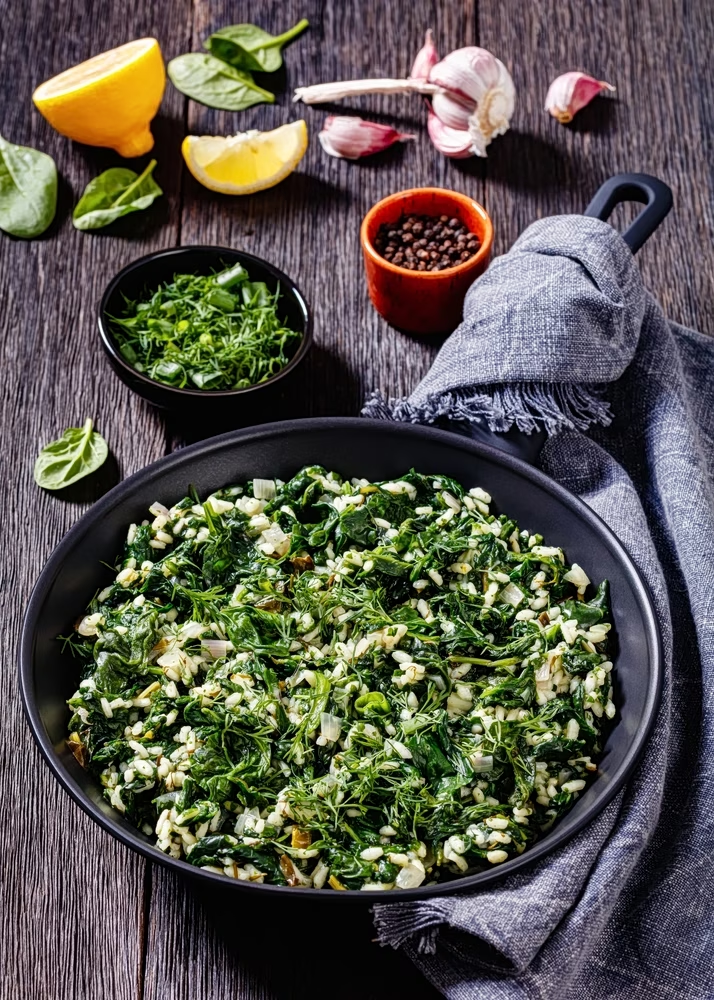
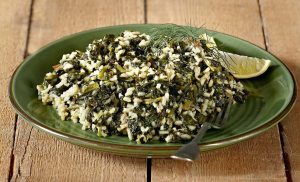
Spanakorizo, a beloved winter “ladero” dish.
In areas where many refugees from Asia Minor and Constantinople settled after the population exchanges of the early 20th century, ladera became more aromatic and refined. Artichokes a la polita with dill and imam bayildi — the famous dish of meltingly soft eggplants filled with onions — remain among the most iconic examples of this culinary tradition.
With little more than seasonal vegetables, excellent olive oil and the patience demanded by a simmering pot, the cooking of rural Greece has today become a gastronomic treasure. In harder times, when meat was expensive and reserved for celebrations, ladera formed the backbone of the Greek family table.
They are also a celebration of seasonality. Every season brings its own produce from the garden: green beans, okra and eggplants in summer; spinach, leeks and cabbage during autumn and winter.
What began as the cuisine of modest households — shaped as much by poverty as by the fasting traditions of the Greek Orthodox Church — evolved over time through the addition of herbs such as dill, parsley and mint. Greek home cooks transformed these dishes into something far greater, highlighting not only their nutritional value but also their remarkable depth of flavor. Using fresh ingredients and the “liquid gold” of Greece — olive oil — they proved that extraordinary cooking does not require rare or expensive ingredients.
The art behind great ladera
As the weather warms and the sun grows stronger, ladera return to the center of the Greek table. Fresh summer tomatoes are grated into the pot, slowly melding with olive oil to create the dish’s signature richness. But these recipes have their secrets.
Very little water is added at the beginning — or none at all if the tomatoes are especially juicy. The vegetables should cook slowly in their own juices. If extra liquid is needed, it is added gradually and always hot.
The onion is sautéed patiently until glossy and sweet, before the vegetables — such as green beans or okra — are lightly sealed in the oil. This creates a protective layer that prevents them from falling apart while helping the sauce bind beautifully by the end of cooking.
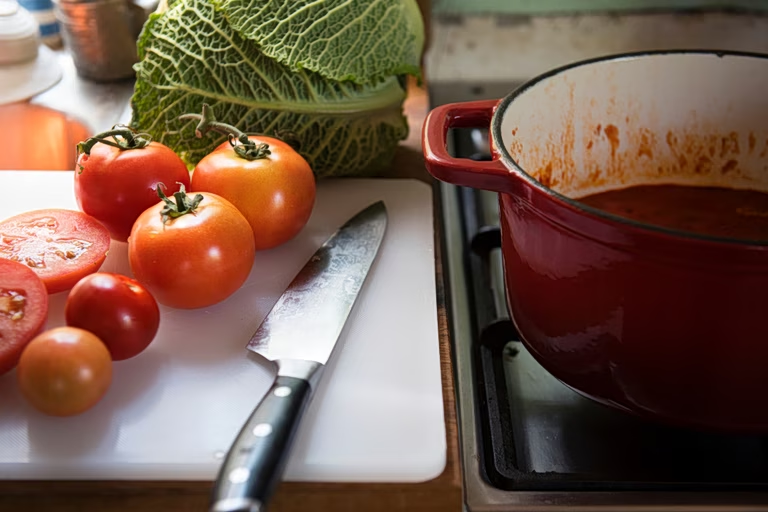
The use of fresh, juicy red tomatoes is one of the best-kept secrets to a good “ladero”.
Once the dish comes to its first boil, the heat is lowered to a minimum. Slow cooking allows the olive oil to emulsify with the vegetables’ natural sugars, creating a sauce thick enough to cling to the spoon.
In every ladera, patience is the real secret. The food must simmer until every trace of excess moisture evaporates, leaving behind only its rich oil and concentrated sauce. This luscious, almost jam-like texture is what makes dipping crusty homemade bread into the pot such an irresistible pleasure.
Before serving, the dish should always rest for at least 30 minutes with the lid slightly open. This allows the flavors to settle and the sauce to achieve its desired silky consistency. If too much liquid remains, the heat is briefly raised for two or three minutes with the lid off, while the pot is gently shaken in circular motions — never stirred with a spoon, so the vegetables stay intact — until only the oil-rich sauce remains.
The essential accompaniments
The experience of ladera is never complete without the accompaniments that reveal their full depth of flavor. Fresh homemade bread, with its crunchy crust and dense crumb, is considered essential for soaking up the rich sauce. A piece of sharp feta cheese cuts through the olive oil and balances the sweetness of the eggplants, green beans or okra.
Olives, fresh radishes or spring onions add brightness and spice to these otherwise mellow dishes. On the Greek islands, ladera are often served alongside cured fish and seafood. Salted bonito, marinated anchovies or even a little smoked herring beside a tray of briam — Greece’s version of roasted summer vegetables — bring an entirely different dimension to the meal, elevating it into something unforgettable.
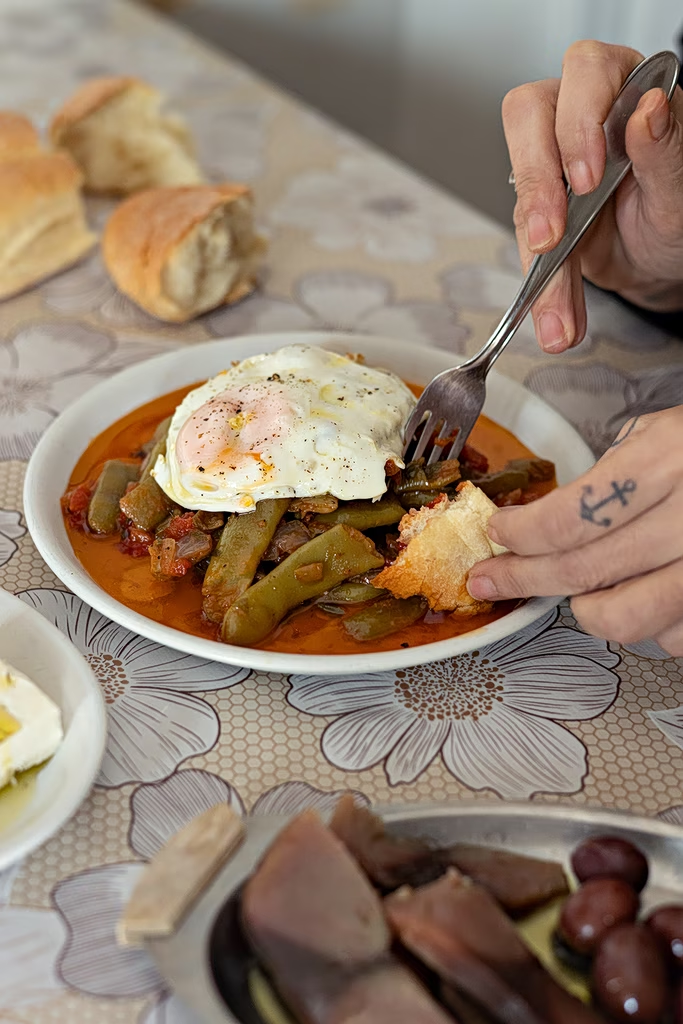
Photo: Giorgos Kapranos
Green Beans Cooked in Olive Oil (Fasolakia Ladera)
Photo: Giorgos Kapranos
Preparation time: 10 minutes
Cooking time: 50 minutes
Difficulty: Easy
Ingredients (Serves 5–6)
- 1 kg fresh green beans (romano or runner beans), trimmed and stringed
- 180 ml extra virgin olive oil, plus extra for finishing
- 2 large onions, finely chopped
- 1 garlic clove, thinly sliced
- 3–4 large ripe tomatoes, grated
- 1 tbsp tomato paste (optional)
- 1 bunch parsley, finely chopped
- 2–3 potatoes, cut into large wedges (optional)
- Fried eggs, for serving
- Fresh bread, for serving
Method
Heat half of the olive oil in a wide pot over medium heat. Add the onions and sauté for at least 8–10 minutes, until soft and translucent. They should not brown; the goal is to slowly draw out their natural sweetness.
Add the garlic and cook for another minute. Stir in the green beans and potatoes, if using, coating them well in the oil. Let them sauté for about 5 minutes, until glossy.
Add the tomato paste first, rubbing it lightly against the bottom of the pot to release its aromas, then pour in the grated tomatoes. Add the remaining olive oil and just a little hot water — no more than half a cup, as the vegetables will release their own juices while cooking.
Cover the pot, lower the heat and simmer gently for 45–50 minutes.
About 10 minutes before the end of cooking, season with salt and freshly ground pepper and stir in the parsley. The dish is ready when the beans are buttery soft and the sauce has reduced until only its rich olive oil remains.
Serve topped with a fried egg and plenty of fresh bread for dipping into the sauce.
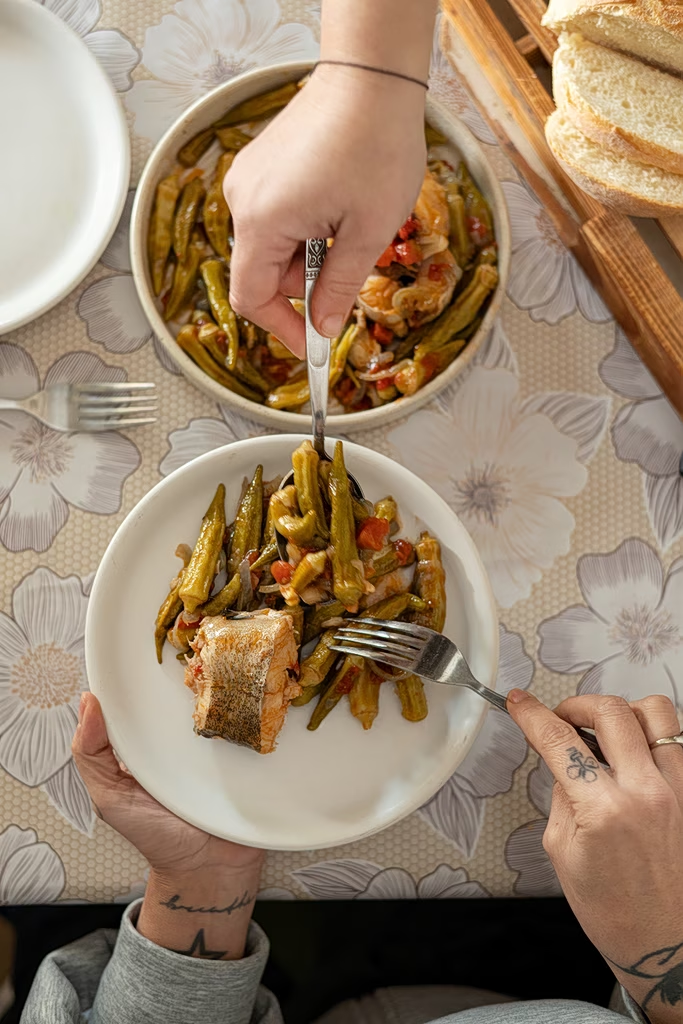
Oven-Baked Okra With Cod
Photo: Giorgos Kapranos
Preparation time: 10 minutes
Cooking time: 50 minutes
Difficulty: Easy
Ingredients (Serves 5–6)
- 700 g fresh or frozen okra, cleaned
- 1 medium onion, finely chopped
- 2–3 garlic cloves, finely chopped
- 1 ripe tomato, grated, plus 1 extra tomato diced into small cubes
- 1 tsp tomato paste
- 150 ml extra virgin olive oil
- 2–3 tbsp parsley, finely chopped
- 500 g fresh cod fillet
- Salt
- Freshly ground black pepper
Method
Heat half of the olive oil in a wide pot and sauté the onion and garlic for a few minutes until softened.
Add the okra and continue sautéing for another 5 minutes. Stir in the tomato paste, the grated tomato and the diced tomato, then season with salt and pepper.
Reduce the heat and let the okra simmer gently for about 10 minutes, avoiding excessive stirring so the vegetables keep their shape. If the sauce begins to dry out, add a little hot water.
Meanwhile, preheat the oven to 180°C (350°F) using the fan setting.
Carefully transfer the okra and all the cooking juices into a baking tray. Sprinkle with fresh parsley and bake for 20 minutes.
Then place the cod pieces throughout the tray and increase the oven temperature to 200°C (390°F). Bake for another 10 minutes, until the fish is cooked through.
Serve with freshly ground pepper and a drizzle of the remaining olive oil over each plate.
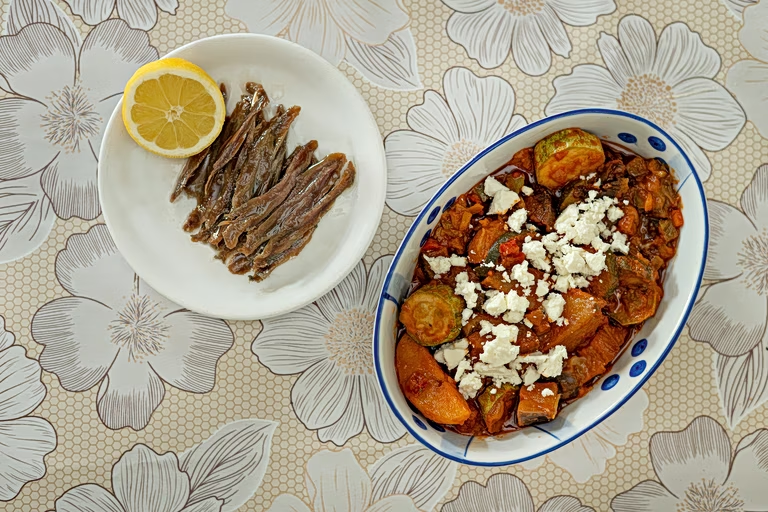
Photo: Giorgos Kapranos
Briam: Greece’s Summer Vegetable Bake
Photo: Giorgos Kapranos
Preparation time: 10 minutes
Cooking time: 45 minutes
Difficulty: Easy
Ingredients (Serves 6)
- 2 large eggplants, cut into chunks
- 3–4 zucchini, sliced into rounds
- 3–4 potatoes, cut into wedges
- 1 Florina pepper, roughly chopped
(Florina peppers are sweet red peppers native to northern Greece.) - 1 green pepper, roughly chopped
- 2 onions, sliced
- 2–3 garlic cloves, finely chopped
- 3–4 ripe tomatoes, coarsely grated
- 1 bunch parsley, finely chopped
- 150 ml extra virgin olive oil
- Salt
- Freshly ground black pepper
- Crumbled feta or xinomyzithra cheese for finishing (optional)
(Xinomyzithra is a tangy soft whey cheese traditionally made in Crete.)
Method
Place all the chopped vegetables in a large baking tray along with the parsley, grated tomatoes, olive oil, salt and pepper. Mix everything thoroughly with your hands so the vegetables are evenly coated with the tomato and olive oil.
Do not add water — the vegetables will release enough moisture while baking.
Cover the tray tightly with foil and bake in a preheated oven at 180°C (350°F), using conventional top-and-bottom heat, for 30 minutes.
Remove the foil and continue baking for another 15 minutes, allowing the vegetables to caramelize lightly and the sauce to thicken.
If desired, during the final 2–3 minutes of baking sprinkle the top with crumbled feta or xinomyzithra cheese.
Serve the briam at room temperature, as is traditional in many Greek homes.