 Μake us preferred on Google
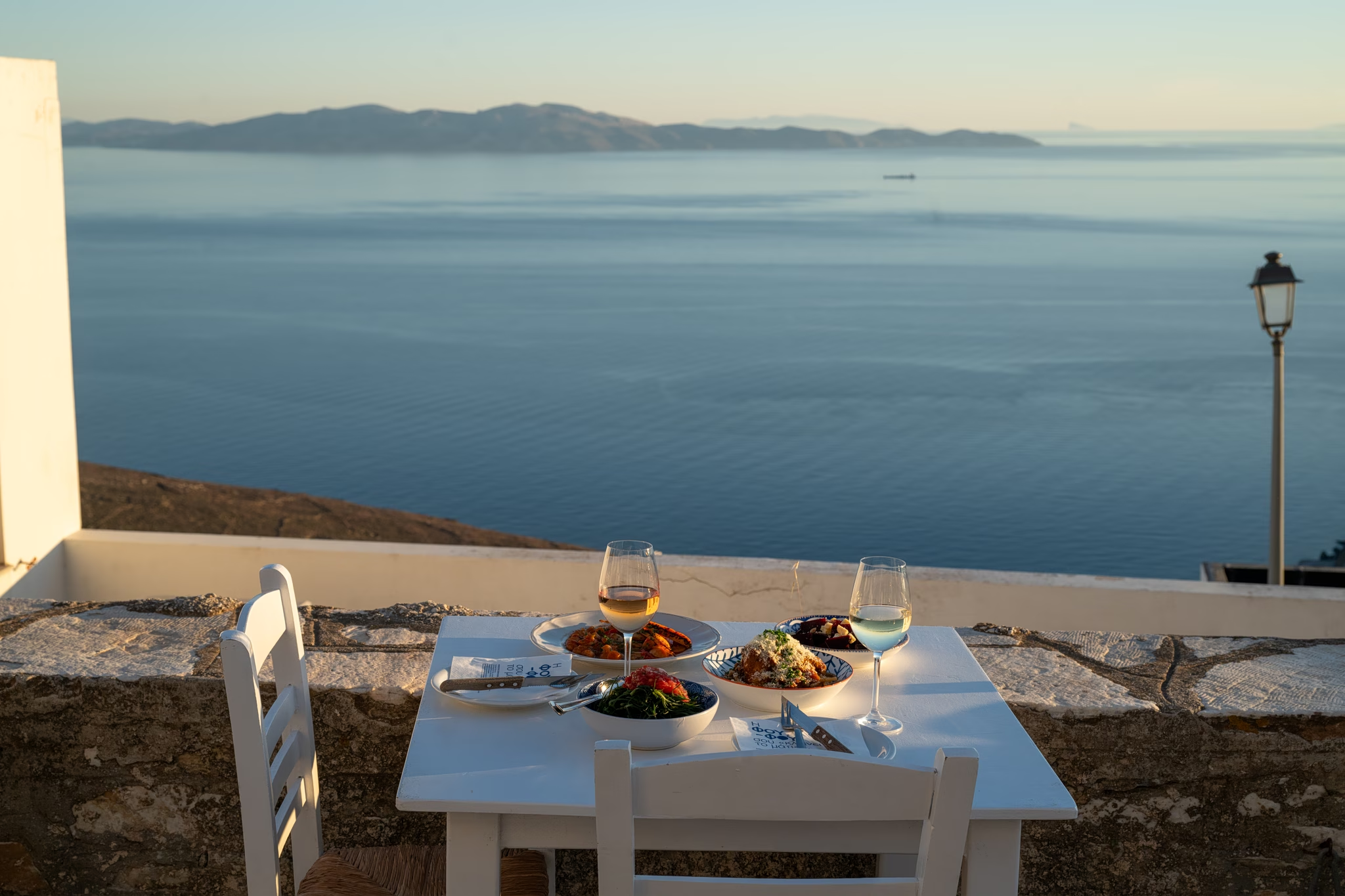
 We arrived in Ysternia, Tinos, at exactly the right moment, just before the sun dipped into the sea. There, on one of the island’s most beautiful terraces, Fou Fou has been welcoming diners for the past three years. Its understated, carefully considered aesthetic was the first thing that made me want to discover its story. A little later, I realized that the people behind it were even more interesting.
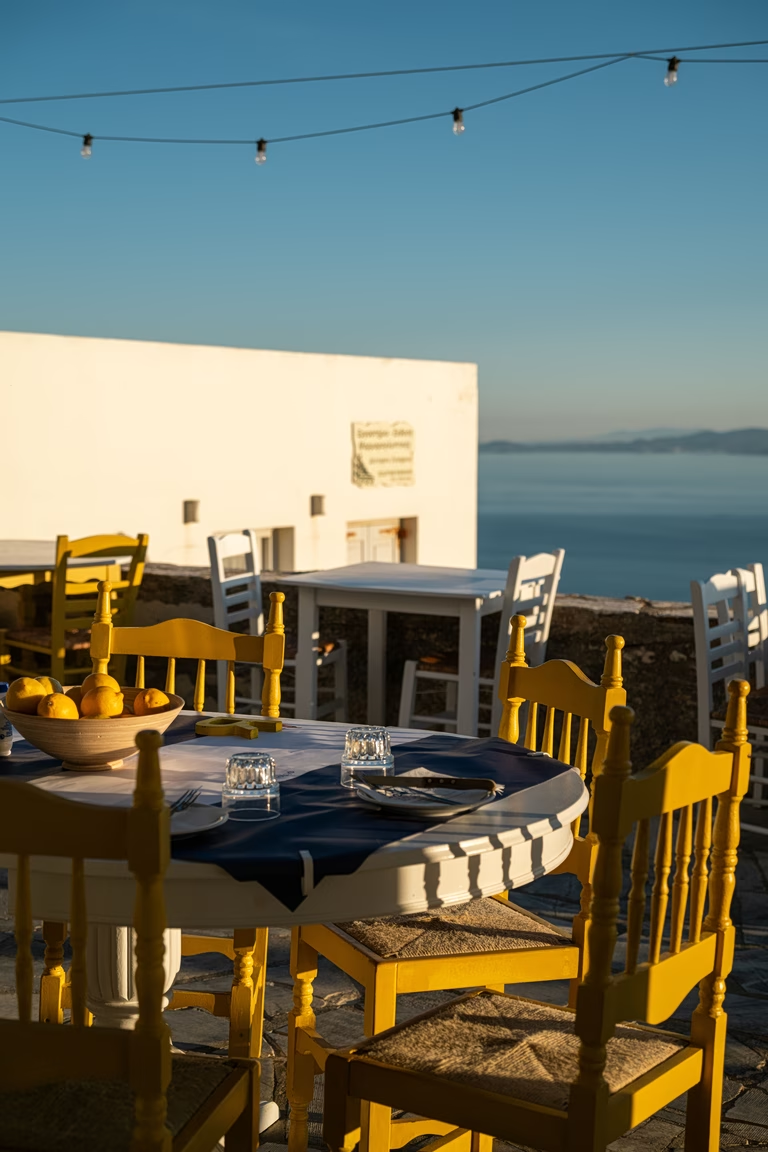
The Fou Fou terrace immediately drew me in and became the reason I wanted to discover the story behind the restaurant and the people who created it. Photo: Alexandros Alexandris
Yiannis Nikolaou had been coming to Tinos for years. His wife is from the island, and somewhere between those summers, an idea began to take shape: Tinos was missing a taverna devoted to good meat.
Not another fashionable, modern opening, but somewhere you would genuinely want to return to, again and again.
When the opportunity came to take over the space, he did not hesitate. He called his childhood friend, Theodoros Chountasis, a chef whose work he held in the highest regard. He knew he was the only person who could turn the idea into reality.
Within minutes, the two had made a decision that would change both their lives. Yiannis left behind the businesses he ran in Athens, while Theodoros walked away from the kitchen where he had worked for years. Together, they began building the restaurant exactly as they had imagined it.
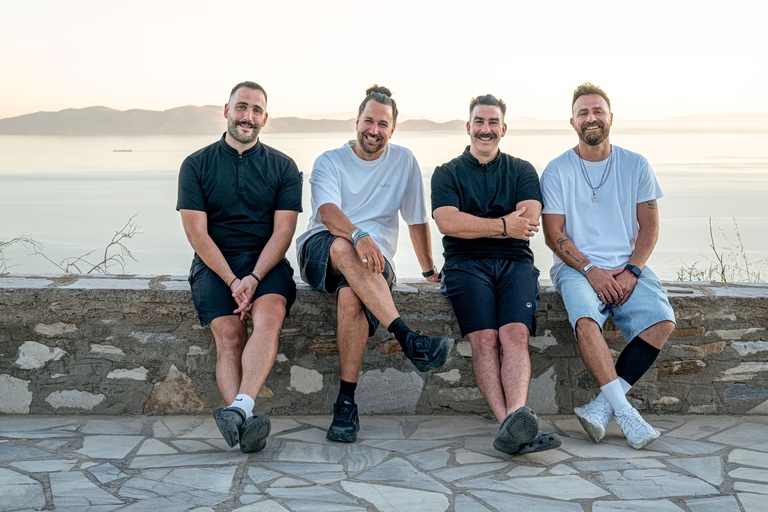
The Fou Fou team: Dimitris Stoumpas, Yiannis Nikolaou, Theodoros Chountasis and Christos Maniatis. Photo: Alexandros Alexandris
The concept was clear from day one. They wanted a taverna reminiscent of the old ones, where the fire was at the heart of everything.
They built a wood-fired oven and decided that they would never use a microwave. Even reheating food is done over wood.
That philosophy gave the restaurant its name. Fou Fou is not a clever play on words. It is their everyday reality: the fire burning from morning until night, the crackle of the wood and the aroma that fills the kitchen.
Yet nothing here feels accidental.
The space strikes a rare balance between Cycladic simplicity and contemporary design. I later learned that Yiannis Tokalatsidis was responsible for the design of both the restaurant and its visual identity. The result is a restaurant that feels modern without ever losing the character of an authentic Greek taverna.
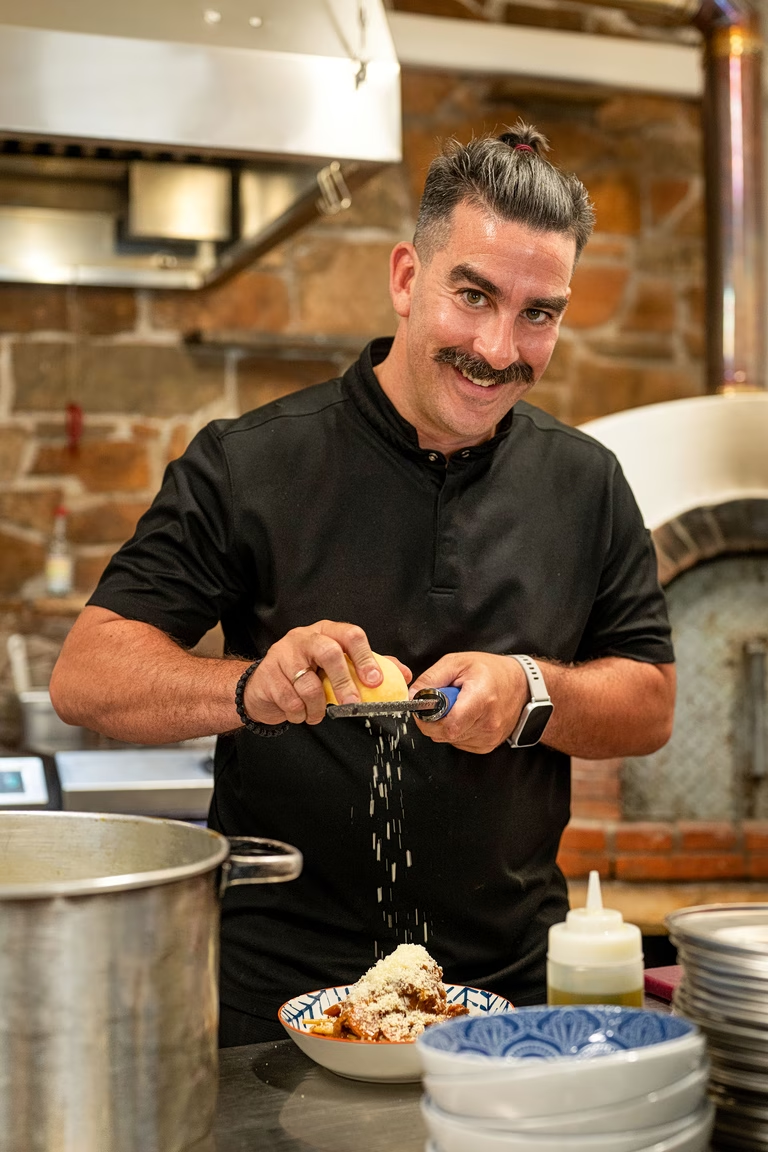
At Fou Fou, excellent food comes with exceptional hospitality. Photo: Alexandros Alexandris
What impressed me most, however, was not just their ideas. It was the way they constantly talked about their people.
They spoke about Dimitris Stoumpas and Christos Maniatis, who are not treated as employees but as an integral part of the team. They spoke about the producers who trusted them when nobody knew who they were yet. And they spoke about the partners who had stood by them from the very beginning.
It is rare to meet people who, when talking about their success, speak more about everyone around them than about themselves.
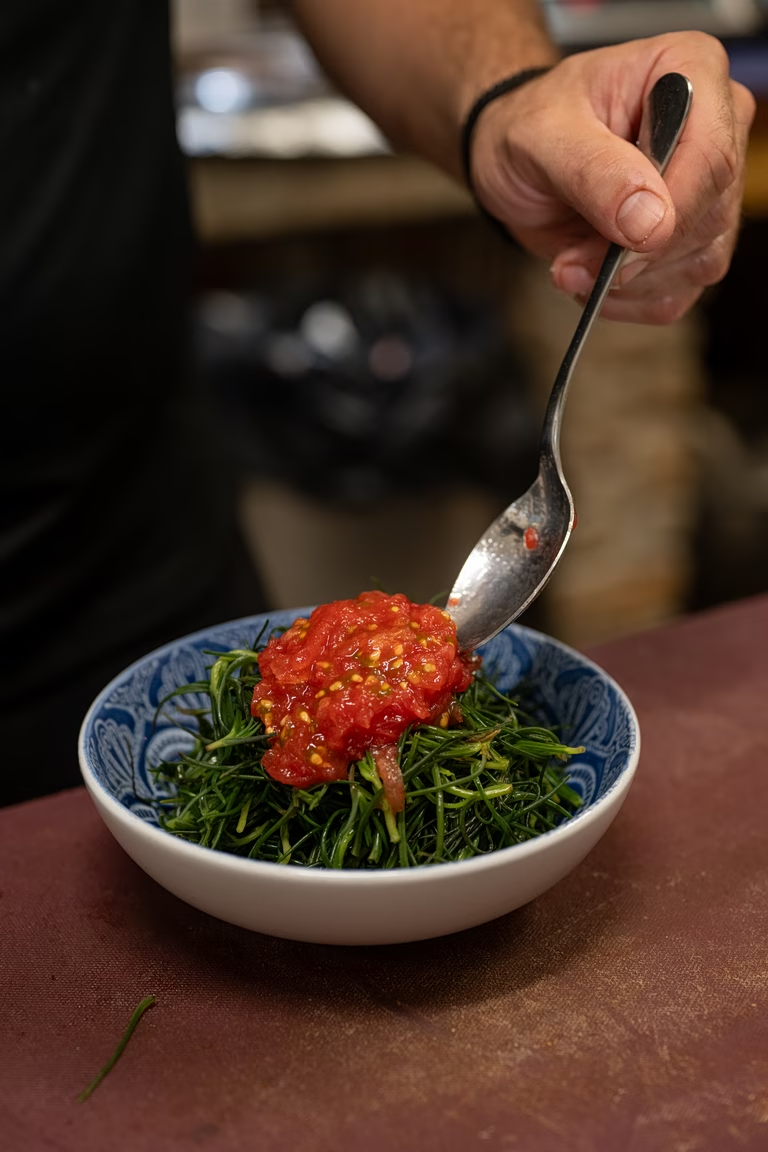
The Fou Fou kitchen works almost exclusively with ingredients from local producers, with whom the restaurant has built close relationships. Photo: Alexandros Alexandris
The food follows an equally clear philosophy. Almost all of the ingredients come from Tinos: potatoes, tomatoes, artichokes, sausages and meat from local producers, with little unnecessary interference in the kitchen.
They are not interested in impressing diners with complicated techniques. They want to bring out the flavor of the ingredient itself.
The goat makaronada, a traditional Greek pasta dish made with goat meat, is what almost everyone orders. Theodoros worked extensively on the recipe, in collaboration with producers on the island, until he arrived at the version they serve today.
It is one of those dishes that needs no flashy embellishment to win you over. Simplicity is its greatest strength.
The same is true of the meat from Kouroupa Farm, which proves that when the raw ingredient is genuinely excellent, all it needs is respect.
The same thinking extends to the drinks list. The wines come mainly from wineries in Tinos and the Cyclades, the beers are local, and even when it came to soft drinks, the team made a decision that now seems almost obvious but was far from so at the time.
From the very first day, they chose exclusively Greek products, despite knowing that this would make things more difficult. They have never changed course.
Because, as Yiannis told me, the relationships you build with the people who believed in you from the beginning are worth far more than any commercial advantage.
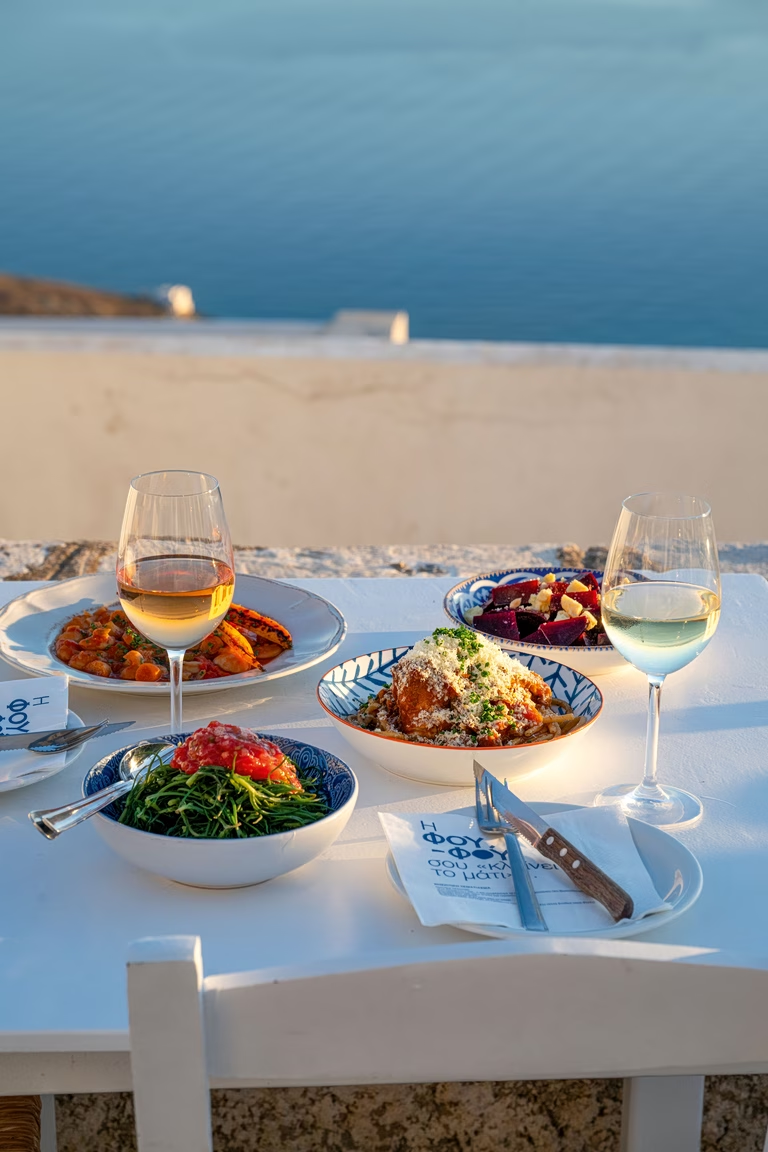
The spectacular colors of sunset make the dishes look even more tempting. Photo: Alexandros Alexandris
Fou Fou is a lovely place. We immediately felt at home with its relaxed atmosphere. And yes, it is good to know that there are still restaurants where you do not feel you have to follow some kind of protocol simply to walk through the door.
That is exactly what its creators wanted to build: a place where a family fresh from the beach can sit alongside a group of friends, a couple, a politician, a local resident or a traveler visiting the island for the first time.
Nobody should feel that they do not belong. Everyone is simply part of the same gathering.
That goes a long way towards explaining why it is difficult to find a table without a reservation in August. Not because Fou Fou has become fashionable, but because the people who have eaten there have done the best advertising a restaurant could possibly hope for.
They went back to their friends and said just one thing:
“If you go to Tinos, don’t miss it.”
That is exactly what happened to me, too.
Majorana: the Tinos restaurant everyone loves
Agapi is one of those villages in Tinos that seems to justify its name completely. One of the island’s oldest settlements, known in medieval times as “Perasma”, it stretches between two hills, with stone houses, arches, marble fountains and a tranquility that is increasingly hard to find in the Cyclades.
These are the kinds of villages you do not simply visit. You walk through them slowly, sit in their shade, admire their architecture and, before you even realize it, find yourself moving at a gentler pace.
Perhaps that is why I was so pleased when I learned in 2022 that Majorana had opened in this little paradise.
Not only because the person behind the venture is Anestis Zamanopoulos, an energetic and multifaceted friend with whom I have shared some of the memorable nights of old Athens, but because I knew that if Anestis ever opened a restaurant, it could not possibly be anything ordinary.
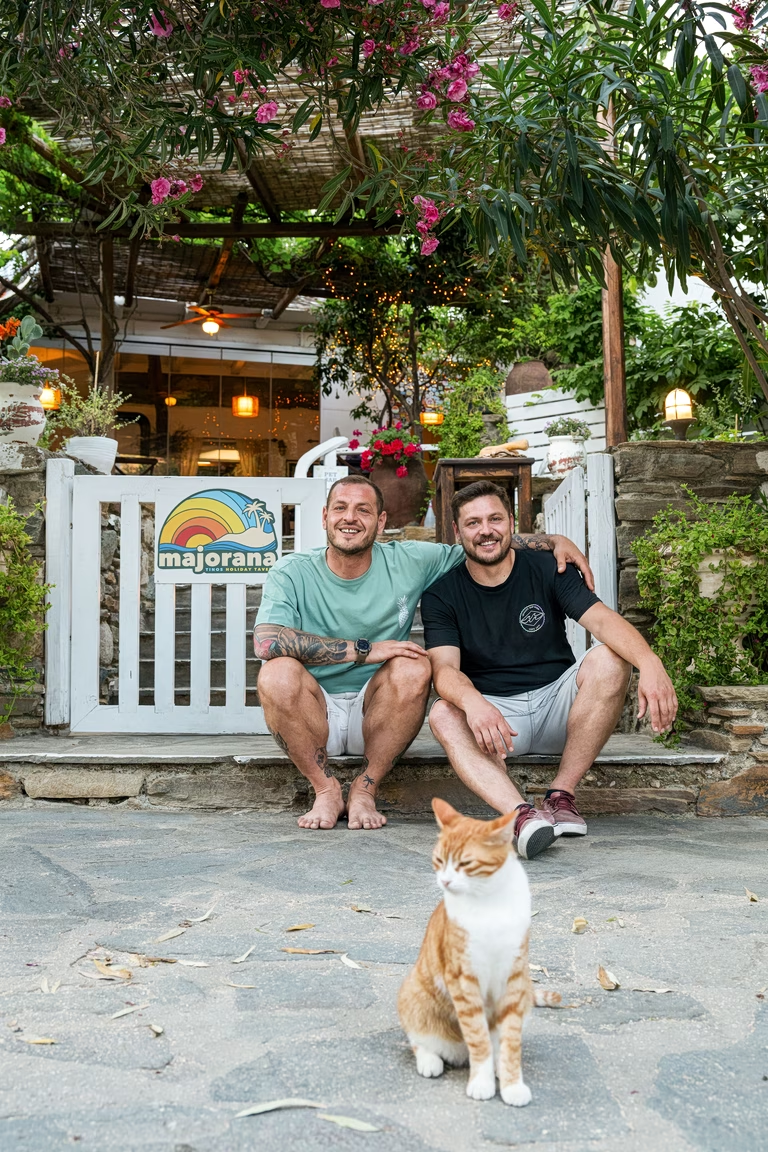
Anestis Zamanopoulos and his brother, Michalis, outside the restaurant. Photo: Alexandros Alexandris
Anestis belongs to that rare category of people who are difficult to fit into a single professional identity.
He is a food technologist, a teacher, works in spirits development and constantly moves between the worlds of science and gastronomy. He has been involved in creating Greece’s first small-batch whiskey, works with companies abroad and, in recent years, developed the world’s first date-based spirit on behalf of a company in the United Arab Emirates. He is also preparing Europe’s first agave spirit.
When I asked him how he manages to combine all these different lives, he laughed and replied:
“Physics, chemistry and mathematics in the morning; potatoes, tzatziki and spicy cheese dip at night.”
The line describes him better than any CV ever could.
His relationship with Tinos was not love at first sight. He had already been coming to the island for more than a decade when the opportunity arose to take over the small restaurant on the square in Agapi.
The space had once housed a simple grill house. Anestis saw something else: the possibility of creating something entirely different, something that would stand out on the island.
He saw a place that could become a meeting point, a restaurant that would express what he believed about food and hospitality.
The decision was a family one from the start. His brother Michalis, his father Spyros and, of course, his mother Polina joined him.
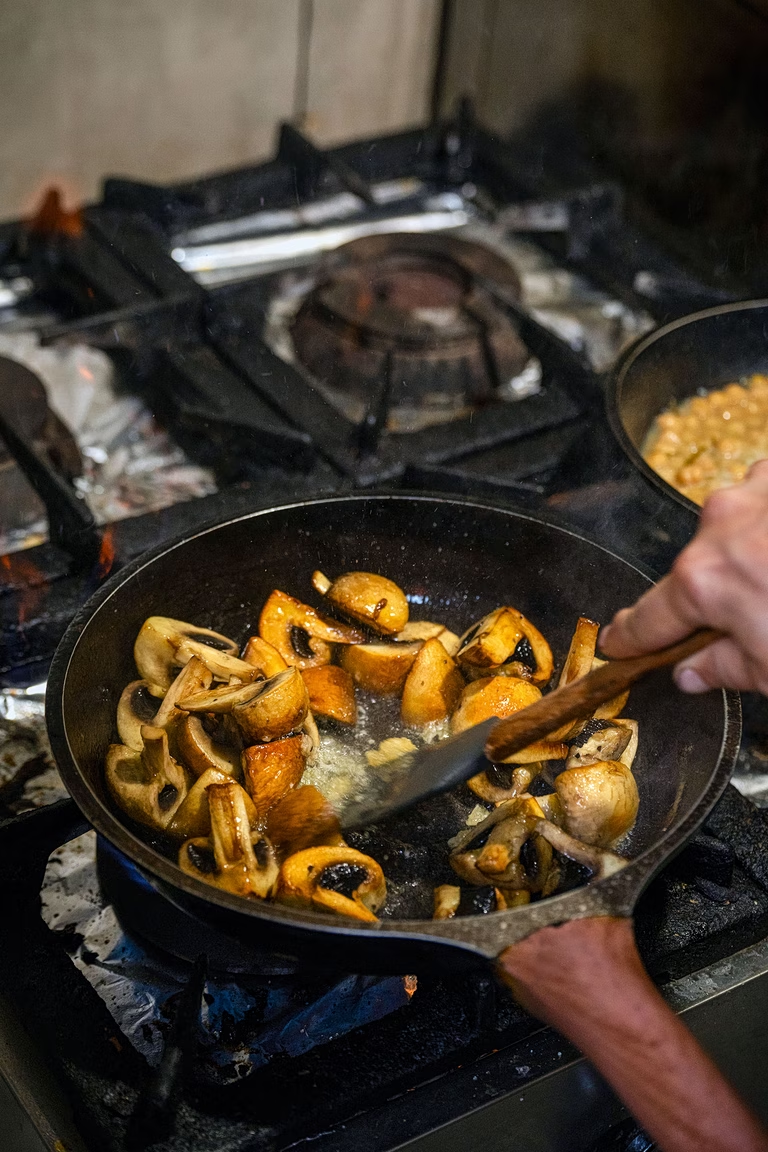
Authentic flavors combining the culinary culture of northern Greece with Tinos’ local produce. Photo: Alexandros Alexandris
And so Majorana was born — a name chosen with care.
It is the Latin name for marjoram, an aromatic herb central to Mediterranean cooking. At the same time, it evokes the Italian physicist Ettore Majorana.
Two very different worlds — gastronomy and science — come together perfectly in Anestis’ personality, a man who moves as naturally from the laboratory of spirits development to the kitchen of a taverna.
In reality, his people are beside him at every step. Michalis, Spyros and, of course, his mother Polina, the undisputed soul of the restaurant.
Her story could easily fill an article of its own.
With two postgraduate degrees in floristry and years of experience at some of Greece’s biggest events, including the Olympic Games, she spent decades creating elaborate floral arrangements and designing the visual settings for major events.
When she eventually retired, however, she decided to fulfil a dream she had carried for years: to cook for people.
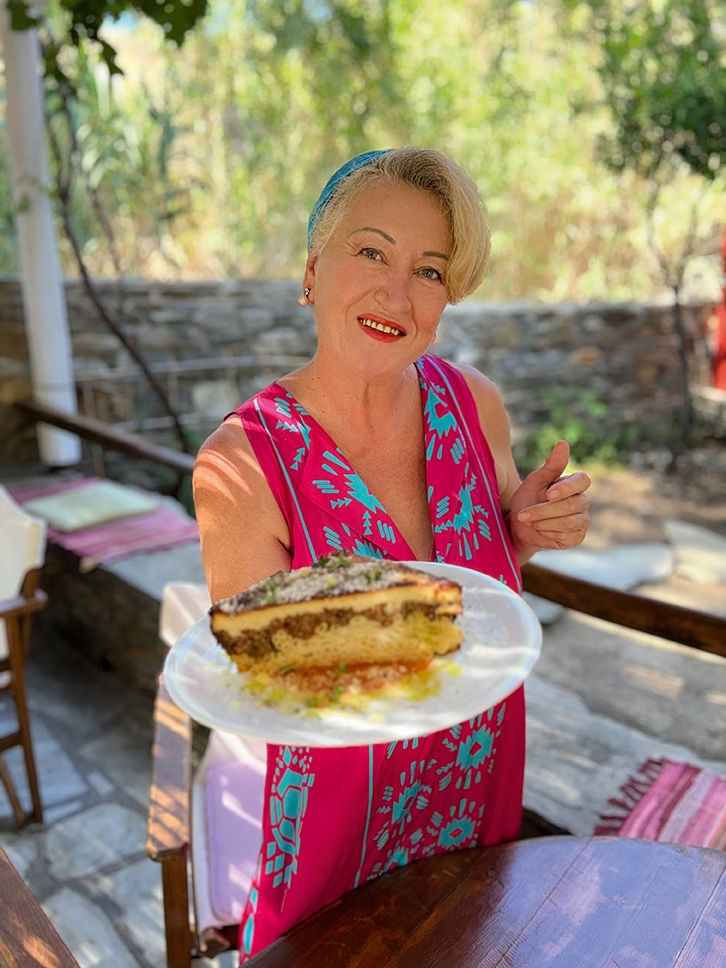
Polina, the soul of the restaurant and mother of the two brothers, is renowned for her golden touch in the kitchen. Photo: Alexandros Alexandris
The Majorana kitchen was born precisely from this meeting of different journeys.
On one side are northern Greece, Thrace, Macedonia and Samothrace, along with the family’s Asia Minor influences. On the other is Tinos, with its exceptional produce, small-scale farmers and deep culinary tradition.
They did not want to imitate the island’s existing tavernas. They wanted to add something that was missing — to offer an experience that would be distinctive and unique in the Cyclades.
The result is a deeply Greek cuisine with a strong personality.
Polina’s dolmadakia — vine leaves stuffed with rice and herbs — her honeyed gemista (stuffed vegetables), lamb baked in parchment, Drama sausage and the famous bouyiourdi, a spicy baked cheese dish traditionally made with feta, tomatoes and peppers, have all become hugely popular.
Most of the ingredients come from small producers in Tinos, with whom the family has built relationships based on trust, following a philosophy rooted in the principles of slow food and local production.
Anestis himself has enormous affection for the people of Tinos and admires every effort being made on the island.
He spoke to me more about the other restaurants in Kato Meria, the southern part of Tinos, than about his own.
He talked about Svoura, Drakonisi, Croque Monsieur and all those who, as he puts it, are working together to raise the overall level of the area.
He sees them as fellow travelers rather than competitors. That philosophy certainly helps explain why Majorana was embraced by locals so quickly.
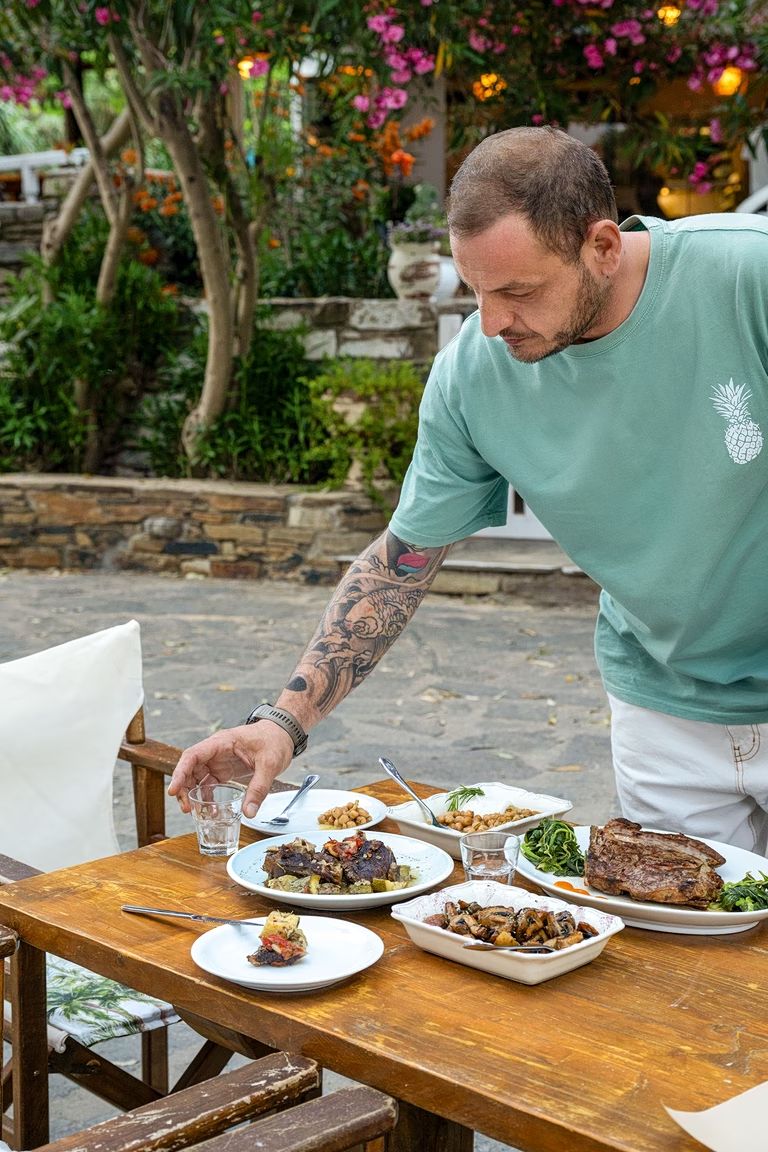
In a beautiful courtyard filled with flowers and cats, Majorana serves northern Greek dishes made with ingredients from Tinos. Photo: Alexandros Alexandris
The courtyard itself is beautiful, too.
The cats adopted by the family wander between the tables as though they were the real hosts. Flowers, wooden tables and low lighting create the feeling of a large private terrace that has always been there.
Nothing feels contrived.
There is only tranquility, world music, smiles and the unmistakable feeling that everyone is exactly where they want to be.
What I liked most, however, is that Majorana does not exist only for the summer.
Anestis decided to keep the restaurant open through the winter — not because a business plan demanded it, but because he wanted there to be a place where people could come together.
A place where they could cook, taste spirits, talk around a table and keep the village alive after the lights of the tourist season had gone out.
As he told me, that was precisely what he had dreamed of from the beginning.
And, as it turned out, people appreciated the decision enormously.
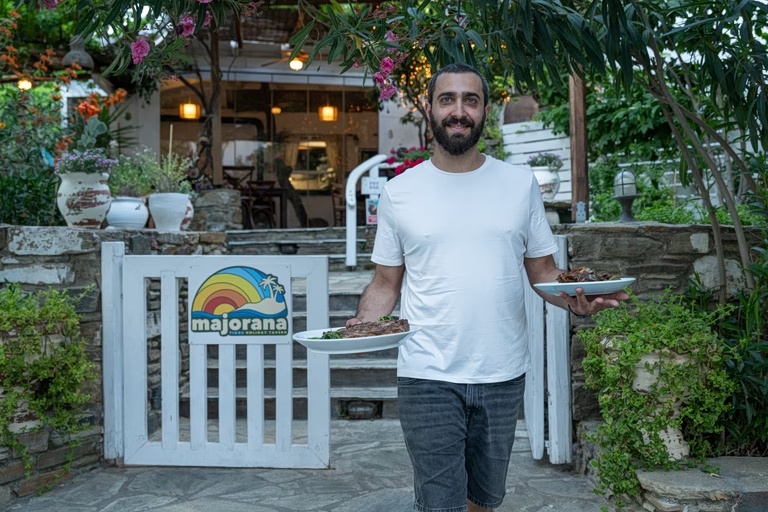
Stratos Katsilieris, a member of the Majorana team, brought the most delicious dishes to our table. Photo: Alexandros Alexandris
You cannot imagine how happy I was when I arrived in Tinos this year and heard the same question everywhere:
“Have you been to Majorana?”
They were not asking because it was the island’s newest restaurant.
They were asking because they feel at home there, rather than like customers.
And that, ultimately, is Majorana — a place I am certain you will love, too.
It is difficult to think of it simply as a taverna. From the moment you arrive, it feels as though you have stepped into the home of a family that has decided to open its doors to everyone.
It gives us one more good reason to return to Agapi, even when the beaches empty and summer slowly retreats from the island.
Because autumn and winter on the Greek islands have a charm all their own.