 Μake us preferred on Google
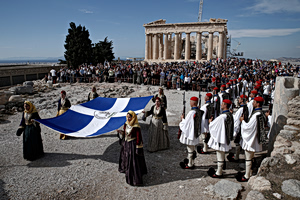
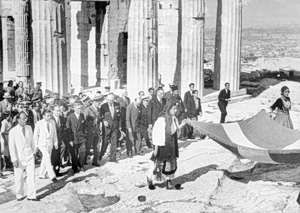
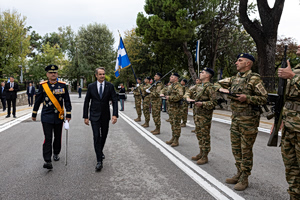
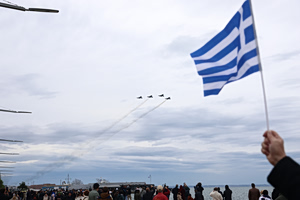
Every October 28, Greece marks the anniversary of its refusal to submit to Fascist Italy in 1940. School celebrations, student and military parades, national flags and familiar images of soldiers fighting in the snow-covered Pindus mountains have become part of the country’s collective memory.
For generations, children have learned poems and songs for school ceremonies, while families have passed down stories of relatives who experienced the war. The word “OXI,” or “NO,” has become the defining symbol of the day, representing Greece’s rejection of the Italian ultimatum.
Yet the anniversary, now a familiar fixture of Greek public life, was not established in its present form all at once. Its history reflects political decisions, the struggle over who would be recognized as a national hero and the lasting divisions created by the Greek Civil War.
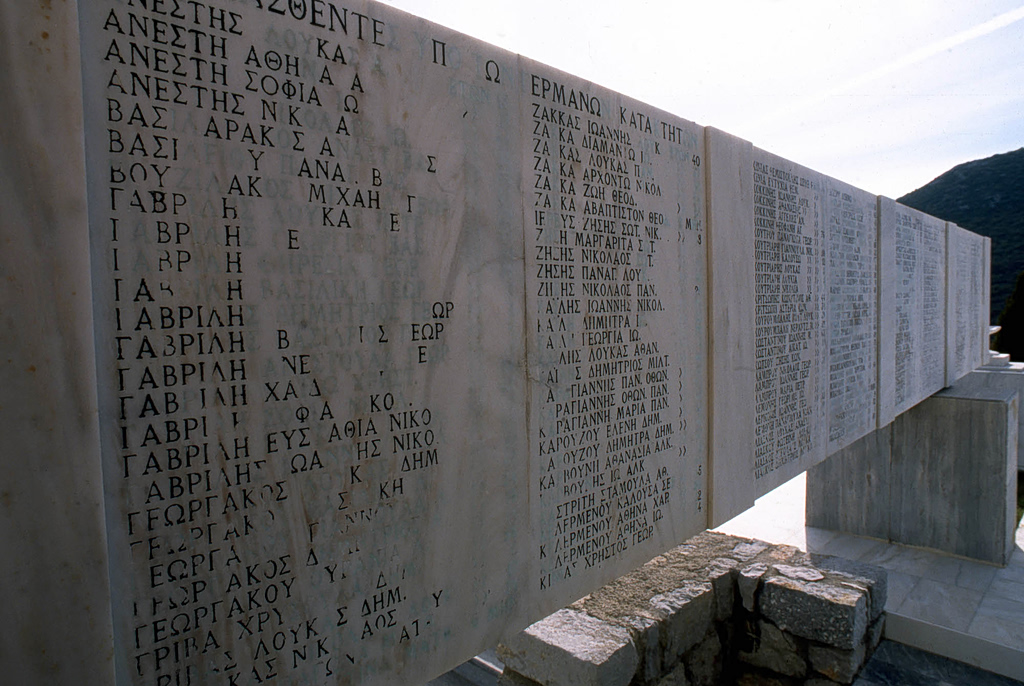
FILE – This March , 1997 file photo shows the names of victims from the World War II Distomo massacre in central Greece on a memorial. Greece said Wednesday Jan. 12, 2010 it will support a claim for compensation from Germany for the massacre by Nazi occupation forces. Residents of Distomo have won a battle in Italian courts for compensation from Germany, joining Italian plaintiffs seeking similar damages. But Germany argues it settled reparation cases in postwar agreements and has taken the issue to the International Court of Justice in the Netherlands. Nazi troops executed 214 civilians on June 10, 1944 in Distomo, in one of the worst World War II atrocities in occupied Greece.(AP Photo/Thanassis Stavrakis, File)
Historians Harris Athanasiades, a professor of public history at Panteion University, and Polymeris Voglis, a professor of social history at the University of Thessaly, examine these questions in an interview with To BHMA. They co-edited the 2023 collection National Anniversaries: Forms of Managing Memory and History, published by Alexandria.
Their central question is how a historical event becomes a national anniversary—and how its meaning changes over time.
Why some historical events become national holidays
For Athanasiades, a national anniversary must first be closely connected to the history of the modern nation-state. This explains why Greece commemorates the 1821 Greek Revolution, which marked the beginning of the country’s emergence as an independent nation-state, rather than military victories from ancient Greek history.
“1821 marks the formation of the nation-state; it is our collective birthday,” he says.
Historical importance alone, however, is not enough. An event must also provide a source of collective pride.
October 28 fulfills that role because it commemorates resistance against a powerful foreign aggressor and Greece’s early victories against the Axis powers in Europe during World War II.
A defeat, even one of enormous historical significance, is less likely to become a national celebration. Athanasiades cites 1922, when Greece suffered defeat in Asia Minor and the Greek presence there collapsed, as an example. The event may be remembered or designated a day of mourning, he argues, but it is unlikely to become a national anniversary in the celebratory sense.
A third condition is national unity. An anniversary must offer a story in which people can recognize themselves on the same side of history.
Civil wars complicate that process because one side’s heroes may be the other side’s sources of trauma. This helps explain why the internal conflicts of the Greek Revolution have largely faded from official commemoration and why the Civil War of 1946–1949 is discussed and analyzed but has not become a formal national anniversary.
The anniversary began as an act of resistance
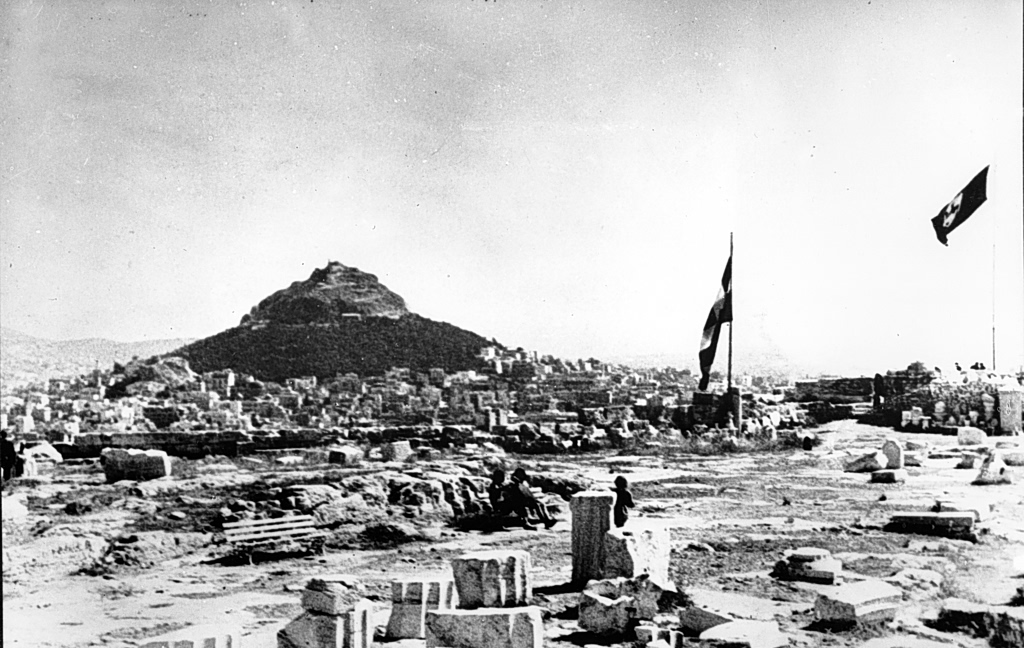
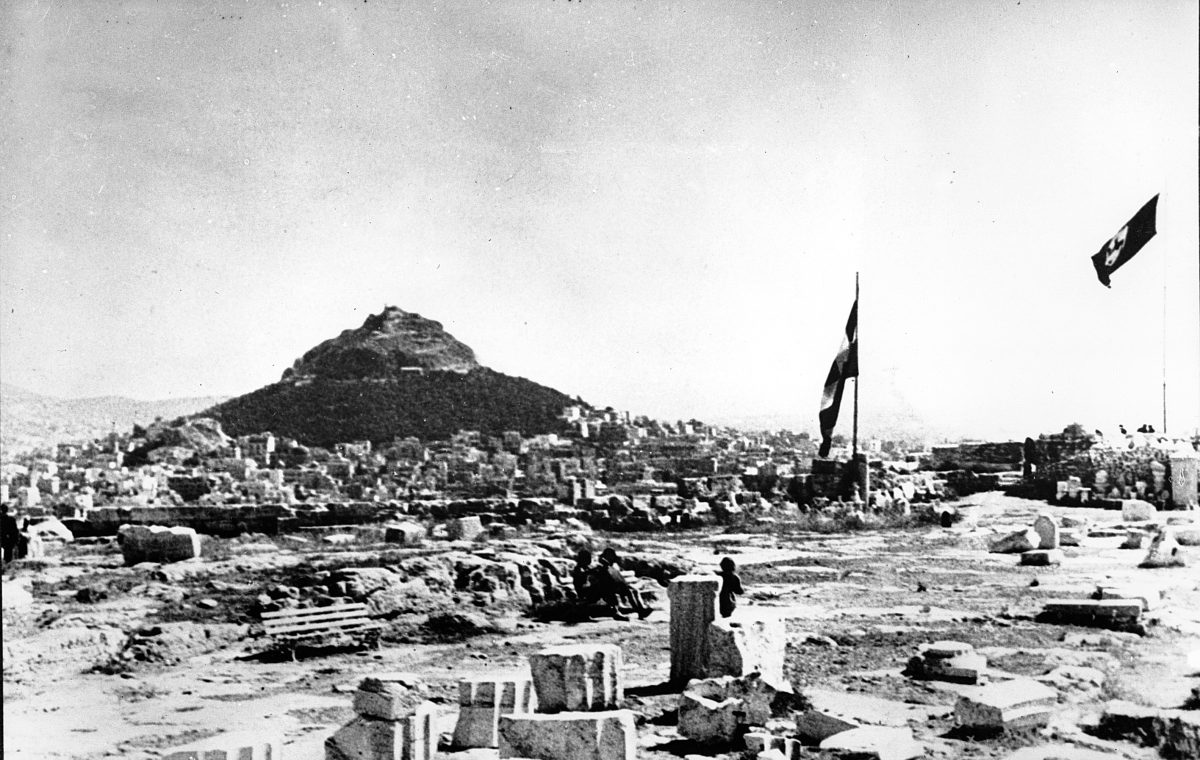
October 28 acquired its commemorative significance while Greece was still under occupation during World War II, before the state formally established it as a national holiday.
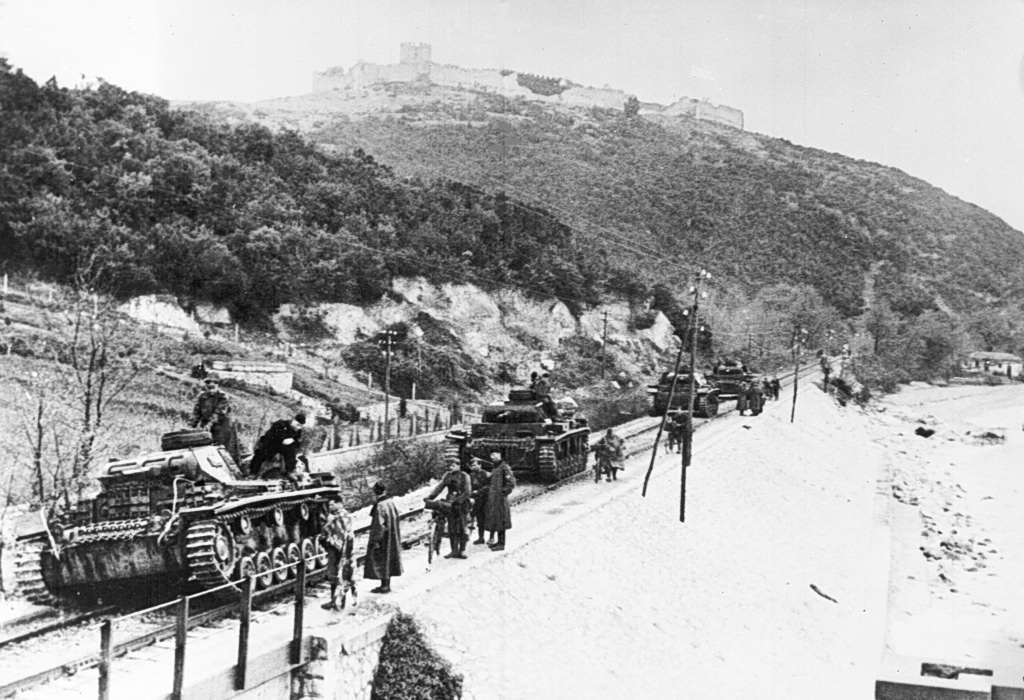
German tanks move along railway tracks on their way to Larisa, Greece, during the occupation of Greece by German forces, April 26, 1941. In the background is the mountain fort Polikastell, which was savagely defeneded by the Greek army. (AP Photo)
According to Voglis, the anniversary initially emerged from popular mobilization. People took to the streets to honor the Greek soldiers who had fought the Italians while also expressing defiance toward the Italian and German occupying forces.
These commemorations included marches and wreath-laying ceremonies that sometimes developed into demonstrations and clashes with the occupiers in central Athens.
The events connected the fighting on the Albanian front against Italy with the subsequent resistance to occupation. They also linked national patriotism with the broader struggle against fascism.
The state formally established October 28 as a national day of celebration on October 24, 1944, just days after Athens was liberated. The decision recognized a tradition that society had already created.
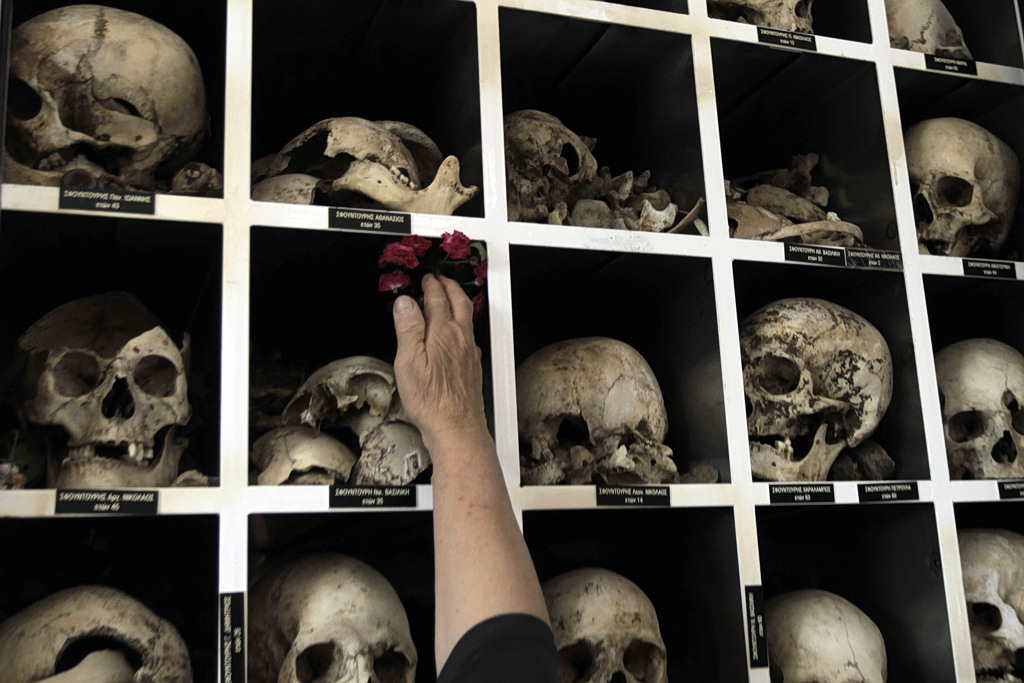
epa04791754 A survivor places a flower in a panel containing the remains of her relative, along the remains of those killed by Nazi troops, during the of 71th anniversary of the Nazi wartime Distomo massacre in the village of Distomo northwest of Athens, 10 June 2015. The massacre took place in Distomo village on 10 June of 1944, where 218 people were killed, including 40 children and infants, by Nazi troops during the second world war. Relatives of the victims are engaged in an ongoing legal battle to claim war reparations from Germany. EPA/ORESTIS PANAGIOTOU
The first official celebration, in October 1944, reflected that connection. The National Liberation Front (EAM), the leading resistance organization, was still participating in the government of national unity, and the commemoration briefly appeared to offer a shared account of the wartime struggle.
That consensus did not last.
How the Civil War reshaped the official narrative
By October 1945, the anniversary’s resistance and anti-fascist dimensions had been removed from the official narrative, Athanasiades says. The political confrontation known as the December 1944 clashes had intervened, foreshadowing the Civil War that followed.
“The defeated lost the future, and the past as well,” he says, describing how those who lost the political struggle were also excluded from the dominant account of the nation’s wartime history.
The exclusion of the resistance movement from official commemoration narrowed the range of people publicly recognized as protagonists of the struggle. Nevertheless, the anniversary continued to resonate across political divisions because it represented a collective refusal to accept foreign subjugation.
Voglis argues that the choice to center the national commemoration on October 28 rather than the liberation of Greece from occupation also reflected the priorities of postwar governments.
The successful defense against the Italian invasion lent itself to a heroic narrative focused on the military, at a time when the armed forces played a significant role in the country’s postwar political life.
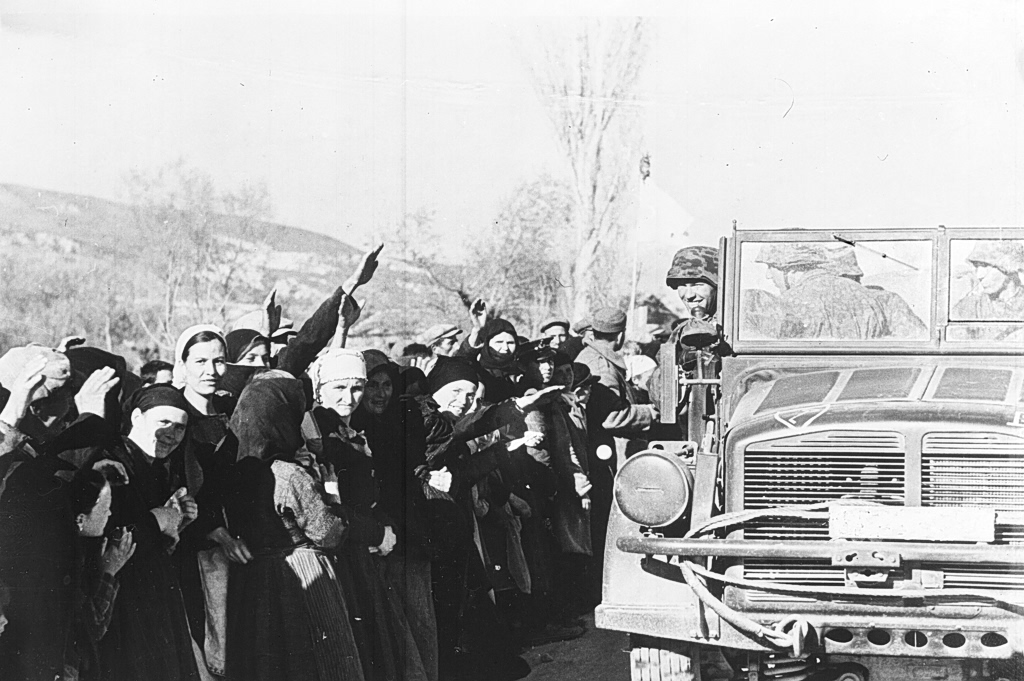
German troops pass some people from a local village, some thinking it best to give the Nazi salute, during the occupation of Greece by German forces, May 1941.
The distinction is important: the anniversary had been formally established before the December 1944 clashes, but the way it was presented and the people celebrated as its heroes changed afterward.
How “OXI” became the defining symbol
The word “OXI,” meaning “NO” in Greek, is inseparable from the anniversary. Its history, however, is more complicated than the familiar national story suggests.
Voglis notes that dictator Ioannis Metaxas did not actually use that specific word when the Italian ambassador delivered the ultimatum demanding that Greece allow Italian forces to enter the country.
During the Greco-Italian War and the subsequent German invasion, however, the word began appearing in the contemporary press as a shorthand for the Greek determination not to surrender to foreign aggression. Over time, it became established in the public consciousness as a symbol of refusal and resistance.
Other elements of the anniversary’s familiar imagery also reflect the choices made in the decades after the war.
Athanasiades describes how, over the next 30 to 40 years, singer Sofia Vembo’s patriotic songs displaced songs associated with the resistance movement, the Pindus mountains overshadowed the Gorgopotamos resistance operation, and military parades left little room for popular demonstrations.
The result was a national celebration that emphasized military heroism while giving less prominence to the broader resistance movement.
The resistance movement’s long exclusion from public memory
The official recognition of the National Liberation Front’s resistance in the 1980s brought a change, but it did not restore the movement’s central role within the October 28 commemoration.
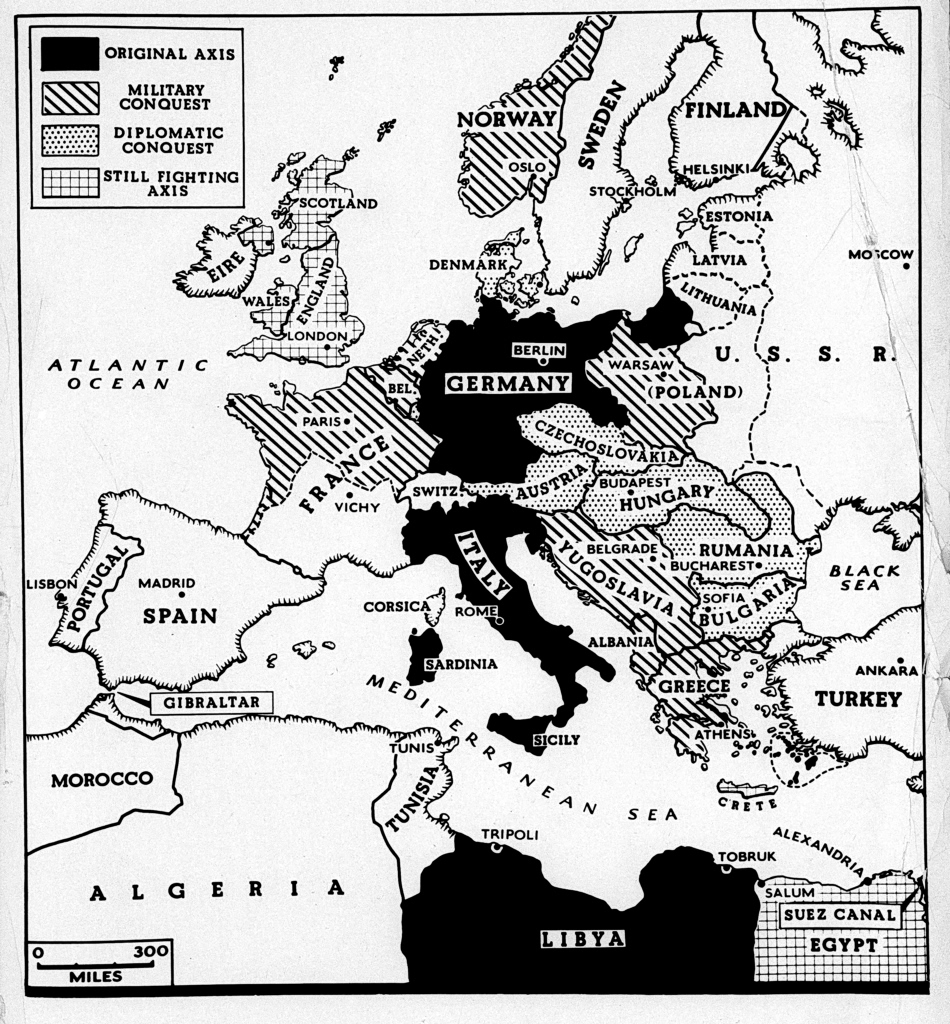
Greece became the 14th European country to come under Adolf Hitler’s control, April 27, 1941. Axis nations of Germany and Italy are in black; seven nations in stripes fought the blitzkrieg and lost (Poland, Norway, Holland, Belgium, France, Yugoslavia and Greece. Six nations (dotted) were overcome by diplomacy/bloodless military maneuvering, including Austria, Czechoslovakia, Denmark, Luxembourg, Romania and Bulgaria. Mussolini of Italy conquered Albania. (AP Photo)
In 1982, Prime Minister Andreas Papandreou recognized EAM’s resistance as part of the national resistance. Yet, according to Athanasiades, it was not incorporated back into the October 28 anniversary. Instead, it was associated with November 25, the date commemorating the 1942 Gorgopotamos operation, in which resistance forces sabotaged a railway viaduct.
Athanasiades argues that November 25 eventually became primarily a commemorative date for the political left, rather than a broadly shared national occasion.
Voglis likewise emphasizes that EAM and its leading role in the resistance remained outside official memory for decades because of the Civil War. Their recognition did not come until the 1980s.
Other aspects of the occupation remained even more difficult to address publicly. Voglis points to collaboration with the occupying forces as a particularly sensitive subject that, until relatively recently, received limited public discussion and historical research.
The issue challenged the dominant postwar narrative of national loyalty because it exposed the fact that some people had cooperated with the occupiers without being held accountable.
The official memory of October 28 therefore involved more than choosing which heroes to celebrate. It also determined which experiences and responsibilities would remain in the background.
National anniversaries reflect the present as well as the past
The meaning of October 28 has continued to change with Greek society. The anniversary still commemorates the determination of Greeks in 1940 to defend their country against foreign invasion, Voglis says, but its public interpretation has varied across generations and political circumstances.
National anniversaries, he argues, often reveal as much about the society celebrating them as they do about the historical events themselves. They can become vehicles for different interpretations of the past or arenas in which competing narratives confront one another.
Personal memories have also shaped how the anniversary has been understood. For decades, people who lived through the occupation and the Civil War could tell their own stories, sometimes reinforcing and sometimes challenging what was taught in schools.
Athanasiades explains that oral accounts play a decisive role while events remain within living memory. When the experiences are traumatic and divisive, they can also produce conflicting versions of the past that are difficult to reconcile.
That relationship changes as generations pass. Children of eyewitnesses may retain secondhand memories, but later generations increasingly encounter the past as history rather than lived experience.
Schools, social media and the future of historical memory
As eyewitnesses become fewer, responsibility for explaining the past increasingly falls to institutions and people who did not experience it themselves.
Schools remain central to this process. The state approves textbooks and establishes school celebrations, while teachers exercise a degree of educational freedom that can influence how students understand the anniversary.
Beyond the classroom, historical narratives circulate through newspapers, television, museums, social media and public commemorations. Their reliability varies, Athanasiades warns, and the past is often interpreted through the assumptions and political needs of the present.
He argues that historians have a responsibility to engage with the public rather than leave collective historical understanding to outdated interpretations, historically uninformed cultural portrayals or nationalist and conspiracy-driven accounts circulating online.
The challenge is particularly important because historical narratives help shape collective identity. Historians, he suggests, should contribute more reliable accounts of the past that can support a richer understanding of who Greeks are.
From the poems recited at school ceremonies to social media posts declaring “Happy Greece Day,” October 28 will continue to be commemorated by generations who never knew the people who fought in the war or participated in the resistance.
Their experiences will survive in archives, recordings and books. As the number of people able to offer firsthand testimony declines, the choices made about what to remember—and what to leave out—will become increasingly consequential for future generations.