
 Μake us preferred on Google
Maria Leptin is a distinguished scientist and President of the European Research Council (ERC), which funds research in the EU through competitive processes. Recently, Ms. Leptin was in Athens for a series of discussions with research institutions, government officials, and the Prime Minister himself.
Research in Greece is a sector that has long struggled as is evident by the figures: from the ERC’s establishment in 2007 through 2026, only 4% of proposals submitted by Greek scientists working in Greece have been funded, compared to a European average of 11%. The 4% figure represents a total of 89 successful proposals. During the same period, another 152 Greek scientists received funding to conduct their work in other countries. In other words, Greece does not lack excellent scientists; rather, it lacks an environment that would allow its research talent to flourish.
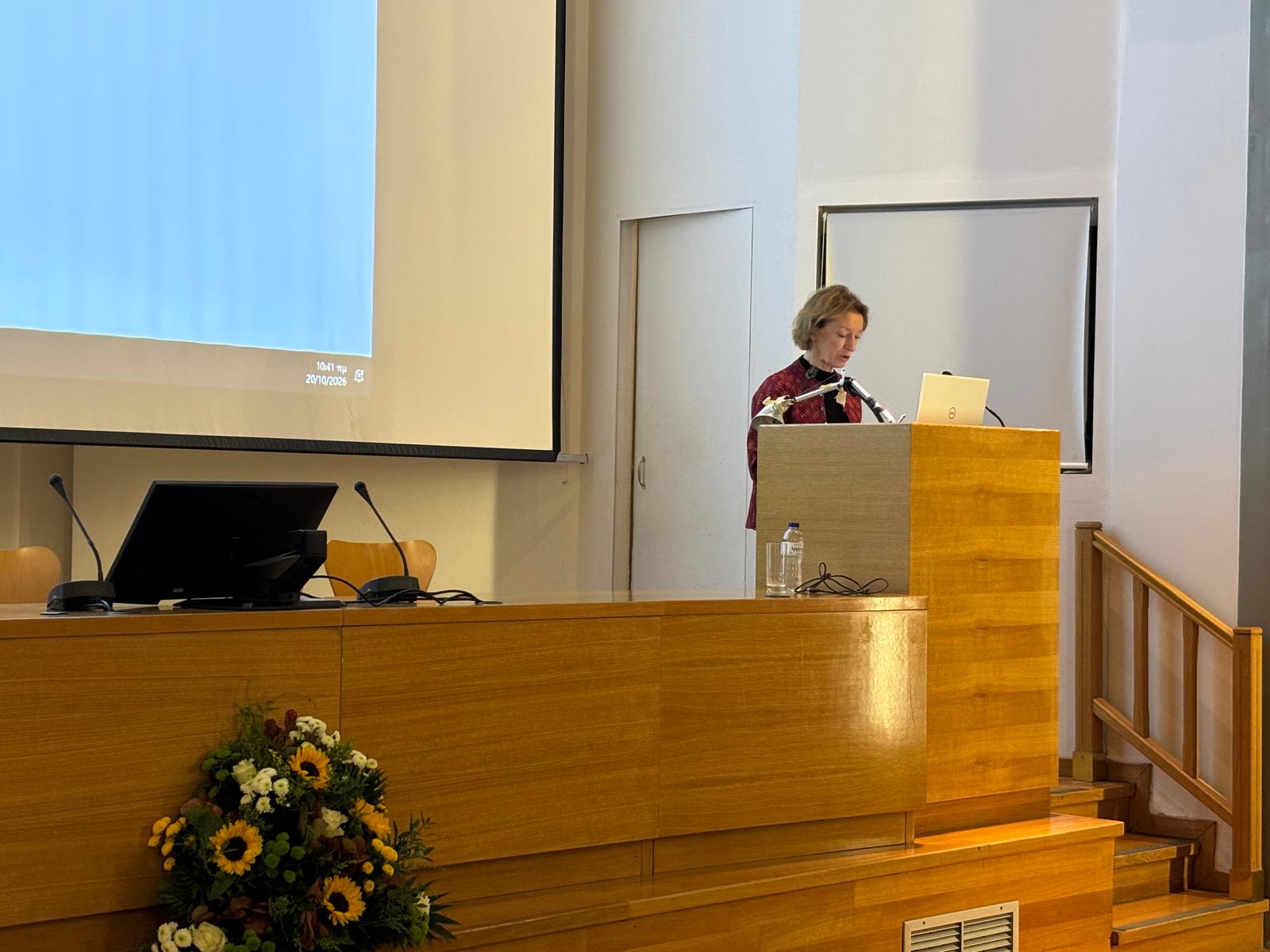
Speaking with researchers during a meeting at the Biomedical Research Foundation of the Academy of Athens, the President of the ERC was clear: the solution to increasing the funding success rate for Greek proposals is not to lower the bar or introduce quotas, but rather to improve the conditions under which research is conducted in our country. Furthermore, as she explained while addressing members of the Academy of Athens, the societal benefits of research are not limited to discoveries alone; they extend to education and the advancement of societies.
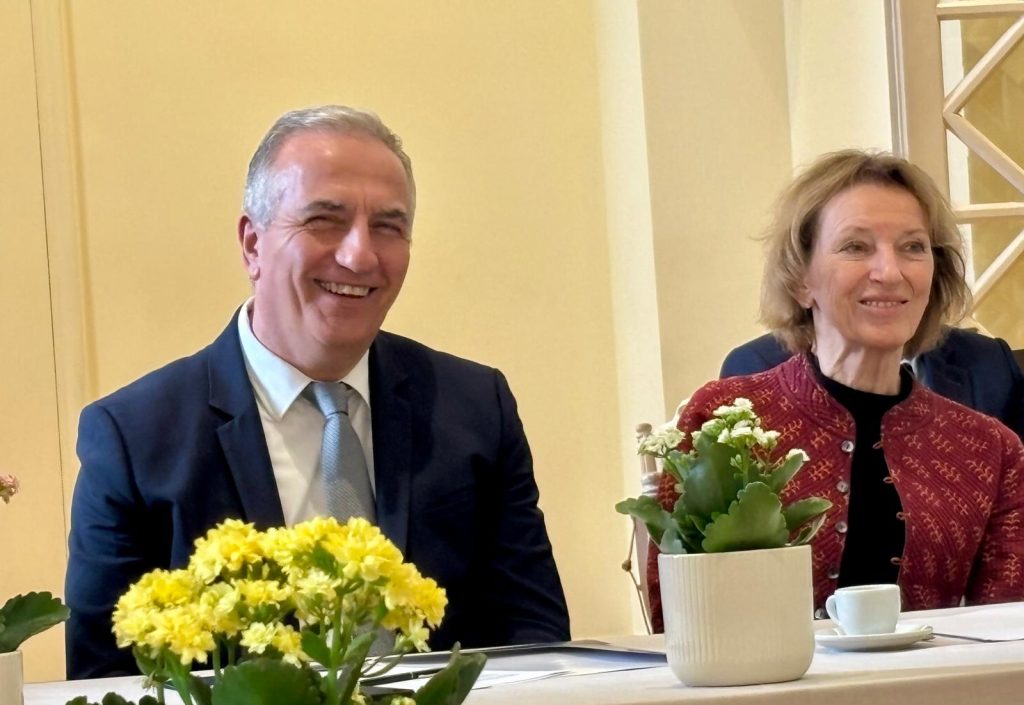
Following her visit to Greece, Ms. Leptin gave an exclusive online interview to “To Vima”, discussing the principles that guide the ERC, the societal contributions of research across all scientific fields, and her satisfaction regarding her meeting with the Prime Minister, where they talked about measures to enable Greek research to flourish.
In a few months, the ERC will mark its 20th anniversary. What are the core principles that govern it, and how would you assess its progress to date?
I will start at the beginning of its history, because it is important to understand why the ERC was established. While the European Union had been funding research for decades, such research was always required to provide added value to the EU—a requirement defined through various conditions, such as mandates for collaborative grants or the participation of industry. This was frustrating for the scientific community, as the science—the research ideas themselves—often ended up being considered less important than these other conditions. Consequently, a group of visionary researchers felt it was essential for the EU to be able to fund simply the best scientific ideas—the best research—because this would enable scientists to make truly novel discoveries. You see, scientists need the freedom to follow their own lines of thought in order to arrive at new discoveries. The visionary individuals, including Prof. Fotis Kafatos who became the first ERC President, persuaded the European Commission to undertake the bold and courageous initiative of establishing the ERC, with the mandate to fund research ideas across all scientific fields—philosophy, religion, engineering, space, you name it! Furthermore, the selection of research proposals was to be carried out solely by scientists, based exclusively on the excellence of the proposed idea. I emphasize this point because, today, we see this very freedom of research being dismantled in the United States—a country with a long-standing tradition of such freedom. Since its inception, the ERC has made selections based strictly on scientific criteria, handled exclusively by scientific experts who exercise completely independent judgment. None of us on the ERC governing body, the Scientific Council—myself included—are privy to the decisions made by the individual peer review evaluation panels until they are publicly announced. This is a principle held sacred and respected by all.
What has been achieved through these principles?
A level of excellence far higher than what could be attained by individual research organizations within separate countries. Having all European researchers submit their ideas and be evaluated on equal terms is somewhat like the Olympic Games, where one competes against the rest of the world rather than against teams within a national league. Through these mechanisms and principles, the ideas selected are always simply the best ones in Europe. This unique philosophy is of paramount importance and is precisely the factor that has driven the success of the ERC. This success is measurable by any metric: whether it is the number of academic publications, the number of companies launched into the market, the number of patents, or the number of individuals trained for successful careers—the ERC excels in all these areas, outperforming any other EU program. And this is precisely because of these principles.
Nevertheless, one could argue that granting an individual scientist 2.5 million euros to spend on their own ideas over five years is an extravagant luxury.
But this would be misleading. Scientists do not sit in a dark room solving esoteric puzzles. They work in research teams, which consist of postgraduate students, postdoctoral researchers, and technical staff. Very often—especially in the experimental sciences—these teams develop new methods, as well as new machinery and instruments. The individuals working on these projects receive training in the process. In fact, they learn much more: they develop critical thinking skills and gain an understanding of how science actually functions. It is not a straightforward path; you test things, they fail, and you have to get back up, try again, devise new approaches, and recognize where you made mistakes. This lies at the core of scientific thinking and is essential for understanding the reality around us. Therefore, the funding does not go solely to the leading scientists who secure grants from the ERC; it also supports the training of all these individuals. Moreover, it is worth noting that not everyone working in such a research team intends to pursue a career in academic research. Some may choose to become business consultants, while others might decide to launch their own companies—and many do. They might wish to enter the public administration sector. This learning is truly significant for them. Consequently, these individuals go on to educate generations of people who possess this understanding and this knowledge. Therefore, the social contribution of funding extends beyond specific discoveries; it concerns the evolution of a society.
Does this also apply to the humanities?
Absolutely! The humanities and social sciences are at least as important—if not more so—than the natural and experimental sciences, precisely because many of the social problems we face today cannot be solved through technology alone. These are issues concerning how we respond to challenges that directly affect our society—such as migration, the impact of artificial intelligence on the labor market, and economic matters. Consequently, having these topics explored by scholars in the relevant fields is to the benefit of our society.
There is a tendency to favor applied research over cutting-edge (fundamental) research. What is your take on this?
First of all, when many things are being developed, it is not at all clear whether they might prove useful at some point. When the foundations for neural networks and machine learning—which led to Artificial Intelligence—were being laid, no one understood what these scientists were doing. To many, they were seen as crazy “nerds” hunched over their computer screens, and people would say, “You shouldn’t be giving money to these people.” And look what happened! I should point out that seeking an immediate contribution to society is a legitimate goal. But does this mean that research lacking an obvious benefit shouldn’t be conducted at all? I believe that society actually has a very deep understanding of the human curiosity that drives a scientist—because it is a fundamental human need. An example I like to use to illustrate this is the black hole. When we saw—for the first time—an image of a black hole millions of light-years away (in 2019), the news made the front page of every newspaper. A black hole doesn’t help anyone at all. It doesn’t cure cancer. It doesn’t make your iPhone work any better. It does absolutely nothing for you, yet people loved it. Because people love space. They love exploration. They love what science achieves. It is a source of excitement and an engaging activity for the human mind. We must not forget that!
Nevertheless, there is always a budget, and choices have to be made. How, then, is investment in research justified?
Science possesses fantastic potential and power, and policymakers should harness this for the benefit of all our citizens. That is the right approach. We must, therefore, support the application of scientific knowledge—from physics-based innovations like solar panels or more efficient wind turbines, to the development of vaccines and preparations for the next pandemic—all of which require investment. We must also address agriculture and nutrition, and try to ensure that everyone across Europe reaches a similar level of wealth and prosperity. Personally, I do not know how to strike the right balance between these various needs—and, fortunately, I am not a politician who has to make such choices. I would, however, like to point out one thing: the ERC receives 17% of the budget for the EU research and innovation Horizon programme. If you look at the applications submitted to the European Innovation Council—which funds ideas to bring them to market—you will see that more than half of those that received funding originated from ERC grantees. Therefore, while I am not going to tell any politician how to allocate funds, I would point out that this 17% share achieves far more than the remaining 83%. That speaks for itself. And those who call for a reduction in the research budget to address immediate needs are funding the present at the expense of the future.
We cannot discuss the future without addressing Artificial Intelligence. The need to set boundaries on its use is often countered by arguments along the lines of: “If we don’t do it, China will.” What is your take on this?
I have never understood that argument. It reminds me of a friend of mine, years ago at a disco, who found a twenty-euro note on the floor in the restroom and proudly told us she had kept it. I said to her, “You shouldn’t have. You should have handed it in at the bar or left it there so the person who lost it could get it back.” She replied, “Well, if I hadn’t taken it, someone else would have.” How can “someone else is going to do something wrong, so I might as well do it too” serve as an ethical guiding principle? That argument simply doesn’t hold water! Besides, AI is not a domestic technology—it doesn’t stay confined within a country’s borders—and I don’t believe China would pursue something from which it couldn’t also protect itself. Furthermore, I am certain that among the grant applications we are currently receiving, there must be projects from the humanities focused on the regulation of AI.
You described how research should function in order to be useful to society. Can the above points apply at the national level—specifically in the case of Greece?
All researchers accept that they must compete for grants. It is part of how science—good science—is conducted. Nowhere in the world is someone guaranteed, at the age of thirty, that they will receive permanent funding simply because they completed a strong PhD or postdoctoral project. Everyone knows they must continue to compete for their funding. But if you succeed in securing a grant this year—hiring a postgraduate student, a postdoctoral researcher, and a technician to carry out the work—and the project yields excellent results, only to find that you are unable to apply for a subsequent grant, the outcome is catastrophic! This lack of continuity—these interruptions—destroys everything that has been built. Discontinuous funding opportunities are a problem faced by certain countries, and it is a point of complaint among Greek researchers. I understand that the country has gone through a difficult economic period and may not be in a position to increase investment in research; however, I believe it is better to have fewer resources with continuity than to rely on intermittent, discontinuous funding.
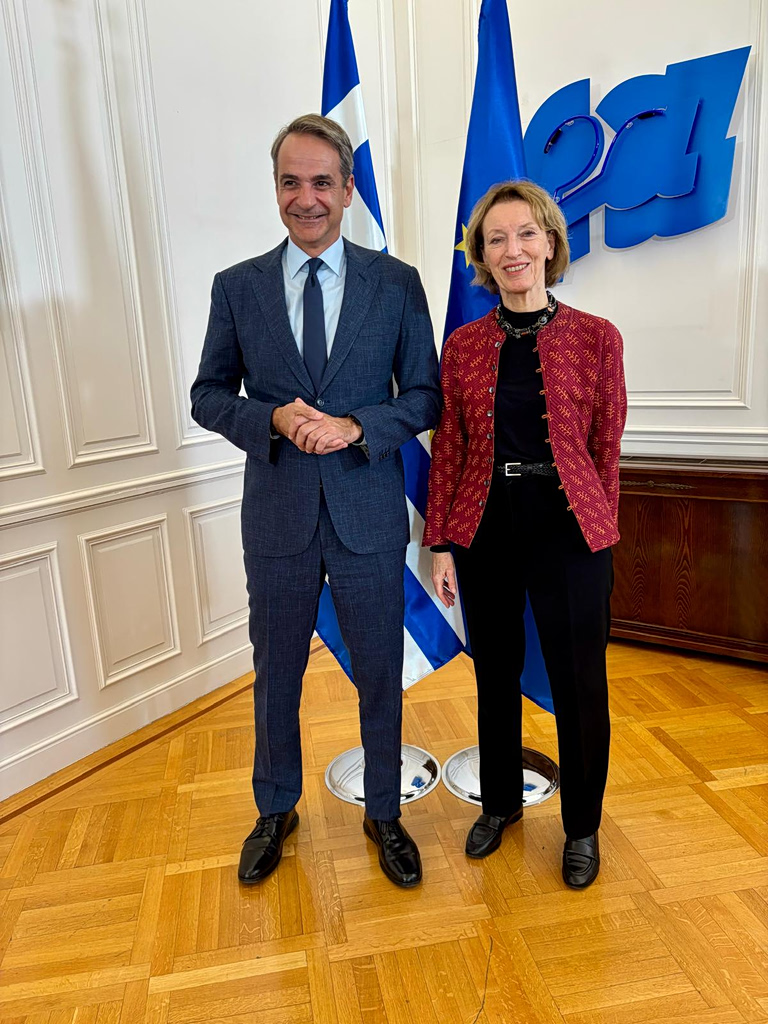
You met with the Prime Minister. What came out of this discussion?
My visit left me very reassured that both the minister and the prime minister truly have the resolution of this problem on their agenda. I therefore hope there will be a recognition that, if Greece wishes to compete internationally at a higher level, then continuity in research funding is a prerequisite.