 Μake us preferred on Google
 Greece’s first astronaut will travel aboard a SpaceX vessel chartered by France, three sources familiar with the planning confirmed exclusively to in.gr, just ahead of the first International Space Summit that Paris is hosting this week to strengthen Europe’s autonomy and sovereignty in space.
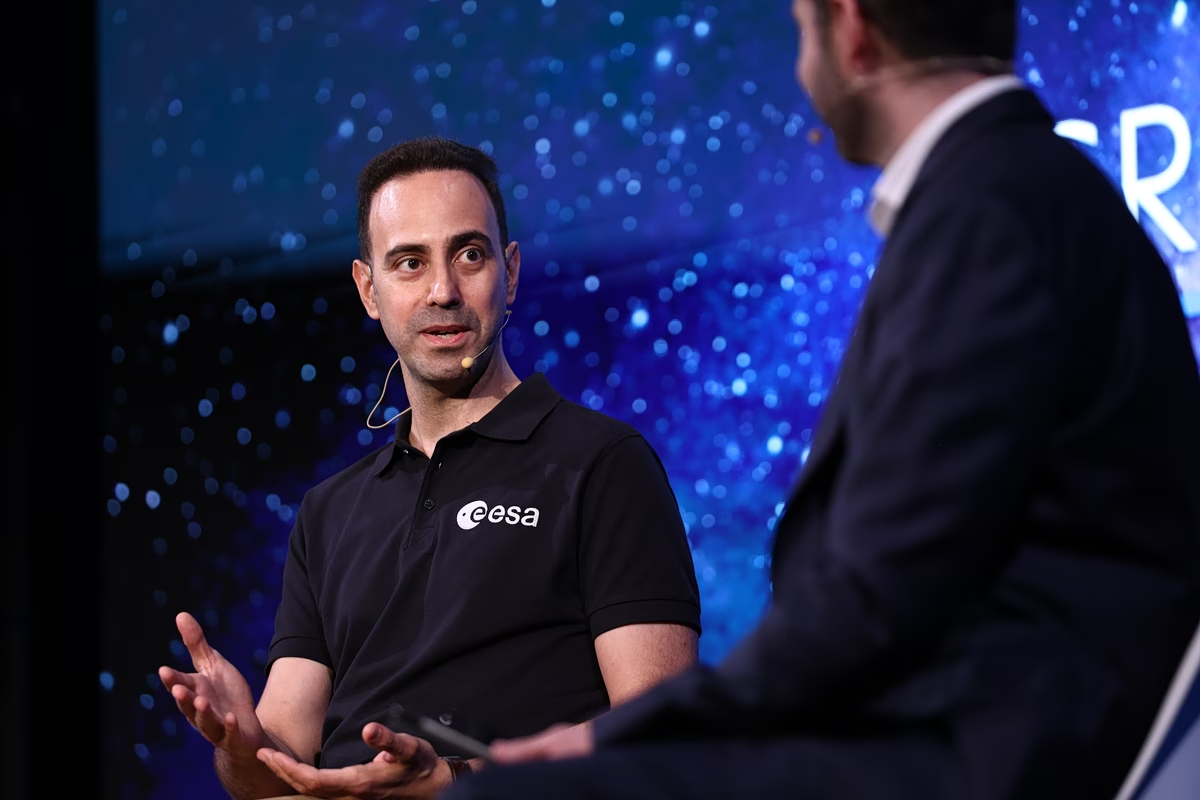
Physician Adrianos Golemis, an astronaut with the European Space Agency (ESA), will take part in the commercial PAM-6 flight, which the American company Vast has been contracted to organize on behalf of its clients.
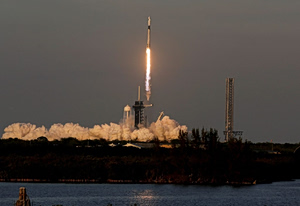
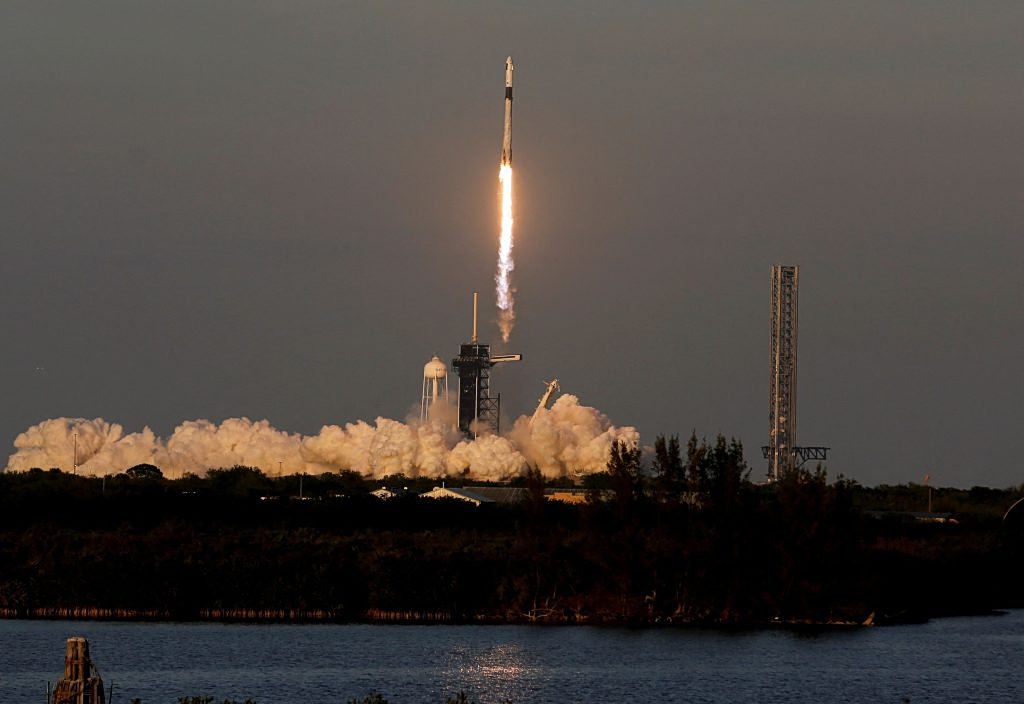
SpaceX’s Crew Dragon spacecraft is scheduled to launch “no earlier than summer 2027” on a two-week mission to the International Space Station (ISS), during which Golemis will carry out experiments on behalf of Greek research institutions and possibly private companies as well.
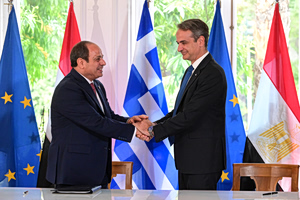
The agreement will likely be announced by Prime Minister Kyriakos Mitsotakis at the summit, which runs September 9 to 10, according to two of in.gr’s sources.
The prime minister had already previewed the first flight of a Greek astronaut when presenting the country’s national space strategy, saying the mission would take place “in the next two years.”
Speaking to reporters in Paris, Lionel Suchet, the operations director of France’s space agency CNES, declined to confirm whether the Greek astronaut would fly on PAM-6, but acknowledged that “there have been discussions on the matter.”
A central goal of the summit is to strengthen European autonomy and sovereignty in space and to pursue new international partnerships, a geopolitical issue that became urgent after the war in Ukraine led to the suspension of ESA’s cooperation with Russia. The EU is also moving forward with IRIS², a constellation of roughly 400 satellites intended mainly for secure government communications, positioned as Europe’s answer to Starlink, the SpaceX satellite communications network that Ukraine currently relies on to operate drones targeting Russian assets.
The summit appears to have irritated Washington, as SpaceX and other American space companies pulled out of the event following reports that U.S. President Donald Trump pressured them to withdraw.
A European crew
On the PAM-6 mission, Golemis will fly alongside French commander Thomas Pesquet, who has said the flight could have an entirely European crew, and Czech pilot Aleš Svoboda. A fourth astronaut may be announced at the summit.
While the cost of the mission remains unclear, each seat on the spacecraft is expected to cost at least 60 million euros. However, ESA, which serves as the institutional body overseeing the mission and technical intermediary, will return part of that sum to Greece in the form of contracts awarded to Greek companies, said Yannis Daglis, professor of space physics at the National and Kapodistrian University of Athens and a board member of the Hellenic Space Center, in comments to in.gr.
The mission of Greece’s first astronaut, Daglis said, will help the country’s effort to become part of the space economy. “The mission also carries symbolic strategic weight. A country that aspires to be part of the club of advanced nations needs to be visible,” he said.
“We’re also very interested in the inspiration a national astronaut provides. We’ve seen how significant an effect this has had in other countries […] We shouldn’t underestimate how important that inspiration is for young people,” he added.
Autonomy and a space shield
The International Space Summit, which is expected to draw around 2,000 participants from more than 100 countries, was a joint initiative of France and Germany, though German Chancellor Friedrich Merz will not attend due to a packed schedule at home. Germany will instead be represented by Research, Technology and Space Minister Dorothee Bär and Defense Minister Boris Pistorius.
On the summit’s second day, it was confirmed that European Commission President Ursula von der Leyen will speak immediately after French President Emmanuel Macron. She is expected to announce the relaunch of the “European Space Shield,” the EU’s plan to protect European space infrastructure from interference, cyberattacks, hybrid threats and other hostile actions.
“We’re in a tense geopolitical environment, marked by weakening multilateral cooperation, geopolitical competition and the emergence of new players, especially private ones, in the space sector, which is accelerating developments in this field,” Benjamin Haddad, deputy minister for Europe and foreign affairs, told reporters in Paris.
“Organizing this summit reflects the particular emphasis we place on developing European strategic autonomy in space. One of the key issues we must address as Europeans is maintaining our autonomous access to space. That’s why in recent years we’ve invested in European solutions for launch systems,” he said.
Ahead of the summit, ESA Director General Josef Aschbacher described the event as “a stepping stone for shaping Europe’s future,” directly linking it to ESA’s interim ministerial meeting in December, where Europe’s strategy for coming years will be discussed.
Aschbacher, who has stressed that Europe must achieve autonomy in space, will present at the summit “a practical roadmap to secure Europe’s future in space exploration, while calling on leaders to decide how committed Europe wants to be in shaping that future.”
Reuters reported last week that ESA is now examining the possibility of launching European astronauts using European rockets instead of relying on SpaceX. The matter, which requires a political decision, is expected to be discussed at the summit.
On Monday, the CEO of the Franco-German group ArianeGroup, Europe’s largest space company, said the new European Ariane 6 rocket “is technically fully capable of crewed missions.”
For Greece, Golemis’s mission will mark both an entry into crewed space activity and an example of Europe’s current dependence: the first Greek astronaut will travel aboard an American spacecraft launched by an American rocket, even as Europe debates how to secure its own autonomous access to human spaceflight in the future.