 Μake us preferred on Google
With the issuance of a four-month NAVTEX restarting the surveys for laying the Greece-Cyprus electricity cable (GSI), Athens formally closes a long and difficult chapter that began when the Italian vessel Ievoli Relume halted its work off Kasos in July 2024, following Turkish intervention.
In practice, however, Ankara reacted immediately, as expected, both by issuing a counter-NAVTEX and through its Foreign Ministry. The GSI project has once again become the trigger that brings to the surface the deep differences between the two sides over the major issue of maritime boundaries in the Eastern Mediterranean.
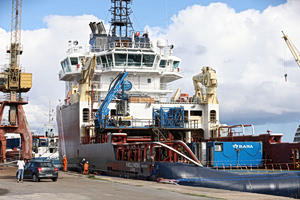
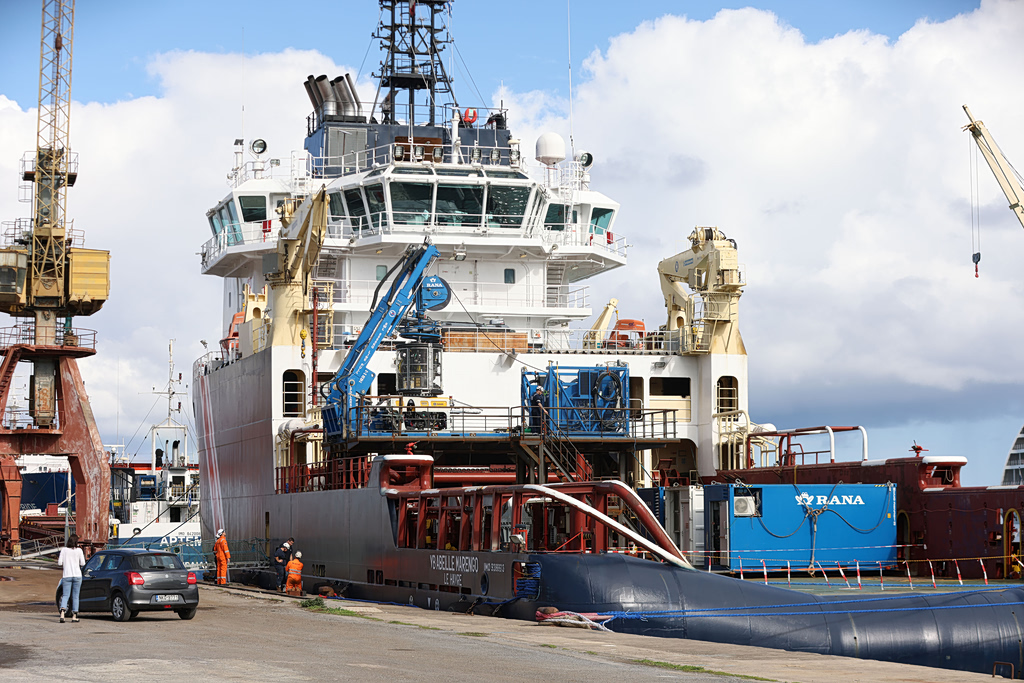
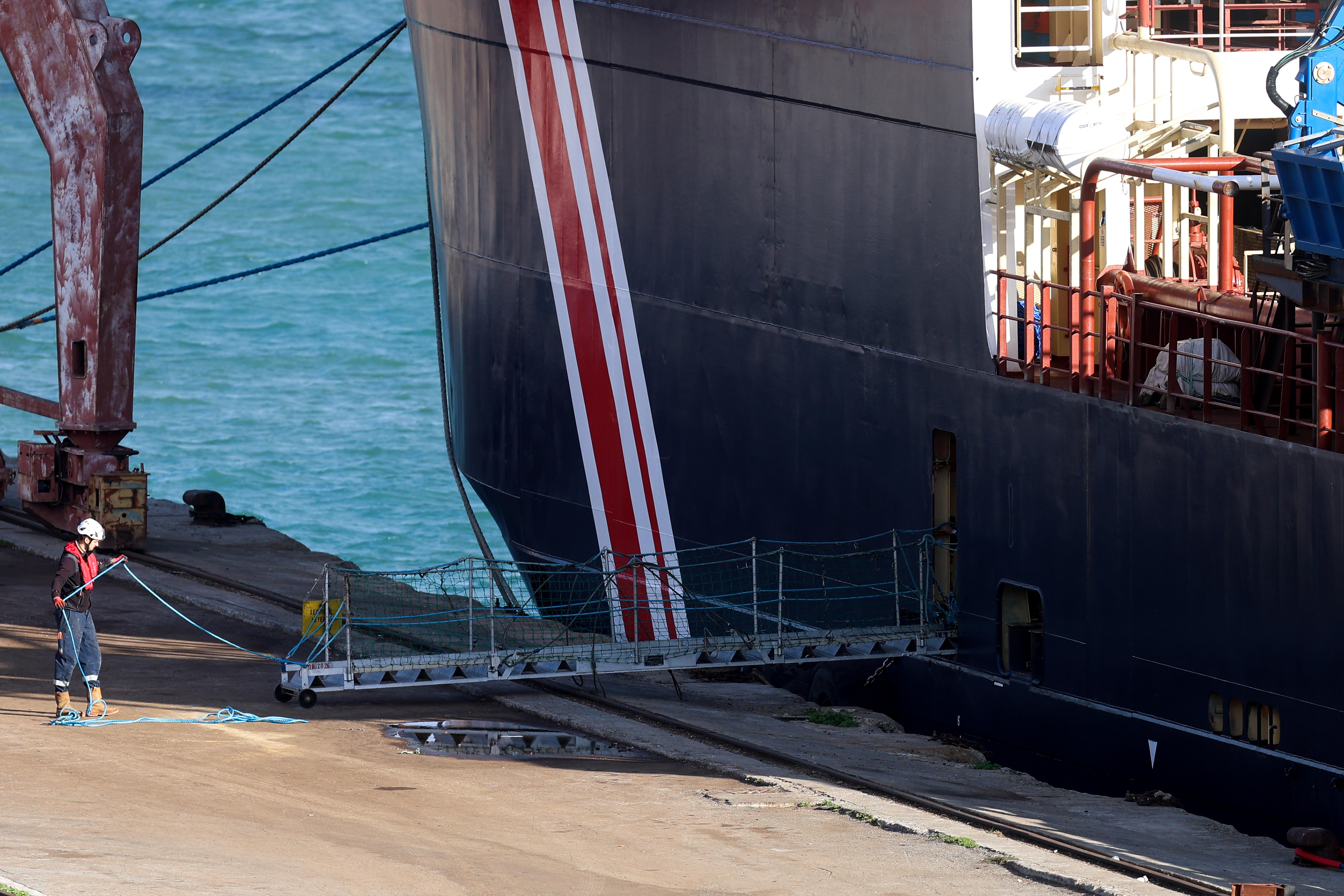
As the French vessel Abeille Marengo now heads outside national territorial waters, all eyes are on Turkey. The possibility of the area becoming militarized remains open, but Greece’s political leadership believes tensions will stay under control and at the diplomatic level.
Under the United Nations Convention on the Law of the Sea (UNCLOS), only the coastal state on whose continental shelf the cable-laying work takes place has the authority to grant a survey permit. In this case, since the cable passes exclusively through areas of the Greek and then the Cypriot continental shelf, Athens and Nicosia issued their NAVTEX almost simultaneously. Coordination between Greece and Cyprus is reportedly complete, with the two foreign ministers, Giorgos Gerapetritis and Constantinos Kombos, speaking once again yesterday afternoon.
With its counter-NAVTEX, Turkey was quick to set out its long-standing revisionist positions. According to these, parts of the areas reserved for the surveys belong to the Turkish continental shelf. The Greek NAVTEX is described as illegal (“unauthorized”), and Turkey states that any activity in the area requires coordination with Turkish authorities.
This last point is described as “key,” as the coming hours will show whether Ankara is simply claiming jurisdiction in the Eastern Mediterranean or preparing to stop the vessel’s work using military means if it does not receive a permit request. Athens, for its part, has made clear that if necessary, it will respond “operationally” in the field in a similar way.
A few hours after the counter-NAVTEX, Turkey’s Foreign Ministry repeated, in a clearly more political and official tone, that the activity planned by the Abeille Marengo is illegal and unauthorized, as it is being carried out on the Turkish continental shelf. The statement also noted that the process of obtaining Turkey’s necessary consent has not yet been completed. Indirectly but clearly, Ankara is therefore suggesting that talks between Paris and Ankara are still ongoing. Turkey also expressed its determination to protect its sovereign rights.
Commenting on the Turkish Foreign Ministry’s statement, diplomatic sources in Athens stressed that “the work of the French research vessel Abeille Marengo will proceed according to the company’s operational schedule, in Greek and Cypriot territorial waters and in areas of the Greek and Cypriot continental shelf.” The same sources noted that “the international law of the sea is clear and leaves no room for different interpretations.”
On the legal side of the Greek-Turkish dispute, Ankara is once again attempting to confine the Greek islands to 6 nautical miles of territorial waters and repeats its claim that the Turkish continental shelf cuts the Aegean in half, including, in the Eastern Mediterranean, the areas east of the 28th meridian. It also points to the coordinates it submitted to the UN in March 2020 as the outer limits of the Turkish continental shelf. The counter-NAVTEX makes no reference to the Turkish-Libyan memorandum, even though the cable’s route also crosses part of the area covered by that illegal agreement.
According to the schedule, the Abeille Marengo will operate from November 6 to 19 on the Greek continental shelf and then on the Cypriot continental shelf. The NAVTEX has been extended until March 6, 2027, at the request of the French company. Under the original plan, the Abeille Marengo would have been active in the Eastern Mediterranean until December 31, but the delay in issuing the permits apparently led to the extension, although it is not expected to be used in full.
Still, the relatively long survey period suggests a drawn-out dispute, unless the modus vivendi that Paris has been working hard to reach in recent weeks is achieved. French diplomats are in constant contact with Athens and Ankara so that the project can continue and be completed without disruption. The French investment firm Meridiam, the GSI’s majority shareholder, is also pushing in this direction, with the project’s financial rather than geopolitical aspects as its top priority.
As the Foreign Ministry announced yesterday, Giorgos Gerapetritis issued the permit decision as soon as the required procedures were completed, and November 6 was nonetheless set as the project’s restart date, as first reported by tovima.gr.
The Greek side has made it absolutely clear that no permit request will be submitted to Turkey, though it has not objected to Ankara possibly being informed of the vessel’s movements. Since there is no such requirement under international law, however, such a move should be seen as a sign of “goodwill” and “understanding,” aimed both at preventing an escalation of tensions between Greece and Turkey and at allowing the surveys to continue smoothly.