 Μake us preferred on Google
If Athens belongs to its residents, why does it seem to cater more and more to those who consume it? Where did its complexity, intensity, fragility, contradictions and unruly beauty go? After the pandemic and the onslaught of mass tourism, shops are closing, trades are disappearing, neighborhoods are being transformed, and the capital is gradually turning into a “polished illusion,” a tourist package ready for consumption, wrapped in the packaging of classical grandeur.
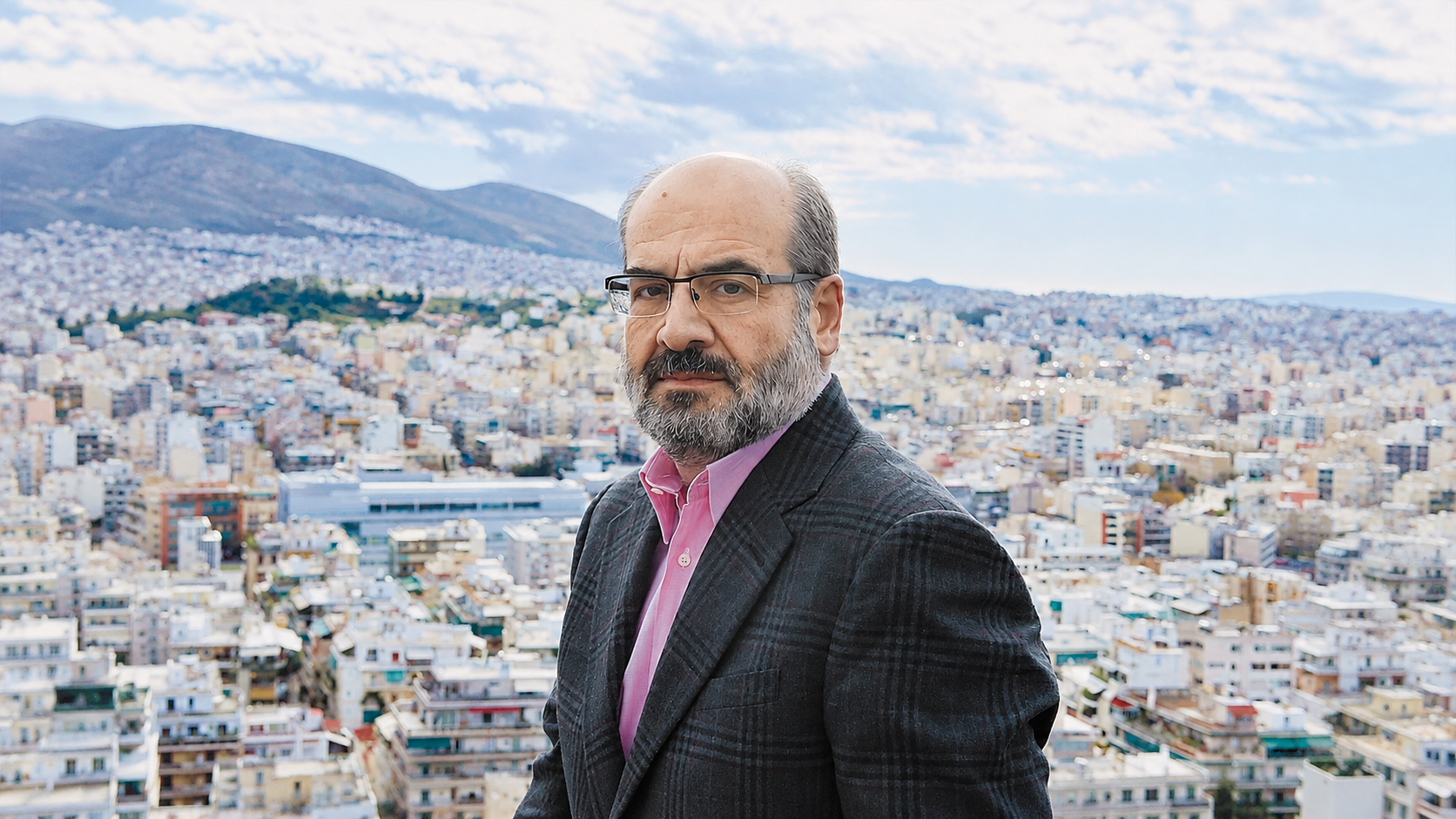
In his latest book, “It Happened in Athens: Archaeology, Heritage, Urban Transformations” (Published by Ekdoseis tou Eikostou Protou), bold thinker and professor of Classical Archaeology at the National and Kapodistrian University of Athens Dimitris Plantzos writes about the “de-mapped” urban life of a city now suffocating between its fenced-off monuments, illegal graffiti, abandoned buildings, Airbnbs, gentrified blocks, archaeological walkways, food halls, poverty, exclusion and disenchantment.
“I didn’t intend to write a book about Athens,” he admits, “but the proposal came from the University of Coimbra Press in Portugal, which published the book last year under the title ‘Athens Demap.’ It’s about how 21st-century Athens tries to stand on the legacy of ancient Greek heritage, neoclassicism and the history of previous centuries, while in essence it is being destroyed by its own success.”
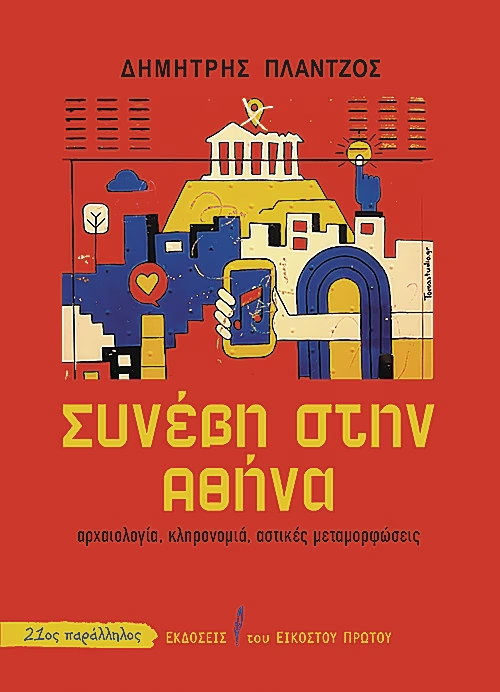
Professor Platzos’ New Book titled: “It Happened in Athens: archaeology, heritage, urban transformation”
The Antiquity-Centered Narrative and Its Exclusions
The city’s current urban dead end bears the mark of a long-standing ideological choice. The powerful narrative linking modern Greece to classical antiquity is at the center of the professor’s research.
“In the 19th century, Athens chose to embrace its classical heritage and base its worldview on it,” he explains, noting that this choice inevitably led to historical omissions and neglect, since choosing to promote one central narrative means inevitably setting something else aside. “From the moment we imagined Greece, and especially Athens, as heterotopias of monuments in order to consolidate our national identity, we ended up with a narrative of exceptionalism, of ‘only us’ and ‘only for us,’ which is a mechanism for excluding others,” he says.
Today, although the pursuit of inclusion makes this rigid narrative problematic, appeals to the classical past remain strong. Introducing the concept of “archaeopolitics” into public debate, Dimitris Plantzos exposes the modern-day exploitation of our heritage: “When you name a defense agreement with Israel ‘Achilles’ Shield,’ or call an operation involving the inhumane treatment of people ‘Xenios Zeus,’ you are using heritage as a veil to hide political aims.”
From the Metro to the Language of Graffiti
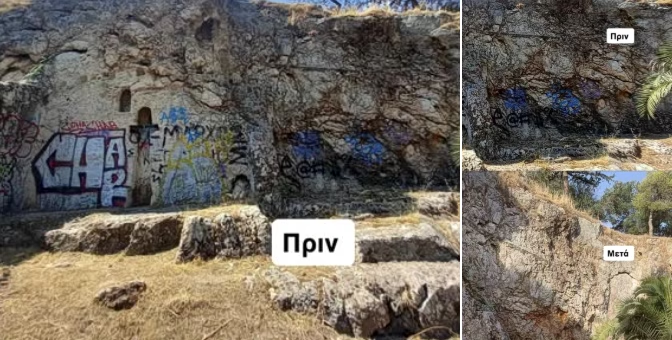
Going beyond the traditional focus on excavation finds, Plantzos’s perspective extends to the living materials of the urban fabric: graffiti, closed buildings, makeshift structures and the physical strain of riding the metro.
Archaeology is thus called on to break out of its classical role by engaging directly with urban sociology. “Since I went to university, archaeology has changed. It is no longer only the archaeology of ancient art and excavations, but also the endurance of monuments: their conservation, preservation, promotion, use and protection from abuse. It is also the archaeology of the present, meaning the way materials, messages and the built environment are organized, and how we as citizens live and behave within it.”
In this context, the language of graffiti takes its place in the book as an unruly, living urban dialect, the fleeting fingerprint of an active community struggling to claim visual space against the shop window being imposed on the city. At the same time, modern infrastructure reflects social pressure, with the metro serving as undeniable evidence of daily strain: “It is the most serious sign of how unlivable the city is becoming for working people, with extremely infrequent trains and dangerous overcrowding on the platforms.”
In response to these conditions, residents are reshaping their routes and creating pockets of small-scale resistance. Even so, as Plantzos says, “we have allowed ruthless neoliberalism to intervene in the essence of the cities we live in,” pointing to studies showing that 85% of short-term rental properties have been handed over to corporate groups.
A Dangerous Monoculture
The book’s epilogue was written in 2024 in New Orleans, during a series of university lectures. “I noticed that historic cities, such as New Orleans, Alexandria, Venice, Barcelona and Athens, are forced to constantly perform their authenticity in a way that cheapens their own cultural capital. It is the compulsion to constantly play yourself in order to sell yourself,” he says.
His criticism then turns to tourism growth indicators, taking apart the argument that the numbers are cause for celebration: “For the book, I studied the published data from ELSTAT. Although the total number of tourists rises every year, the indicators for revenue and length of stay point to a decline in tourism in the future.
“It’s frightening, but seasonal employment in tourism, direct or indirect, accounts for 50% of the workforce. Tourism has been allowed to make up a much larger share of GDP than it should if we are to say we have a healthy economy.”
When tourism is a monoculture, the next crisis risks bringing collapse, especially in an era of extreme weather events. “We are moving blindly because no one has ever carried out a serious sustainability study of Greek tourism. Some of us talk about the need for gradual de-touristification to reduce the phenomenon worldwide, if we want to survive. But no government wants to hear it,” he concludes with disarming honesty.