 Μake us preferred on Google
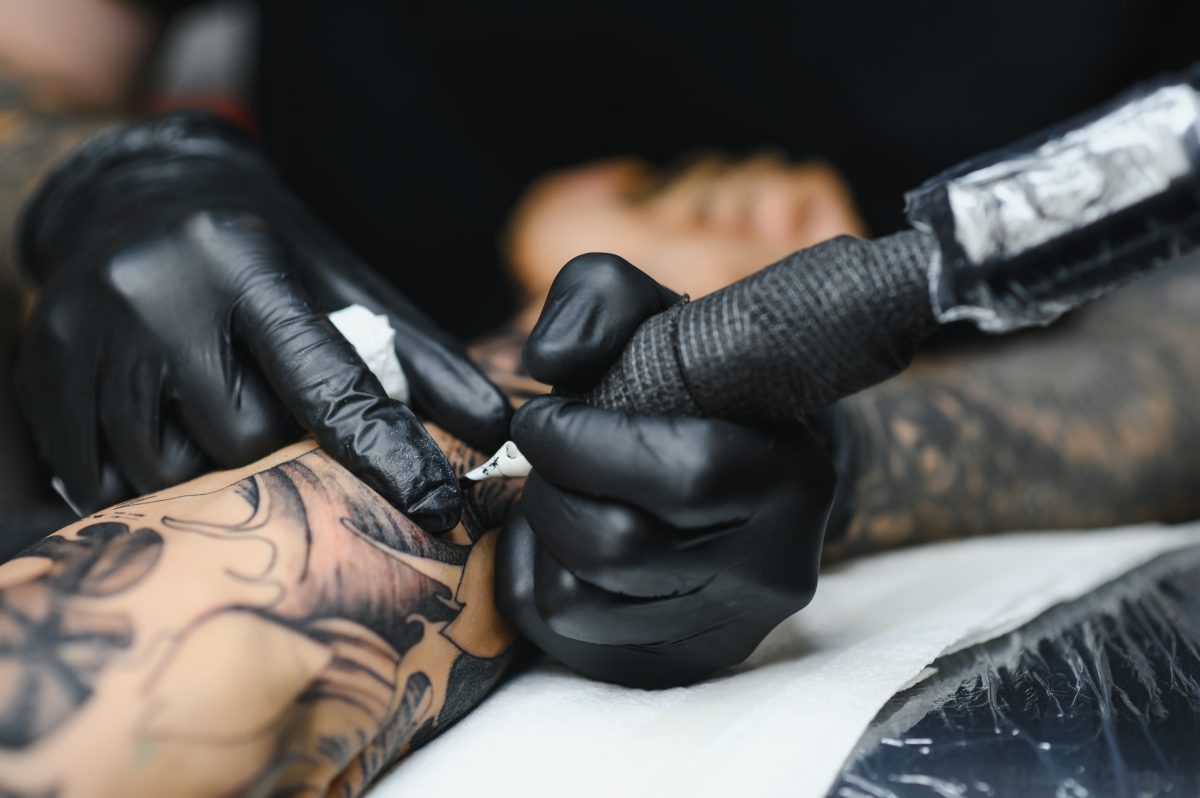
A basic, beginner-friendly tattoo kit can cost as little as €100, and includes a basic tattoo machine, also known as the ‘gun’. Margot Robbie famously got her hands on one such machine during the final weeks of filming Suicide Squad and gave any willing costars and crew small flash tattoos. As it turns out, getting the gear is only fractionally easier than opening your own parlor in Greece.
Opening a tattoo studio in the country requires a few basic permits and health inspector visits, none of which confirm one’s ability to tattoo someone’s skin properly. Up until last year, tattoo businesses lacked any statutory protection-for either the customer or the service provider. At press time, the tattoo sector is still operating under the same legal framework as barbershops and beauty parlors. It was only in December 2025 that an amendment issued by the Ministry of Health put some health code specifications in place for tattoo parlors in Greece.
Still, they barely scratch the surface of what is truly needed to secure a safe, sterile tattooing environment that meets European and global standards.
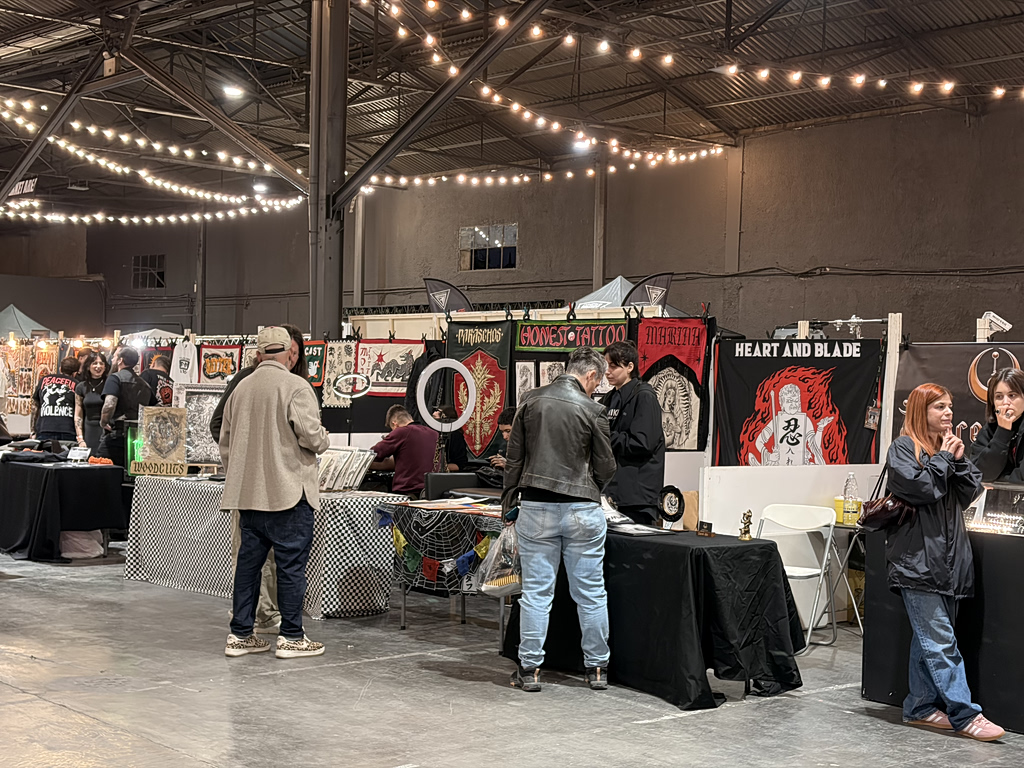
A few of the booths at this year’s Tattoo Expo. Photo by Nansy Samaka for To Vima International Edition
During the 10th Athens Tattoo Expo, TO VIMA International Edition caught up with a few artists to gauge their views on how the tattoo industry in Greece is evolving. A common thread ran through their varied experiences: the importance of distinguishing between professionals and novices.
Formalizing the learning curve
The consensus among industry veterans is that bureaucracy and health inspections do not make for a reputable artist. “Tattooing is a profession that takes years to master. It takes time and some degree of financial sacrifice to move from apprentice to skilled professional,” according to Giannis Andreou, known professionally as Dane, who has been in the business for over 17 years.
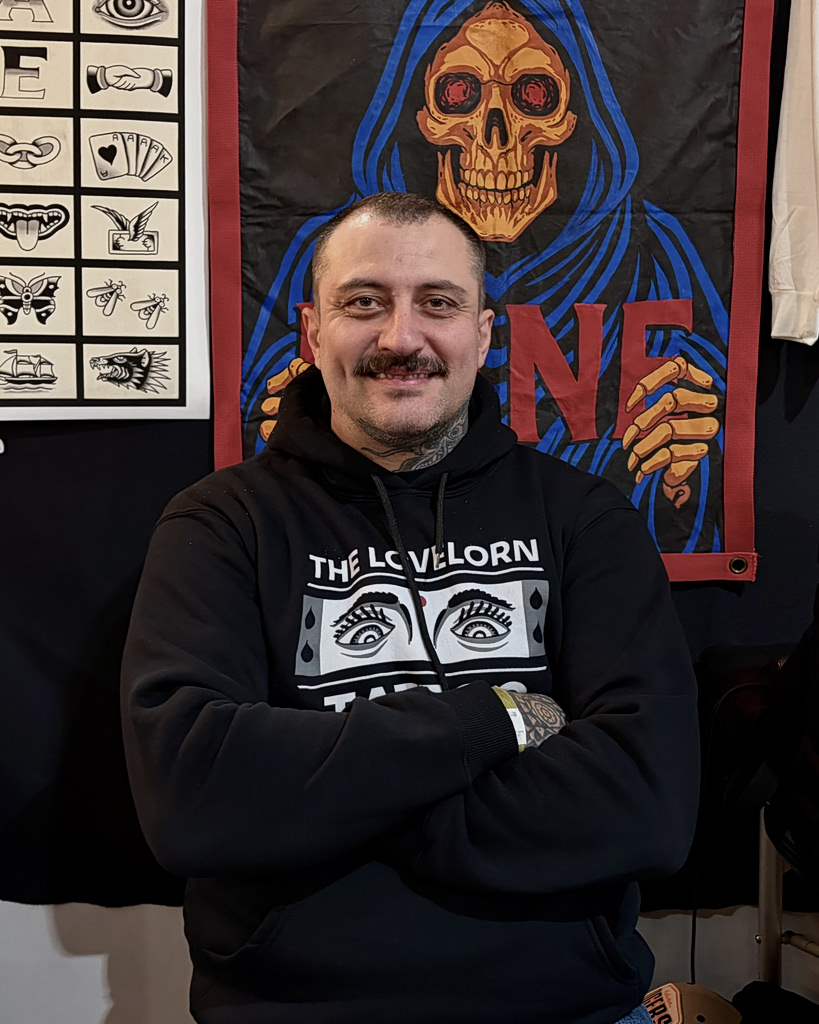
Giannis Andreou, known professionally as Dane, pictured at his booth during the 2026 Tattoo Expo. Photo by Nansy Samaka for To Vima International Edition
Speaking with TO VIMA International Edition about what Greece’s tattoo scene looks like today, he seems positive yet cautious. “The younger generation have better access to information and enter the industry faster, but you can’t just wake up, pick up a tattoo machine and become an artist.”
Apprenticeship in established tattoo parlors has long been considered the first step for anyone wanting to become a reputable tattoo artist. In an effort to legitimize these skills, institutions like the Athens Tattoo Academy offer certification in the craft with guidance from industry professionals. This change hasn’t been warmly received by all artists, however, as some believe nothing could replace on-hands knowledge in a reputable studio. “There is no better way to learn than shadowing and studying under a professional,” another artist said, adding: “Beginners need a serious mentor.”
View this post on Instagram
Oversaturation, change and risks
Athens and Thessaloniki are two of the biggest tattoo hubs in the country. The Greek capital alone has more than 200 registered tattoo studios.
Dane opened his The Lovelorn Tattoo in 2021. “I believe the tattoo industry in Greece is doing better than the industry internationally. I travel often and lived abroad for a few years, and I’ve noticed that demand here hasn’t dropped,” he said.
Despite consistent difficulties, including the big dip in business during the COVID pandemic, the tattoo sector in Greece continues to grow.
View this post on Instagram
Matina, a tattoo artist who works in the Sayagata Tattoo Studio in Thessaloniki, has noticed that most clients still come through recommendations rather than research. “Word of mouth is a lot more powerful in Greece than abroad. Clients won’t necessarily come to you for your specific tattooing style, but because you did their friend’s tattoo.”
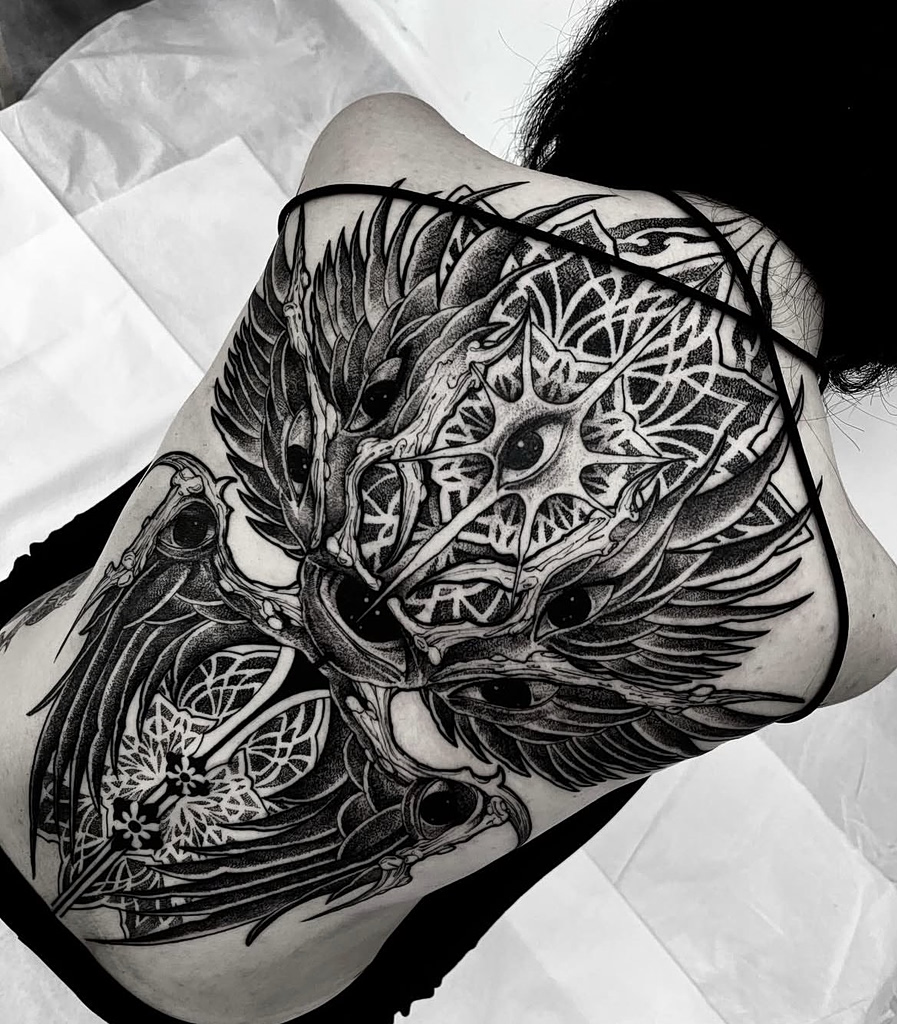
Large backpiece created by Matina Macabre, Sayagata Tattoo studio. Photo courtesy of Matina Macabre
The use of AI has also brought about new challenges for artists, as Matina notes: “Some people want an exact AI-generated design with no alteration on the artist’s part. Excessive use of AI will destroy original tattoos as we know them.”
View this post on Instagram
New legislation enacted in 2025 has specified all the tools that are required to operate a tattoo parlor in Greece. Additionally, the minimum floor space required by law for a tattoo workstation is now set at 15 square meters. There are vague rules on proper hygiene and sterilization techniques, which mention using only disposable materials, but no actual rule guidelines on what proper sterilization entails.
Tattoo artist Sotiris, the co-owner of Fabrika Tattoo Aesthetika who goes by AMOK professionally, spoke on the importance of setting and imposing clear sanitation guidelines. While every studio operates in accordance with what is required by law, industry veterans go above and beyond the base standard through shared experience.
View this post on Instagram
“Health services inspect us, but they do so under a very generalized rulebook, it’s simply not effective for our industry.” One of the biggest concerns that comes with vague rules is how open they are to individual interpretation. “Yes, it’s important to prefer a studio over getting tattooed in a household setting, but not all studios are created equal.”
As Sotiris points out, “unfortunately, the local industry is all over the place: each tattoo parlor operates in line with the personal ethics and standards of the individual owner.”
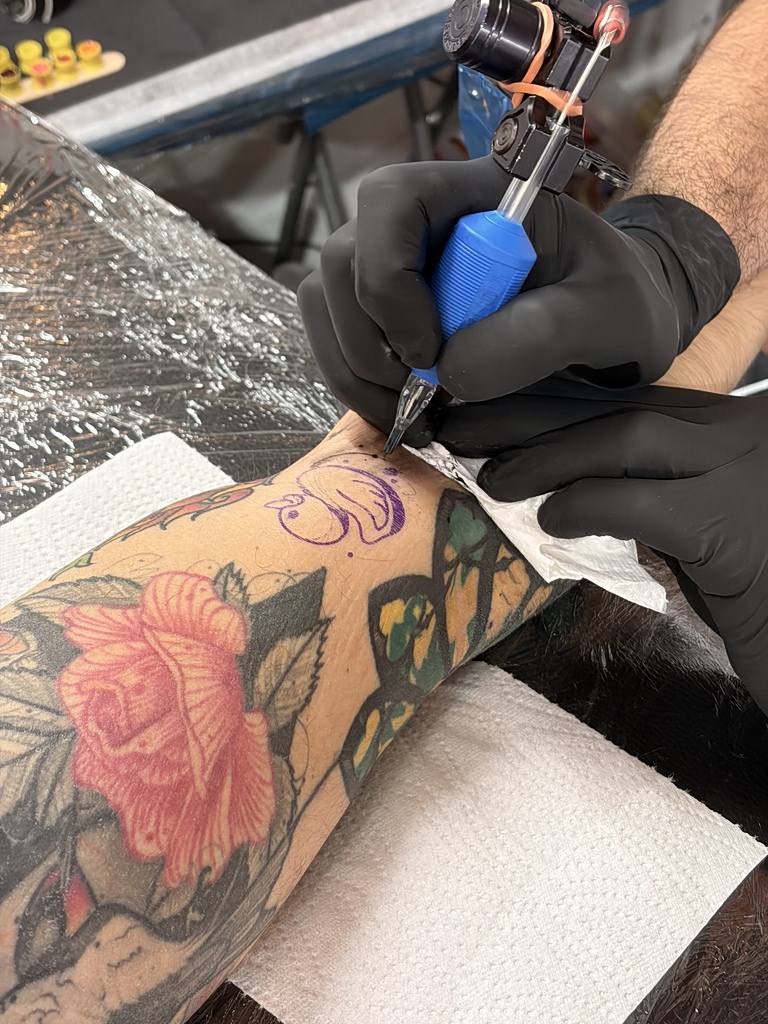
Sotiris tattoos a small duck on a client during the 2026 Tattoo Expo. Photo by Nansy Samaka for To Vima International Edition
A place of one’s own
The Greek Tattoo and Piercing Union seeks to address all of the above issues by bringing the community together and separating the professionals from the wannabes and fly-by-night operators. With just 120 members at present, it’s still in its early stages.
View this post on Instagram
TO VIMA International Edition spoke with Union President Kyriakos Valassis and Treasurer Elpida about the organization’s core mission. “After the pandemic, tattoo studios were the last businesses to reopen. If we had proper representation, it would have been easier to advocate for the sector,” Kyriakos said.
More changes in legislation are imminent, according to reports, and the Tattoo and Piercing Union is hoping to help institute proper safety regulations in collaboration with state officials. On her part, Elpida spoke about the union providing a shield for tattoo and piercing artists: “We are looking to recruit as many members as possible, so that we too can have a voice in future legislative changes that affect our industry.”
Corrections & Amplifications: Sotiris is the co-owner of Fabrika Tattoo Aesthetika, together with artist Leah Tattooer.