 Μake us preferred on Google
The endless bubbles of champagne – so abundant that they almost cover the dress of the woman holding a full glass of the sparkling wine – would give rise to what may be the most famous poster artist of the Belle Époque. He was the same artist who became an overnight sensation, prompting people the very next day to do whatever it took to get their hands on one of his works, even at the risk of damaging it. In the same company was a red-haired woman in a yellow dress, capable of selling anything from a cabaret performance to soap and gasoline. And among them was a performer who may not have been one of the most celebrated figures of Paris’s Golden Age, but whose striking depiction on a poster found its way into a work by the artist who would later be hailed as the greatest of the 20th century: Pablo Picasso.
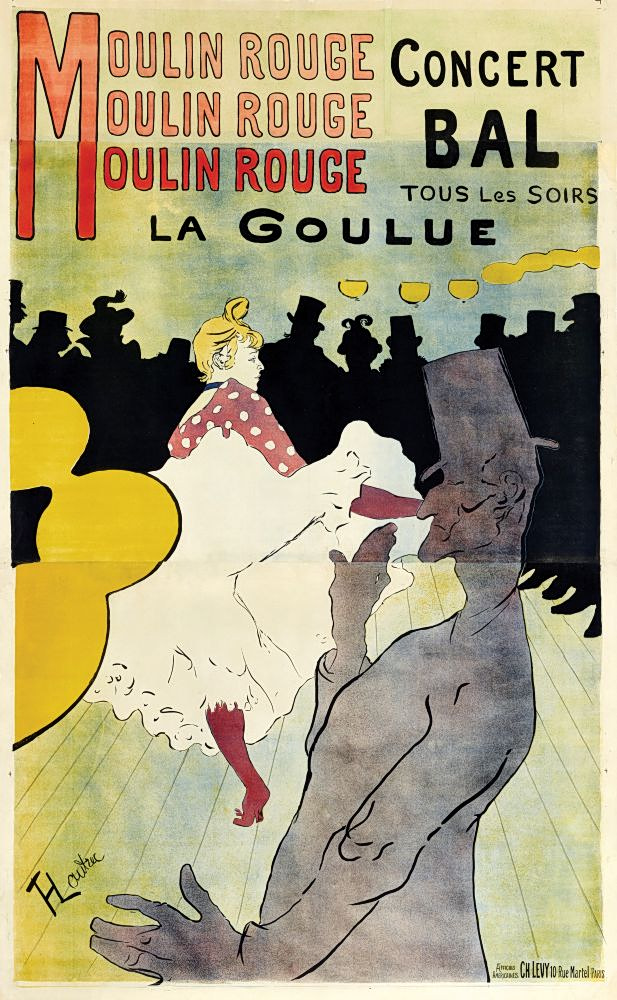
Image courtesy of B&E Goulandris Foundation
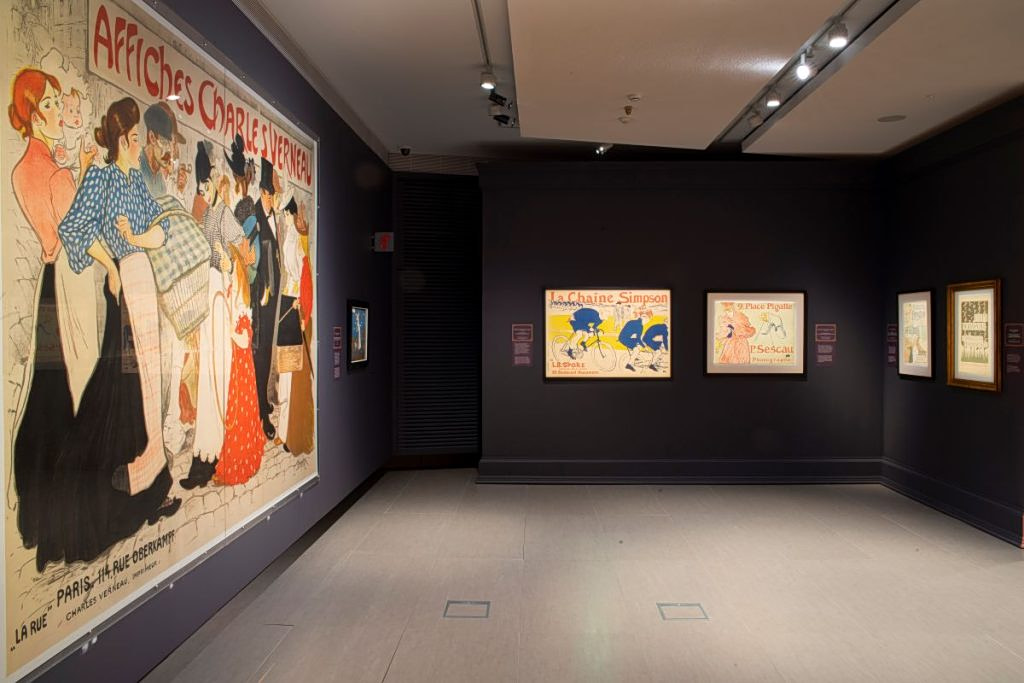
These are just some of the small but particularly captivating stories brought to life in a brand-new exhibition at the Basil and Elise Goulandris Foundation. As Maria Moro Koutsomalli, one of the exhibition’s curators, explained, the show came about as a solution to an unexpected setback after another exhibition project was canceled. The result, however, is an engaging immersion into the world of the Belle Époque. Rather than focusing primarily on oil paintings, it brings together lithographs, posters and pencil drawings – works that serve as ideal guides to both the world that gave birth to the poster and modern advertising, and the Paris of the turn of the 20th century.
At the heart of the exhibition is a European capital that, for 25 years, from 1850 to 1875, was one vast construction site, as the city underwent a sweeping transformation intended to make it the “center of the world.” Despite its stark social inequalities, Paris embraced entertainment and pleasure, leaving behind such a fond impression that decades later the period acquired its own name: the Belle Époque, or “Beautiful Era.”
Representative Works
The deep red that once dominated the cabarets of Montmartre welcomes visitors to the foundation’s temporary exhibition space. The eye is immediately drawn to some of the era’s most recognizable works: Théophile Steinlen’s black cat from the posters advertising the Chat Noir cabaret; Henri de Toulouse-Lautrec’s elegant Jane Avril; and the slender female figures of Alphonse Mucha, emerging from lush floral ornamentation. They are displayed beneath glowing lights and against velvet carpets, in an environment specially designed by Andreas Georgiadis and Vivi Gerolymatou.
But the world of the Belle Époque, as presented through 90 works by 15 artists, soon reveals a far more diverse and often unexpected range of characters and stories. The exhibition is curated by Maria Moro Koutsomalli, head of collections at the Goulandris Foundation, and Marina Ferretti Bocquillon, honorary scientific director of the Museum of Impressionism in Giverny.
The show does not attempt to cover the entire Belle Époque, generally dated from 1880 to 1914. Instead, it focuses on the two decades between 1880 and 1900, from the establishment of freedom of the press to the years when some of the great poster artists ceased to work in the field – either because they turned their attention to painting, as Pierre Bonnard did, or because they died, as Toulouse-Lautrec did.
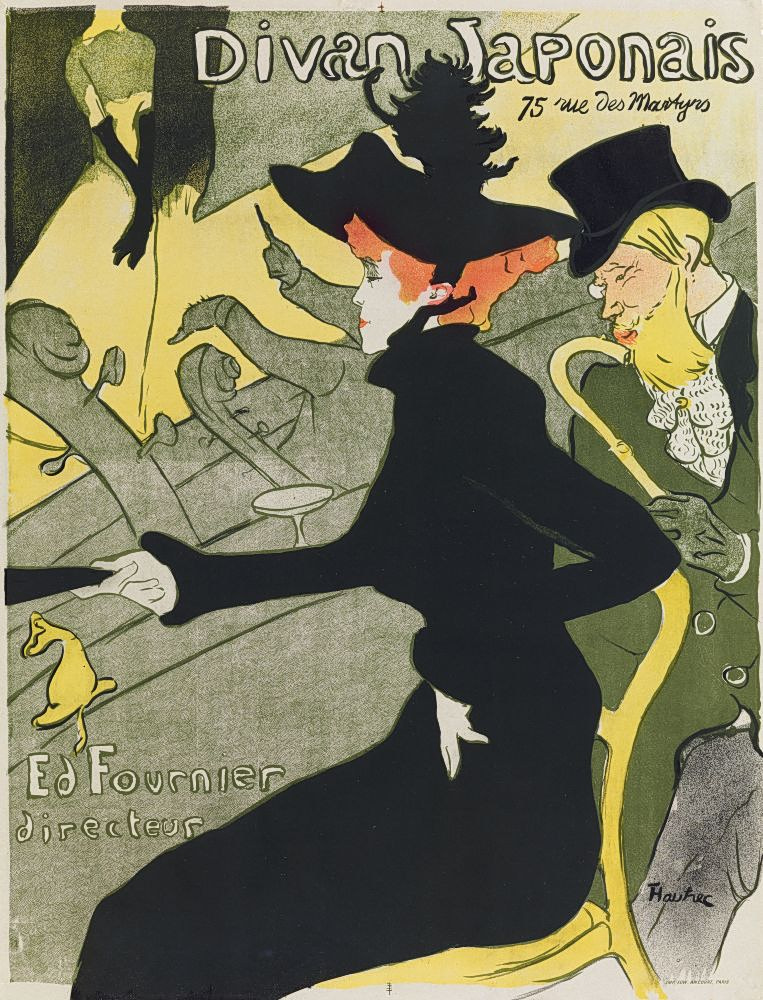
Image courtesy of B&E Goulandris Foundation
As visitors take in the works, stories emerge from the carefully written captions, although they are explored in greater depth in the richly illustrated exhibition catalog. Its approach mirrors that of the exhibition itself: presenting the period not merely through the lens of artistic production, but also through the broader transformation of Parisian society.
Among the chérettes – the red-haired women in yellow dresses created by Jules Chéret, the artist and lithographer whose work influenced many of his contemporaries – and Toulouse-Lautrec’s first poster for the Moulin Rouge, printed in 2,000 copies, visitors can discover the story of an overnight sensation. The poster made him famous almost instantly, and people reportedly tried to tear copies off the streets to take them home.
Visitors will also encounter Bonnard’s depiction of a little girl carrying an enormous laundry basket, a particularly striking image at a time when child labor was being restricted and school attendance was compulsory until the age of 13. Another of Bonnard’s works on display is his advertisement for French champagne – a poster that caught Toulouse-Lautrec’s attention and inspired him to enter the colorful world of poster art himself.
Advertising and Entertainment
Beside Toulouse-Lautrec’s poster featuring performer May Milton, commissioned by her patron Jane Avril and later echoed in an early work by Pablo Picasso, visitors will find a proposal by Wassily Kandinsky for a beer advertisement. Rendered in much darker tones than the other works in the exhibition, the design was never produced.
These extraordinarily detailed works invite close inspection. One particularly fascinating detail is Toulouse-Lautrec’s technique for achieving different shades of color: he would blow paint through a straw. Beyond their artistic value, the posters also reveal how the foundations of advertising – in this case, advertising entertainment – were laid in a city that offered 35,000 seats every night across its theaters, café-concerts and cabarets.
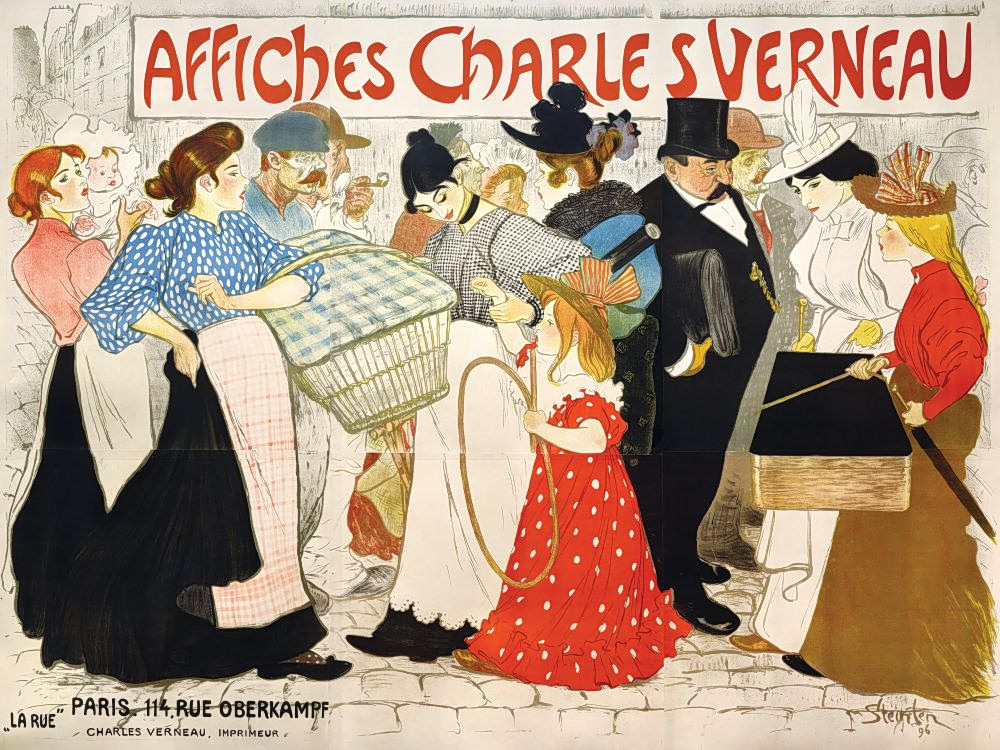
Image courtesy of B&E Goulandris Foundation
Visitors are also likely to be captivated by the black-and-white photographs documenting the striking presence of colorful posters in public spaces. Particularly intriguing are two films bearing famous signatures – those of the Lumière brothers and Georges Méliès – which make fun of the ban on putting up posters.
Other highlights include a three-dimensional interactive map, where illuminated markers pinpoint the locations of artists’ studios and department stores, as well as an augmented-reality game exploring the secrets of the Belle Époque. The experience culminates in a treasure hunt inside the exhibition hall, designed for visitors of all ages.