 Μake us preferred on Google
Americans head to the polls on Tuesday, November 3, in US midterm elections that could significantly change the balance of power in Washington and determine how much political freedom President Donald Trump retains during the final two years of his presidency.
Democrats are seeking to regain control of the House of Representatives, while their path to a Senate majority remains more difficult but plausible. Either outcome could constrain Trump’s legislative agenda, intensify congressional investigations and alter his ability to appoint senior officials, ambassadors and federal judges.
But another question has emerged ahead of Election Day: What happens if the results are challenged?
The concern is not entirely hypothetical. In a bid to avoid the instability that followed the 2020 elections, Republican and Democratic lawmakers have sought commitments from colleagues to recognize certified election winners, while the Trump administration, meanwhile, has pursued litigation that could delay certification of a closely contested Senate race. The prospect of disputed results has drawn renewed attention to the constitutional rules governing elections for Congress.

US Vice President JD Vance speaks at a campaign rally ahead of the midterm elections at Eugene F. Kranz Toledo Express Airport in Swanton, Ohio, November 2, 2026 in Swanton, Ohio. Tom Brenner/Pool via REUTERS
What Changes if Democrats Win the House?
Republicans currently control both chambers of Congress, giving the White House a legislative advantage, although narrow majorities and internal divisions have complicated efforts to advance its agenda.
All 435 seats in the US House of Representatives are up for election. Republicans currently hold 218 seats, compared with 214 for Democrats, with one independent member and two vacancies. Democrats need at least 218 seats to secure an outright majority- a net gain of four from their current position, according to Reuters.
A Democratic majority would make it considerably harder for Trump to advance his legislative agenda. Democrats could block Republican proposals, demand concessions in budget negotiations and exercise greater influence over federal spending.
They would also gain control of House committees, allowing them to investigate government decisions, hold hearings, seek documents and issue subpoenas under congressional rules.
Such investigations could expose the administration to sustained scrutiny over its policies, executive actions and the conduct of senior officials.
A recent Wall Street Journal article reveals that Trump administration officials are already “lawyering up”, as they “brace for an avalanche of investigations next year if Democrats take one or both houses of Congress in the midterms.”
The House also has the constitutional authority to impeach a president by a simple majority vote. However, impeachment does not remove a president from office. Conviction requires a two-thirds majority of senators present – a threshold that will be difficult for Democrats to reach without substantial bipartisan support.
Recall that Trump was impeached twice during his first presidency and acquitted by the Senate on both occasions. A democratic state senator speaking with To Vima International News says that impeachment is a long and expensive process, which may not be in the party’s interests to repeat, even if they take both chambers.
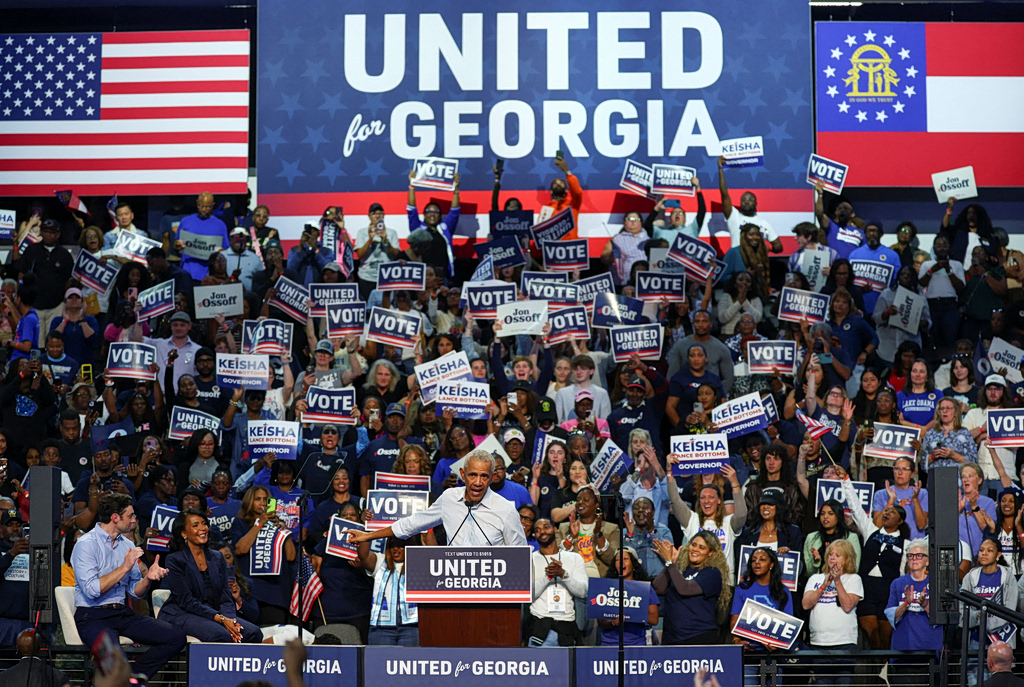
Former US President Barack Obama speaks as Senator Jon Ossoff (D-GA) and Democratic gubernatorial nominee Keisha Lance Bottoms listen during a rally ahead of the midterm elections in Morrow, Georgia, US October 28, 2026. REUTERS/Edgar Su
What if Democrats Also Win the Senate?
The consequences would be greater if Democrats gained control of both chambers.
Republicans currently hold 53 Senate seats, while Democrats and two independents aligned with them account for 47. Democrats need a net gain of four seats to secure a majority, assuming they retain their existing seats.
Winning the Senate would give Democrats control over its committees and legislative agenda, as well as considerable influence over presidential appointments.
Under the Constitution, the Senate confirms Cabinet members, ambassadors, federal judges and Supreme Court justices. A Democratic majority could delay or reject nominees, making it harder for Trump to fill important positions with his preferred candidates.
However, control of both chambers would not give Democrats unrestricted legislative power.
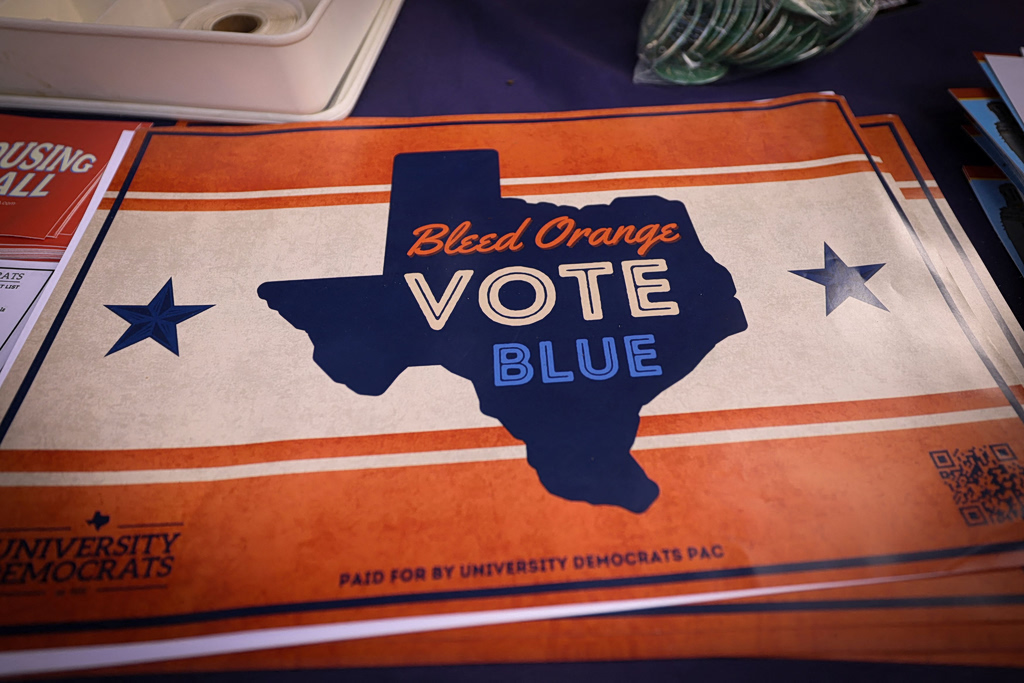
A table of campaign materials from University Democrats sits outside an early voting location on the campus of The University of Texas at Austin during early voting ahead of the November 3rd US midterm elections in Austin, Texas, US, October 27, 2026. REUTERS/Mike Segar
Trump would retain the presidential veto. Overriding it requires a two-thirds majority in both chambers, with a quorum present.
Under Senate rules, most legislation requires 60 votes to overcome a filibuster and bring debate to a close, although final passage generally requires only a simple majority. Presidential nominations, including judicial appointments, can generally advance by simple majority.
A Democratic Congress could therefore constrain Trump, but enacting major legislation against his opposition would remain difficult.
The Powers Trump Retains
Trump could continue issuing executive orders, directing federal agencies and exercising presidential authority over foreign affairs and national security, subject to constitutional and statutory limits.
According to Reuters reporting published on November 1, the White House has spent months preparing for a possible Democratic takeover of Congress.
Senior officials have reportedly examined ways to advance administration priorities through executive action, including immigration, tariffs, housing costs and federal spending.
Such measures would not be immune from challenge. Executive orders cannot override federal law or the Constitution, and courts can review their legality, although this is a slow process. Congress also retains substantial authority over federal appropriations.
A divided government therefore would not halt presidential action, but it could produce even more prolonged political and legal confrontations, as we have already seen in the first two years of President Trump’s second term.

US Midterms and Concerned Lawmakers
A separate concern involves what happens before the new Congress can exercise those powers.
In October, Republican Representative Don Bacon of Nebraska and Democratic Representative Josh Gottheimer of New Jersey led a bipartisan initiative urging House colleagues to recognize state-certified election winners and support their seating in the new Congress.
The effort, reported by the Wall Street Journal, also drew support from Rep. Mike Lawler (R-NY) Rep. Brian Fitzpatrick (R-Penn.), and reflects concerns that disputes over close election results could become political battles over who is entitled to serve in Congress.
Concerns about disputed election results are not entirely hypothetical. Legal challenges involving election procedures have already reached federal courts.
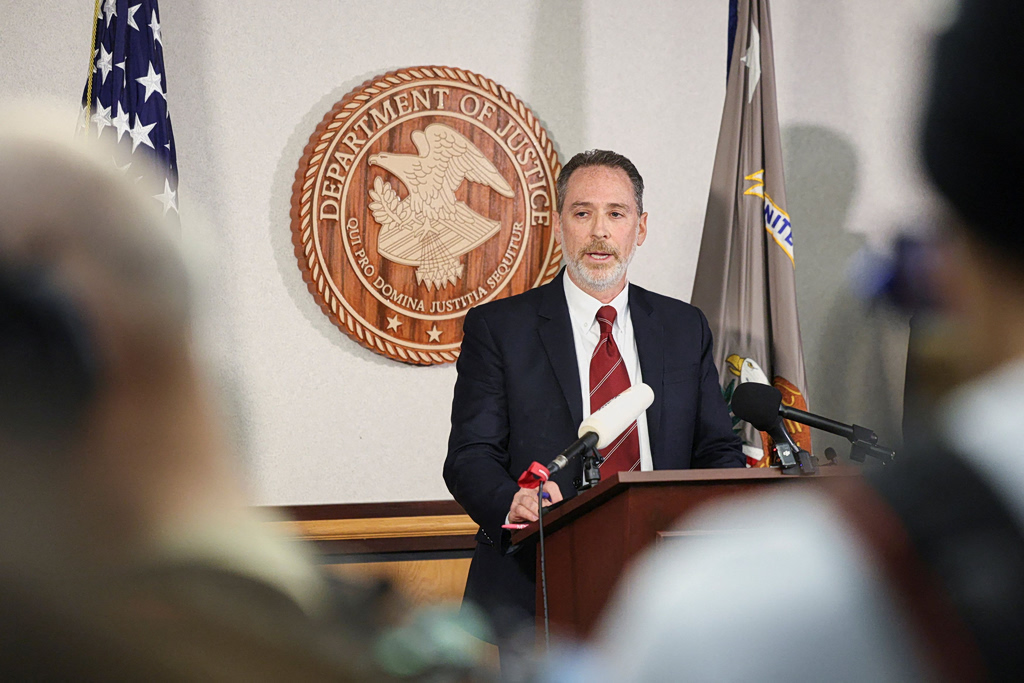
US Attorney Michael J. Heyman speaks during a press conference as the Justice Department investigates allegations that Democrats recruited potential spoiler candidates to run in Alaska’s US Senate race, ahead of the midterm elections, at the US Attorney’s Office in Anchorage, Alaska, US, October 30, 2026. REUTERS/Kerry Tasker
In Alaska, the Justice Department filed a lawsuit seeking to block certification of the Senate election if Republican incumbent Dan Sullivan narrowly lost to Democrat Mary Peltola and votes cast for another candidate with a similar name could have affected the outcome.
The lawsuit alleged that voters might confuse the incumbent with Daniel J. Sullivan Jr., a retired teacher also appearing on the ballot. Federal attorneys sought an investigation into whether votes intended for the Republican senator had instead gone to the other candidate.
On November 1, US District Judge Sharon Gleason dismissed the lawsuit, ruling that the government had failed to establish how the requested intervention could remedy the alleged problem without compromising ballot secrecy. The Justice Department appealed the decision, according to Reuters.
The case has illustrated how disputes over election procedures can reach federal courts even before votes are fully counted.

US Senator Susan Collins (R-ME), who is running for re-election in a tight race for the midterm elections against Democrat Troy Jackson, greets a supporter, as she arrives for a campaign event at Ellis Family Market, in Patten, Maine, US, November 2, 2026. REUTERS/Taylor Coester REFILE – QUALITY REPEAT
Who Decides a Contested Congressional Election?
Unlike presidential elections, congressional elections do not involve a national Electoral College count.
States administer elections, count ballots and certify results under their respective laws. Close contests may trigger recounts or legal challenges, depending on the circumstances and applicable procedures.
But the US Constitution gives Congress an additional role. Under Article I, Section 5, the House of Representatives and Senate each have the authority to resolve disputes over the election of their own members.
In practice, this means that even after state officials certify an election result, the relevant chamber can examine a challenge to whether the declared winner was lawfully elected and entitled to take the seat.
The president has no equivalent authority. Therefore, Trump cannot unilaterally overturn a congressional election result or decide who is entitled to serve in Congress.

Democratic candidate for US Senate Abdul El-Sayed and US Senator Elizabeth Warren (D-MA) attend a campaign rally, ahead of the midterm elections, in Ypsilanti, Michigan, US, November 2, 2026. REUTERS/Brian Snyder
The Prospects of a New Congress, with Empty Seats
The new Congress is scheduled to convene on January 3, 2027, under the constitutional timetable, unless a different date is established by law.
The House must elect a Speaker and organize itself for the new legislative term. If several closely contested seats remain unresolved, the number of members available to vote could affect that process, particularly if the parties are separated by only a handful of seats.
Congress can function with vacancies, provided constitutional quorum requirements are met. So an unresolved election does not automatically prevent the institution from operating.
But, a narrow balance of power could make those vacancies politically significant.
One not-so-distant historical example comes from Minnesota’s disputed 2008 Senate election.
Democrat Al Franken and Republican Norm Coleman were initially separated by just 215 votes out of approximately 2.9 million cast, triggering a recount and months of litigation.
On June 30, 2009, the Minnesota Supreme Court unanimously upheld Franken’s victory. He was sworn into the Senate on July 7, more than six months after the new congressional term began.
The Senate continued operating during the dispute, although Minnesota had only one serving senator until Franken took office.
The case demonstrates that contested elections can delay representation without necessarily preventing Congress from functioning.
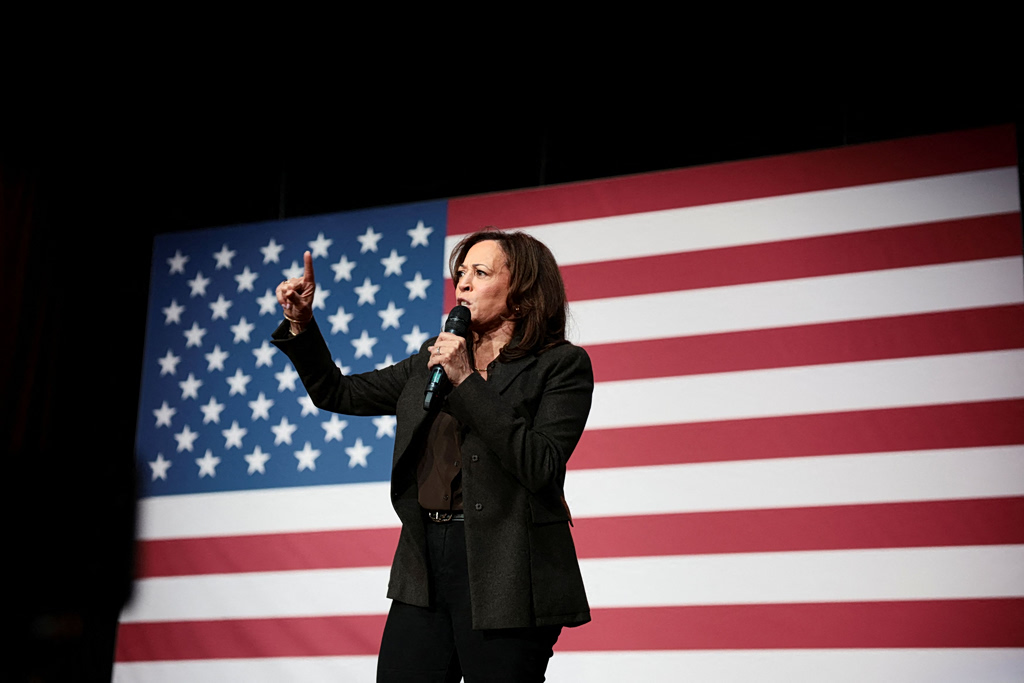
Former US Vice President Kamala Harris speaks at a “Stop the Power Grab” rally for Democrat gubernatorial candidate Xavier Becerra in Los Angeles, California, US, November 1, 2026. REUTERS/Evelyn Hockstein
Could a Dispute Change Who Controls Congress?
Potentially, if control depends on a very small number of unresolved seats.
In the House, the consequences could be immediate because the chamber must elect its leadership at the beginning of each new Congress.
In the Senate, an unresolved race could affect the balance of power, particularly if neither party has a clear majority without the contested seat.
That being said, election challenges must follow applicable procedures and meet relevant legal standards.
Congress has broad powers to judge the election of its members, but this does not include the power to reverse “unfavorable results”.

Democratic US Senate candidate Chris Pappas signs door hangers while meeting with community members at Willow, a clothing boutique, in Windham, New Hampshire, US, November 2, 2026. REUTERS/Kylie Cooper
A Test of Political Power and Institutional Resilience
The immediate question facing American voters is whether Democrats can win enough seats to constrain Trump’s presidency.
A Democratic “Blue Wave” could investigate the administration, block legislation, and restrict presidential appointments. Trump, meanwhile, would retain substantial executive authority and the power to veto legislation.
But another question is whether close results, if disputed, will be effectively resolved through established electoral and constitutional procedures, and in a timely and peaceful manner.
The bipartisan initiative to protect the seating of certified winners, together with litigation already surrounding competitive races, shows why that question has become part of the debate before Election Day.
For the United States’ international partners, including Greece and other European allies, the outcome matters because the functioning of the US government could influence how effectively Washington’s political institutions function during the remainder of Trump’s presidency, and even impact US foreign policy.
But on a more significant level, the handling of any disputed results could become a separate test of the resilience of the American constitutional system itself.
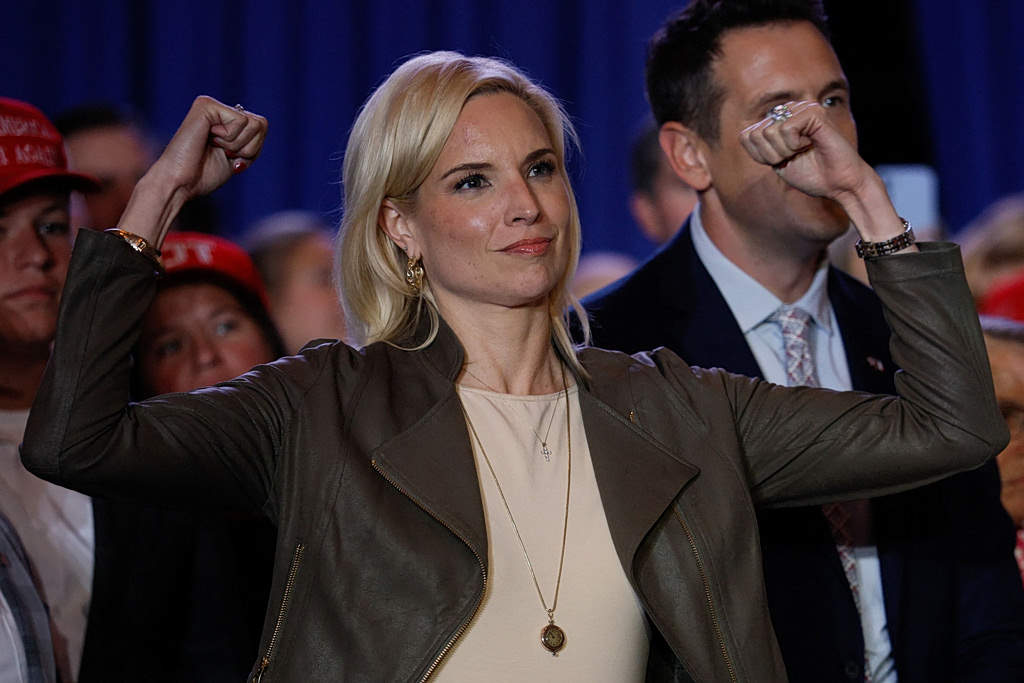
Republican Senate candidate Ashley Hinson reacts during a midterm campaign rally with US President Donald Trump at Five Flags Center in Dubuque, Iowa, US, November 1, 2026. REUTERS/Evan Vucci