 Μake us preferred on Google
The second volume of a major three-volume history of Athens explores the city’s evolution from the early Byzantine centuries to the founding of the modern Greek state, in an interview with Katerina Nikolaou, professor of Byzantine history at the National and Kapodistrian University of Athens
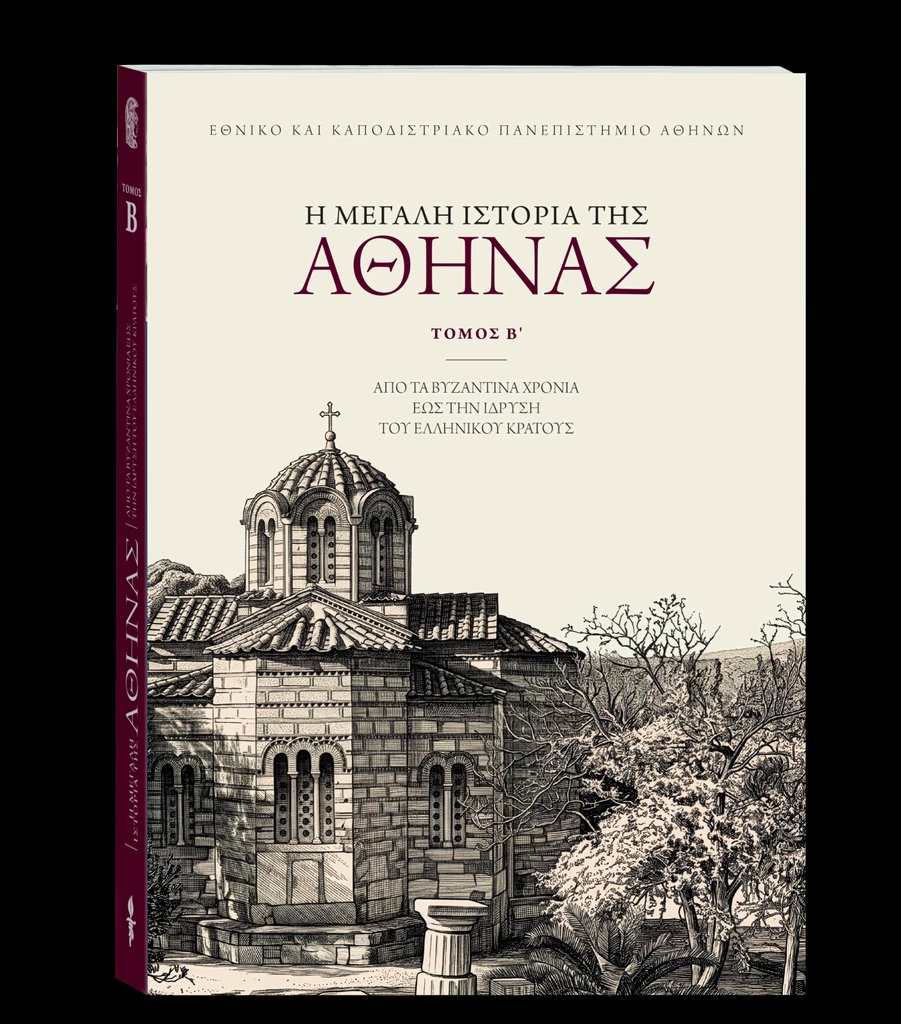
Last weekend, To Vima presented the second volume of The Great History of Athens, a three-volume publication by the National and Kapodistrian University of Athens (NKUA).
The volume traces the history of the modern Greek capital from the early Byzantine period to the establishment of the Greek state, shedding light on aspects of the city’s past that remain unfamiliar to many people or are difficult to place within their historical and geographical context.
To mark its publication, To Vima spoke with the volume’s editor, Katerina Nikolaou, professor of Byzantine history in the university’s Department of History and Archaeology.
When discussing Athens’ history, people tend almost automatically to leap thousands of years from the present to antiquity. Why is it important to know about the city during the Byzantine period as well?
Quite simply, it is neither academically sound nor necessary today to reproduce the choices made during the founding of the Greek state, when Athens was designated its capital. At that time, the city entered a new era in which antiquity became central to the ideological foundations of the state itself.
Yet residents and visitors alike encounter the city’s Byzantine past in everyday life. They may take a walk in Kaisariani, find themselves drawn to the Church of Panagia Kapnikarea while walking along Ermou Street, admire the elegance of the Church of Agios Georgios Omorfokklisia in Galatsi, hear that a meeting of the Church of Greece’s governing body has taken place at Petraki Monastery or pass the Church of Agioi Theodoroi in Klafthmonos Square.
These are just a few examples of our encounters with Athens’ Byzantine heritage. They demonstrate that the city did not simply survive through the centuries before emerging from the brilliance of the age of Pericles as a cultural and political beacon of a newly established nation-state.
Athens is an urban space that has been continually reinterpreted, and continues to be reinterpreted today, by the societies that have inhabited it and by the political and religious authorities that have sought to shape and claim it.
Understanding Byzantine Athens helps explain how a city with such a powerful ancient legacy could undergo profound transformation without losing its dialogue with the past. Changes to its urban fabric and the adaptation of ancient structures for new purposes reveal historical continuity through periods of discontinuity.
How different was Byzantine Athens from the city in antiquity, and how closely did its appearance and daily life resemble those of Constantinople, the great imperial capital?
Clearly, fourth-century AD Athens was not the Athens of the Golden Age. Byzantine Athens was different from Roman Athens, too.
In the late 12th and early 13th centuries, Michael Choniates, the city’s metropolitan bishop, arrived from Constantinople and addressed the Athenians, emphasizing their city’s long history and challenging them to prove worthy successors to its legacy. At the same time, however, he expressed deep frustration with contemporary conditions and a desire to leave what he regarded as a dismal place.
At the beginning of the Byzantine period, Athens had lost the political pre-eminence it enjoyed in classical antiquity. Nevertheless, it retained considerable symbolic importance through the fifth century as a center of education and philosophy. During the fourth and fifth centuries, it was also a prominent meeting point for two distinct cultural and religious traditions.
Neoplatonic philosophy sustained elements of the ancient Greek intellectual tradition, while Christianity gradually transformed the religious and physical landscape. Ancient temples were converted into Christian churches, and the Acropolis acquired growing strategic importance, contributing to the city’s development as a fortified Byzantine settlement.
From the seventh century onward, as happened in many cities across the Byzantine Empire, Athens experienced demographic and urban contraction, entering a new phase of medieval life.
It nevertheless remained Attica’s military, administrative, economic and ecclesiastical center, although neighboring cities such as Thebes and Corinth gradually surpassed it in importance. The inhabited area shrank, construction declined and land that had previously formed part of the urban fabric was converted into agricultural zones.
From the ninth century, measures introduced by the Byzantine administration to reorganize southern Greece helped Athens begin to recover. It became a metropolitan see and, during the first half of the century, served as the principal base of the military governor of the theme of Hellas.
As security in the Aegean improved, particularly following the Byzantine reconquest of Crete in 961, Athens experienced economic and demographic growth alongside a flourishing of architecture and other arts. New neighborhoods developed in areas that had been abandoned for centuries, while new churches and monasteries were built, many of which continue to adorn the city today.
The picture of Athens presented by Michael Choniates in the late 12th century was considerably less favorable. The metropolitan belonged to a broader tradition of provincial bishops who believed the imperial capital prospered at the expense of the provinces and that government intervention was largely confined to what they considered unjust taxation.
His stark descriptions of poverty, deteriorating infrastructure and limited productive activity undoubtedly reflect the difficulties of the period. They do not necessarily demonstrate that urban life had collapsed altogether. Such accounts also served as instruments of pressure and negotiation in relations between the provinces and the imperial center.
Comparing Athens with Constantinople would be unfair, as it would be for virtually any other medieval city. Michael Choniates’ younger brother, Niketas, lamenting the destruction and looting of Constantinople during its capture in 1204, described it as a city of cities, a wonder known throughout the world and a spectacle beyond compare.
The Crusaders themselves, through the account of Geoffrey of Villehardouin, acknowledged their astonishment at the imperial capital’s wealth, walls, palaces and churches.
The form and daily life of the two cities were therefore entirely different. This does not diminish the fact that Athens, despite its political marginalization and the transformations associated with medieval life, remained an active urban center with political and cultural significance and substantial links to the imperial authorities.
Three Byzantine empresses of Athenian origin also testify to the city’s distinctive relationship with the imperial center: Athenais-Eudokia, Irene of Athens and her niece Theophano.
All three left their mark on Byzantine cultural life and political developments. Irene was the only woman to rule the empire in her own name, representing a remarkable example of female sovereignty in the medieval world.
The Latin and Ottoman periods of Athens’ history remain relatively unfamiliar to many residents and visitors. Would it be worthwhile to give these chapters greater prominence?
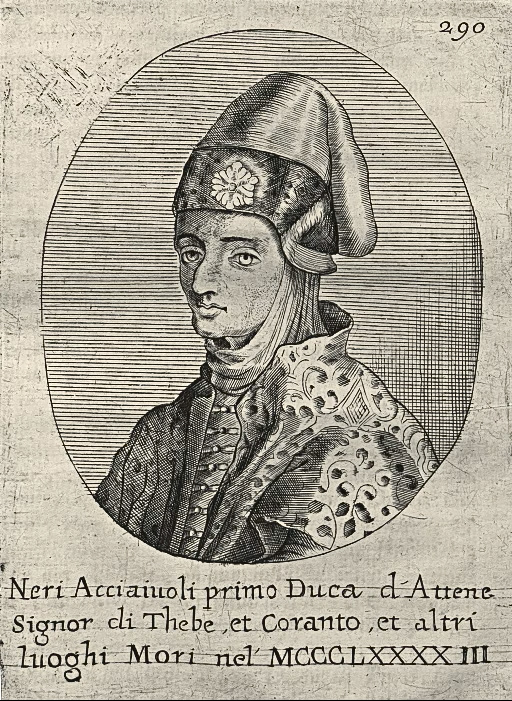
Certainly. Following the Crusaders’ conquest of Constantinople and the fragmentation of the Byzantine Empire in 1204, Athens became part of the Duchy of Athens. It passed successively under Burgundian, Catalan and Florentine Acciaioli rule, interrupted by a brief period of Venetian control.
Between 1205 and 1456, Latin rulers introduced new political and social arrangements, linking Athens to broader transformations across the medieval Mediterranean, including the Crusades, the commercial expansion of Italian city-states, papal policy and competition among Western powers.
The city’s overall urban landscape did not change dramatically. The most visible transformation took place on the Acropolis, which remained the center of military, political and religious authority.
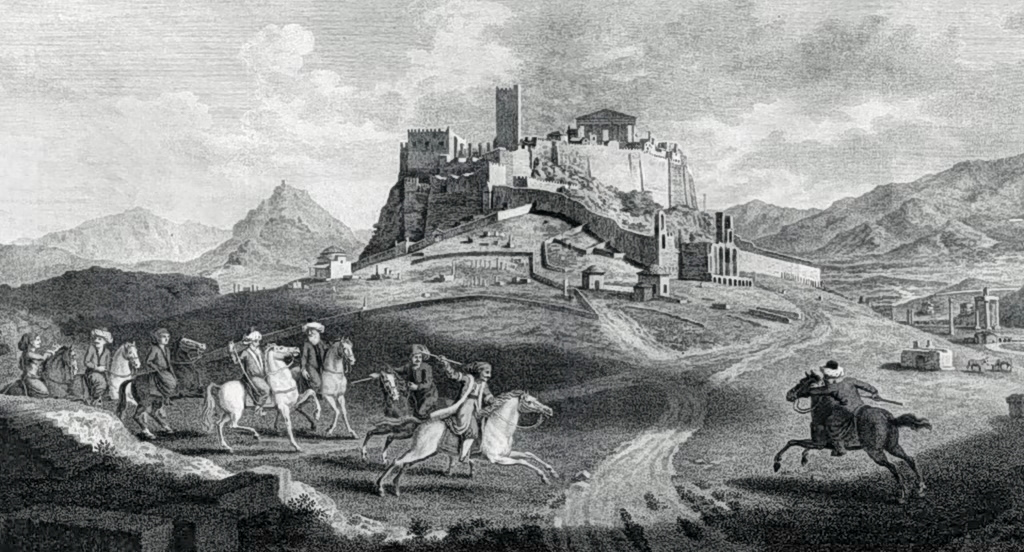
Successive Latin rulers strengthened its fortifications, turning it into a formidable, almost impregnable castle. These structures are now known chiefly through depictions made by travelers in the 18th and 19th centuries.
After the Acropolis was liberated in 1833, the fortifications were gradually removed as part of an effort to restore the Rock to its ancient appearance. The demolition of the Acciaioli Tower at the Propylaea in 1874 effectively marked the disappearance of the most prominent visible remains of the Latin period.
Latin rule therefore deserves a place in Athens’ history. However, the city’s continuous habitation and, above all, the ideological orientation of the Greek state during the 19th century did little to encourage the preservation of tangible archaeological evidence from that period.
An important point is that the city adapted to the needs of its successive rulers without losing its continuity. Ancient monuments remained integral to the urban environment, serving at different times as building materials, structures repurposed for new uses or carriers of symbolic meaning.
Ottoman Athens was equally complex. The city came under Ottoman rule without acquiring cultural or social uniformity. Christians and Muslims lived there, forming a diverse social and religious mosaic.
Written accounts and archaeological remains allow us to reconstruct Athens as a living urban center in which different communities coexisted, came into conflict, cooperated and adapted to changing political circumstances.
The Acropolis remained the dominant fortified stronghold, while a dense urban environment developed around it, comprising homes, baths, fountains, mosques, churches, monastic estates and monasteries. Ancient monuments became part of everyday life.
Beyond the accounts of travelers such as Evliya Celebi and the engravings and illustrations of the period, a walk through Plaka today is enough to bring us into contact with aspects of that earlier Athens. Numerous sites reveal this layer of the city’s history, and many are accessible to visitors.
Ottoman Athens was another incarnation of the same centuries-old city, and it deserves to remain visible.
Before concluding, I would like to mention the profound turning point brought about by the Greek War of Independence. Athens was also the scene of major military operations, culminating in the siege of the Acropolis in 1826-27.
These events gave the city’s ancient monuments a new dimension of international political and ideological significance. The Acropolis became a symbol of the Greek cause and, at the same time, an object of international diplomatic concern and efforts at protection.
Across all these different versions of Athens, one element remains constant: the urban space itself, the memory it carries and the continual reinterpretation of its past.