 Μake us preferred on Google
Greek Prime Minister Kyriakos Mitsotakis has warned that further cuts to the European Union’s budget would undermine the bloc’s ambitions for greater competitiveness and economic strength, saying they would consign the Draghi report to the “dustbin of European history.”
If we continue to insist on further cuts to the EU budget, we can throw the Draghi report and its lofty ambitions into the dustbin of European history.
— Prime Minister GR (@PrimeministerGR) November 26, 2026
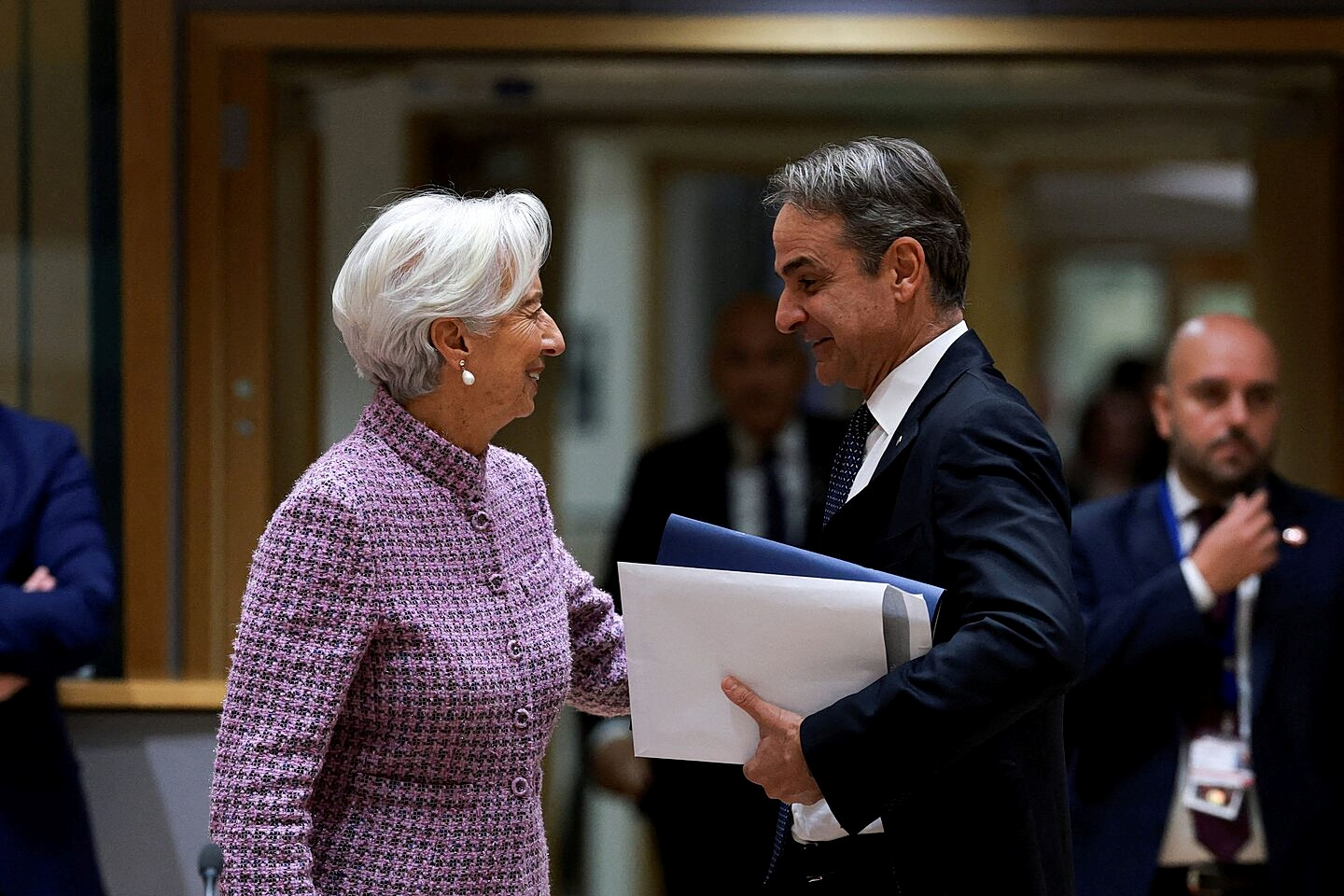
“If we continue to insist on further cuts to the EU budget, we can throw the Draghi report and its lofty ambitions into the dustbin of European history,” Mitsotakis wrote in a post on X on Thursday, as EU leaders met in Brussels to discuss the bloc’s next long-term budget.
His intervention came amid deep divisions among the 27 member states over the proposed Multiannual Financial Framework (MFF) for 2028-2034, with negotiations showing little sign of convergence.
Upon arriving at the summit, Mitsotakis had already made clear that Greece would not accept further reductions in funding for cohesion policy or the Common Agricultural Policy (CAP).
“We cannot talk about a strong Europe with a weak budget,” he said, arguing that the EU could not pursue greater competitiveness, energy security and border protection without providing the necessary financial resources.
He also described cohesion and agricultural policy as fundamental elements of the European project, enshrined in the EU treaties and closely associated with the bloc’s role in the eyes of its citizens.
Greece is aligned with the Friends of Cohesion, a group of 17 member states seeking to preserve adequate funding for regional development and agriculture. The group opposes further reductions in traditional EU spending programmes, while the so-called frugal countries are pressing for a smaller overall budget and a shift in resources towards defence, innovation and competitiveness.
The Friends of Cohesion coordinated their position ahead of Thursday’s summit, designating Italian Prime Minister Giorgia Meloni and Romanian President Nicușor Dan to represent their common positions in the negotiations.
For Athens, the main concerns include the future of cohesion funding and the CAP, as well as the risk that negotiations over the long-term budget could become entangled with the question of financial support for Ukraine.
Mitsotakis has also backed efforts to identify new sources of EU revenue rather than relying on further cuts. Greece has proposed a joint European auction of the 6G telecommunications spectrum as a means of generating additional resources. The prime minister said the initiative had received an initially positive response from several European leaders.
The negotiations are further complicated by discussions over additional financial support for Ukraine in 2027. The European Commission has proposed up to 45 billion euros in additional assistance, with EU leaders expected to consider the proposal alongside Ukraine’s broader financing needs. The funding is separate from the existing 90-billion-euro Ukraine Support Loan covering 2026 and 2027.
The summit is scheduled to continue on Friday, with leaders seeking to make progress towards an agreement on the next long-term budget.