 Μake us preferred on Google
In a statement, the ministry argued that the European Union has no jurisdiction over the delimitation of maritime jurisdiction areas, citing a ruling by the Court of Justice of the European Union. It also accused the European Parliament of adopting resolutions that disregard international law under the pretext of solidarity among member states.
Peace and stability in the eastern Mediterranean could be secured only through dialogue, good-neighborly relations, mutual respect and cooperation, the ministry said, calling on EU officials to adopt what it described as a constructive approach.
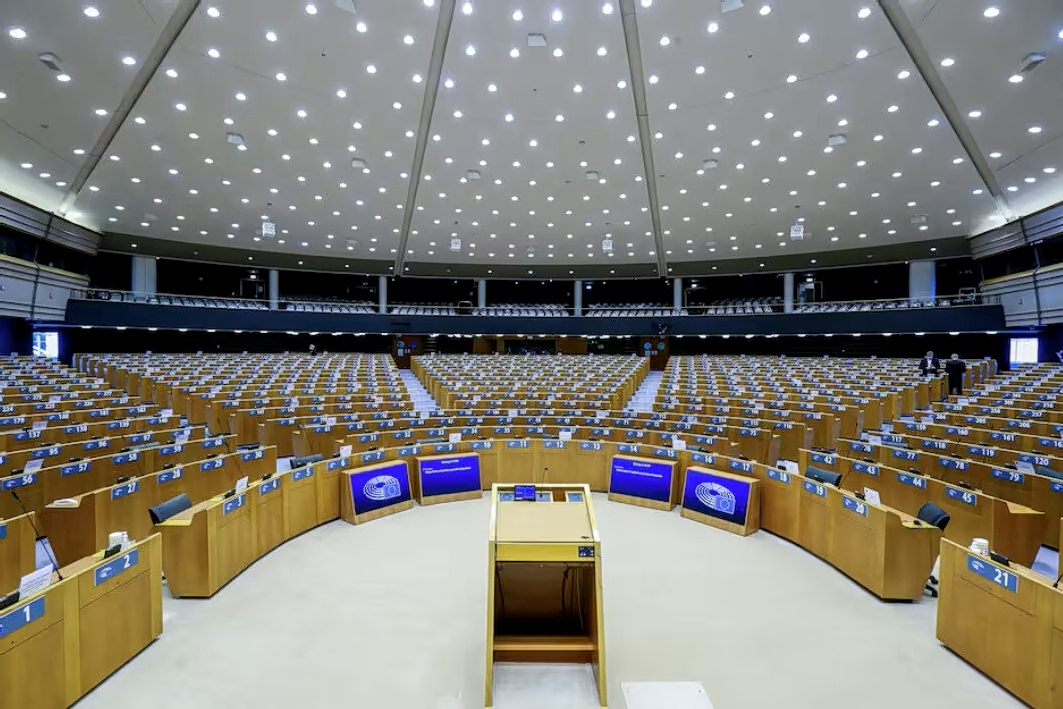
The response followed the European Parliament’s adoption of a resolution reaffirming its rejection of the Turkey-Libya maritime memorandum, expressing solidarity with Greece and Cyprus and calling for a coordinated European response.
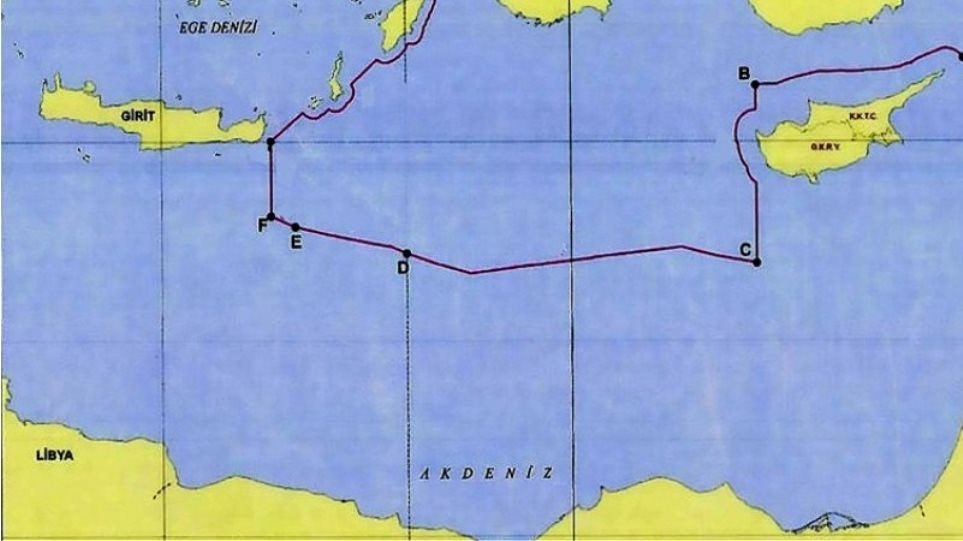
The resolution reiterates Parliament’s position that the 2019 agreement infringes upon the sovereign rights of third countries, is incompatible with the United Nations Convention on the Law of the Sea (UNCLOS) and cannot produce legal consequences for states that are not parties to it. It also criticizes the agreement’s ratification by Libya’s eastern-based House of Representatives on Oct. 20.
Ankara maintains that the memorandum is a legitimate agreement between two coastal states and is consistent with international law and the principle of equity. Turkey has not ratified UNCLOS, arguing that the convention does not adequately account for particular geographical circumstances and competing maritime claims.
Greece, however, maintains that the agreement disregards the maritime entitlements of its islands, particularly Crete and the Dodecanese, and attempts to establish maritime boundaries without its consent. The issue has returned to the forefront following the eastern Libyan parliament’s approval and publication of the agreement, prompting renewed objections from Athens, Nicosia, Cairo and the EU.
The European Parliament’s resolution also addresses Turkey’s broader maritime claims, including its so-called “Blue Homeland doctrine”, its threat of war, or casus belli, against Greece in the event of an extension of territorial waters, and its plans for marine parks beyond its territorial waters.
Ruling New Democracy (ND) party MEPs have highlighted six provisions they consider particularly important for Greece and Cyprus. These include the condemnation of the casus belli and Blue Homeland doctrine, recognition of UNCLOS principles as customary international law, criticism of Turkey’s marine park plans and reference to the EU’s mutual assistance clause under Article 42(7) of the Treaty on European Union.
The delegation also points to the right of Greece to extend its territorial waters up to 12 nautical miles under Article 3 of UNCLOS and the maritime entitlements of Greek islands, including rights to an exclusive economic zone (EEZ) and continental shelf under Article 121. These points reflect the ND delegation’s interpretation of the resolution and do not constitute a separate judicial ruling on the maritime disputes.
Beyond the memorandum itself, the European Parliament calls for protection of undersea infrastructure, urging Turkey not to interfere with the laying of submarine cables or the implementation of the Great Sea Interconnector (GSI), the planned electricity link between Greece and Cyprus.
It also calls for a review of EU financial cooperation with Turkey and Libya to ensure that European funds do not support activities connected with implementation of the agreement.
On possible sanctions, MEPs urge the EU Council to consider targeted measures against individuals or entities responsible for activities that violate the sovereign rights of member states, if implementation of the memorandum results in such violations.