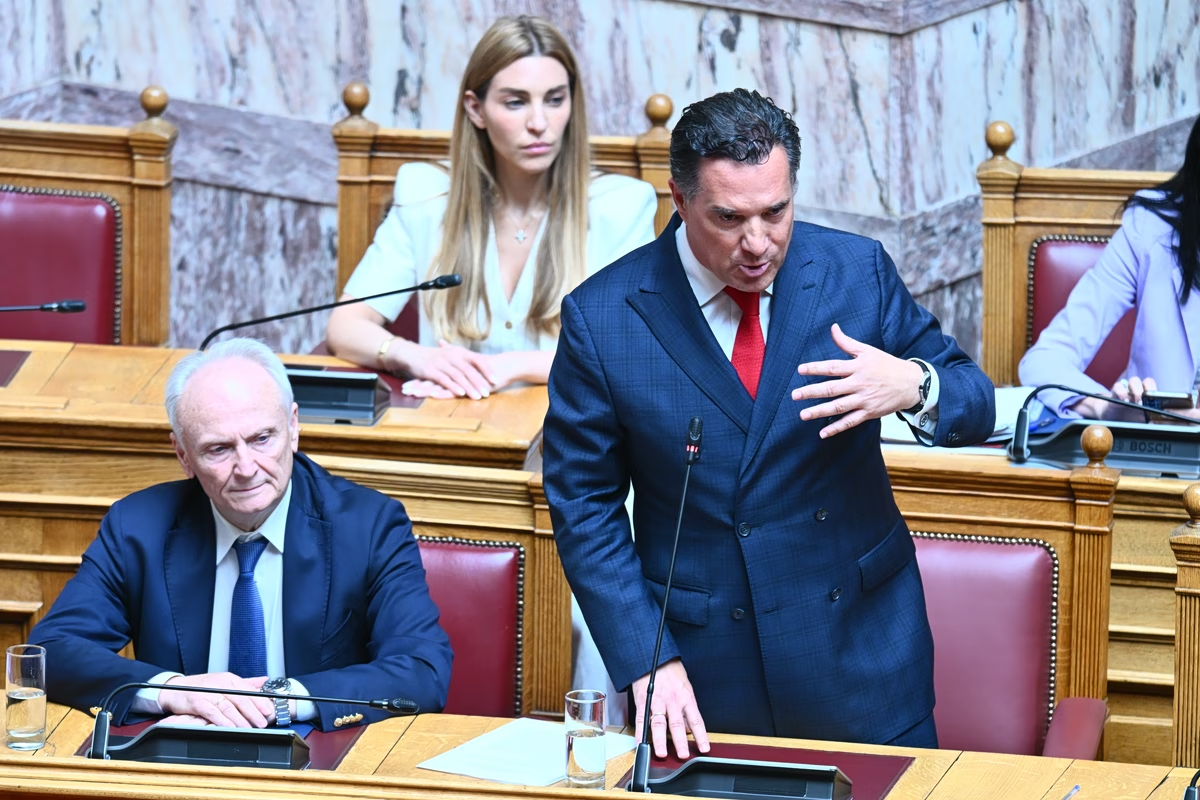
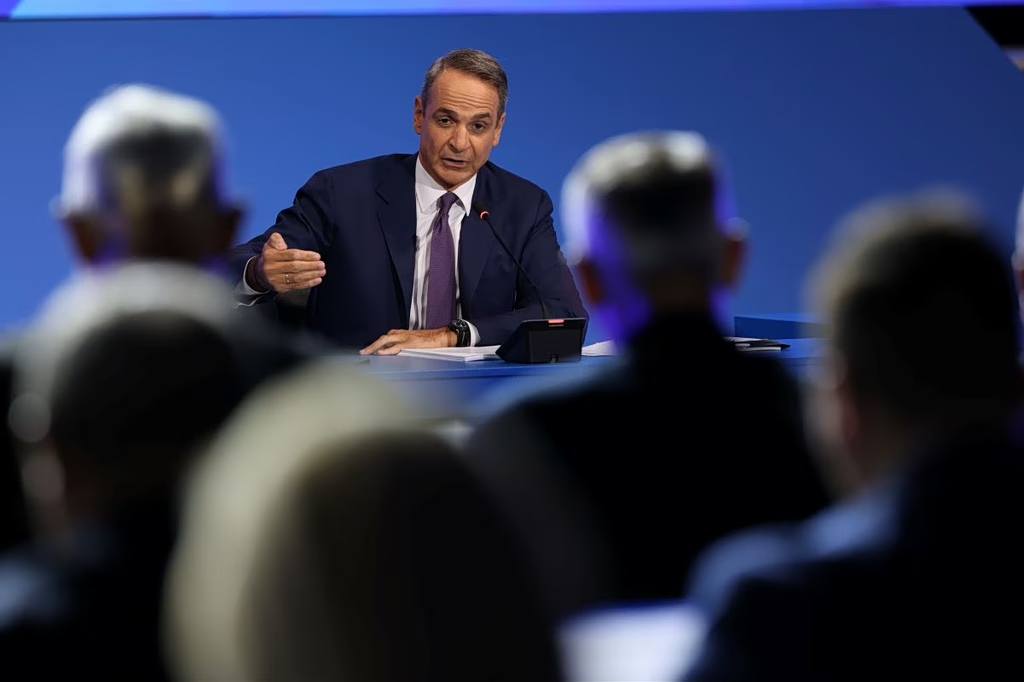
With Prime Minister Kyriakos Mitsotakis having set the next Greek general election for the spring of 2027, the ruling New Democracy (ND) party is already accelerating its political and organizational preparations. As Parliament enters its summer recess, the party has completed an initial phase of internal restructuring under its new secretary, Konstantinos Kyranakis, who is seeking to transform the party apparatus from a mechanism focused on day-to-day administration into a network geared toward political mobilization and electoral readiness.
The message from the party leadership is clear: the coming months will not be a period of routine party activity but the beginning of a prolonged election campaign. The objective is for New Democracy to be operating at full capacity by the autumn, particularly following the annual Thessaloniki International Fair (TIF), traditionally the starting point of Greece’s political season.
In his first days as party secretary, Kyranakis convened meetings of all party bodies to identify weaknesses within the organization. According to party sources, discussions highlighted the need for closer coordination between party secretariats, better use of staff and volunteers, and a more unified operating model across every level of the party structure.
The overhaul, however, has not been without resistance. Mitsotakis’ decision to substantially renew the party’s electoral lists—including lifting the informal ban on local government officials standing as parliamentary candidates—has drawn objections from incumbent MPs, party officials and former candidates who narrowly missed election.
Despite these concerns, the process of identifying new candidates is continuing nationwide, with the leadership aiming to broaden representation by recruiting figures from civil society, local government, business and the productive sectors of the economy.
To ease internal tensions, the announcement of dozens of parliamentary candidates, originally expected at the end of July, has been postponed until September, allowing additional time for consultations and consensus-building.
Further organizational changes are also planned for the autumn, including new appointments to party secretariats and policy departments, a prospect that has already generated unease within party ranks. Particular emphasis is being placed on strengthening the role of the Inter-Secretariat Coordination Committee, which is expected to become the central body responsible for coordinating party initiatives and ensuring a unified political strategy.
At the same time, the Political Committee is expected to assume a more active role. Rather than serving primarily as a forum for briefings, its elected members will be encouraged to contribute directly to policy development and the drafting of the party’s next governing platform.
The same philosophy extends to local party organizations, which are expected to play a more substantial role, while the party’s youth wing, ONNED, is being mobilized to strengthen engagement with younger voters.
Northern Greece at the Center of Outreach
Kyranakis has made it clear that he does not intend to manage the party solely from its headquarters in Moschato. Instead, he has launched an extensive tour across the country, with early visits to Thessaloniki, Arcadia, Messinia and Aetolia-Acarnania, while additional stops are planned before the Thessaloniki International Fair.
Northern Greece has become a key focus, with the party planning targeted visits and closer engagement with local communities and professional groups.
At the same time, New Democracy wants its local organizations and party officials to help shape its “2030” governing programme through a broad internal consultation process.
The post-summer period is seen as crucial, with New Democracy preparing nationwide tours, mobilizing its overseas organizations, expanding outreach to professional groups and finalizing candidate lists. Kyranakis also wants the party to play a greater role in shaping future legislation.
Party officials expect the organizational overhaul to be reflected in the first opinion polls of the autumn, arguing that preparations for the 2027 general election are already underway.