 Μake us preferred on Google
Democrats have a chance to retake the Senate—a proposition that seemed far-fetched earlier this year. But instead of unifying ahead of Election Day, the party is already engaged in infighting and finger-pointing.
Allies of the party’s leaders privately say that an insurgent left-wing has unnecessarily sucked time and money into races that should have been easier for Democrats, to the detriment of other candidates. Progressives say the party’s establishment isn’t doing everything possible to help them win, according to people familiar with the conversations.
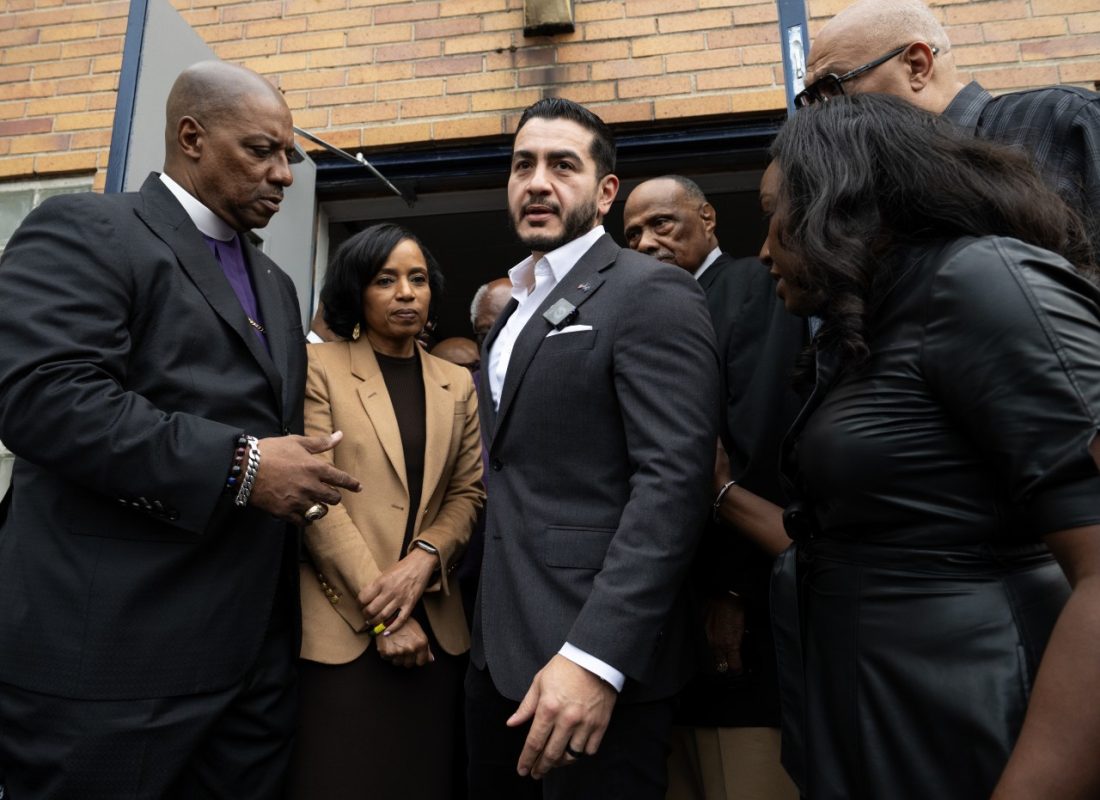
Tensions spilled out publicly Sunday when a Democratic congresswoman in Michigan, who lost this year’s Senate primary to Abdul El-Sayed , endorsed the Republican nominee in the close-fought race. Michigan Rep. Haley Stevens , who had been the party leadership’s pick in the primary against the more progressive El-Sayed, announced Sunday she was backing former GOP Rep. Mike Rogers after previously endorsing El-Sayed.
The Democratic rivals’ clash has centered on Stevens’s disapproval of El-Sayed’s critical comments about Israel’s actions in the Middle East. Israel is among the most divisive issues within the Democratic Party. Stevens’s endorsement was swiftly criticized , including by top Democratic leaders. Senate Minority Leader Chuck Schumer of New York, in a social-media post, called Stevens’s move a “despicable betrayal” and said “Senate Democrats are united in our support for Abdul El-Sayed.”
But the spat, just days before the election, is the latest example of Democratic division.
Both factions want a Democratic Senate, and winning might soothe the acrimony. But whatever the outcome, Tuesday’s results are poised to accelerate an internecine battle for the future of the party. If the Democrats fall short in the Senate, each side will blame the other. If they are victorious, each side will claim the credit and declare its vision vindicated.
Michigan is one of the most important races for control of the Senate—and a test for Democrats. If El-Sayed, a former public health official, pulls off a win, it would bolster an argument the far-left is already making: Their candidates can win hard races in purple states in America’s heartland. That mindset belies a long held belief among top Democrats that only moderates can win battleground races.
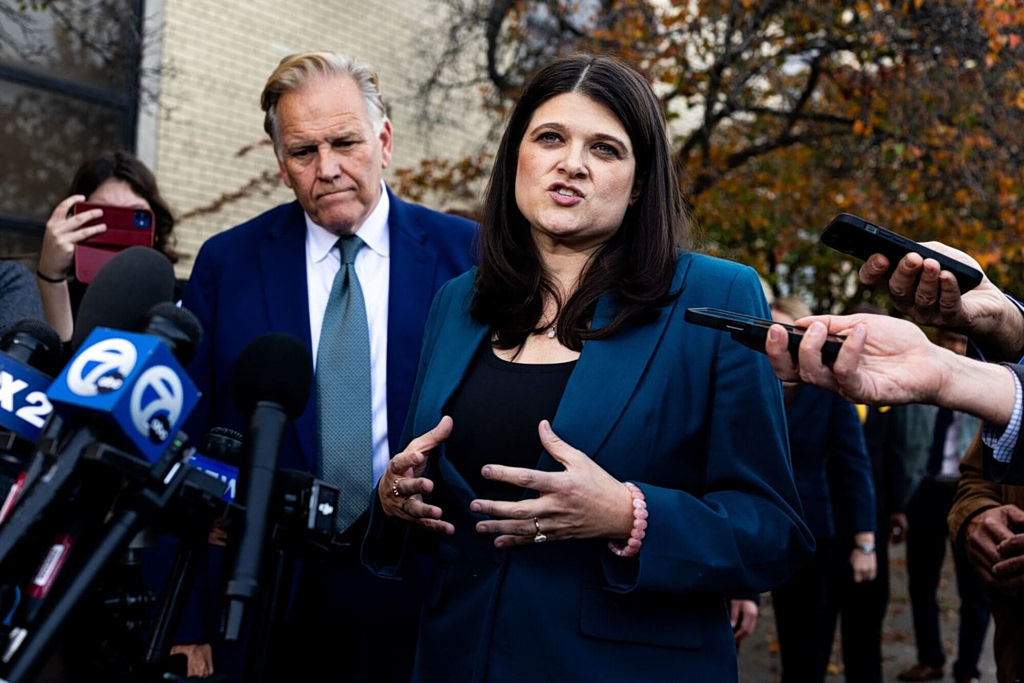
Haley Stevens speaks alongside Mike Rogers, whom she has endorsed. Jose Juarez/AP
“If Abdul can win in Michigan, anybody can win anywhere,” Rep. Alexandria Ocasio-Cortez (D., N.Y.) said during a fundraiser with El-Sayed recently. Ocasio-Cortez, a progressive darling, is herself considering a run for president or a challenge for Schumer’s New York Senate seat in 2028.
Progressives are the nominees in several key Senate battlegrounds, including Michigan and Maine, as well as in several competitive House races across the country. On top of that, the House is expected to have more than a half dozen Democratic socialists in office next year, and Democratic socialists are already in charge of—or competitive in races to lead—some of the country’s biggest cities. Voters in general show they have moved toward a more populist approach to governing, according to a Wall Street Journal poll .
The Democratic map has expanded dramatically since January. Normally solid Republican states such as Ohio, Alaska and Iowa are now considered tossups and North Carolina is seen as leaning toward Democrats. Schumer was heavily involved in recruiting candidates in several of the most competitive states.
However, Schumer was unsuccessful in keeping progressives from becoming the nominee in states that were viewed as easier victories for Democrats. Those races are now unexpectedly tight in a year when the Republican Party is struggling to hold on to Trump’s 2024 coalition.
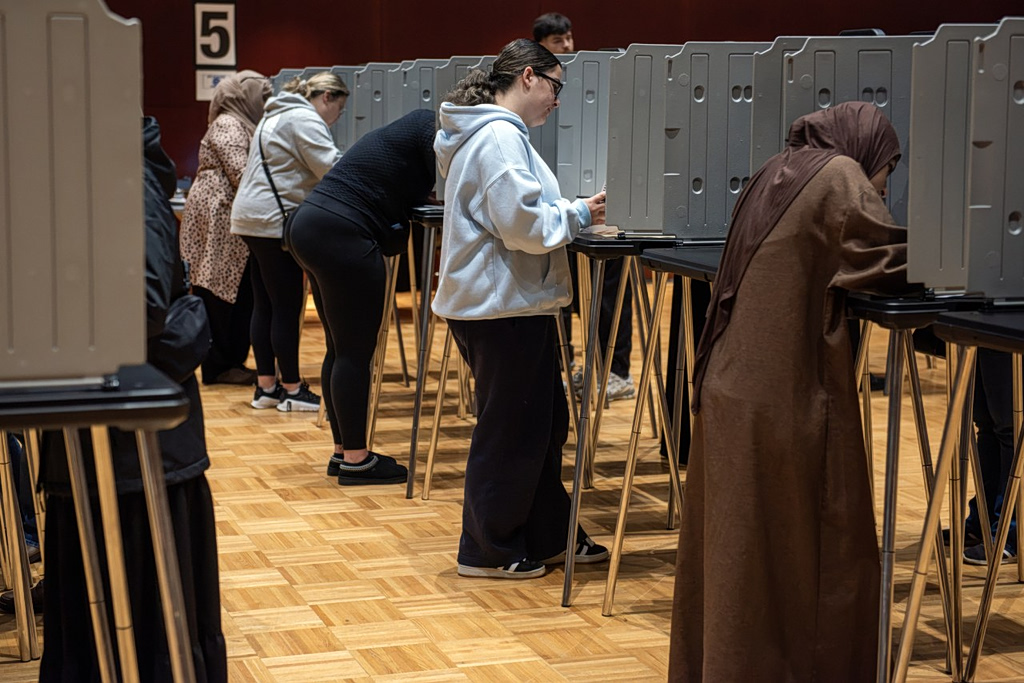
Voters casting their ballots during early voting Saturday in Dearborn, Mich. Emily Rose Bennett for WSJ
Maine voted for Vice President Kamala Harris in the 2024 election, and Michigan hasn’t elected a GOP senator in more than three decades. Both Senate seats are considered tossups by nonpartisan analysts.
El-Sayed narrowly won the Democratic primary in Michigan despite a push from party leaders to back Stevens. Progressive Troy Jackson was selected by Maine Democrats after Graham Platner , another progressive who had won the primary over Schumer’s preferred candidate, dropped out amid sexual assault allegations. Minnesota’s nominee, Lt. Gov. Peggy Flanagan, is also a progressive who won easily against another candidate seen as Schumer’s pick. Minnesota is viewed by analysts as a lean Democratic seat but is one where Republicans still see a chance.
“There are centrists who don’t want to see us win, and who will lay any setbacks on Election Day at the feet of progressives,” said Joseph Geevarghese, executive director of Our Revolution, the grassroots progressive group founded by Sen. Bernie Sanders (I., Vt.), which now operates independently of the senator.
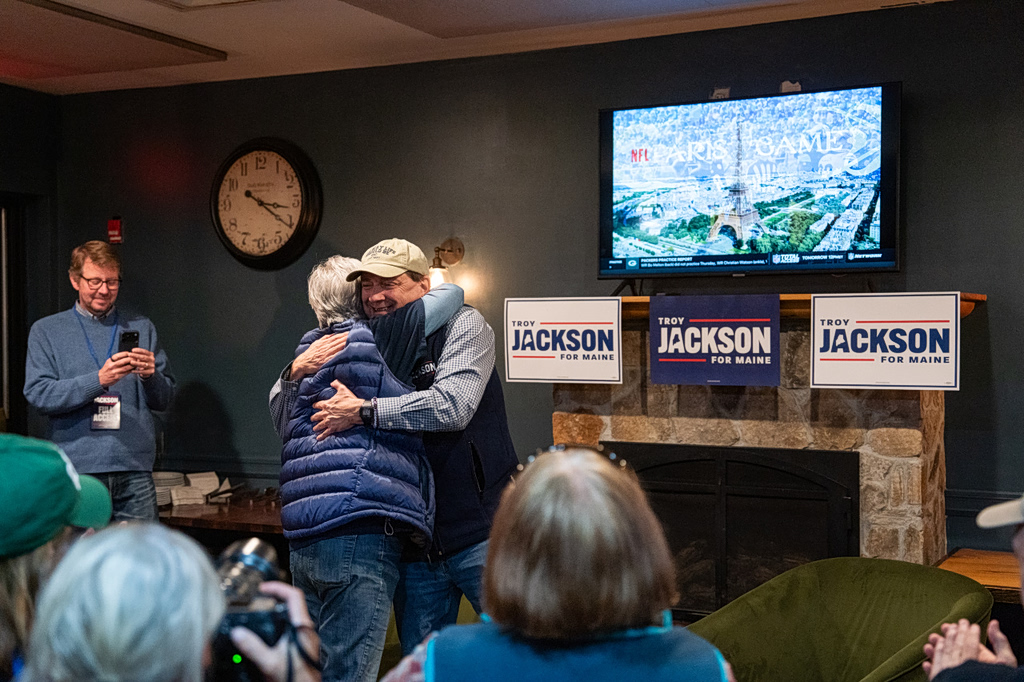
Troy Jackson during a meet-and-greet event in Falmouth, Maine. Sofia Aldinio for WSJ
Allies of establishment Democrats say the party apparatus hasn’t only gotten behind El-Sayed and Jackson but has also gone above and beyond—especially compared with the far left. The Schumer-aligned super PAC, for example, had previously announced plans to spend more than $60 million on communications in support of El-Sayed and $33 million for Jackson on TV by Election Day. It hasn’t announced investment in Minnesota. The Democratic Senatorial Campaign Committee, Senate Democrats’ campaign arm, has invested more than $21 million to support El-Sayed and $8 million for Jackson.
Meanwhile, those people say, Sanders hasn’t pulled his weight for the candidates he backed. Sanders has donated just over $2 million to El-Sayed, and roughly $1.5 million to other candidates, according to a spokesman for the senator. Sanders, the godfather of the progressive movement who has campaigned hard for El-Sayed and other progressives, had almost $22 million on hand as of the last campaign filing. He has signaled he is unlikely to run again for president, which made the pile of cash ripe for spending, the people said.
Sanders “is doing everything in his power to end Trump’s rubber-stamp Republican Congress,” spokesman Jeremy Slevin said in a statement, adding that on top of candidate support, Sanders had spent more than $16 million on rallies and campaign staff in competitive states.
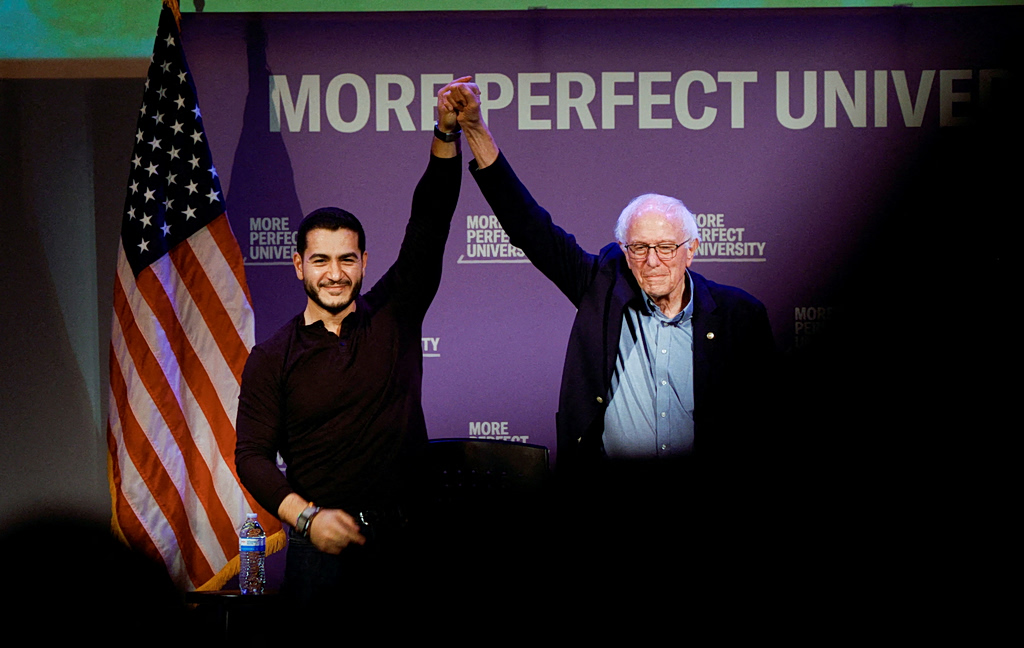
Democratic US Senate nominee Abdul El-Sayed and US Senator Bernie Sanders (I-VT) join hands at a More Perfect University presents Students vs Billionaires Town Hall in Ann Arbor, Michigan, US, October 26, 2026. REUTERS/Rebecca Cook/File Photo
Representatives for Schumer, El-Sayed, and Jackson didn’t respond to requests for comment.
Last month, Massachusetts Democratic Rep. Ayanna Pressley, standing beside Ocasio-Cortez at a press gaggle in Michigan to boost El-Sayed, blasted Senate Democrats’ campaign arm, claiming it wasn’t giving an “equitable investment in progressive and diverse candidates,” referring to the Michigan, Florida and Mississippi Democratic Senate nominees. Florida and Mississippi remain long shots for Democrats, considered likely Republican seats by nonpartisan analysts.
Establishment figures pushed back, saying her comments weren’t in line with the reality of how much the Senate Democrats campaign arm and Schumer’s Senate Majority PAC were spending in Michigan, in particular.
The DSCC and the Schumer-aligned Senate Majority PAC have since sent money to Mississippi, where Schumer helped recruit the nominee, who is a moderate, according to a person familiar with the matter. But both groups haven’t made major investments in Florida for progressive firebrand Angie Nixon.
The Senate Majority PAC didn’t respond to a request for comment.
“The DSCC’s job is to win a Senate majority, which is why we have heavily invested in states critical to our path,” a DSCC spokesperson said in a statement.
Nixon, a state representative who joined the Democratic Socialists of America this year but has rejected the socialist label, made waves in the August primary when she beat a heavily funded establishment-backed moderate.
She said in an interview she now has a “good working relationship” with Democratic leadership as they have helped her raise money. But still, she said that if she loses on Tuesday, a factor will be that there weren’t enough resources flowing into Florida to help her.
Matt Bennett, co-founder of the centrist Democratic organization Third Way, said he wants all Democratic candidates to win. But he worries if they do, it would negatively affect a 2028 presidential primary.
“We are worried about the people who are planning to run as a moderate reading this wrong. Not because they’re not smart but because the story line takes hold” that Democratic voters are more progressive than they actually are, Bennett said.
Progressive organizers and leaders, for their part, believe a strong showing in the midterms positions them well to have more of an influence in shaping the conversation among the 2028 Democratic presidential candidates.
“We’re going to be the center of gravity,” Geevarghese said.