 Μake us preferred on Google
Months ago, the Republicans’ majority in the upper chamber looked impregnable. Then Donald Trump launched a war in Iran, sending American fuel and borrowing rates sharply higher. Now Democrats appear in a commanding position to take not just the US House but potentially even the Senate too.
The president has told voters to “pretend I am on the ballot”. Now some Republicans are trying to distance themselves from their historically unpopular leader.
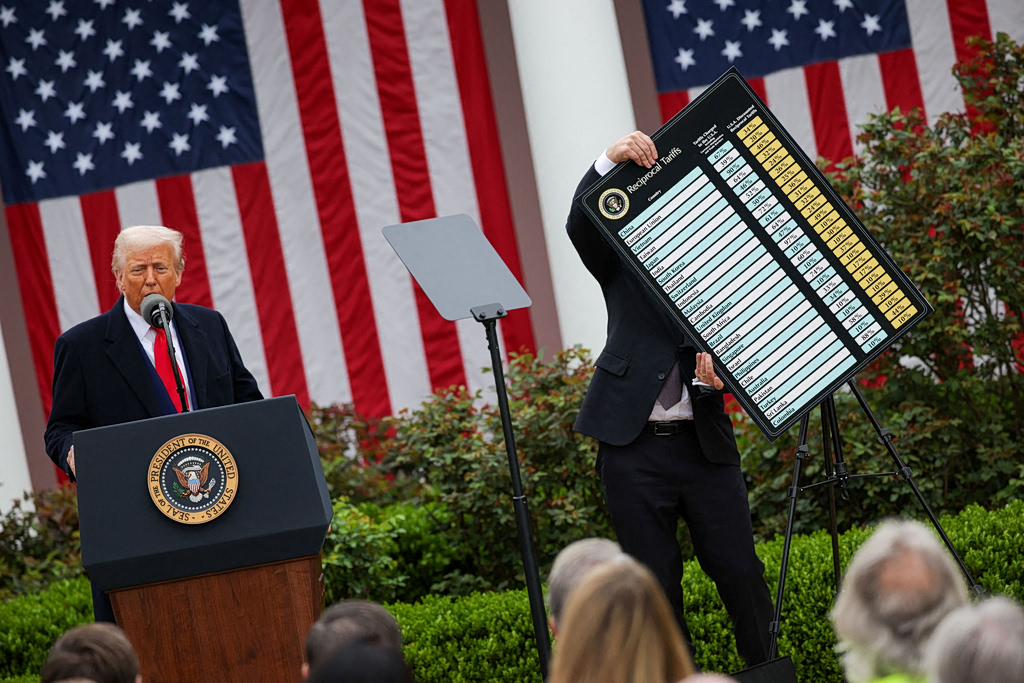
U.S. Secretary of Commerce Howard Lutnick holds a chart as U.S. President Donald Trump delivers remarks on tariffs in the Rose Garden at the White House in Washington, D.C., U.S., April 2, 2025. REUTERS/Carlos Barria/File Photo
But Democrats are unpopular too. The race for control of Congress may boil down to whether Trump’s party can overcome popular anger about inflation and the high cost of living — the biggest issues for most voters in many polls — and whether Democrats can persuade disillusioned voters they have real answers.
The election will give a sense of America’s mood near the halfway point of Trump’s second term. It will be full of colourful candidates and blockbuster fights, from the far-left Democratic candidates roiling their own party’s establishment to the Senate battle in Texas pitting a progressive Christian seminary student against a scandal-ridden, Trump-backed Republican.
Here are the pivotal developments to watch between now and November 3.
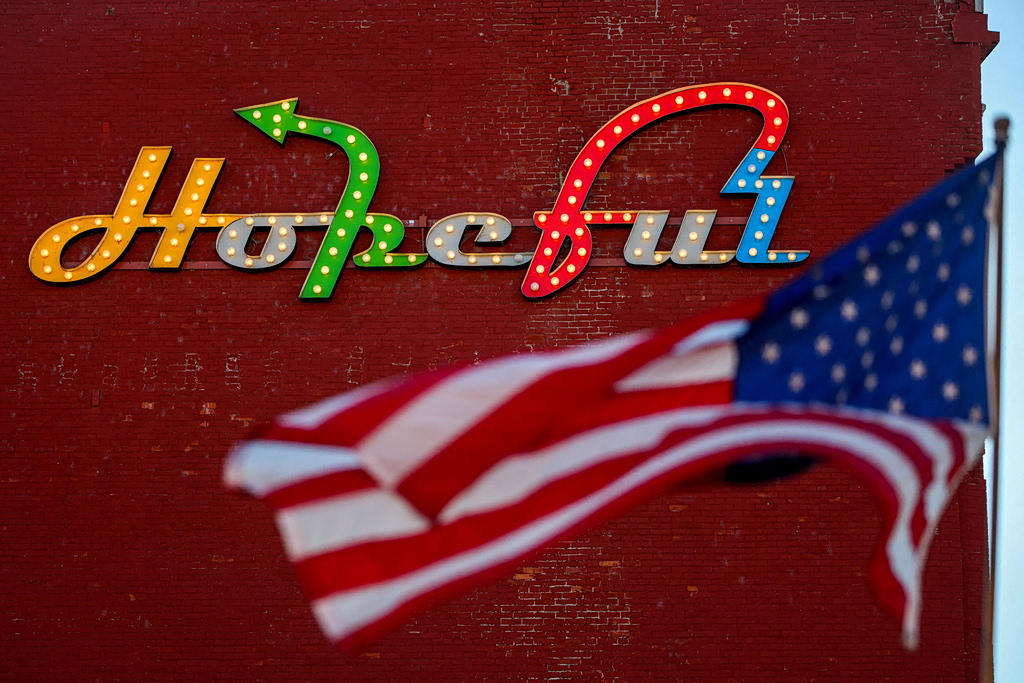
A sign saying “Hopeful” hangs on the side of a downtown building as an American flag waves in the wind ahead of the US midterm election in Bangor, Maine, US November 1, 2026. REUTERS/Taylor Coester TPX IMAGES OF THE DAY
The race for the Senate
Democrats face an uphill battle to take back control of the Senate, where 35 seats of the 100-member legislature are up for grabs.
Just 15 of these are rated as competitive by the Cook Political Report, a non-partisan newsletter that analyses US election campaigns. The rest are in safely “red” Republican states or “blue” Democratic states and are unlikely to change hands.
Republicans control the Senate by 53 seats to 47, with two independent senators, Bernie Sanders and Angus King, caucusing with the Democrats. That means Democrats need a net gain of four seats if they are to retake the upper chamber.
Republicans, meanwhile, can only afford to lose three seats. If the Senate is split 50-50, then vice-president JD Vance is able to cast tiebreaking votes in the chamber.
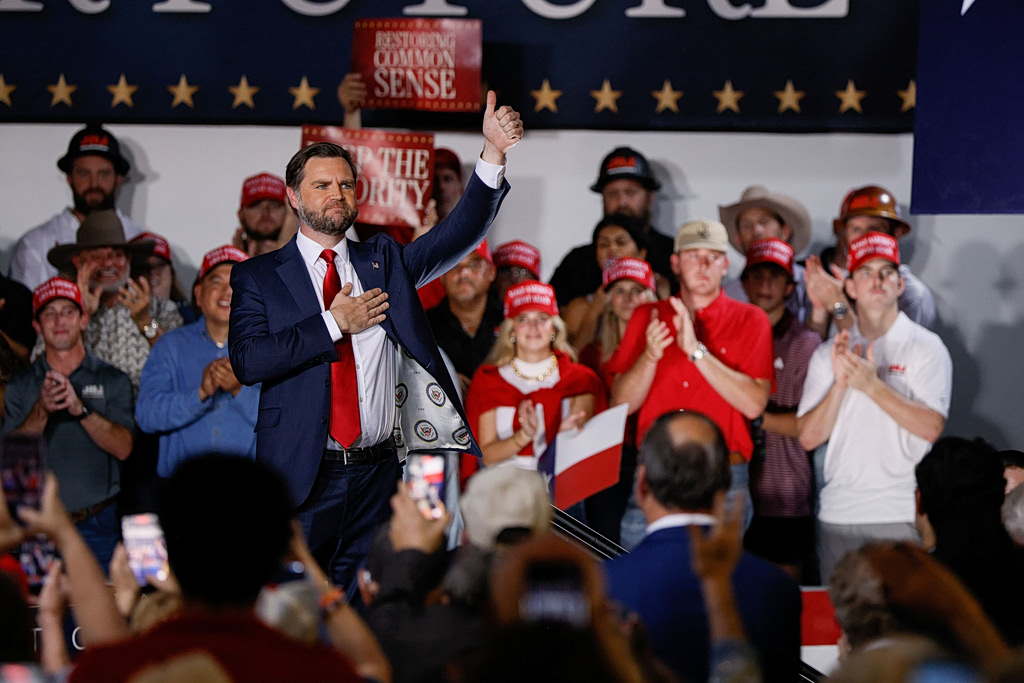
US Vice President JD Vance attends a midterm campaign rally at JRJ Construction in Weatherford, Texas, US, October 29, 2026. REUTERS/Evan Vucci/Pool
Democrats’ strongest chances of picking up seats are in North Carolina, Maine and Ohio. They could also pick up a fourth seat in either Alaska, Iowa or Texas. But they must also hang on to those they already hold in Michigan, Georgia and New Hampshire.
It’s a tall order, but a tantalising one for Democrats. If they can take back the Senate, they will be able to curb Trump’s presidential power in his final two years in the White House.
As petrol and other prices have risen, Democrats’ chances of winning the Senate have increased. Betting markets now think the party will win control of the upper chamber.
Senate races to watch
Former US Senator Sherrod Brown (D-OH), Democratic US Senate candidate, speaks during a rally before the midterm elections in Brook Park, Ohio, US, November 1, 2026. REUTERS/Shannon Stapleton
1. Ohio
Former Democratic senator Sherrod Brown is trying to make a political comeback against incumbent Republican Jon Husted in a test of whether the party can still appeal to white, working-class voters in Ohio.

US Senator Susan Collins (R-ME), who is running for re-election in a tight race for the midterm elections against Democrat Troy Jackson, delivers remarks at a ribbon-cutting ceremony for a new Public Safety Building in Milo, Maine, US, October 30, 2026. REUTERS/Taylor Coester
2. Maine
Republican incumbent Susan Collins will face fifth-generation logger Troy Jackson after progressive populist challenger Graham Platner was forced to suspend his campaign in the face of sexual assault and rape allegations.

Democratic candidate for the U.S. Senate Abdul El-Sayed speaks at a campaign rally ahead of the midterm elections, in Southfield, Michigan, US, November 1, 2026. REUTERS/Brian Snyder
3. Michigan
Progressive Democrat Abdul El-Sayed will face former Republican Congress member Mike Rogers in what is likely to be a fierce battle for this must-win seat.
Democratic US Senate candidate Mary Peltola speaks at a campaign event ahead of the midterm elections in Anchorage, Alaska, US, October 30, 2026. REUTERS/Kerry Tasker
4. Alaska
Under Alaska’s quirky state laws, the top four finishers in a primary advance to the general election. The two front-runners are Dan Sullivan, the Republican incumbent, and Mary Peltola, a former Democratic Congress member.

Democratic candidate for US Senate from Texas James Talarico speaks during a campaign rally at The Espee ahead of the midterm elections in San Antonio, Texas, US, November 1, 2026. REUTERS/Kaylee Greenlee
5. Texas
Democrat James Talarico, a former school teacher and Presbyterian seminarian, is in a battle to defeat Ken Paxton, the Trump-backed attorney-general with myriad professional and personal scandals.
Republican Senate candidate Ashley Hinson reacts during a midterm campaign rally with US President Donald Trump at Five Flags Center in Dubuque, Iowa, US, November 1, 2026. REUTERS/Evan Vucci
6. Iowa
Early polls suggest a close race between Republican Congress member Ashley Hinson and Democratic state legislator Josh Turek. A win for Turek would be a big upset: Donald Trump won Iowa by a 13-point margin in 2024.

Democratic candidate for US Senate from Kansas Adam Hamiltons canvassing in Kansas City, Kansas US, October 31, 2026. REUTERS/Nathan Howard
7. Kansas
Democrats have not won a Senate seat in Kansas since 1932 but their candidate, pastor Adam Hamilton, is in an unexpectedly tight race with Republican incumbent Roger Marshall
The battle for the House of Representatives
If Democrats take control of the House, they will decide whether Trump can pass legislation through Congress. They would also almost certainly launch investigations into the president and top members of his cabinet.
Members of the House serve two-year terms, so the entire 435-member lower chamber of Congress is up for re-election this November. The vast majority of the races are uncompetitive — partly due to decades of gerrymandering, in which both political parties have sought to redraw the borders of House districts to shore up “safe” seats across the country.
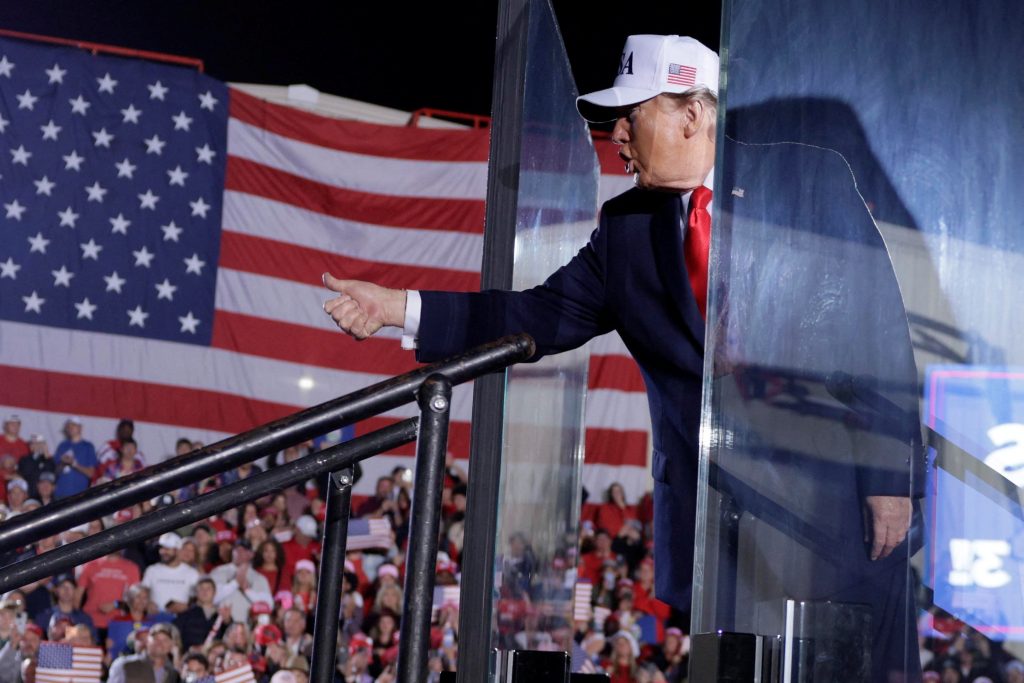
US President Donald Trump gives the thumbs up as he attends a midterm campaign rally at Salina Regional Airport in Salina, Kansas, US, November 1, 2026. REUTERS/Evan Vucci
Although this redistricting has historically taken place after the census once every 10 years, Republican-controlled state legislatures recently redrew election maps in southern states such as Texas. Democrats responded with their own gerrymandered map in California. Most experts suggest Republicans could gain a few seats through these redrawn boundaries. But the process has left only about 20 races that could decide the contest. Campaign money and resources are already inundating those districts.
Over the past few weeks, several polls have tilted in Democrats’ favour, in some cases turning House races once rated as “toss-ups” by the Cook report into ones that lean Democrat.
One is in Pennsylvania’s seventh congressional district, where Republican Ryan Mackenzie faces Bob Brooks, a retired firefighter from Bethlehem, Pennsylvania, where the FT is undertaking a multiyear reporting project.
Nationally, polls and prediction markets show voters swinging towards Democratic congressional candidates. Republicans are hoping that the polls are wrong.
Governors’ races to watch
Voters in state and local elections will also choose other officials, including governors in 36 states. Some will be seen as potential presidential contenders in 2028 and beyond.
Among the toss-ups are battlegrounds that are also swing states in presidential elections: Arizona, Georgia, Nevada and Wisconsin. Also in the mix are Michigan and Ohio.
Other races are drawing attention for the cast of characters. In California — which is generally seen as solidly Democratic — former Downing Street adviser turned Republican Fox News personality Steve Hilton is running a long-shot campaign against Democrat Xavier Becerra, Joe Biden’s former health and human services secretary.
Some Democratic governors up for re-election are considered 2028 presidential candidates. They include Josh Shapiro of Pennsylvania, Maryland’s Wes Moore and JB Pritzker of Illinois.
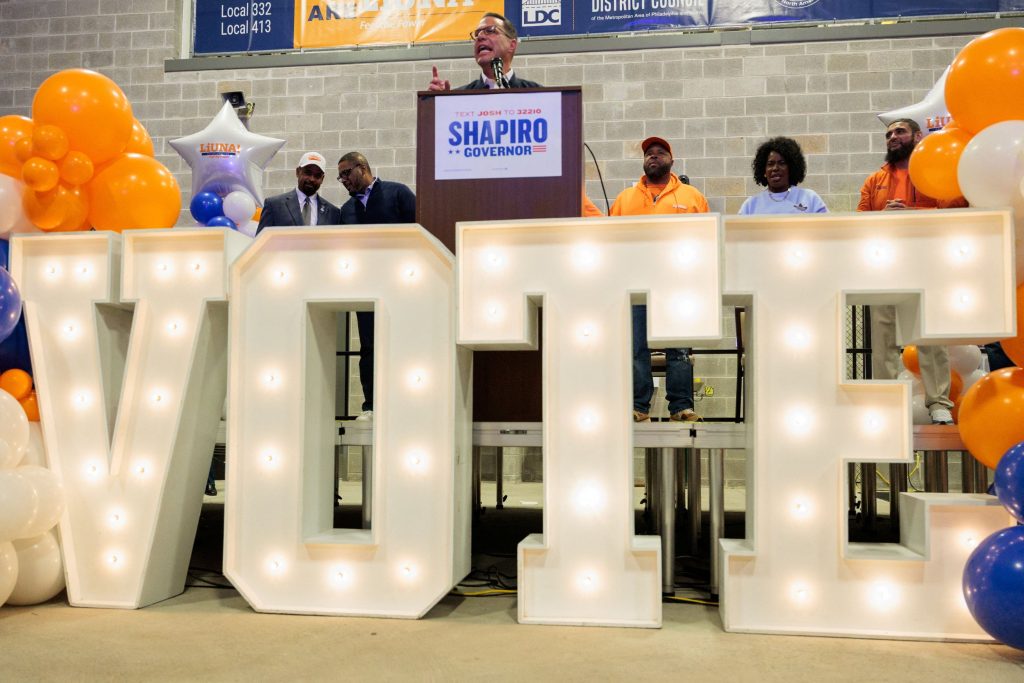
Pennsylvania Governor Josh Shapiro, Democratic candidate for re-election, speaks at a “Laborer’s District Council” rally in Philadelphia, Pennsylvania, US, November 1, 2026. REUTERS/Hannah Beier
Key issues
Affordability
During the 2024 presidential race, Trump promised to crush inflation and lower petrol prices that had soared under his predecessor Biden.
But Republicans could pay the penalty for the president’s failure to deliver. Inflation is now higher than when Trump took office in January 2025.
Petrol prices are a totemic issue for American voters and have risen sharply since Trump launched his war in Iran. According to AAA data, the average price of a gallon of regular petrol on October 26 was $4.28, well above its level of $3.14 a year earlier.
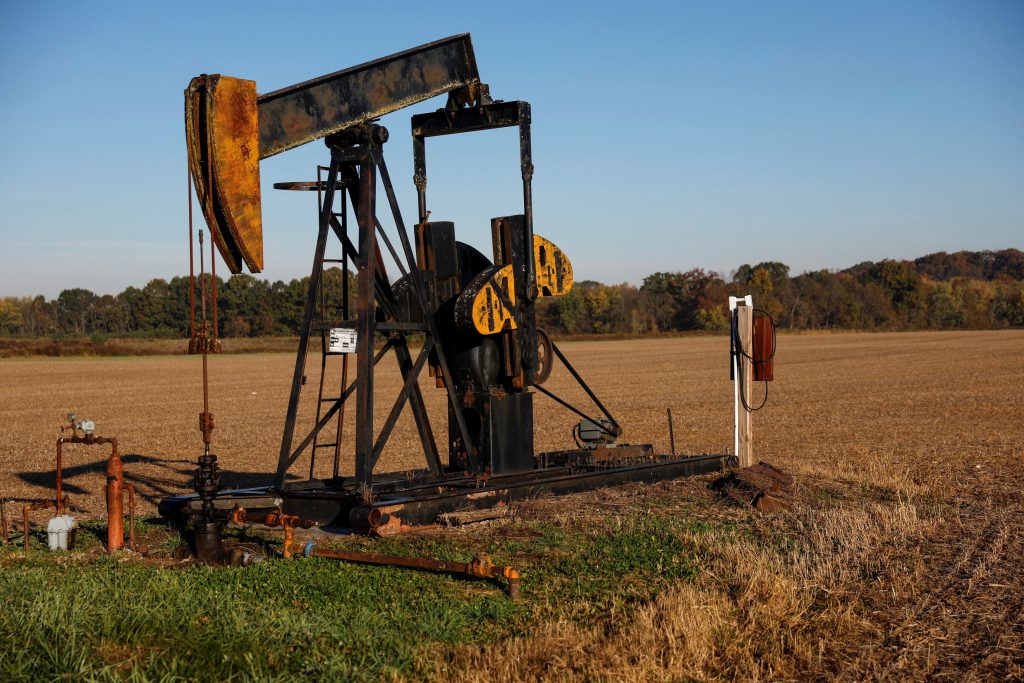
An oil and gas well stands in a corn field before the November midterm elections in the Tuscarawas County village of Bolivar, Ohio, US, October 25, 2026. REUTERS/Shannon Stapleton
The price of diesel — the lifeblood of America’s agricultural and industrial sectors — has shattered previous records and is now above $6.30 a gallon. Those costs are rattling through supply chains, pushing up the prices of other goods.
For Democrats, Trump’s failure to deliver on pledges has provided a consistent line of attack on the White House and the Republican Party. Trump has dismissed the cost of living “hoax”, mocking the word “affordability” as an obsession of “fake news” media.
Iran
Trump’s decision to go to war with Iran in February has been deeply unpopular with voters.
The president campaigned on a promise to avoid new military conflicts, especially in the Middle East. But in recent months he has embraced the use of force around the world, from the operation to capture Nicolás Maduro in Venezuela, strikes against alleged drug boats in Latin America and the Caribbean and attacks on Islamic militants in Nigeria.
With the conflict in Iran, Trump’s troubles have been compounded by the high cost of the war and its failure to accomplish its aims.
Months after US strikes began, the regime in Tehran has not been dislodged, and Washington is struggling to maintain a fragile ceasefire or to secure an agreement to maintain open shipping access through the crucial Strait of Hormuz.
Immigration
Early in his second term, Trump earned plaudits from voters for the near-complete closure of the US border with Mexico.
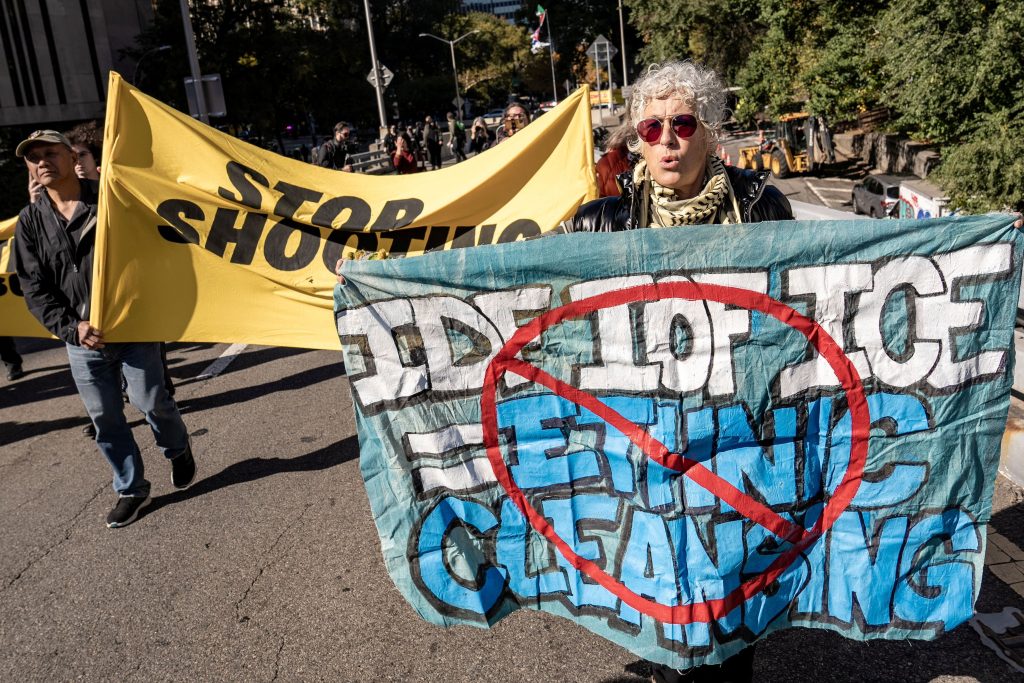
Demonstrators block the Brooklyn Bridge, to protest against recent Immigration and Customs Enforcement (ICE) shooting, in New York City, US, October 28, 2026. REUTERS/David ‘Dee’ Delgado
But the president’s crackdown on immigration has gone much further, with federal agents enforcing a deportation campaign, sometimes violently. The operation has disrupted communities across the country and prompted a wave of protests.
In January, government officers shot and killed two US citizens protesting the anti-immigration raids in Minneapolis, Minnesota, triggering protests. In July, two more people were killed by immigration agents and the White House has continued to push anti-immigrant rhetoric.
Voters still trust Republicans more than Democrats on immigration, by 47 per cent to 36 per cent, according to polling conducted for the FT by Focaldata.
AI
Trump and his allies have been hoping that the AI boom, which has lifted the stock market and boosted investment, would help improve voters’ perceptions of the economy heading into the midterms.
But the president’s intense focus on AI, including his cosiness with top technology executives, appears to be backfiring.
Voters fear the benefits of the technology are not being broadly shared and believe the gains are too narrowly distributed among a small cohort of top executives.
Protests have erupted across the country over the construction of the data centres needed to power AI development, due to their environmental impact, their effect on electricity prices and the limited number of jobs they create.
Party funding
Republicans have a substantial cash advantage across the national party committees and their allied Super Pacs in the final weeks of the campaign, holding about $485mn as of October 15. Democratic groups held roughly $227mn.
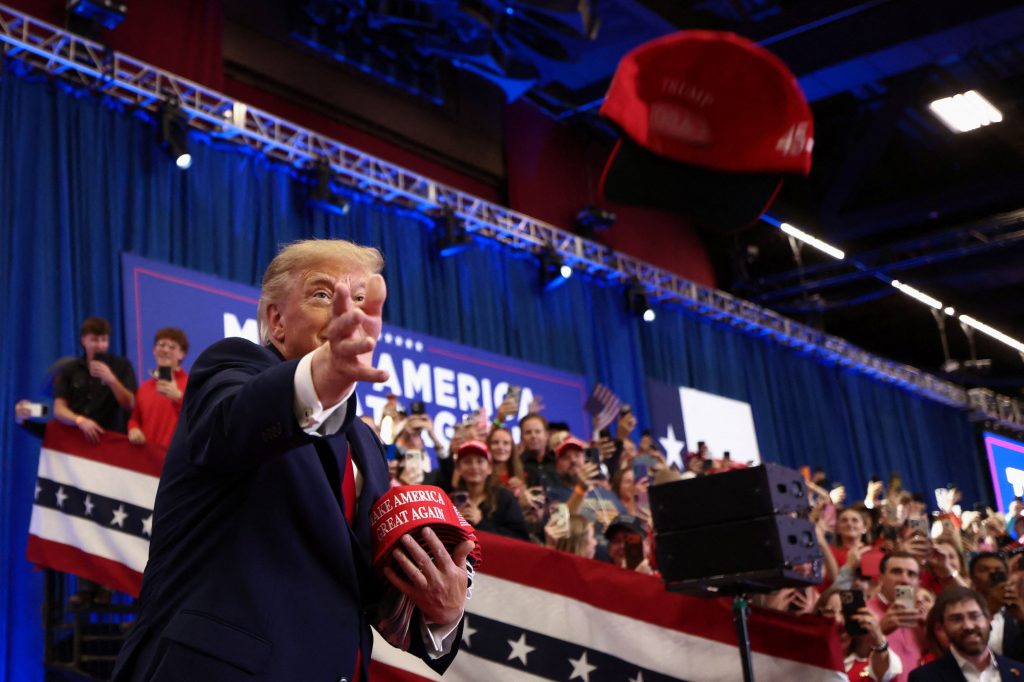
US President Donald Trump throws MAGA hats to attendees during a midterm election campaign rally to support Republican US Senate candidate Ken Paxton, in Lubbock, Texas, US, October 27, 2026. REUTERS/Kevin Lamarque
The pro-Trump Super Pac Maga Inc has also amassed a war chest of more than $400mn — more than any comparable group in a non-presidential election cycle, despite Trump being constitutionally barred from seeking another term — giving the Republicans another potentially significant financial advantage. With just weeks to go to the election, Maga Inc has begun spending some of its money to support Trump-friendly candidates.
Despite their smaller overall cash pile, Democrats have bigger war chests in several high-profile Senate races, including Texas and Georgia.
Link to FT.com: https://www.ft.com/content/29f1af13-ecc3-4f26-a479-e6088c67231b?syn-25a6b1a6=1
Copyright The Financial Times Limited 2026
© 2026 The Financial Times Ltd. All rights reserved. Please do not copy and paste FT articles and redistribute by email or post to the web.