 Μake us preferred on Google
Two major contracts granting private companies the right to operate shops and visitor facilities at some of Greece’s most visited archaeological sites, including the Acropolis, have been annulled by the country’s public procurement authority, prompting opposition parties to accuse the government of misconduct and demand answers from Culture Minister Lina Mendoni.
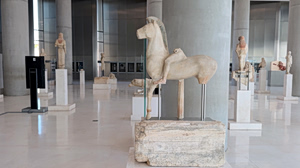
The decisions concern 27 shops at archaeological sites and museums across the country, as well as restrooms and storage lockers at the Acropolis and other locations. Both agreements were signed in August and had already drawn criticism over their financial terms and the procedures used to select the operators. The controversy has been particularly pronounced because several of the shops had recently been renovated with European Union funding before their management was awarded to private companies under agreements that could last up to 12 years.
The Hellenic Single Public Procurement Authority (EADISY) annulled the tenders following appeals by two companies challenging the procedures used by the Hellenic Organization of Cultural Resources Development (ODAP), the Culture Ministry agency responsible for managing commercial activities at archaeological sites and museums.
Publicly Funded Shops, Private Management
The larger of the two agreements covered 27 shops at archaeological sites and museums, including the Acropolis, Delphi, Olympia, Knossos and Epidaurus. The contract was awarded to a consortium of Space Hellas and Radiant Technologies for a fixed monthly payment of €50,600 plus 2% of sales. The initial term was six years, with an option to extend it for another six. That amounts to an average of approximately €1,874 per shop per month, excluding the percentage of sales.
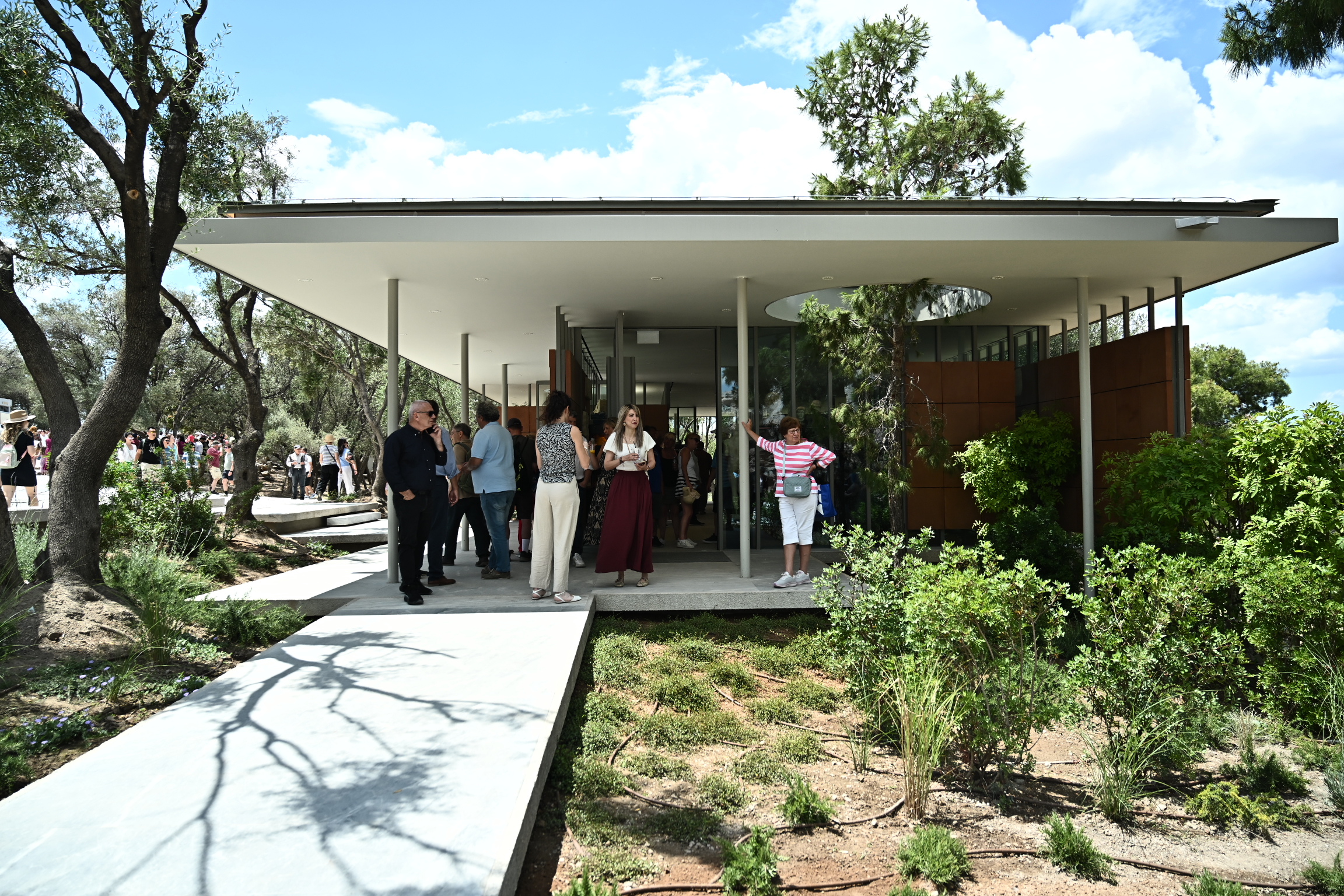
The financial terms attracted scrutiny because the state had recently invested heavily in modernizing many of the facilities. The Acropolis shop, for example, reopened in June 2025 following a €600,000 renovation funded through the European Union’s Recovery and Resilience Facility. It was part of a wider €6.3 million program to renovate 14 shops, including those at Delphi and Olympia.
Under the August agreement, the private operator would also be allowed to sell products of its own design and production under ODAP’s logo, subject to the agency’s approval.
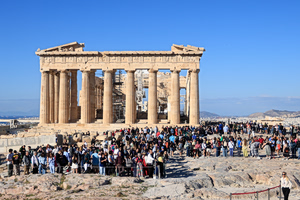
The second disputed contract concerned the management of restrooms and storage lockers at archaeological sites, including the Acropolis, which attracts approximately 5 million visitors annually.
That agreement was awarded to Public Shine Facility Management, a company established in November 2025 with initial share capital of €25,000, according to information previously publicized by the Greek Left Alliance (EL.A.S.), Alexis Tsipras’ new party. The company was to pay €2,500 a month plus 2% of revenue under a six-year agreement that could be extended for another six years.
Why the Contracts Were Canceled
Both arrangements were challenged by companies that argued ODAP had improperly treated the agreements as property leases rather than public service contracts, which are subject to stricter transparency and competition requirements. According to information obtained by TO BHMA, the companies argued that ODAP had wrongly treated the contracts as property leases, allowing it to bypass stricter public procurement rules.
In the case of the 27 shops, EADISY ruled that the contract was large enough to require an EU-wide tender, rather than the restricted bidding process ODAP had used. The authority also canceled the tender for the restrooms and storage lockers, finding that it was subject to public procurement rules and publication requirements that had not been met. The decisions concerned the legality of the tender procedures, rather than the financial terms of the agreements.
Opposition Parties Demand Answers
The cancellations have intensified criticism of Mendoni and ODAP from opposition parties that had already raised concerns about the agreements in Parliament.
PASOK, Greece’s main opposition party, said it first brought the issue before Parliament on Sept. 14, when its culture spokesperson, Naya Grigorakou, submitted a parliamentary question and a formal request for documents to Mendoni. Nearly 50 days later, the party said, it had received no response.
PASOK argued that both tenders had raised serious concerns from the outset about transparency, competition, the financial terms and the protection of public assets.
PASOK said the decision raised serious questions about how the Culture Ministry and ODAP had handled the contracts, particularly the failure to open the bidding for the 27 shops to companies across the EU. The party called on Mendoni to explain what had happened.
Sia Anagnostopoulou, a lawmaker from the New Left party, had also submitted parliamentary questions and requests for documents concerning the contracts.
The Greek Left Alliance, the newly formed party by former Prime Minister Alexis Tsipras, went further, calling for Mendoni’s resignation and describing the cancellations as vindication of its earlier allegations. “In any country governed by the rule of law, the culture minister would have resigned,” the party said in a statement, accusing the governing New Democracy party of another scandal involving public contracts.
It criticized the financial terms of both agreements and accused the government of failing to protect public revenue from some of Greece’s most commercially valuable archaeological sites.
Source: TO BHMA, AMNA