 Μake us preferred on Google
Since Friday, November 6, Greece’s political and diplomatic landscape has been dominated by the “cable issue” – the electricity interconnection between Greece and Cyprus, known as the Great Sea Interconnector (GSI).
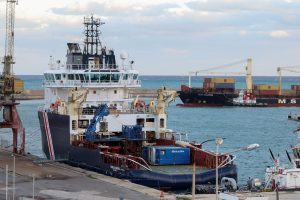
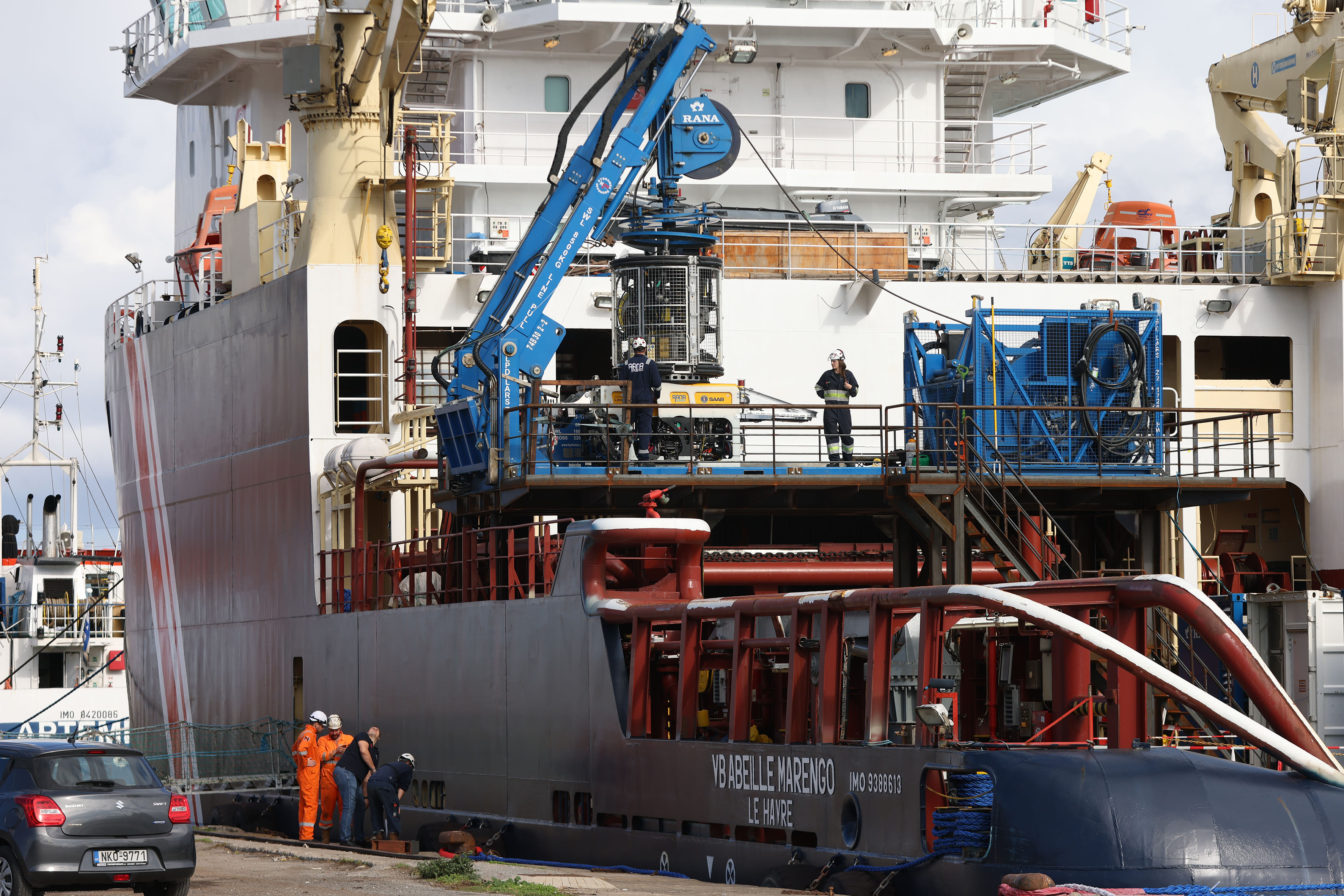
The developments have included Athens issuing a NAVTEX – a maritime safety notice – for the start of seabed surveys by the French-flagged vessel Abeille Marengo; Paris sending a diplomatic note to inform Ankara; Turkey responding that it had given its consent for the surveys to proceed; and the Greek government making an increasingly urgent effort to convince the opposition that authorization had been granted only by Greece and Cyprus. Together, these developments have created a tense atmosphere. Public debate has also been poisoned by an uncontrolled spread of opinions and leaks.
The tensions between the Prime Minister’s Office at the Maximos Mansion and the Foreign Ministry, along with the “shadow of Kasos” – a reference to the events of 2024, when Turkey halted the first phase of seabed surveys for the GSI – may help explain the cloud of uncertainty surrounding what exactly happened over the past two weeks.
The UNCLOS Legal Puzzle
In a case such as this, every legal and political detail matters. This was one reason why, as early as November 6, the Greek Embassy in Paris contacted the French Foreign Ministry to obtain a full understanding of the details.
According to reliable sources, however, the text of the diplomatic note does not establish an adverse legal precedent for Greece, since France does not recognize Turkish jurisdiction in any form – for example, through the Turkey-Libya maritime memorandum.
On the contrary, the note addresses the disputed area in the appropriate way: in the absence of maritime boundary delimitation, each side may have claims, but neither has rights. Unilateral actions, such as Turkey’s submission of coordinates for the outer limits of its continental shelf, create no binding obligations whatsoever.
There is also the legal puzzle posed by key articles of the United Nations Convention on the Law of the Sea (UNCLOS).
According to Maria Gavouneli, professor of international law at the Law School of the University of Athens, “The issuance of a NAVTEX was sufficient in itself, since the right to lay cables under Article 79 of UNCLOS is being exercised” (in combination with Article 58, which concerns the rights and obligations of other states in an exclusive economic zone, or EEZ).
Turkey, she adds, “chose, however, to essentially invoke Article 246, which concerns marine scientific research in EEZs and on the continental shelf, in order to establish a different legal basis.”
Indeed, the Turkish Foreign Ministry’s November 6 statement referred to “unlawful marine scientific research” on the continental shelf.
On the basis of this reasoning, the Turkish NAVTEX invoked Ankara’s unilateral submission of coordinates to the United Nations in 2020 to justify its consent for the Abeille Marengo surveys.
Petros Liakouras, professor of international law at the University of Piraeus, takes a similar position. As he points out, “The laying of a cable and the research inherent to that activity constitute a freedom of the sea. They may take place on the continental shelf, but this does not in any way deprive them of their character as a free use of the seabed. Turkey is not authorized to demand permission, consent or notification in order to consider whether to approve every vessel that explores the seabed on Greece’s instructions.”
He adds: “It must be made clear that Greece has an unshakable legal basis in support of its interests: the powerful leverage provided by the principle of freedom of the seas.”
Article 87
Even more important, although less widely known, is Article 87, which concerns the freedom of the high seas and also refers, among other things, to the freedom to lay submarine cables.
Paragraph 2 of the article states that this freedom is exercised “by all States, with due regard for the interests of other States in their exercise of the freedom of the high seas, and also with due regard for the rights under this Convention with respect to activities in the Area.”
This article has served as the basis for two important rulings: one by the International Court of Justice in The Hague in the Kenya-Somalia case (2021), and another by the International Tribunal for the Law of the Sea (ITLOS), based in Hamburg, in the Ghana-Côte d’Ivoire case (2017).
Legal experts told TO BHMA that the article is particularly significant in cases involving maritime areas where boundaries have not been delimited. Much of the area in which the Abeille Marengo will operate falls into this category. In the absence of agreed boundaries, coastal states have claims, but no established rights.
In such cases, notification that a state intends to exercise its freedom of the high seas is important. This, it appears, was the legal basis on which Paris sought to navigate the challenges surrounding the GSI.