 Μake us preferred on Google
 Turkish media have closely followed U.S. Secretary of State Marco Rubio’s visit to Athens, focusing on his meetings with Greece’s political leadership, the agenda of his talks and protests held in the Greek capital.
While some reports have highlighted the decision by Rubio not to travel to Ankara, much of Wednesday’s coverage has centered on the demonstrations and the issues expected to feature in his meetings with Greek officials.
Protests draw attention
Opposition newspaper Cumhuriyet gave prominent coverage to demonstrations held in Athens ahead of Rubio’s visit, citing a report by Turkey’s state-run Anadolu news agency.
Yunanistan’ın başkenti Atina’da, ABD Dışişleri Bakanı Marco Rubio’nun ziyareti öncesi savaş karşıtı gösteri düzenlendi.
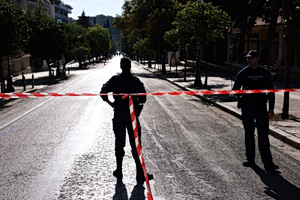
ABD Büyükelçiliğine yürümek isteyen göstericilerin önü polis barikatıyla kesilirken, eylemciler caddeye kırmızı boya dökerek ABD ve İsrail karşıtı sloganlar attı, Filistin’e destek mesajları verdi.
https://t.co/Sxcnd7z93T
— Cumhuriyet (@cumhuriyetgzt1) October 7, 2026
The newspaper reported that Greek police had imposed heightened security measures and erected barricades along Vasilissis Sofias Avenue to prevent demonstrators from approaching the U.S. Embassy.
According to the report, protesters threw red paint onto the road in front of the police barricades and chanted slogans against the United States and Israel while expressing support for Palestine.
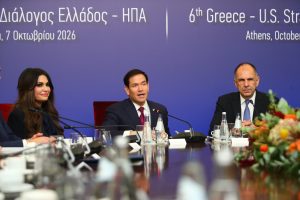
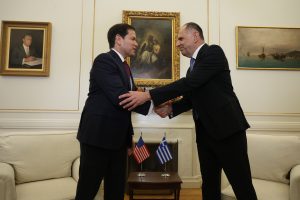
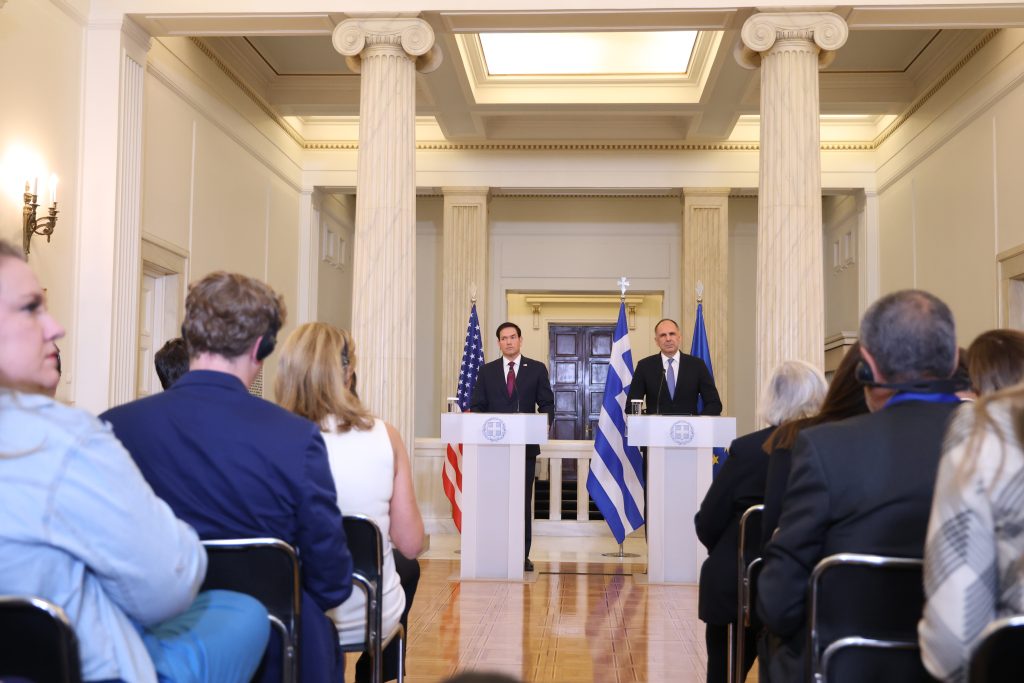
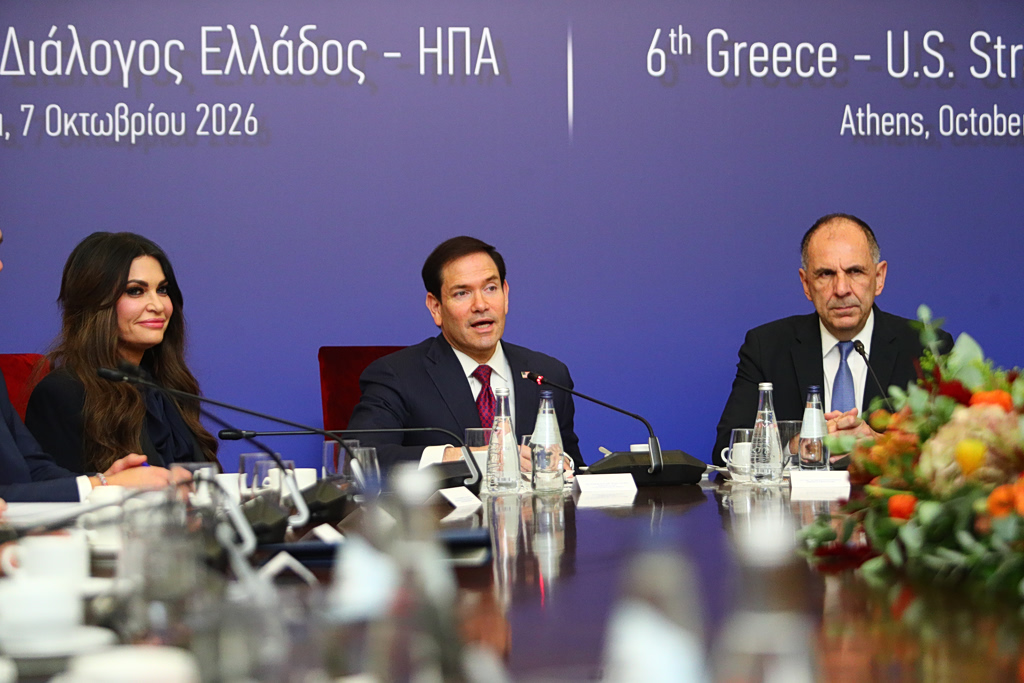
Cumhuriyet also reported on Rubio’s schedule, noting that he would meet Greek Foreign Minister George Gerapetritis and participate in the Greece-U.S. Strategic Dialogue.
A Haber highlights “explosion of anger”
Pro-government broadcaster A Haber published two reports on the visit.
One described Rubio as having faced a “huge shock” in Athens because of what it called an “explosion of anger” among protesters over U.S. and Israeli military plans.
A second report focused on Rubio’s planned meetings with Gerapetritis and Greek Prime Minister Kyriakos Mitsotakis, saying defense, energy and regional developments are expected to be at the center of the discussions.
It also reported that Greece’s plans to acquire U.S.-made missiles are expected to be discussed.
Focus on U.S.-Greece energy ties
Newspaper Aydınlık approached the visit from a different angle, running a headline about the strengthening of a “U.S.-Greece axis against Turkey.”
AYDINLIK MANŞET, 7 Ekim 2026
PAPA‘YA MEKTUBUN İTİRAFI
https://t.co/GIO6Cf3slG https://t.co/d2j3dOoxIH
— Aydınlık (@AydinlikGazete) October 7, 2026
Its report also referred to the Vertical Corridor, arguing that energy cooperation between Greece and the United States is linked to efforts to limit Turkey’s role and energy importance in the region.
Meanwhile, the Greece-focused website Yunanda described Rubio’s visit as a sign that U.S.-Greek relations are increasingly developing an independent character rather than simply forming part of Washington’s management of the balance between Greece and Turkey.
Rubio’s absence from Ankara draws attention
Rubio’s decision to visit Athens without a corresponding trip to Ankara had already attracted attention in Turkish media in the days leading up to his arrival.
The newspaper Türkiye, in a report published October 5, covered Greek media assessments that Rubio’s “exclusive” presence in Athens represented a positive development for U.S.-Greek relations.
The report said Greece was seeking to use the visit as a diplomatic advantage before turning to Turkey’s relations and defense agreements with other countries.
TR Haber similarly referred to Greek media assessments that Rubio’s presence in Athens was favorable for Greece. The Turkish outlet, however, argued that Washington continues to pursue a policy of balancing between Athens and Ankara.
&
Rubio’nun Atina ziyareti öncesi Yunan basınından Türkiye itirafı: Ankara’ya karşı hamle yapmak zorlaşıyor
▪️ ABD Dışişleri Bakanı Marco Rubio’nun Atina ziyareti üzerinden Türkiye’ye karşı diplomatik denge kurmaya çalışan Yunanistan’ın hesabı, Ankara’nın Avrupa ülkeleriyle geliştirdiği savunma ilişkileri nedeniyle zorlaşıyor.
▪️ Yunan basını, Türkiye’nin Avrupa’nın önde gelen ülkeleriyle yaptığı savunma anlaşmalarına ve gelişen askeri sanayisine dikkat çekerek Ankara’ya karşı adım atmanın giderek güçleştiğini yazdı.
https://t.co/PjFEhKyWmx
— TRHaber (@trhaber_com) October 5, 2026
nbsp;
Both reports notably used a photograph of Rubio shaking hands with his Turkish counterpart, Hakan Fidan.
How will Washington balance Athens and Ankara?
Halk TV focused on the question of how Washington will manage the balance between Greece and Turkey following Rubio’s visit to Athens.
Its report also referred to the close relationship between U.S. President Donald Trump and Turkish President Recep Tayyip Erdoğan, examining how that relationship could influence the U.S. administration’s approach to the two countries.