 Μake us preferred on Google
“Freedom is not given.” The words came from the F-16 of the Zeus display team above Thessaloniki, in Squadron Leader Christos–Paris Charitos’s message marking 28 October. It is the kind of phrase that can move us without making us uncomfortable. All we have to do is leave it referring exclusively to others: those who fought, those who sacrificed, those who had to stand their ground. The harder part begins when we ask what the same words demand of us once the parade is over.
The anniversary of 28 October commemorates Greece’s rejection of the Italian ultimatum in 1940 and its resistance to Fascist Italy’s attack. It is neither the anniversary of the Greek Revolution of 1821 nor the day of liberation from the German occupation. The distinction seems elementary. Yet a society cannot assume that it knows its history simply because it repeats its commemorations every year. Familiarity with symbols does not necessarily mean understanding the events that gave rise to them.
When a young person struggles to explain what we are commemorating, the easy response is ridicule. A wrong answer fits neatly into a short video and invites the verdict that the younger generation “knows nothing”. But we have no right to turn selected moments into a diagnosis of an entire generation. Nor can we ask children to bear sole responsibility for knowledge that we, as adults, have a duty to pass on. Ignorance needs to be addressed, not supplied with an audience to mock it.
When it comes to politicians, however, leniency cannot become immunity from scrutiny. We cannot quiz a teenager on camera yet settle for ceremonial rhetoric when it comes from someone holding public office. The higher the office, the greater the obligation to be historically accurate. Anyone who invokes the past to lecture citizens on responsibility must first check their own words and, when they are wrong, correct them publicly. An inaccurate formulation does not, on its own, prove wholesale ignorance. But public office does not turn it into truth. And getting a date right is not enough if resistance to fascist aggression is presented as a war without ideology and without identifiable responsibility. History is not a backdrop for the speaker’s prestige.
Historical accuracy requires us to confront what does not fit comfortably into a ceremonial speech. The rejection of the ultimatum was delivered by Ioannis Metaxas, the head of a dictatorship. The war was fought by people with different political convictions. Acknowledging the decision of 28 October does not absolve the dictatorship; condemning the dictatorship does not erase the decision. A mature relationship with the past can hold both truths together without turning history into a contest over which political camp owns it.
Ceremonies matter. A parade, a wreath-laying or a school commemoration can create a shared moment of remembrance and connect generations that did not live through the same events. Emotion is not the enemy of knowledge. It becomes an alibi, however, when we believe it excuses us from seeking that knowledge. The problem is not that we stand respectfully before a monument. It is that we imagine this gesture fulfils everything we owe the people we commemorate.
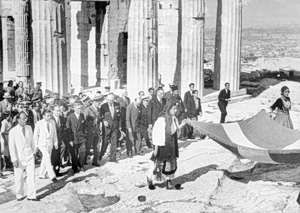
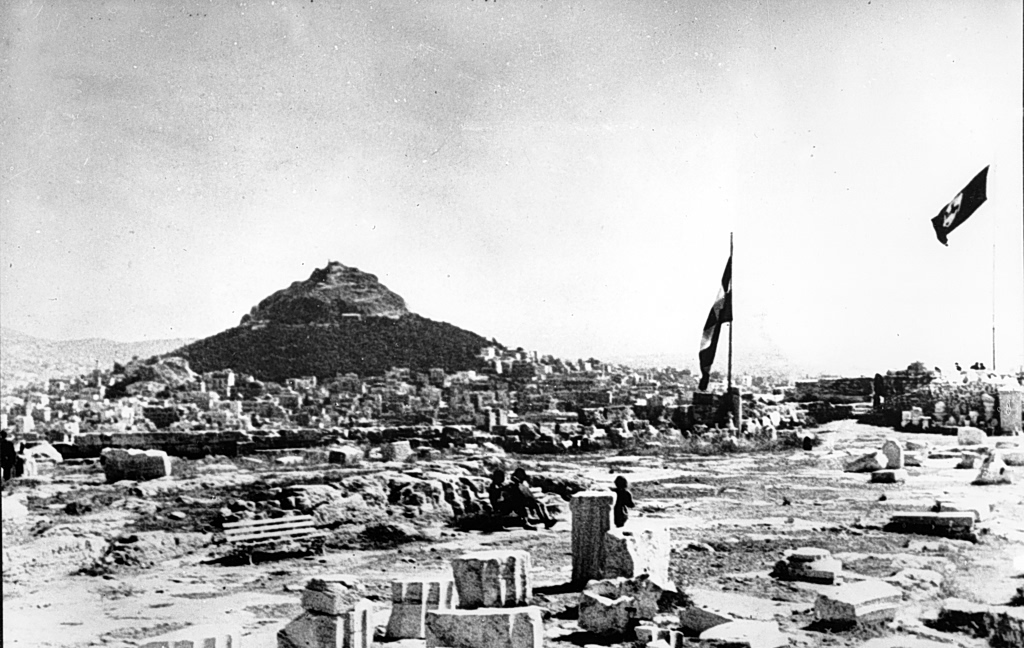
The exhibition “Divided Past: Greek-German Relations in Dark Times”, a collaboration between the National Archaeological Museum and the German Archaeological Institute at Athens, offers a different starting point: evidence-based research into the relationship between the two institutions, including during the occupation. What matters here is not the calendar of anniversaries, but the opportunity to examine what institutions and individuals did under specific historical circumstances. Cooperation in research does not require a sanitised version of the past.
This is also what we should ask of history education. It should go beyond reproducing the correct answer and teach pupils how we substantiate it. Who wrote an account? Under what circumstances? What does an archive reveal, and whose voice is missing? Working with sources, museums and local history can put human faces to what might otherwise remain abstract words. Teachers need time and support for that work, not simply another obligation to prepare a commemorative event.
Critical understanding does not mean that all interpretations are equally well-founded. Scholarly debate does not legitimise the denial of documented crimes, nor does respect for complexity erase the distinction between occupier and occupied. It means not demanding that research confirm in advance whatever suits us. Love for a country is not measured by our ability to conceal the difficult chapters of its history. It is also measured by the courage to learn about them.
This is precisely where the connection with democracy lies. We do not need to label every present-day conflict “another 1940”, or every political opponent a fascist. Such shortcuts strip words of their meaning and obstruct judgement. We need to understand how propaganda cultivates obedience, and how devaluing certain people prepares the ground for accepting the denial of their rights. History does not hand us a ready-made answer to every contemporary dilemma. It can, however, help us recognise, before it is too late, what a society is growing accustomed to tolerating.
We do not fulfil our democratic responsibility by assuring ourselves that, in the place of earlier generations, we would certainly have done the right thing. No one has been tested retrospectively. We are tested in the real circumstances of our own time: when we demand accountability from those we voted for as well, when we defend an opponent’s right to speak, when we refuse to accept abuses of power simply because they target someone we dislike. Today’s responsibilities are not the same as wartime sacrifices. They are nevertheless ours, and we cannot pass them on to the dead.
The state has a duty to support the independence of historical research and make room for children’s questions, even when they disrupt the comfort of a ready-made narrative. And we have a duty to demand the same accuracy in public discourse that we expect in a pupil’s answer. Remembrance acquires democratic meaning when it shapes what we tolerate in the present. Otherwise, we can be moved by the courage of those who came before us while always finding an excuse for our own silence. The message from the skies above Thessaloniki therefore leaves a question that outlasts the parade: if freedom is not given, is it enough to applaud those who defended it while we avoid the cost of defending it ourselves?