 Μake us preferred on Google
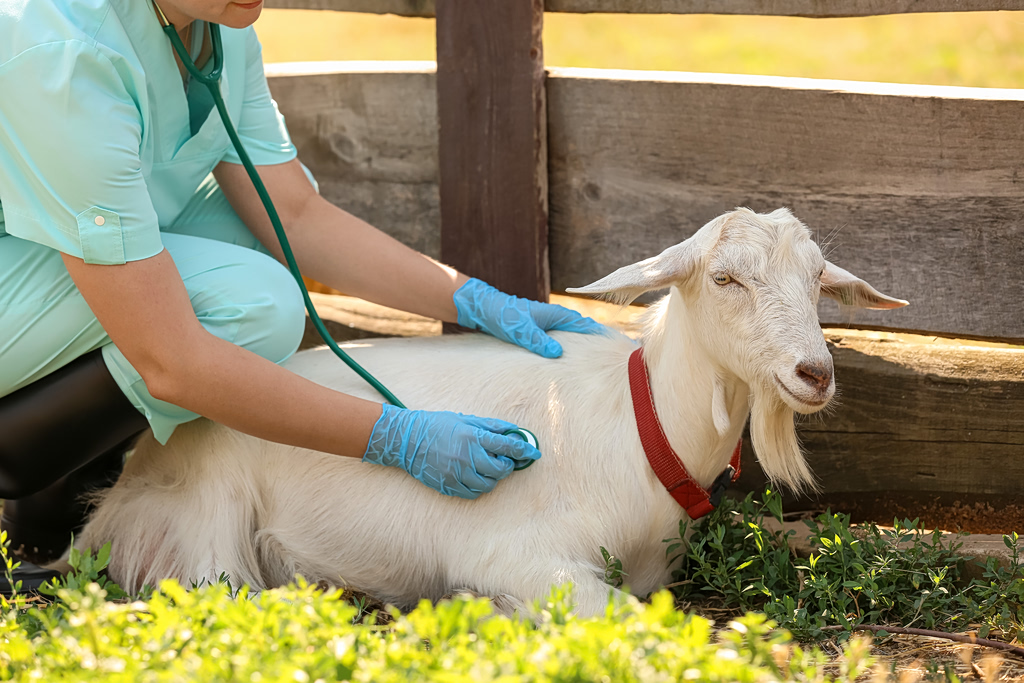
 Internal parasites may be quietly reducing the amount and quality of milk produced on Greek goat farms, according to new peer-reviewed research on the country’s pastoral livestock sector.
Researchers who followed 294 dairy goats on seven farms in Central and Northern Greece found that infection with gastrointestinal nematodes, a group of parasitic worms that live in the digestive tract, was associated with milk-yield reductions ranging from 2.8% to 7.6%.
The infected animals also produced milk with less protein. Protein content was 1.2% to 2.4% lower, while total protein yield fell by 3.7% to 7.5%. Measures of solids other than fat were also reduced.
The study, called “The impact of internal parasitism on milk production and udder health of dairy goats in low-input pastoral farming systems in Greece,” was published online in the open-access journal Parasitology Research.
A “Hidden” Parasite
The study examined goats from the indigenous Skopelos and Eghoria breeds and the Damascus breed. The animals, aged one to five, were monitored over two consecutive milking periods. Researchers collected monthly samples to assess parasite infection alongside milk yield, milk composition and indicators of udder health.
Parasitic elements were found in 38.1% of the fecal samples examined and gastrointestinal nematodes accounted for most of the infections detected.
The important finding for farmers is that the damage may not be obvious. Although infected goats produced less milk and less milk protein, the researchers did not find significant changes in the two udder-health indicators they studied, somatic cell counts and total viable bacterial counts.
In other words, a herd can lose output without showing a corresponding warning signal in the udder measures routinely associated with mastitis and milk hygiene.
The statistical models found an average reduction of about 5.2% in daily milk yield among goats infected with gastrointestinal nematodes. When the researchers considered infection by any of the parasite groups examined, the estimated average reduction was about 4.2%.
The sample covered seven low-input farms, and the authors say further research is needed to determine the parasite-burden thresholds at which production falls.
What it Could Mean for Greek Dairy

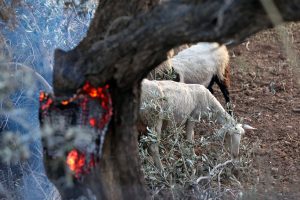
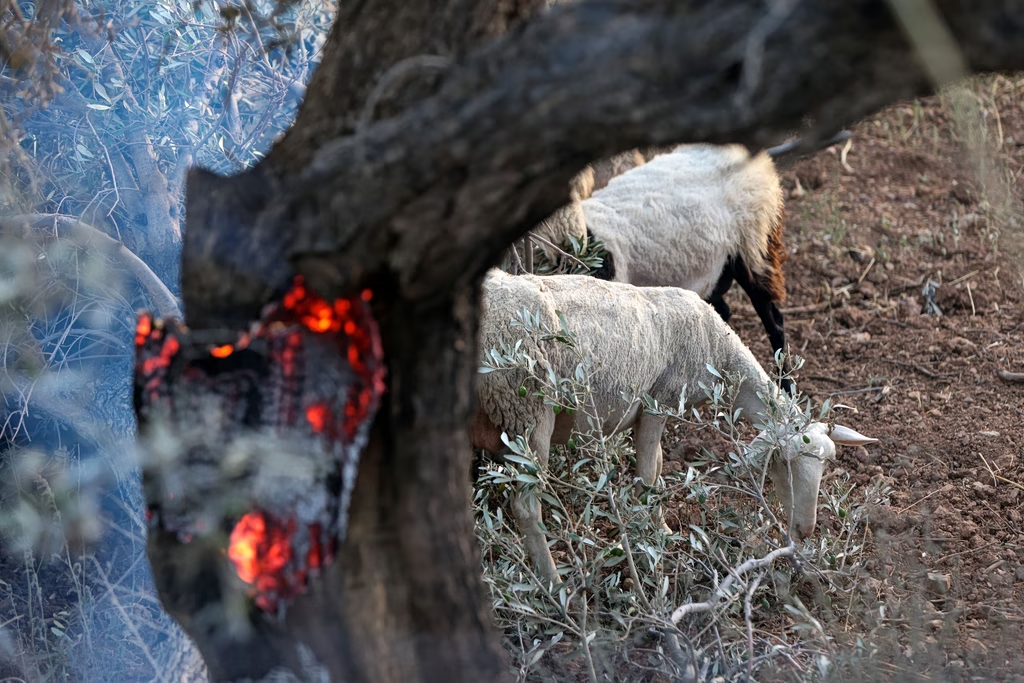
EUROKINISSI
Goat farming is economically and culturally important in rural and mountainous Greece. The paper cites a national population of approximately 3 million goats and annual goat-milk production of more than 160,000 metric tons, much of it produced in grazing-based, low-input systems.
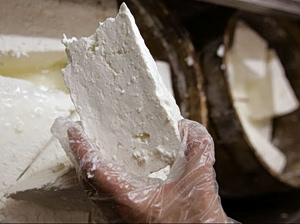
Milk volume is only part of the equation. Protein and casein contribute to cheese yield, texture and flavor, so a parasite-related decline in both milk quantity and protein can affect farm revenue as well as processing efficiency.
Citing earlier estimates, the paper notes that the cost of infections across 18 European countries cost the goat sector about €86 million a year. Across ruminant livestock, the same analysis attributed 81% of the economic burden to lost production and 19% to treatment and prevention. National estimates specific to Greece are not available.
The Role of Climate Change
The authors warn that rising temperatures and changing environmental conditions can favor the development and survival of parasites during their free-living stages on pasture.
That could increase the exposure of grazing animals and deepen production losses in the future. The concern is especially relevant to Mediterranean pastoral systems, where animals spend substantial time outdoors and climatic conditions strongly shape the life cycle of parasites.
The paper calls for targeted, evidence-based parasite control. Targeted control implies monitoring infection and treating according to veterinary evidence, farm conditions and the animals at greatest risk. A farm-level cost-benefit study would be needed.

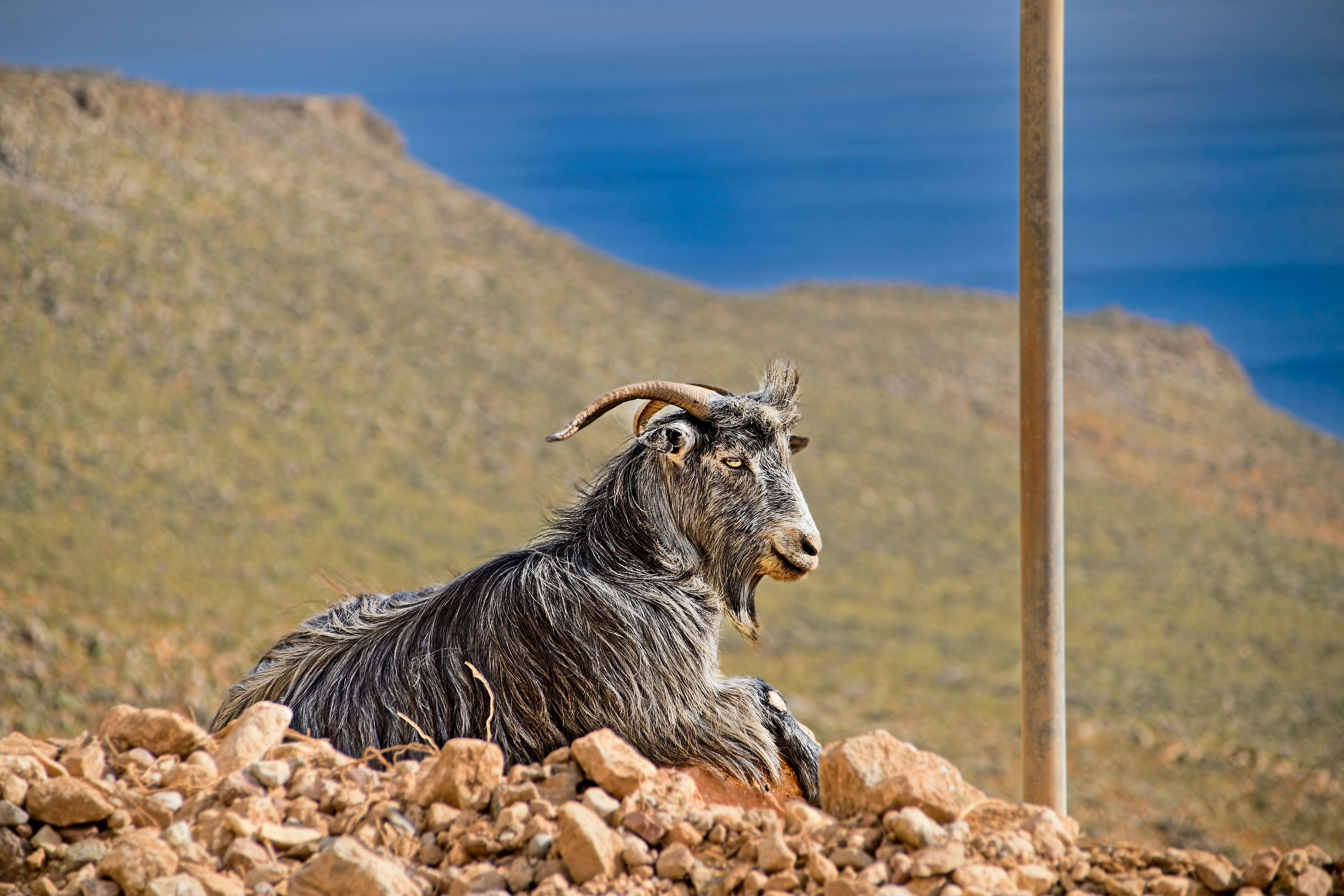
A goat as seen on the Greek island of Andros. Credit: Yoav
Another Strain on Greece’s Livestock Farmers
The findings arrive as Greek sheep and goat farmers continue to contend with sheep and goat pox, a separate viral disease that is not related to internal parasites and does not infect humans.
European Union animal-disease reporting recorded new Greek sheep-pox and goat-pox outbreaks in Maronia-Sapes, Olympia, Thasos and Preveza during the week of August 13 to 19. Greek control measures include the culling and sanitary burial of animals on infected holdings, movement restrictions and protection and surveillance zones. The Agriculture Ministry has also made compensation payments to affected livestock farmers.
Sheep and goat pox can destroy a flock through compulsory culling and movement restrictions, while internal parasites can erode production more quietly over time. Together, however, they underline the mounting animal-health and financial pressures facing smaller pastoral operations.
For the researchers, the practical conclusion is that parasite management should be treated as a productivity issue, not only an animal-health measure. Better-targeted control could help preserve milk volume and quality, but the next step is to establish which interventions deliver a return that smaller Greek producers can afford.