 Μake us preferred on Google
 Italy’s Giorgia Meloni has criticised Donald Trump’s plan to buy diesel from Russia, calling it a “very risky choice” that undermines international pressure on Vladimir Putin to end his war in Ukraine.
Speaking in parliament on Wednesday ahead of an EU leaders’ summit about support for Ukraine, the Italian prime minister said the US-Israeli war in Iran was driving up global energy prices — not the Ukrainian attacks on Russian refineries.
The US president has blamed Kyiv’s strikes for the increase in diesel prices and on Friday announced he had struck a deal with Putin to allow Russia to sell 300,000 metric tonnes of diesel to the US and other countries, despite western sanctions and efforts to bring the Russian president back to the negotiating table, Meloni said.
“The outcome of this decision is questionable, the risks are clear,” she said in her fiercest critique of a policy championed by her erstwhile political ally.
Meloni acknowledged high energy prices are currently putting heavy pressure on families and businesses around the world, including in Italy.
But she said Trump’s Russian diesel deal would grant “legitimacy to Moscow while its bombs continue to fall on Ukrainian cities”, bring fresh revenues into Putin’s war chest and lead to “an implicit weakening of the leverage provided by sanctions”.
“These are factors we cannot ignore, and they contradict the actions taken so far by western nations, including the United States, to push Putin to the negotiating table,” she said.
Meloni denounced Russia’s “increasingly harsh attacks” on civilian targets in Ukraine, such as power plants, hospitals and bridges.
“It’s a strategy by which Russia aims to subdue the Ukrainian people through terror, cold and darkness, simply because it hasn’t succeeded in subduing them on the battlefield,” she said. “No one will convince me that the surrender of those defending their freedom can be called peace.”
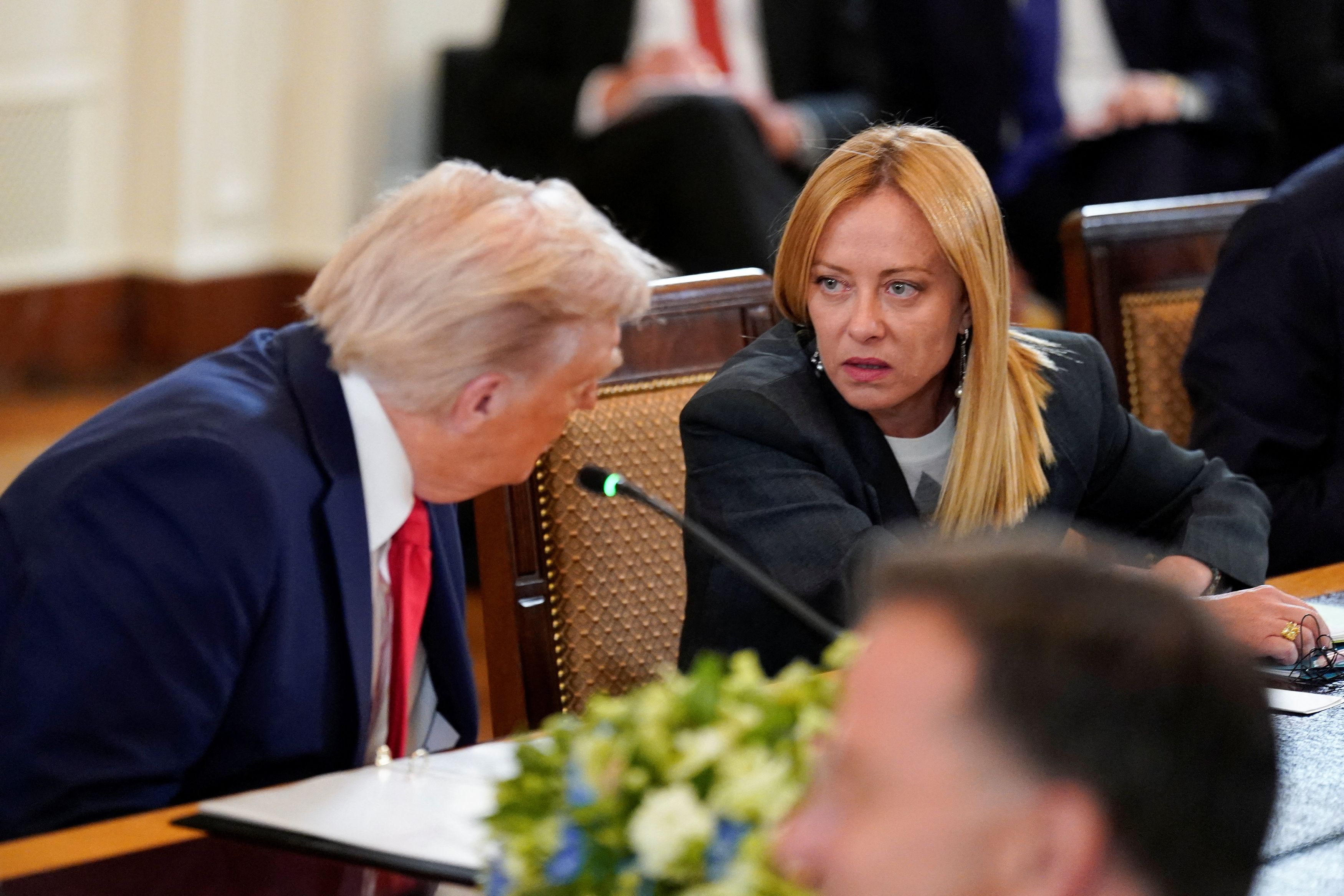
Meloni’s attack is her strongest criticism of the US president since the breakdown of their personal and political alliance earlier this year.
Meloni, who has longstanding ties with the US Republican Party, was once an ardent Trump admirer. After his return to the White House in 2025, she hoped their common ideological leanings would allow her to serve as a bridge between Washington and Europe.
But their once-warm personal bond broke down this year, after Rome balked at allowing US air bases in Italy to be used for Trump’s unpopular and controversial bombing campaign in Iran.
Though Meloni had avoided any direct criticism of the war, Trump turned on the Italian premier, accusing her of lacking courage to support, which led to a bitter public row between them.
Rome and Washington have since sought to repair ties, with Rome stating it would not respond further to Trump’s personal provocations.
Meloni’s attack comes as her government faces growing difficulties in tackling some of Europe’s highest energy prices, which industry groups warn are threatening the country’s economic growth.
The Italian premier’s fiercest political rival, former general Roberto Vannacci, has praised Trump’s decision to buy Russian diesel.
Riccardo Alcaro, a political risk analyst at Rome’s Institute of International Affairs, said Meloni taking such a strong stand against Trump on the issue would bolster her standing in Europe and emphasise her differences with Vannacci, a Putin admirer and former military attaché to Moscow.
“For Meloni, support for Ukraine has been the defining issue which has given her an international reputation,” Alcaro said.
“The fact that she has come out so strongly against a move that Vannacci has already praised solidifies her credentials domestically and internationally as a politician who remains committed to the Ukraine line, and is not as willing as people might assume to go where the political winds are blowing,” he said.
Link To FT.com: https://www.ft.com/content/178041cc-c9e7-4bd9-8c6e-7967931dcb33
Copyright The Financial Times Limited 2026
© 2026 The Financial Times Ltd. All rights reserved. Please do not copy and paste FT articles and redistribute by email or post to the web.