
 Μake us preferred on Google
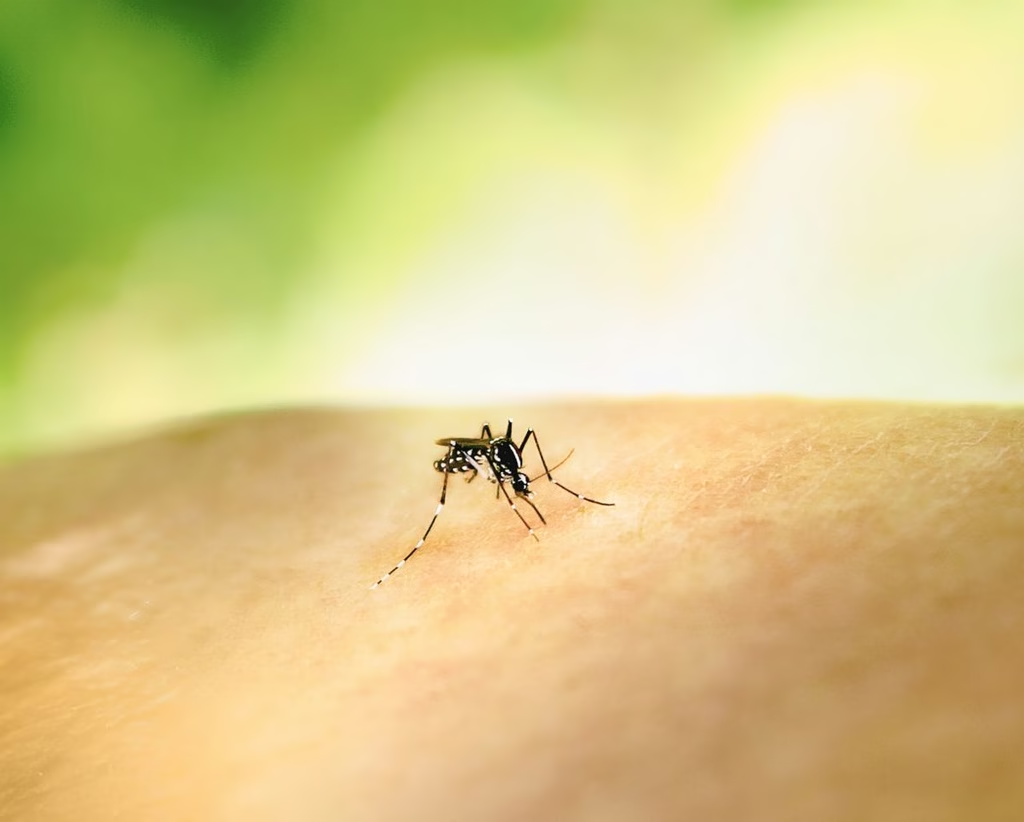
 Greek health authorities are stepping up mosquito control efforts as concerns grow over the spread of West Nile virus, with officials warning that infections could increase further in the coming weeks.
The Ministry of Health and the National Public Health Organization (EODY) have raised the alarm following a rapid rise in cases linked to mosquito transmission. Although 42 cases have been recorded so far, public health services expect a significant increase in the coming weeks, as infections typically peak during the second half of August.
The greatest concern is currently focused on the Attica region, which includes Athens, although EODY experts stress that new cases cannot be predicted because the virus is already circulating among mosquito populations.
Emergency Spraying Approved in Several Regions
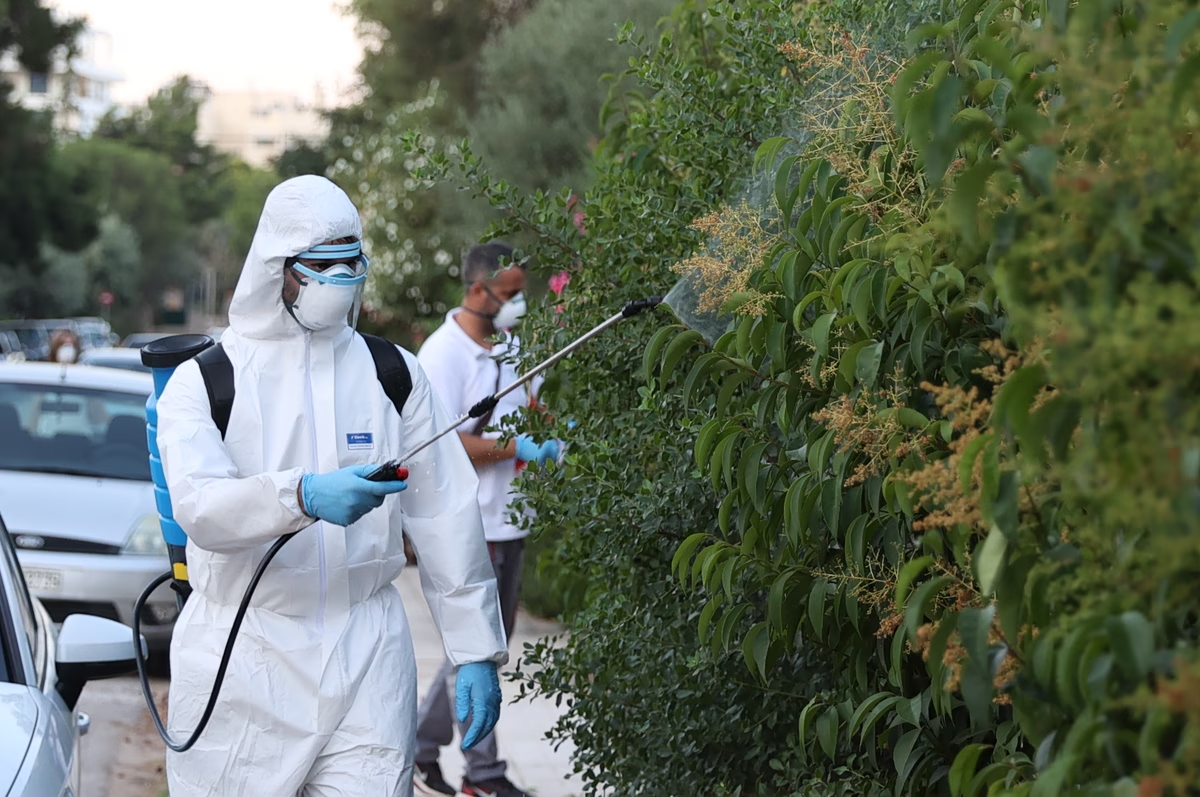
To limit the spread of the virus, Health Minister Eirini Agapidaki has granted special approval for additional mosquito spraying operations in Attica, Eastern Macedonia and Thrace, and Central Macedonia.
Although mosquito control with biocides is normally carried out when mosquitoes are in the larval stage, meaning preventive measures should begin in spring, authorities said the rapid spread of West Nile virus over the past month represents a documented public health risk requiring emergency action.
The approved measures include ultra-low volume (ULV) adult mosquito spraying, which uses specialized biocides to target adult mosquitoes.
In Attica, ULV spraying has been approved in the municipalities of Spata, Artemis, Pallini and neighboring areas of Eastern Attica, while maintaining restrictions requiring applications to take place more than 2 kilometers from residential areas.
A similar additional ULV spraying operation has been approved in the wider rice-growing areas of Central Macedonia, also with restrictions on applications near populated areas.
Authorities Require Monitoring Before and After Spraying
The ministry emphasized that mosquito population monitoring and documentation of the effectiveness of biocide applications are essential.
Authorities must track participating vehicles, collect mosquito samples and monitor population levels before and after spraying operations.
Officials also stressed the need for strict compliance with all safety requirements and restrictions to protect the environment, wildlife, local residents and workers carrying out the applications.
Health authorities noted that systematic mosquito control during the larval stage remains the main prevention method and should be intensified through emergency measures, especially in areas where West Nile virus circulation has been detected or where mosquito breeding sites are present.
ULV spraying against adult mosquitoes should not become a routine practice, authorities said, but should only be used in exceptional circumstances when there is a documented public health risk.
Authorities Seek More Detailed Mosquito Data
The Ministry of Health has also requested updated entomological data, virus surveillance information and records on mosquito control operations before and after biocide applications.
Attica authorities have been asked to submit detailed implementation plans, including intervention areas, the reasons for the applications, timelines and available mosquito data before and after each operation.
In Central Macedonia, officials requested additional information identifying the specific mosquito species collected during sampling, rather than only the mosquito genus.
Authorities said identifying mosquitoes only at the genus level does not allow for a sufficient assessment of population changes or the risk of disease transmission from individual species.
Public Urged to Take Protective Measures
Despite mosquito control efforts, EODY continues to recommend personal protection measures throughout Greece and for the entire mosquito season, as new infection locations cannot be predicted.
Residents are advised to use mosquito repellents and wear clothing that covers arms and legs to reduce exposure.
Health officials have highlighted the need for particular caution among older adults and people with weakened immune systems due to chronic conditions, as these groups face a higher risk of severe illness from West Nile virus.