 Μake us preferred on Google
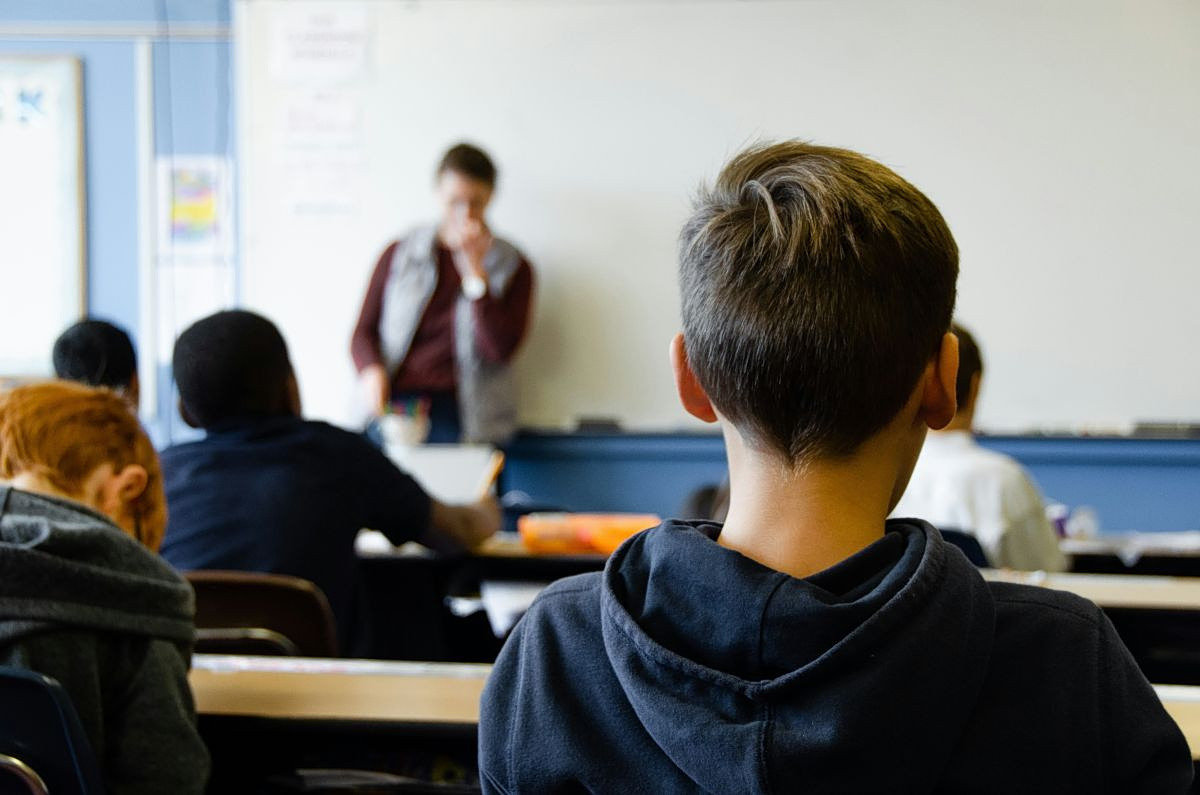
Schools in remote frontier and border regions. Pupils with no classmate beside them to get into mischief with, copy from or study with in the afternoon. A handful of children in places longing for more life, and communities that only barely “smell of school,” as I once heard a grandfather say while he waited happily for his grandson to finish class.
From Ioannina to Lesvos and Symi, and from Kastellorizo to Xanthi, Samothrace and Thymaina. Where the map of Greece ends, a “handful” of children stubbornly remain, together with their families.
The Numbers
- 580 school units in total, in hard-to-reach areas.
- 423 in primary education and 157 in secondary.
- About 19,000 pupils, or 1.5% of the country’s total student population.
These students experience all the pros and cons. There are teachers covering two grades at once and newly appointed teachers who may never turn up to their posts. But there is also a carefree life, freedom and mutual support in the country’s most remote corners.
‘When My Child Starts High School, We’ll Leave Kastellorizo’
Konstantina K., a mother of three, has lived on Kastellorizo for the past 16 years, ever since she met and married her husband. Their children, aged 5, 12 and 14, bring life to the island’s schools. In total, she says, about 35 children attend kindergarten and primary school, while just 16 share the desks in middle school and high school.
“It depends on the year and the births. It’s not always certain that there will be children. We’ve never had a year with none at all. Only last year’s second grade of primary school had zero children. But that had never happened before.”
Now that her children are approaching the demanding path toward the Panhellenic university entrance exams, the mother of three is thinking of leaving the island, and she explains why.
“I’m at the point where, as soon as my child starts high school, I’ll want to leave. If you had asked me ten years ago, I would have told you my children are perfect here and I don’t want them to go anywhere. It depends on what level they are at and how their parent thinks they should proceed. The problem starts in high school. Last year I was paying around 600 euros a month just for the children’s online tutoring, so they wouldn’t miss out on anything. For someone on a salary, that’s a huge amount. But I want them to leave, because there are no tutoring centers here. There are specialist teachers who may never come for the whole year, while the child is sitting the Panhellenic exams. That happened two years ago to a student taking the computer science track, and we had no computer science teacher here.”
The decision is not easy. The family will be split, she says. Half will stay behind, and there will be double costs for rent and other bills.
But there are also real advantages to living on a frontier island.
“I feel very lucky that my children are far away from drugs, beatings and violence, and from bullying at school. Here there is calm and freedom. They go out whenever they want. There is no fear, no traffic chaos. All of that is very far from us,” she says.
‘The Moving Parade With the Only Pupil on Arkioi’
Giorgos Ntoutsoulis is president of the Parents’ Association of the 1st Primary School of Voula and the creator of the initiative “Where There Are Angels.” He noticed the “loneliness” of the few pupils in these schools and decided not to sit idly by. In recent years, he and other parents have traveled to border areas so their children can march together with local pupils in school parades. It began on March 25, 2024, when they stood beside Michail Angelos, he recalls. He was the only pupil on Arkioi, a beautiful island with 44 residents, according to the 2021 census.
“Words cannot express the deep emotions we felt then. Angelos’s tears and the emotion of his parents, and of his teacher, were overwhelming. Because right up to the last moment, since we had no support at all (it is a completely volunteer effort), we ended up getting there on chartered inflatable boats from Lipsi, not on the regular ferry. That’s why we didn’t know if we would manage to set foot on the island. A breeze of five to six on the Beaufort scale would have canceled the whole trip. So when we arrived, since I took the last little boat with the other parents, what I saw was a group hugging, with Angelos and his mother in tears. I think that says it all,” he says.
“My son loves Arkioi very much. He has grown very attached to the place. He loved fishing, the sea, everyday life there. He felt at home. At the same time, though, he also felt his loneliness. Because a child can have a good time and have people who love him, but still miss having a friend his own age,” his mother, Nektaria Spyrou, tells us. Now, she adds, he is happy among about 30 classmates, the number of students at the middle school on Lipsi.
More joint parades and more gratitude followed: Agathonisi, Makedonia, Gavdos, Patmos, Kos. What Ntoutsoulis learned for certain is that an open school gives life to the whole community. In the end, in Michail Angelos Kavouras’s case, the school suspended its operation, since its one and only pupil has been attending the middle school on Lipsi since last year.
“Life is different now for Michail Angelos. At first, of course, it was a big change. He struggled to adjust, because he suddenly found himself in a bigger school with many children and a completely different daily routine. But after six or seven months, he adapted. Now he has signed up for soccer and has a full schedule. Still, Arkioi will always be in his heart.”
‘Demographics Are Our Biggest Problem’
In Stavroupoli, Xanthi, the number of students is falling year after year, says Chrysi Kalpakidou, principal of the area’s middle school with high school classes, who is now in her fourth year at the school.
“The main problem is that our student numbers are falling. Some children leave, and some, because we are a general high school, prefer to go to vocational high schools (EPAL), and of course, as you understand, there is the demographic problem. In my first year we had 65 students. This year we have just 25. There are no children. To give you an idea, the primary school here in Stavroupoli was downgraded to a three-teacher school. We, as a middle school with high school classes, have the support of the regional authority and of the secondary education directorate to keep the school open. But what cannot be solved is the demographic problem. And of course, one of the practical problems is getting the children to and from school.”
When it comes to education itself, though, they are not lagging behind, the principal stresses. Her colleagues on the teaching staff are highly qualified. Lessons are taught properly, and so are countless extracurricular activities. Notably, the school was named a European Parliament Ambassador School last year, a program she describes as very beneficial for the children.
Education Ministry: ‘No School Mergers in Frontier Areas’
The importance of keeping such schools open is self-evident for the Ministry of Education, Ioannis Papadomarkakis, Secretary General for Primary, Secondary and Special Education, tells tanea.gr. That is why there are never mergers in these areas, he makes clear.
“There have been no mergers in any frontier area. There are suspensions when there are no pupils. Let’s stress that. But a suspension does not mean closure. If there is even one pupil the following year, the school unit reopens normally.”
As for tutoring needs, he says, they “are covered by remedial teaching from the teachers themselves, who need to complete their working hours, and by the digital tutoring service, which runs all day and in which 400,000 students took part last school year.”
Just as important are the incentives offered to teachers to choose border areas. “As far as I know, very few teachers fail to show up in frontier areas, and that is because of the incentives. Namely:
- The two rents the government provides to permanent and substitute teachers serving away from their place of residence, up to 1,600 euros a year, plus 100 euros per child.
- All substitute teachers, again in schools outside their permanent place of residence, can eat at the officers’ clubs.
- Travel tickets at Christmas, Easter, in the summer, and even now for taking up their posts, are discounted by 50%.
- And of course the double points provided for border and frontier areas,” Papadomarkakis concludes.
In recent years, according to the Secretary General, the ministry has also been founding new schools: on Pserimos in 2025 for four pupils, a unified special vocational middle and high school (ENEEGYL) in Ierapetra for six students, and a special primary school in Eleousa, Ioannina, for seven pupils.