
 Μake us preferred on Google
KYIV—The last threads of Tetiana Limarova’s frictionless world withered away this month as she found herself living on four hours of power a day.
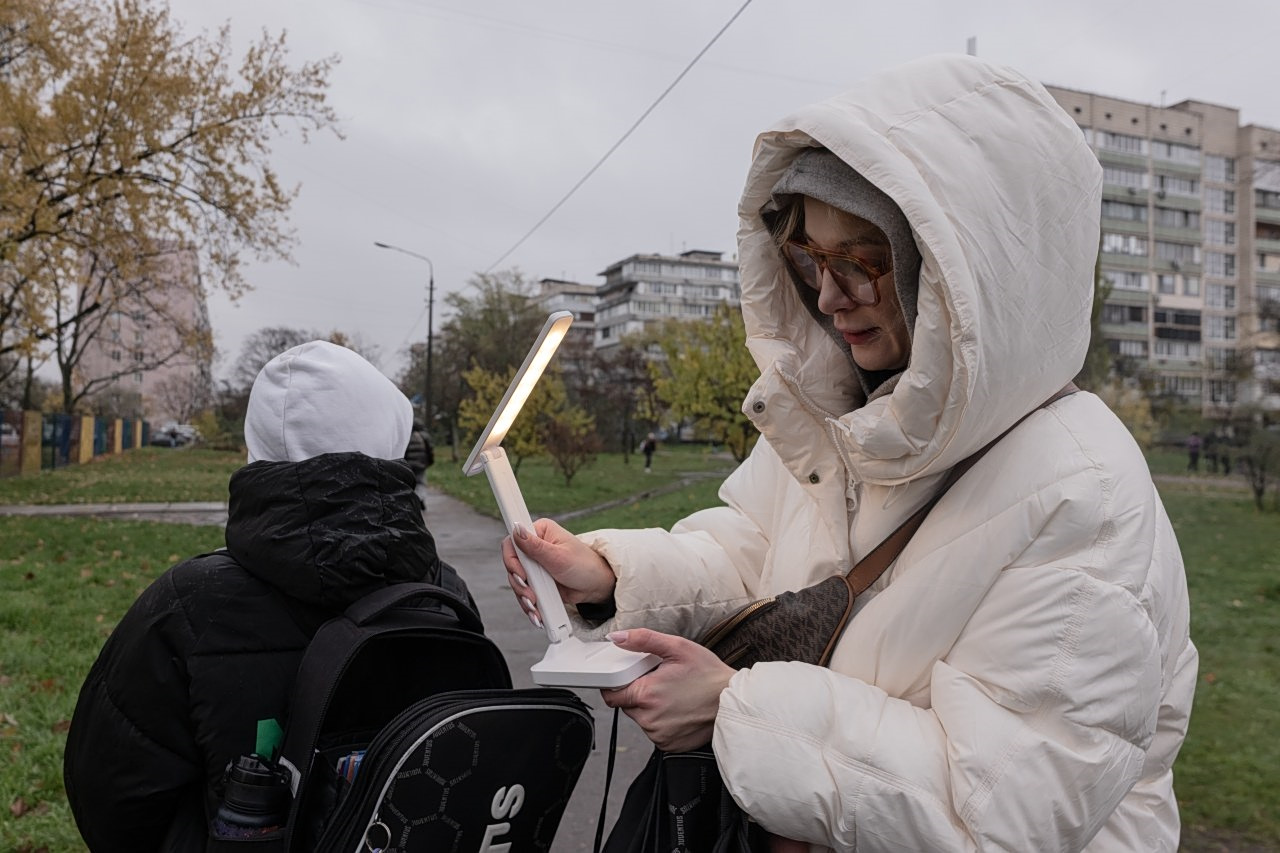
Blow-drying her hair has become a luxury. Her Wi-Fi cuts out during the long blackouts, and when her power banks die she has to trek to the nearest mall to recharge her devices. Her 10-year-old son’s schoolbag now includes a reading lamp for when the blackouts hit his elementary school.
At the beauty salon where she works, the temperatures hovered around 50 degrees Fahrenheit in mid-November, so the customers bundled up in blankets to stay warm as they got their hair washed.
“We’re hanging in there and don’t want to leave,” said Limarova, 40. “But if my child can’t go to school and is living in conditions that make survival impossible, that’s the situation that would force me to go.”

In the Kyiv beauty salon where Limarova works, temperatures hovered around 50 degrees Fahrenheit in mid-November. Photography by Svet Jacqueline for WSJ
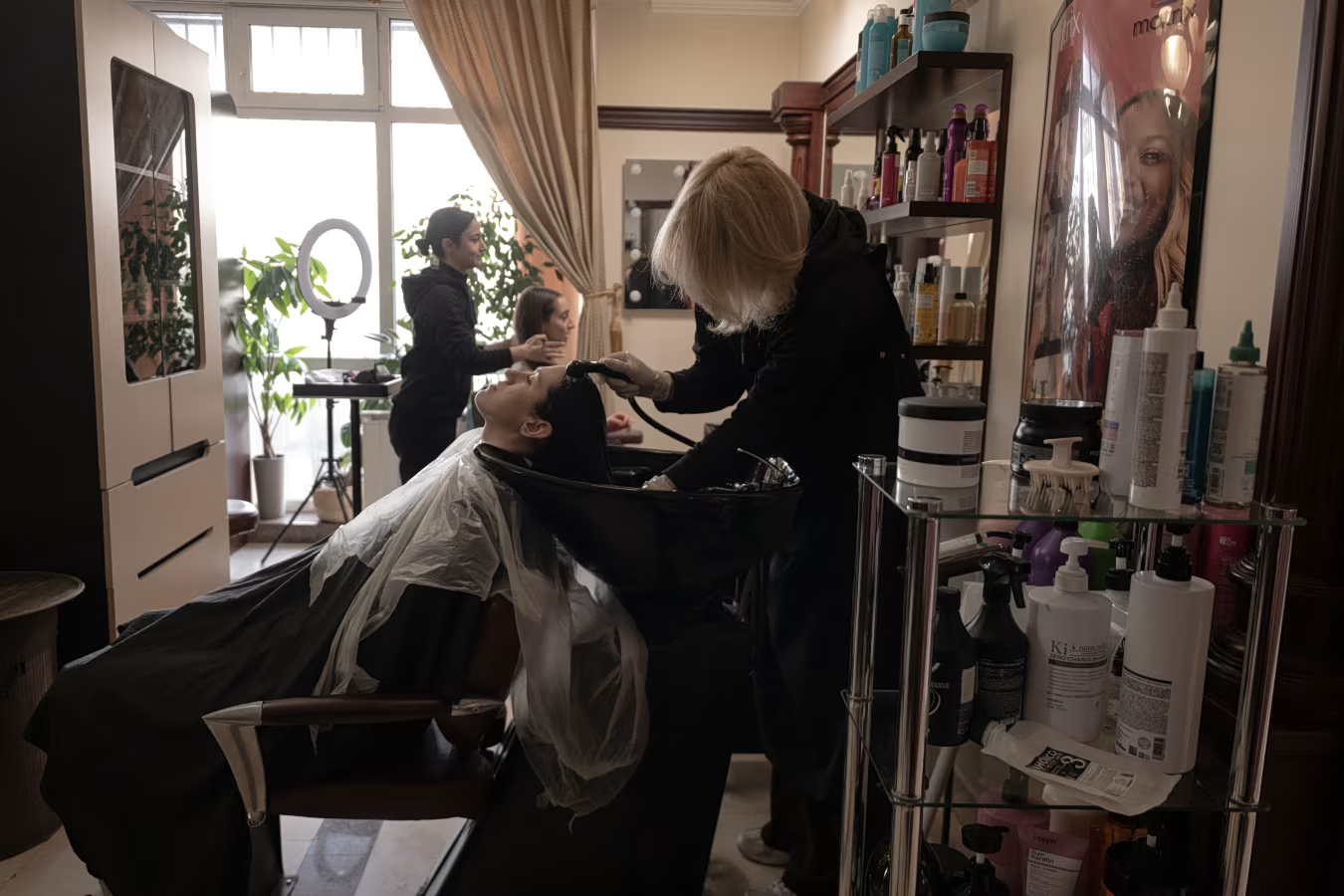
In the Kyiv beauty salon where Limarova works, temperatures hovered around 50 degrees Fahrenheit in mid-November. Photography by Svet Jacqueline for WSJ
As Russia’s President Vladimir Putin goes all in on targeting Ukraine’s power plants and other critical infrastructure this winter, millions of Ukrainians in Kyiv and other cities are reassessing the red lines that, once breached, would compel them to move to safety.
Ukrainian President Volodymyr Zelensky says Russia’s goal with its relentless missile and drone strikes is to paralyze Ukraine’s economy and physically separate the country. “We discussed in detail the challenges posed by Russia’s operation against our bridges and power grid— Russia is trying to divide Ukraine along the Dnipro River and make life as difficult as possible for people—for our cities and villages,” he said after a meeting with top government officials earlier this month.
That leaves ordinary Ukrainians with a choice: double down on their winter prep in Kyiv, or seek safety farther west or beyond Ukraine’s borders.
So far, many appear willing to bunker down. Limarova aims to stay in Kyiv to be closer to her husband in the Ukrainian military and her mother, who lives nearby. But the choice is becoming more difficult and more people are finding themselves on the edge. “I’d survive, whether in the cold or hunger, but I have a child, and I’m making this choice for him,” Limarova said.
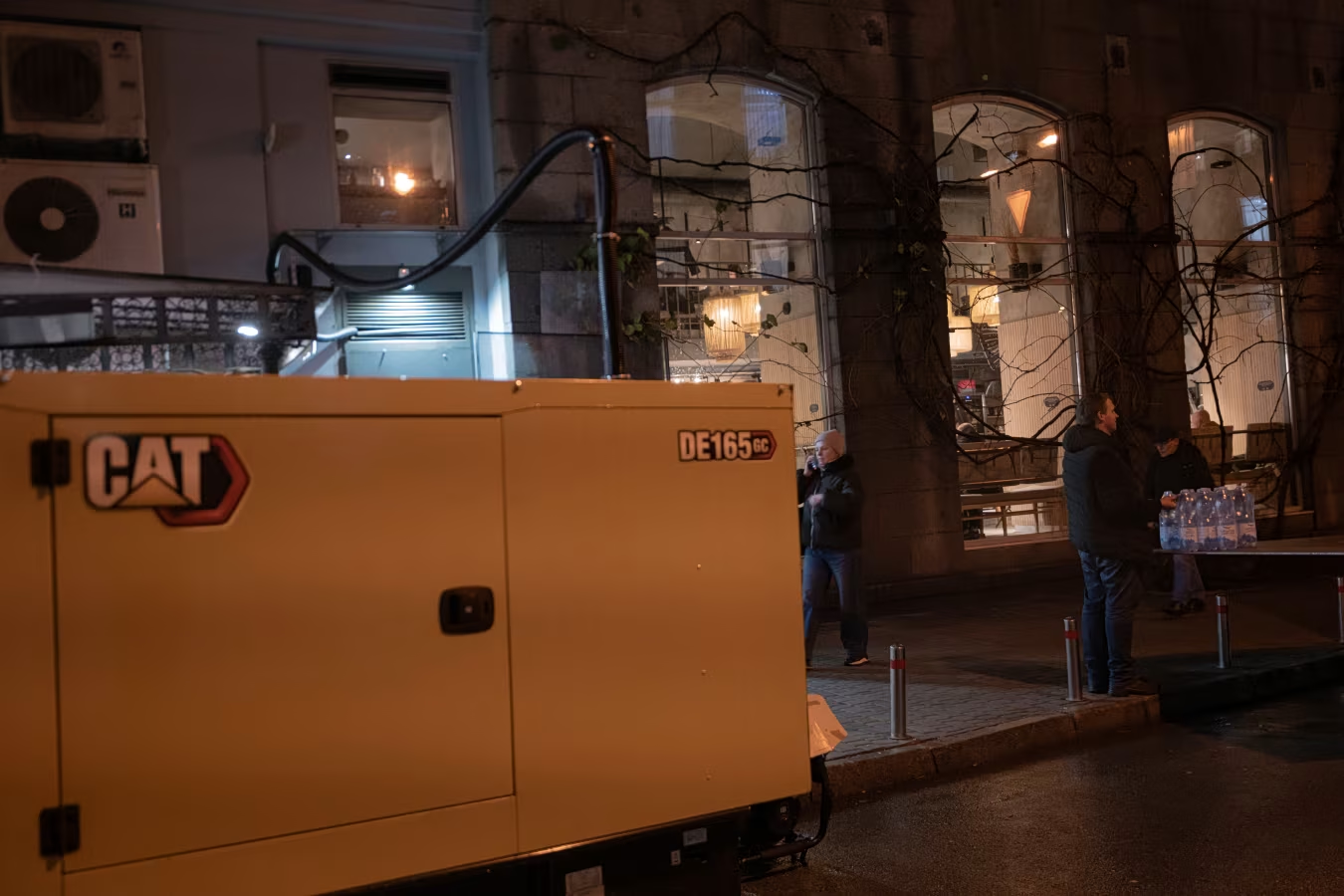
Stanislav Zavertailo’s restaurant in Kyiv relies on its generator to function during power cuts. Photography by Svet Jacqueline for WSJ
Stanislav Zavertailo’s restaurant in Kyiv relies on its generator to function during power cuts. Photography by Svet Jacqueline for WSJ
The Russian attacks have long intensified as winter approaches, but the consequences kicked in sooner this year. During daylong water cuts, she had to carry gallons of water up eight floors to brush teeth, wash dishes and flush toilets.
Since school functions intermittently, depending on air alerts in Kyiv, Limarova and her sister-in-law work fewer days in the beauty salon so that one of them can always be around in case her son gets caught in an attack while studying at home. The situation at work isn’t much better; her client base is shrinking as people leave town.
“In mid-October, many of my clients left for the winter, especially those who work remotely, either to stay with relatives in villages or abroad,” she said. “They say, ‘We’ll come back, but there’s just no way to put up with this.’”
The Russian attacks have systematically targeted power plants for years, and the barrage is intensifying, Ukrainian prosecutors say. During one week in November, Ukraine’s largest private power company DTEK was working to restore power to over a million consumers. Water companies struggled to power their pumps. Parts of town lost water pressure for hours. Trendy downtown bars poured filtered water over the clients’ hands to wash them and offered jugs of gray water for toilets that wouldn’t flush; some closed their bathrooms altogether.
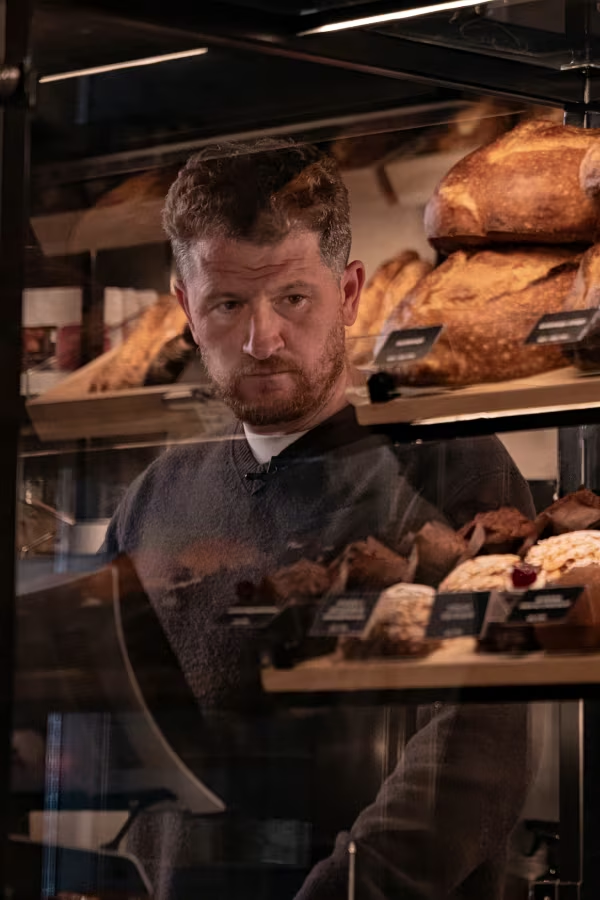
Kyiv restaurant co-owner Stanislav Zavertailo installed a backup water system to stay open, but the growing cost of the generators he needs to work is colliding with waning demand. His business operated at a loss last month.
“This is the first time we’re facing such critical challenges—people are leaving and everything is getting more expensive,” Zavertailo said, adding that Russian strikes on other businesses caused delivery disruptions. He is now considering closing some locations. “I’m not going to say this is the hardest part because the hardest part is still ahead.”
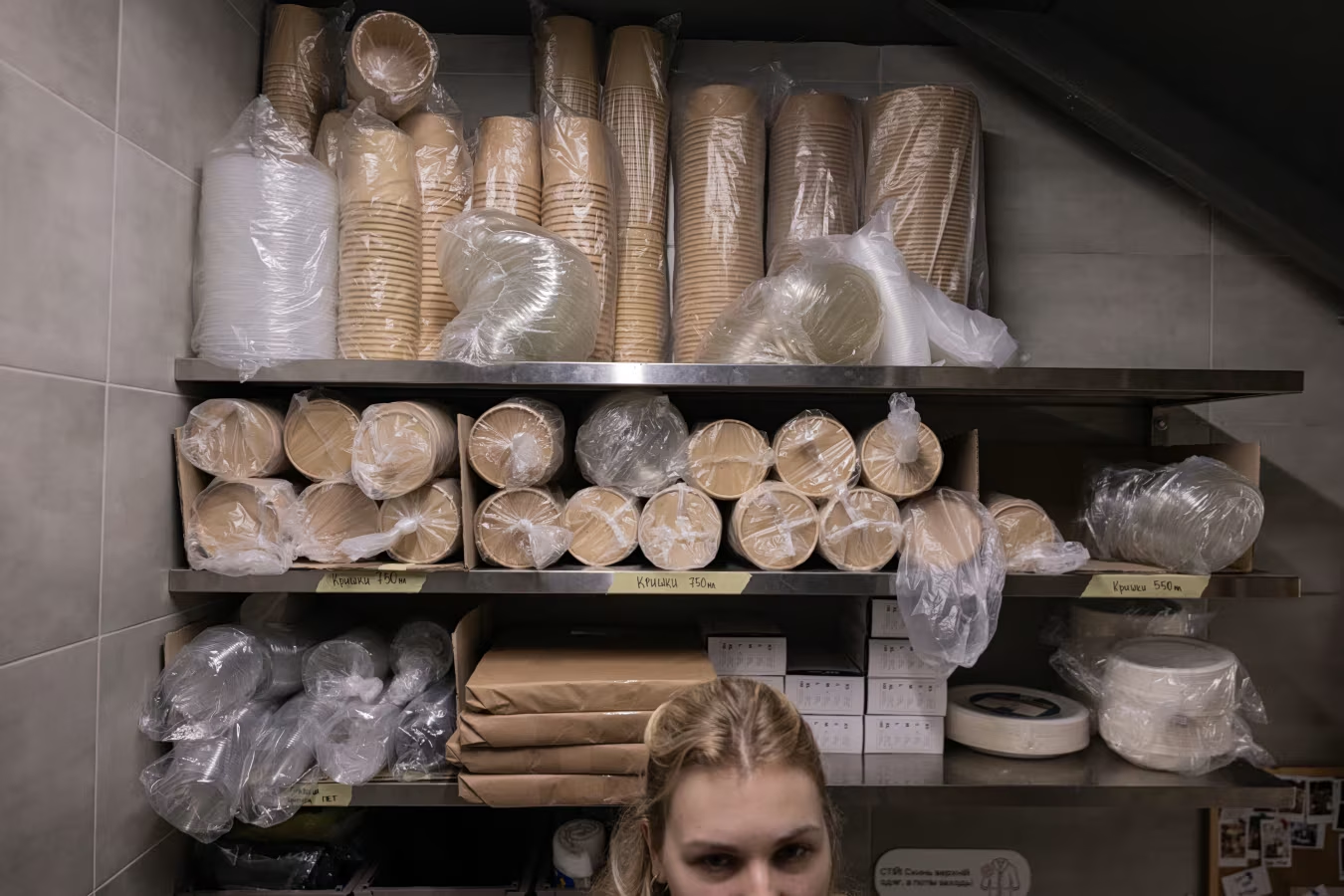
Zavertailo stores gallons of water as a backup for the restaurant and uses disposable dishware to minimize usage during supply outages. Photography by Svet Jacqueline for WSJ
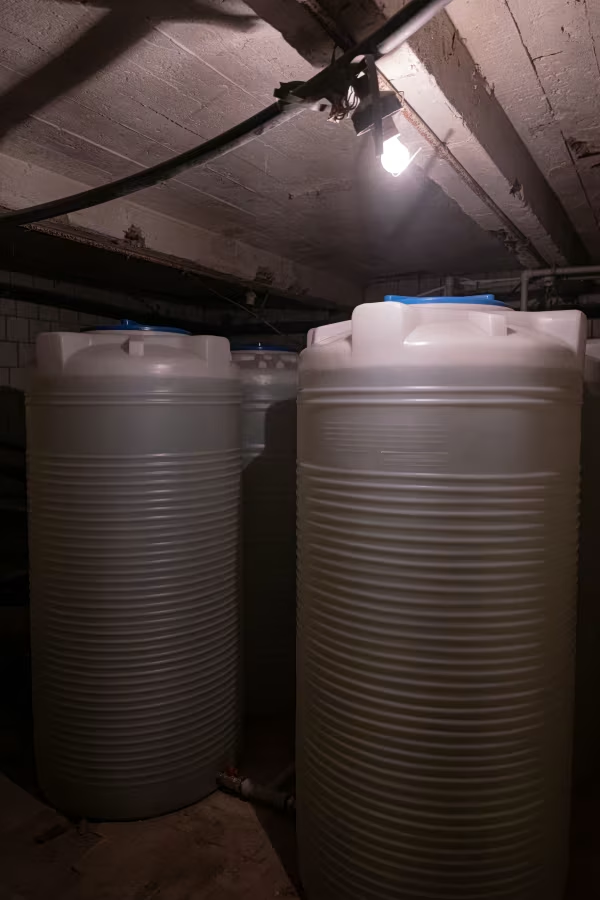
Zavertailo stores gallons of water as a backup for the restaurant and uses disposable dishware to minimize usage during supply outages. Photography by Svet Jacqueline for WSJ
When Russian forces stepped up their use of jet-powered drones and ballistic missiles, Daryna Trunova, 33, felt it was time to go. Her growing fear for her 7-year-old son made life too hard to stay in Kyiv and she moved west to Lviv in October.
“It got to the point where even on our day off, no matter where we went, there would be an air-raid alert, and drones would be shot down,” she recalled. “You had to stay in a shelter, or you had to accept that it’s all God’s will—either it would kill you or it wouldn’t. When you have a child, it’s impossible to come to terms with that.”
One of her friends, Myroslava Trofymchuk, 25, plans to stay in Kyiv. She is now in the throes of winter prep, stockpiling nonperishable foods in case the Russian attacks on distribution hubs continue and a supply of gas for the camping stove she uses during power cuts. Next on the list are a camping shower and toilet.
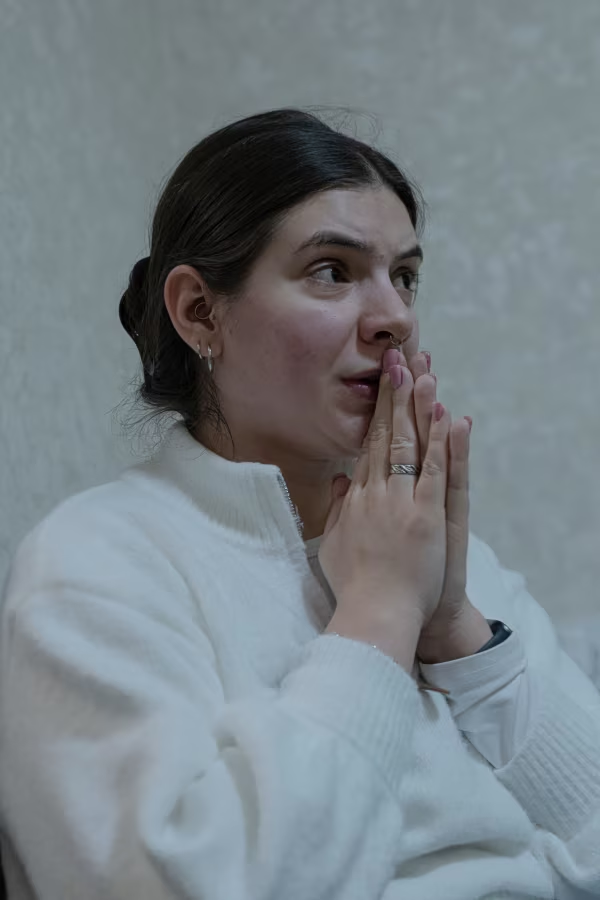
Myroslava Trofymchuk uses battery-powered lights during blackouts. She is preparing for the winter by stockpiling nonperishable foods and gas supplies. Photography by Svet Jacqueline for WSJ
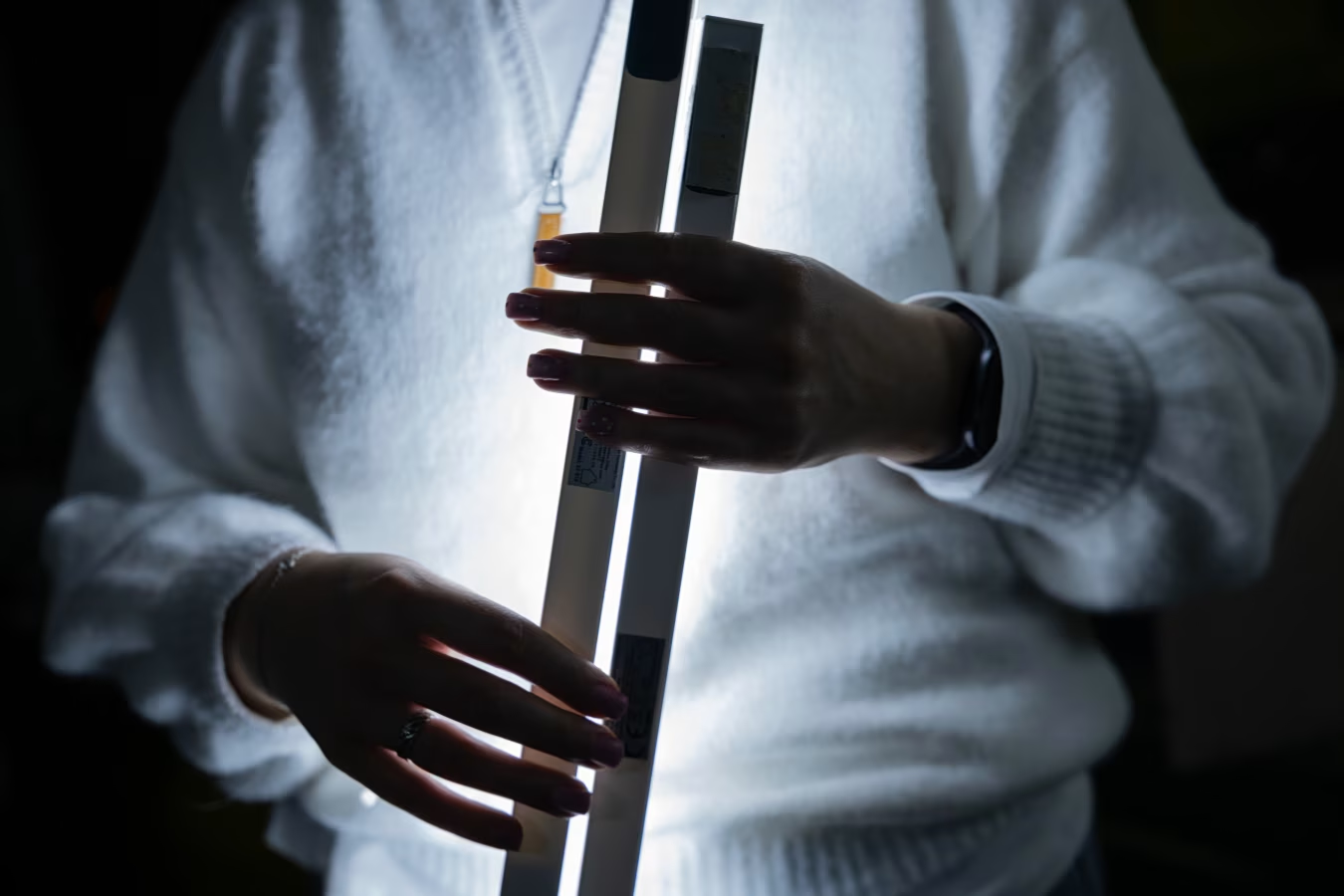
Myroslava Trofymchuk uses battery-powered lights during blackouts. She is preparing for the winter by stockpiling nonperishable foods and gas supplies. Photography by Svet Jacqueline for WSJ
“If the water supply leaks or freezes, it makes the house completely uninhabitable. You can’t wash dishes, you can’t cook a meal, because it’s hard to get water,” said Trofymchuk about her biggest concern for the winter ahead. Even so, she isn’t considering joining her family in Lithuania, where they now live.
She gathers strength from her memories of 2014, when at 13 she had to survive without water, gas and power supplies when Russian-backed forces attacked her hometown in the Donetsk region in eastern Ukraine.
“We had no electricity from the summer through November. We slept in basements. They bombarded us with high-explosive shells and that was much scarier,” she remembered. Her post-traumatic stress disorder from these events flared up in the spring and she started taking antidepressants.
“What’s happening in Kyiv now—ballistic and drone attacks—is also really, really tough. But so far, we’re not yet in such a hopeless situation that we should just give up.”
Write to Anastasiia Malenko at anastasiia.malenko@wsj.com