 Μake us preferred on Google
European leaders are pushing for yet another multibillion-euro loan for Ukraine, even as a growing share of their own voters move the other way, POLITICO reports.
The shift is clearest in Germany, Europe’s largest economy. According to a poll by the nonprofit Körber Foundation published this week, 53% of German adults now oppose sending military aid to Ukraine. The share in favor has dropped to 46%, from 59% a year earlier.
The decline has been steady. In November 2024, the same Körber survey found 57% of Germans still backed military assistance, already down from 66% the year before. Opposition is strongest in the east. Analysts attribute the shift partly to active campaigning against Ukraine aid by the AfD and BSW parties, which argue that the money could instead go to social needs at home.
The numbers reflect a wider trend of war fatigue, as the conflict nears its fifth anniversary since Russian President Vladimir Putin launched his full-scale invasion in February 2022.
Why Leaders Are Holding the Line
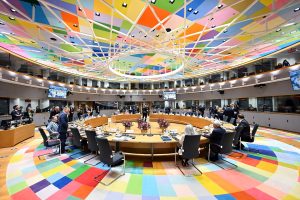
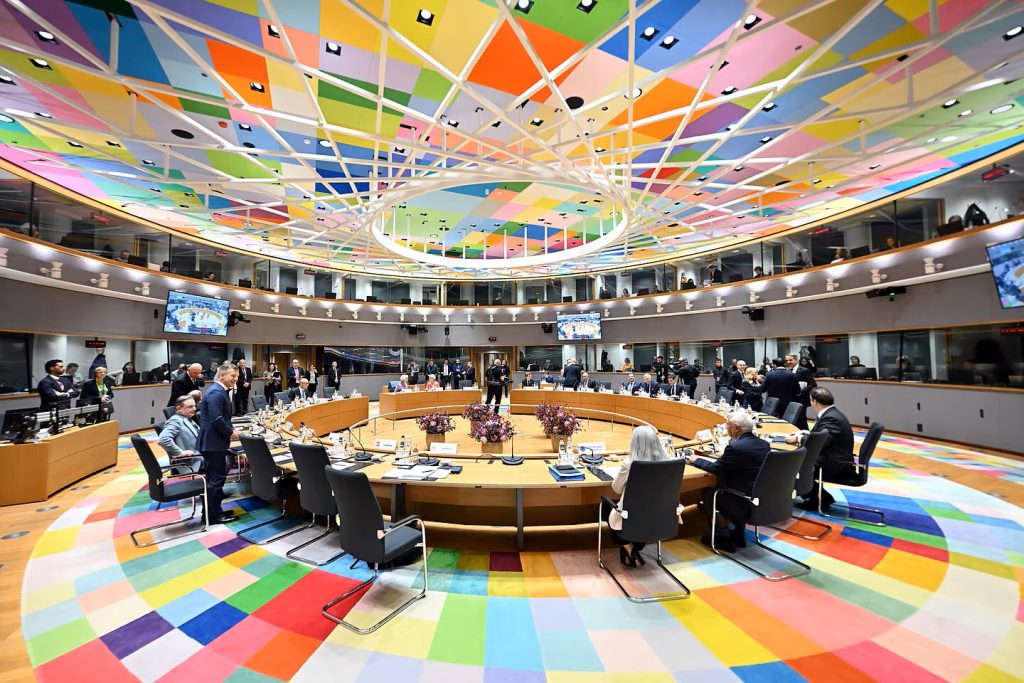
For centrist governments facing tight budgets and rising support for Ukraine-skeptic populists, the political risk is real. Yet many of the leaders gathered in Brussels this week argue that cutting off Kyiv would be far more costly than going against public opinion.
Their warning is that Putin would claim victory and feel emboldened to seize more territory, possibly in the Baltic states. A Ukrainian defeat would also force European governments to spend heavily on their own defenses to face a stronger Russia.
Swedish Minister for European Affairs Jessica Rosencrantz told POLITICO that everyone understands the risk of citizens tiring of a long war. But she said supporting Ukraine is existential, not merely desirable, and warned that a Ukrainian defeat would carry a high price for all of Europe.
The debate comes at a critical point. Ukraine is heading into its fifth winter under Russian bombardment, and US-brokered peace efforts have yet to produce a breakthrough. EU allies fear any sign of wavering would convince Putin that time is on his side.
For them, supporting Ukraine is now about more than stopping Russia from redrawing Europe’s borders by force. It is also about protecting their own security and the public finances that sustain their way of life.
Estonian Prime Minister Kristen Michal put it bluntly on his way to the summit: Europe is only counting euros, while Ukrainians are shedding blood. Polish Prime Minister Donald Tusk warned that a “cheap Europe” could turn out to be a very expensive mistake.
The Price of Defeat
A study published last year by the consultancy Corisk and the Norwegian Institute of International Affairs estimated that even a partial Russian victory could push up to 10 million Ukrainian refugees into Europe, driving up welfare costs and fueling populism. Combined with the need for new NATO forces on the eastern flank, the total bill for Europe could reach €1.6 trillion, twice the cost of a Ukrainian victory.
Tymofiy Mylovanov, president of the Kyiv School of Economics and a former Ukrainian economy minister, told POLITICO that a Russian win would also hit trade and investment in neighboring countries such as Poland and Romania. In his view, an aggressive Russia will be a threat for decades, and funding Ukraine, which is willing to fight, is the cheapest way to contain it.
A €45 Billion Gap
The need for money is pressing. International aid is shrinking, and Kyiv faces an estimated €70 billion shortfall next year. EU leaders are weighing a €45 billion loan to cover two-thirds of that gap, backed by the bloc’s long-term budget, which is still being negotiated.
The proposed mechanism would allocate €20 billion for budget support to Ukraine and €25 billion for defense needs, with the Commission raising the money by borrowing on financial markets under EU budget guarantees.
It follows an earlier package. In April, the EU approved a 90-billion-euro loan to help Ukraine meet its economic and military needs for two years, after months of political deadlock caused by Hungary’s veto.
Germany remains central. It is Europe’s biggest donor, with €54 billion in aid since 2022, second only to the United States, according to the Kiel Institute. Chancellor Friedrich Merz, one of Kyiv’s strongest backers, now wants long-term Ukraine funding written into the EU’s next seven-year budget. Merz also insists on the participation of all EU countries in financing Ukraine and has warned he could block the next long-term budget if no agreement on the Ukraine loan is reached.
Concern in Berlin
The poll has rattled Berlin. Merz hit back at critics on the far right and far left who say Germany is spending too much on Kyiv, warning that Moscow wants more than Ukraine. Defense Minister Boris Pistorius admitted that the war weighs on people and costs money, but said Europe’s stability is now at stake.
Voter fatigue is boosting parties that want aid stopped, such as the far-right Alternative for Germany (AfD), where 88% of supporters oppose military aid. Ukraine’s ambassador to Germany, Oleksii Makeiev, accused mainstream parties of letting extremists dominate the debate, particularly at the local level.
Shielding Against Le Pen
In Brussels, however, the bigger worry is not current polls but France’s presidential election next April. Diplomats fear that a win by far-right leader Marine Le Pen could disrupt European finances and cut support for Kyiv.
That is why leaders like Merz want to lock Ukraine funding into the EU’s next long-term budget before the political landscape changes. Danish Prime Minister Mette Frederiksen has backed him, calling Ukraine Europe’s first line of defense.
The push is already meeting resistance. The Commission hopes to secure the participation of all 27 member states in the new €45 billion loan, despite objections from Bulgaria, the Czech Republic, Hungary and Slovakia. Hungary, Slovakia and the Czech Republic previously secured exemptions from the EU’s €90 billion loan.
Fredrik Wesslau of the European Council on Foreign Relations told POLITICO that cutting aid would be a false economy, since a Russian victory would send European defense spending soaring. He said Merz and French President Emmanuel Macron are moving ahead of public opinion at home and, though politically weak domestically, must show leadership by going against the current.