
 Μake us preferred on Google
Behind businesses reporting high revenues, companies with no real operations, fake invoices and complex financial transactions may lie organized tax evasion and money-laundering networks.
Recent cases linked to the Pizza Fan and Horiatiko chains have brought into focus not only the mechanisms used to conceal income and avoid remitting value-added tax, or VAT, but also the route illicit profits can take before appearing as legitimate funds.
A key method involves mixing illicit money with a business’s genuine receipts. In this way, funds of unknown or criminal origin are presented as revenue generated through the sale of goods and services.
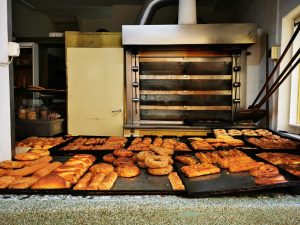
In the case of a bakery, this practice typically involves reporting higher revenue than the amount generated by actual sales. The money is entered into the company’s accounts as business receipts, giving it an apparently legitimate source. That alone, however, is not enough to make the funds legal.
The Three Stages of Money Laundering
The laundering of proceeds from illegal activities generally takes place in three stages:
1. Placement: Illicit funds are introduced into the economy and mixed with businesses’ legitimate revenue.
2. Layering: The money is moved through a succession of transactions between individuals and companies, sometimes across different countries, to obscure its illegal origin.
3. Integration: The illicit funds are then presented as legitimate through real estate transactions, fictitious profits, overinvoicing or underinvoicing.
The Most Common Practices Include:
Triangular transactions. Three or more businesses appear to buy and sell goods or services among themselves. When the transactions are fictitious, they can obscure the money’s true path. For example, one company may appear to purchase services from a second business, which is then invoiced by a third, even though no actual work has been performed. Triangular transactions are not illegal in themselves.
Fake invoices. Invoices and other documents are issued for goods that were never delivered or services that were never provided.
Shell companies. Businesses with no genuine operations, employees or facilities appear to conduct significant transactions and act as intermediaries in the movement of money. In some cases, offshore companies are used to make it more difficult to identify the true beneficial owners.
Cash and fictitious revenue. Businesses that handle large numbers of cash transactions, such as bakeries and cafés, can be used to mix illicit funds with genuine receipts. In this way, money of unclear origin is presented as revenue from sales.
Real estate and luxury assets. Illicit funds may be directed into purchases of real estate, cars or other assets. Their subsequent sale can create the appearance of legitimate income.