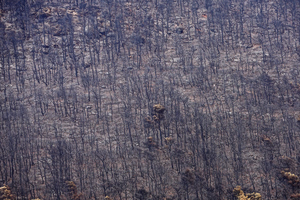
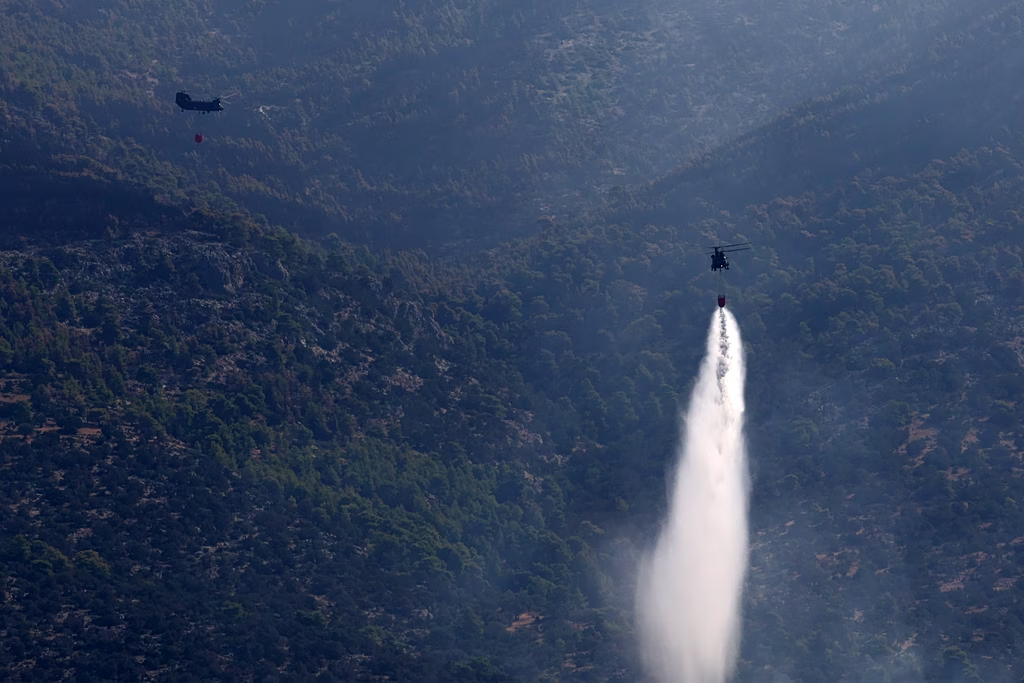
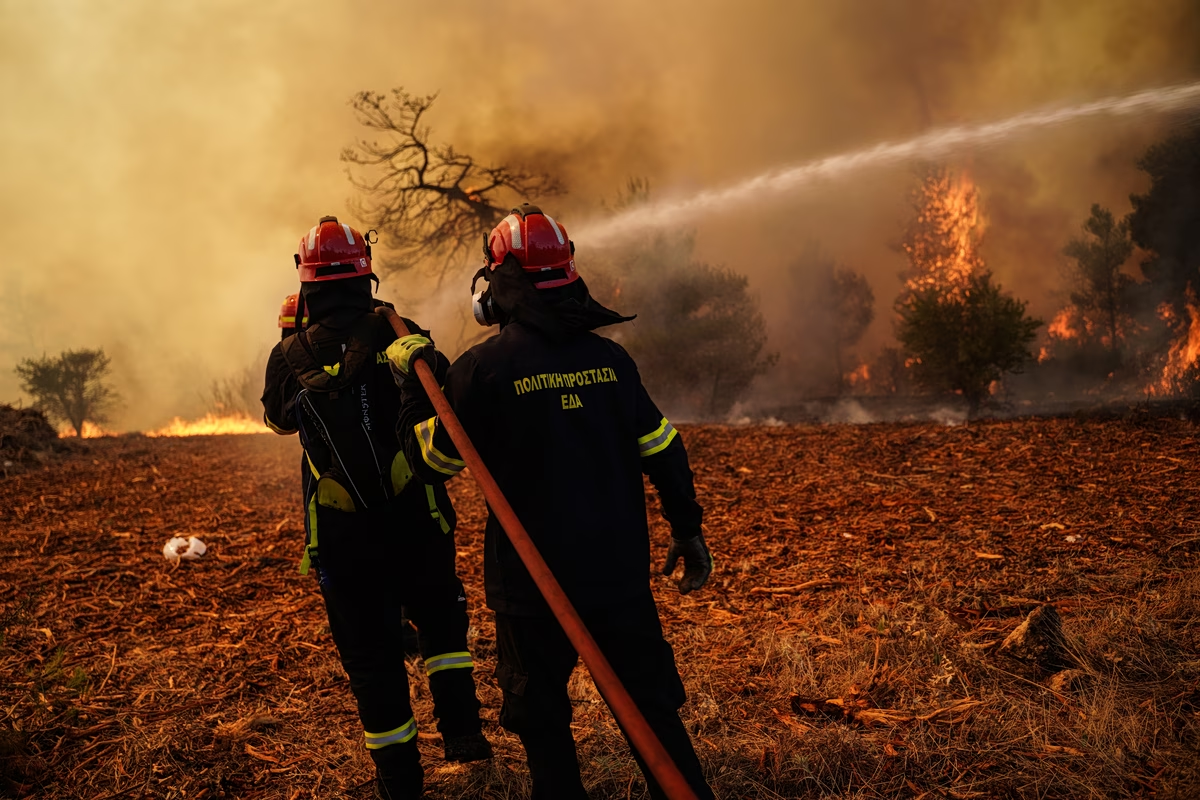
Greek authorities investigating the devastating wildfire that swept through Attica and Boeotia have identified a likely electrical short circuit in a privately operated power distribution network as the cause of the blaze, according to an official forensic inspection report.
The report by the Directorate for Arson Crime Investigation, which examined the fire’s point of origin at Mavro Spithari in Boeotia, documents technical deficiencies, construction flaws, and poor workmanship in the electricity network supplying a privately managed wind farm.
According to the findings, the deficiencies are believed to have caused a short circuit and the generation of sparks that ignited the wildfire.
Investigators arrived at the scene approximately eight and a half hours after the fire began. They found no evidence of incendiary devices, human activity, hot work, self-igniting materials, discarded smoking materials, or signs that the private overhead power line had been struck by gunfire.
The inspection found that the private electricity distribution network transitions from an underground cable to an overhead line supported by wooden utility poles before reaching the wind farm’s facilities.
The report includes extensive photographic documentation, with experts recording the fire’s point of origin using precise coordinates. It also contains a photograph taken by a private hiker showing the area beneath the power line where the fire is believed to have started.
Investigators found a fallen wooden utility pole and power conductors lying on the burned ground. They also identified localized deformations and heat damage on the metal strands of the conductors, concluding that these defects existed before the wildfire and were not caused by it.
According to the report, there were also signs of earlier problems on the same power line.
It notes that on June 27, 2026, another wildfire broke out approximately 150 meters (about 490 feet) from the origin of the latest fire. That earlier incident was attributed to a short circuit caused by contact between two live electrical conductors, with sparks igniting dry vegetation.
The investigation also includes sworn testimony from a mechanical engineer provided on August 1, 2026. The engineer stated that thermal imaging inspections carried out on June 20 detected elevated temperatures at two points where the underground network connects to the overhead line. One of those locations was at the end of the overhead section, where the fires later broke out.
A court-appointed electrical engineering expert concluded that strong winds caused the energized conductors to oscillate, either bringing them into contact and triggering a short circuit or allowing them to come close enough to create an electrical arc because of construction deficiencies.
The report further concludes that the construction defects linked to the previous fire had not been fully corrected, resulting in another wildfire breaking out just a few utility poles away along the same power line.