 Μake us preferred on Google
 With no room for complacency, firefighting operations entered a sixth consecutive day as crews continue battling the massive wildfire that swept through western Attica and Boeotia.
Strong ground forces and specialized forest firefighting units remain deployed across the burned areas, continuously patrolling the fire’s perimeter to respond immediately to any active hotspot.
Although conditions have improved significantly, authorities remain on the highest level of alert. At least three active fire fronts continue to burn, keeping emergency services on full operational readiness.
Concern in Psatha Over Smoldering Underground Hotspots
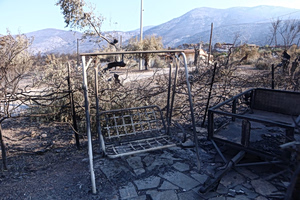
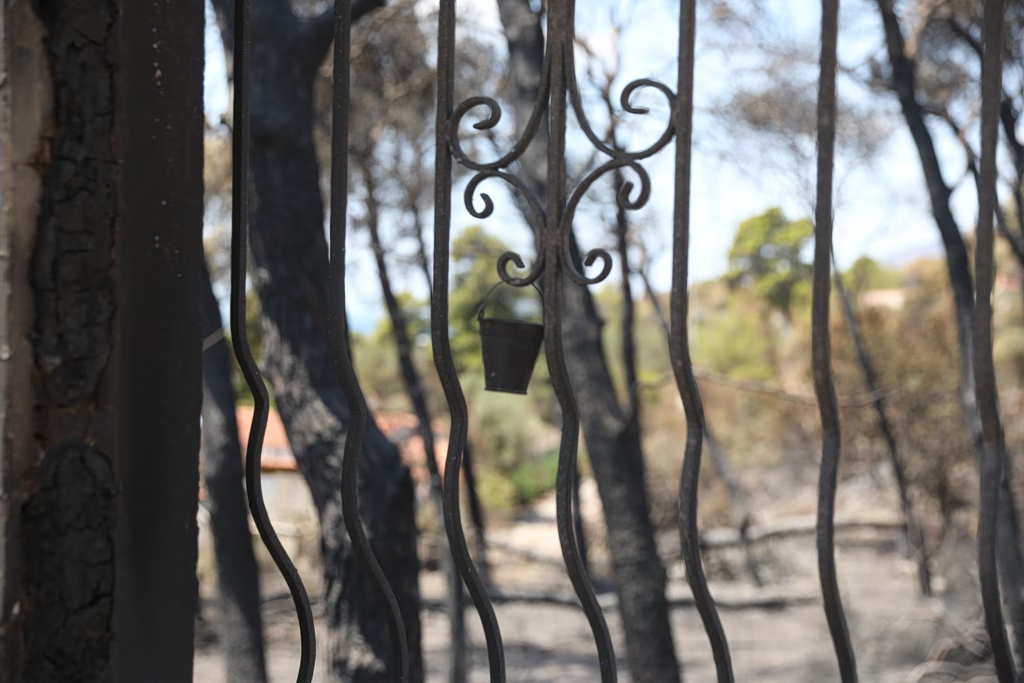
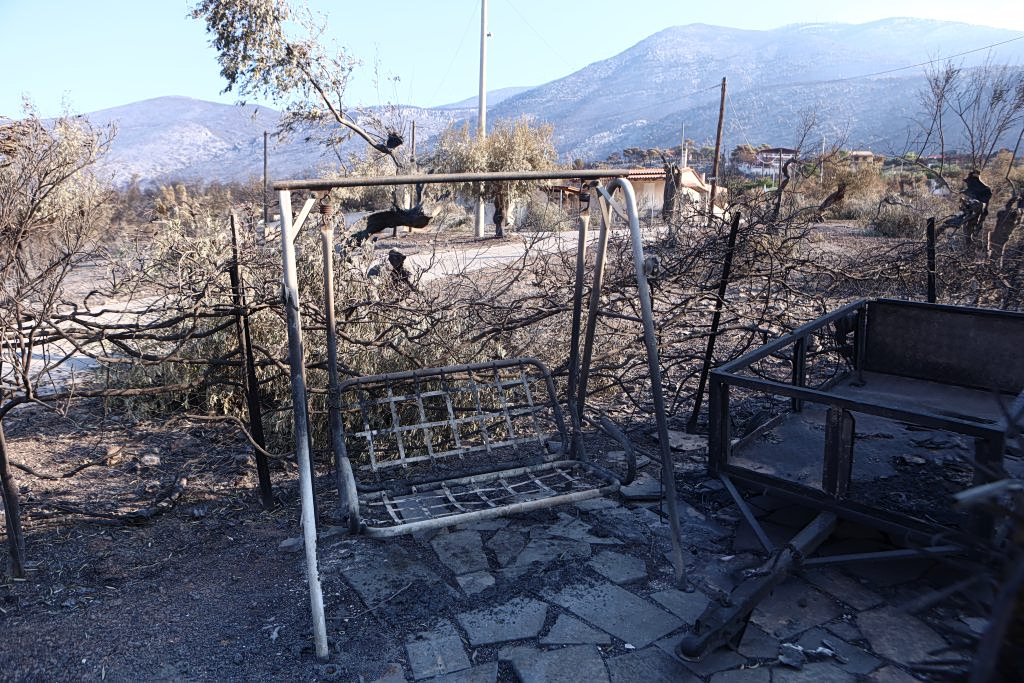
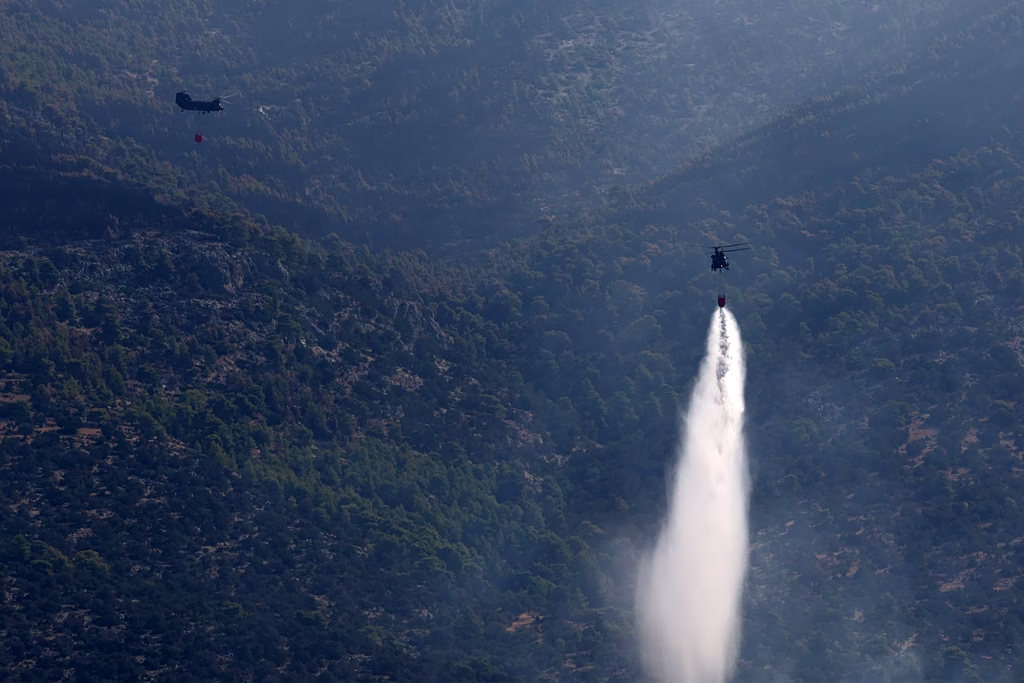
Particular concern remains in the coastal area of Psatha, where flames entered the settlement in recent days, destroying property and causing extensive environmental damage. At least one home was completely destroyed despite continuous aerial water drops, while several others sustained significant damage.
As night fell Tuesday, authorities closely monitored what firefighters refer to as “candles“—small underground hotspots that continue smoldering beneath the surface. Although they lie within the burned perimeter, untouched forest stretches directly above them, raising fears that they could ignite a major new flare-up.
Forest firefighting teams remained on the mountain throughout the night. If calm wind conditions continue, there is optimism that ground crews will be able to reach and fully extinguish these dangerous hotspots. At the same time, many residents have returned to the area and are assisting the response wherever possible.
Continuous Battle in Loumba and Mount Pateras
In Loumba and the wider Municipality of Megara, strengthening winds on Tuesday afternoon triggered a series of flare-ups. Ground and aerial firefighting forces launched continuous operations to contain scattered hotspots stretching as far as Kandili, on Mount Pateras.
Ground crews remained deployed overnight, as thick smoke indicated the presence of underground fires that could have developed into a new uncontrolled front if they intensified during the night.
How the Antinero Program Helped Protect Vilia
Authorities say the Antinero forest protection program played a key role in slowing the wildfire’s advance toward Vilia. The existence of accessible forest roads allowed firefighting vehicles to maneuver through the area and block the fire’s path between forestland, farmland, and residential communities.
Special firebreaks created by the relevant authorities—particularly the north-to-south corridor between Agios Nektarios, Kryo Pigadi, and Agia Paraskevi—also helped stop the wildfire as it advanced toward Vilia.
Preventive clearing of forest roads and previously burned areas, carried out under the Antinero program, also contributed significantly to limiting the fire’s spread.