 Μake us preferred on Google
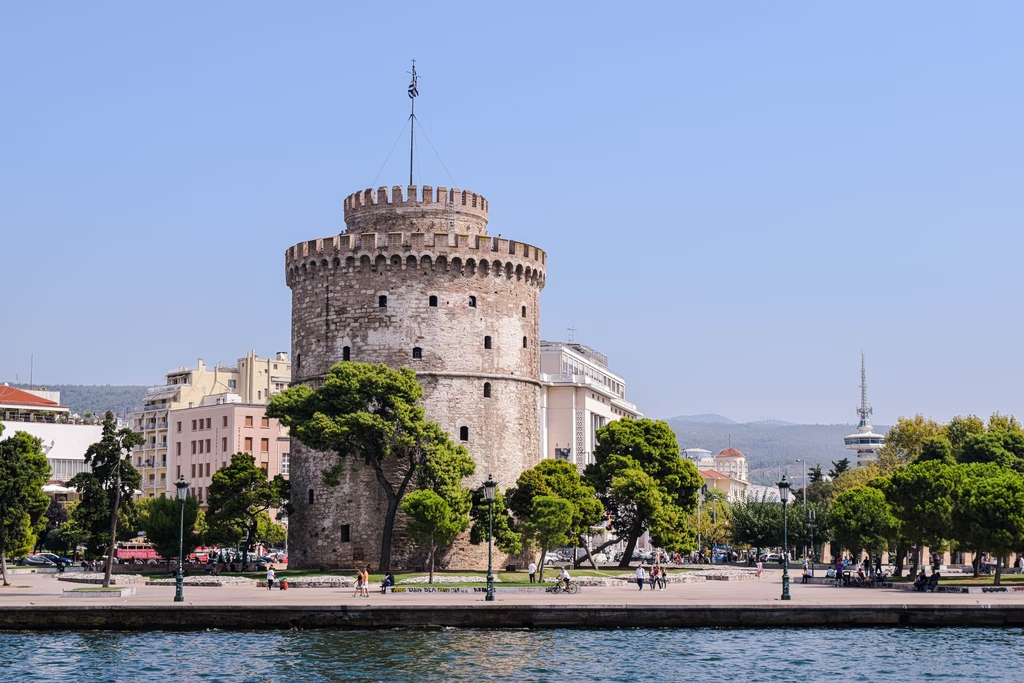
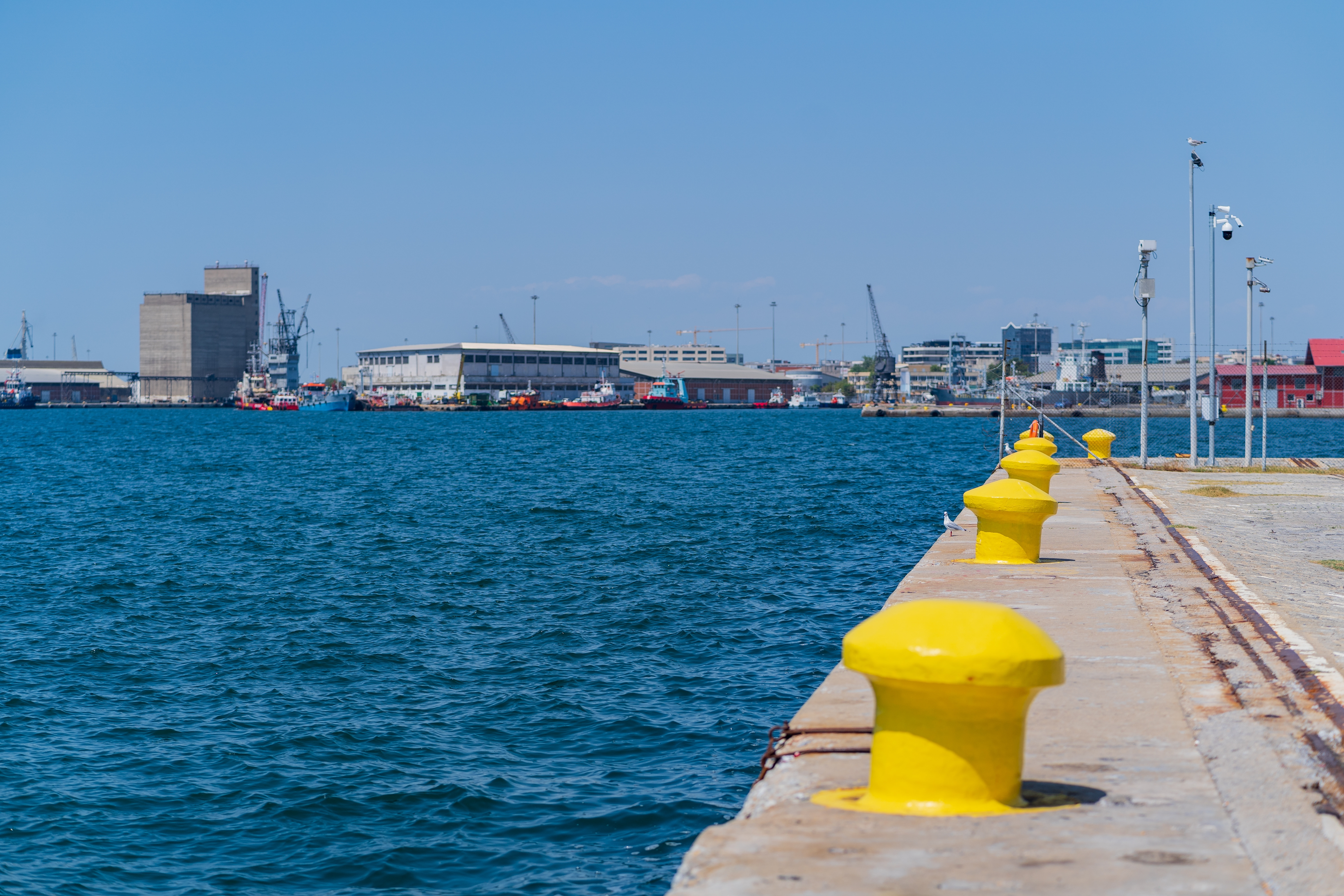
 The focus is on findings detected on the seabed of the port of Thessaloniki, at the site where work is underway to expand Pier 6. The Thessaloniki Port Authority (ThPA) assures that there is no danger, while noting that special care is needed during underwater excavations, since metal objects have been detected that may be related to unexploded ordnance.
The director of the Pier 6 Expansion Project at the Thessaloniki Port Authority (ThPA S.A.), Dimitris Moutsakis, speaking to the Athens-Macedonian News Agency (AMNA), stressed that “there is no danger, just as there was none in previous years,” while also noting that the large number of possible findings changes the conditions for carrying out the work.
Proposals for Safe Handling Expected
As he explained, the project was designed from the start so that different construction activities would proceed in parallel, with underwater excavations being a critical part of the process.
The findings are not visible, as they are buried in the seabed and are uncovered only during excavation.
“We are dealing with the issue calmly. There is no danger, just as there was none in previous years. However, the safety of workers during the excavation process is non-negotiable,” Mr. Moutsakis said.
As he noted, excavations can continue, but some conditions have changed. ThPA is now awaiting the contractor’s technical proposal on how to safely handle the findings, as well as an assessment of the possible impact on the project’s schedule and cost.
At the same time, Mr. Moutsakis stressed that immediate assistance from the state is necessary, as this is an issue that goes beyond ThPA’s responsibilities.
Addressing the issue in a timely manner is considered critical to keeping on schedule a project of strategic importance for the port of Thessaloniki and, more broadly, for the economy of Northern Greece.
The expansion of Pier 6 is the largest port project currently underway in the country. The construction site operates 24 hours a day, seven days a week, and work is moving forward at an intensive pace. The construction and placement of the caissons is progressing at a rate of about three per month.
What the Magnetic Survey Shows
Geophysicists at the Aristotle University of Thessaloniki (AUTh) are providing important information about what may lie on the seabed.
Panagiotis Tsourlos, professor in the Geophysics Section of the AUTh Department of Geology, explains to AMNA that a magnetic survey is the most common and appropriate method for detecting buried metal objects.
As he points out, a strong signal may be caused by a large quantity of metal material. The method can show that metal objects are present, but it cannot on its own prove whether they are bombs.
To determine exactly what the detected objects are, they must be excavated and identified by specialized bomb disposal experts.
Grigoris Tsokas, professor emeritus of Applied Geophysics at AUTh, takes a similar view. He explains that a magnetic survey can accurately determine the location of metal objects on the seabed and, under certain conditions, provide estimates of their size and the depth at which they lie.
The survey is carried out with magnetometers towed behind vessels. However, as he clarifies, it is not possible to get a complete image of an object using this method alone. For this reason, it can be combined with other techniques, such as sonar, though even this does not provide absolute certainty about the nature of the findings.
The Link to World War II
The history of the port of Thessaloniki leads to reasonable assumptions about the origin of the metal objects.
Stratos Dordanas, associate professor in the AUTh Department of History and Archaeology, believes they may be bombs dumped in the area by the Germans during their withdrawal from Thessaloniki in late October 1944.
According to this historical assessment, German forces, unable to carry all their war materiel as they withdrew, destroyed it and dumped it into seas and lakes so that it would not fall into the hands of the Greeks and the Allies.
The Bombings That Came Before
Historian Evangelos Hekimoglou, for his part, points out that the area had already been heavily bombed before the Germans withdrew.
In October 1944, American and British forces bombed the port of Thessaloniki to prevent German forces from using it during their withdrawal.
According to Mr. Hekimoglou, about 80% of the port was destroyed in the bombings, which means a large number of bombs must have ended up in the sea.
Later, as they withdrew, the Germans completed the destruction by blowing up the quays and mining the port to prevent ships from entering.
However, he believes the objects found now are unlikely to be mines. As he explains, a mine-clearing operation was carried out by the Hellenic Navy after the liberation, and if active mines had remained in the area, an explosion would likely have occurred at some point over the past eight decades.
The port of Thessaloniki had also been bombed by Italian forces in 1941 and 1942.
A Similar Incident in Kordelio
This is not the first time war materiel from the World War II period has been found in Thessaloniki.
In February 2017, a World War II bomb was found in Kordelio during excavation work to expand underground tanks at a gas station.
The bomb was removed and defused by the army, and about 72,000 residents were evacuated from the evacuation zone ahead of the operation.
Caissons are large reinforced concrete structures that, in port projects, are sunk into the sea and used as a basic structural element of quays or other port structures.