
 Μake us preferred on Google
Cyberattacks are emerging as a major threat to national security, with the potential to seriously disrupt critical infrastructure and essential services. The growing use of artificial intelligence (AI) is making it easier to identify vulnerabilities and automate attacks, increasing concerns about the security of sectors such as electricity, health care, transportation and food supply.
“Whatever is vulnerable right now will be hit quickly,” warned Spyros Papageorgiou, secretary-general for the Protection of Critical Entities, in recent remarks to Greece’s public broadcaster ERT.
Papageorgiou said AI allows attackers to automate operations, making constant vigilance and stronger infrastructure resilience essential. Absolute security, he stressed, is unattainable.
How state-backed attackers differ from cybercriminals
Papageorgiou distinguished between cybercriminals, whose primary motivation is financial gain, and state actors, whom he described as the more dangerous threat.
State-backed attackers seek to steal information, gain control of systems or disrupt their operation, particularly during periods of crisis. They are difficult to detect, he said, emphasizing the need for systematic efforts to identify and pursue cyber threats within networks.
He also described the relationship between cyberattacks and armed conflict, noting that “usually, a cyberattack precedes a war” and targets services that support military operations.
Attacks require preparation, Papageorgiou explained, with perpetrators using AI to search for vulnerabilities before launching operations.
“If we want to counter this, we must think like the attackers,” he said, advocating measures to limit the exposure of systems to potential threats.
Protecting critical infrastructure and building resilience
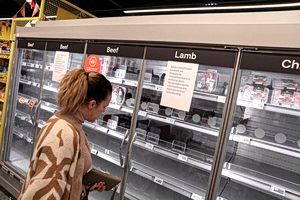
Addressing concerns about cyberattacks targeting refrigeration systems in supermarkets, Papageorgiou acknowledged that the threat was real. He emphasized the need to restrict remote access to systems and establish strict controls over user permissions.
“Cybersecurity is not simply a set of specific measures,” he said, identifying prevention and resilience as the two central pillars of protection.
“If an organization can withstand an attack, the country can withstand it too,” he added, noting that Greece has the necessary expertise to address cyber threats.
The General Secretariat for the Protection of Critical Entities has identified 12 critical infrastructure sectors that require protection. It also follows an “all-hazards approach,” designed to address threats of every kind.
The agency’s mission, Papageorgiou said, is to protect citizens’ everyday lives by coordinating cooperation among government ministries and relevant organizations.
“We are pieces of the same puzzle. The General Secretariat is responsible for coordination,” he said.