 Μake us preferred on Google
Social media now fills much of children’s and young people’s daily lives, and that is raising alarm about its effects on their minds and mental health. Research around the world shows cognitive performance falling among younger generations. Platforms such as TikTok and Instagram are at the center of the debate.
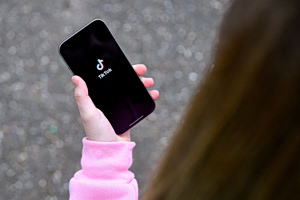
The findings for Greece are especially worrying. A recent study by the Clinical Epidemiology Laboratory at the National and Kapodistrian University of Athens (NKUA) surveyed 1,033 users. It found that one in two Greeks under 30 shows symptoms of clinical addiction to TikTok. Young people spend an average of four hours a day on social media, and 2.3 of those hours go to TikTok alone.
Petros Galanis, associate professor of research methodology at NKUA’s Department of Nursing, says TikTok has changed the internet. It is built around a powerful algorithm rather than conversation. “It is by far the most addictive,” he says. “It reads your mind and knows what video you’ll want to watch half an hour from now. The moment you log in, it decodes you.”
That algorithm, combined with “doomscrolling” through an endless stream of videos, is driving up mental health problems. Among addicted users, 80% report daytime drowsiness, 70% report severe anxiety and 60% show symptoms of depression.
There is a wider concern too. For decades, each generation scored higher on cognitive tests than the one before, a pattern scientists call the Flynn Effect. Galanis says that pattern has now broken. Studies have recorded the effect slowing (Norway’s Ragnar Frisch Centre, 2018) and even reversing (Northwestern University, 2023). For the first time, a generation of children is scoring lower on IQ tests than their parents.
Speaking on the latest episode of Health Talks, Galanis blames a digital “pandemic” of screens. “It’s chilling,” he says. “Evolution shows that brains progress. Instead of moving forward, we’re going backward.”