 Μake us preferred on Google
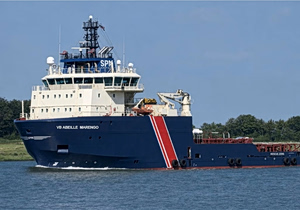
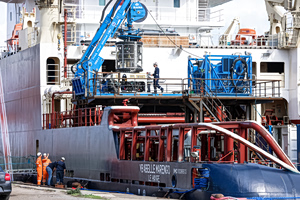
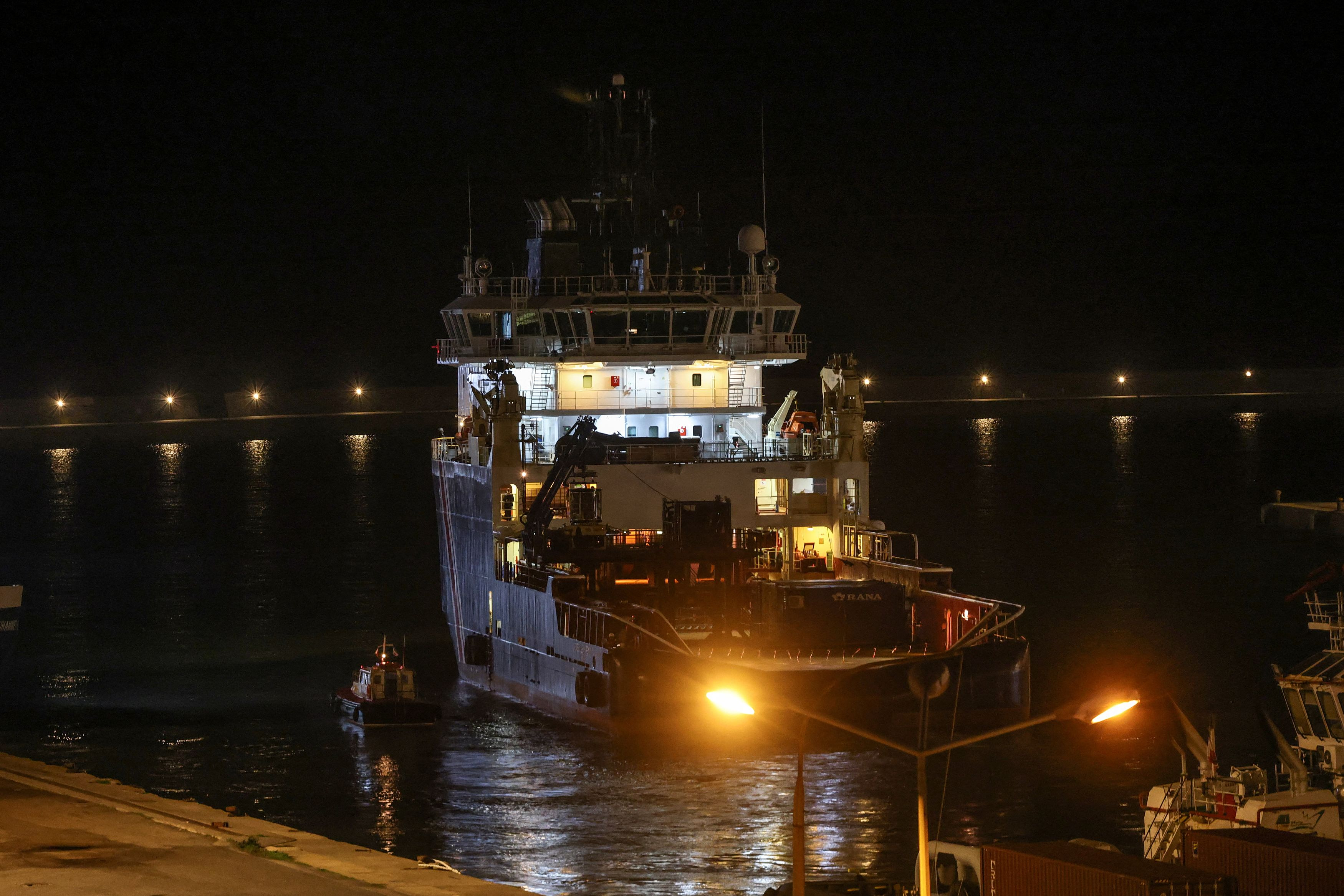
The Greek government views Turkey’s NAVTEX, issued late Tuesday, as an expected development, but also as the result of Athens’ initiatives to finally set in motion — after months of delays — the research work of the French vessel Abeille Marengo.
The most significant development, according to government assessments, is that the way now appears clear for the French research vessel to begin its work without obstruction, allowing the long-troubled Greece-Cyprus electricity interconnection project to move forward.
However, the possibility of further abrupt Turkish moves in the Eastern Mediterranean in the near future, particularly around the French vessel’s route, cannot be ruled out.
An Illegal Turkish NAVTEX
The Turkish NAVTEX cannot be viewed in isolation, as it reiterates Ankara’s revisionist positions on maritime boundaries and maritime zones.
In any case, Greece considers the Turkish NAVTEX illegal, arguing that Ankara has no jurisdiction over the area where the surveys are taking place.
The government is emphasizing that only Athens and Nicosia received requests for authorization and issued permits for the surveys. It therefore argues that Turkey has no jurisdiction over the project and that there is no resulting challenge to Greece’s sovereign rights, at least in the area designated for the work.
The Critical Point
It remains unclear how Ankara will react when the Abeille Marengo enters the area covered by the Turkey-Libya memorandum, off the islands of Kasos and Karpathos.
Diplomatic sources, however, turn the question around. Speaking to To Vima, they argue that a precedent has now been established: requests for authorization were submitted exclusively to the Greek authorities, even for areas that are illegally included in the Turkey-Libya memorandum.
Furthermore, the departure of the Abeille Marengo and the subsequent issuance of the Turkish NAVTEX signal acceptance of the French communication formula — namely, the contents of the diplomatic note delivered by Paris to Ankara, possibly with amendments to its initial version.
Athens Is Familiar With the Diplomatic Note
It is clear, on the one hand, that Athens is fully aware of the note’s contents. On the other, the wording it contains carries particular weight because this is an official channel of communication. That does not, of course, mean that questions of sovereignty or sovereign rights are established or relinquished through it.
Nevertheless, officials at the Foreign Ministry are focusing on what they consider the decisive point: the request for authorization was submitted only to Greece, and Greece was the country that issued the permit for the surveys.
They also stress that the vessel’s precise route became known only after the Greek NAVTEX was issued and made public. The Abeille Marengo will follow that route from now on.
The same sources argue that the Turkish NAVTEX carries no significance because it was issued afterward.
Particular attention is also being paid to Ankara’s choice of language, which refers to “consent” and “coordination” with the Turkish authorities regarding the surveys in the specific areas.
The distinction between these terms and the concept of “authorization” may be subtle, but the key point, according to the Greek side, is that Ankara never received an application seeking its authorization for the project.
Immediately after the Turkish NAVTEX was issued, Turkish media outlets insisted that the Abeille Marengo had received “official approval to conduct operations within Turkey’s Exclusive Economic Zone (EEZ).”
A Political Arrangement
On the other hand, it is self-evident that the parties involved reached a political arrangement to allow the project to continue. The understanding has already come under fire from opposition parties in both Greece and Turkey in recent days and is now an issue that both governments must manage domestically.
It is also clear that developments in recent days have put increasing pressure on Athens and Ankara.
The Greek government had little room for further delays, let alone abandoning the project altogether. Turkey, meanwhile, appeared to be placing considerably more emphasis on an issue that has brought it into confrontation with all the other players in the Eastern Mediterranean, with the exception of Libya, as well as with the fundamental principles of international law.
Turkey’s Illegal Continental Shelf Claims
The Turkish NAVTEX once again lays out Ankara’s revisionist agenda regarding the delimitation of maritime zones in the Eastern Mediterranean.
Ignoring the sovereign rights of Greek islands, Turkey submitted to the United Nations in March 2020 the outer limits of what Greece considers its illegally claimed continental shelf, in direct contradiction with the fundamental principles of the law of the sea.
Under Ankara’s approach, the continental shelf is drawn along a median line between the mainland coasts of the two countries, effectively dividing the Aegean Sea. Turkey also claims the entire area east of the 28th meridian.
Turkey’s continental shelf claims in the Eastern Mediterranean, together with the legally invalid Turkey-Libya memorandum, form the culmination of Ankara’s “Blue Homeland” doctrine. Through this policy, Turkey seeks to confine Greece to its six-nautical-mile territorial waters.
As in previous cases, Athens is expected to respond to Turkey’s claims by issuing a counter-NAVTEX.