
 Μake us preferred on Google
 A surge in cartel violence across Mexico following the death of a powerful drug lord has raised fresh concerns over the country’s readiness to safely host the upcoming FIFA World Cup, according to new assessments and eyewitness accounts.
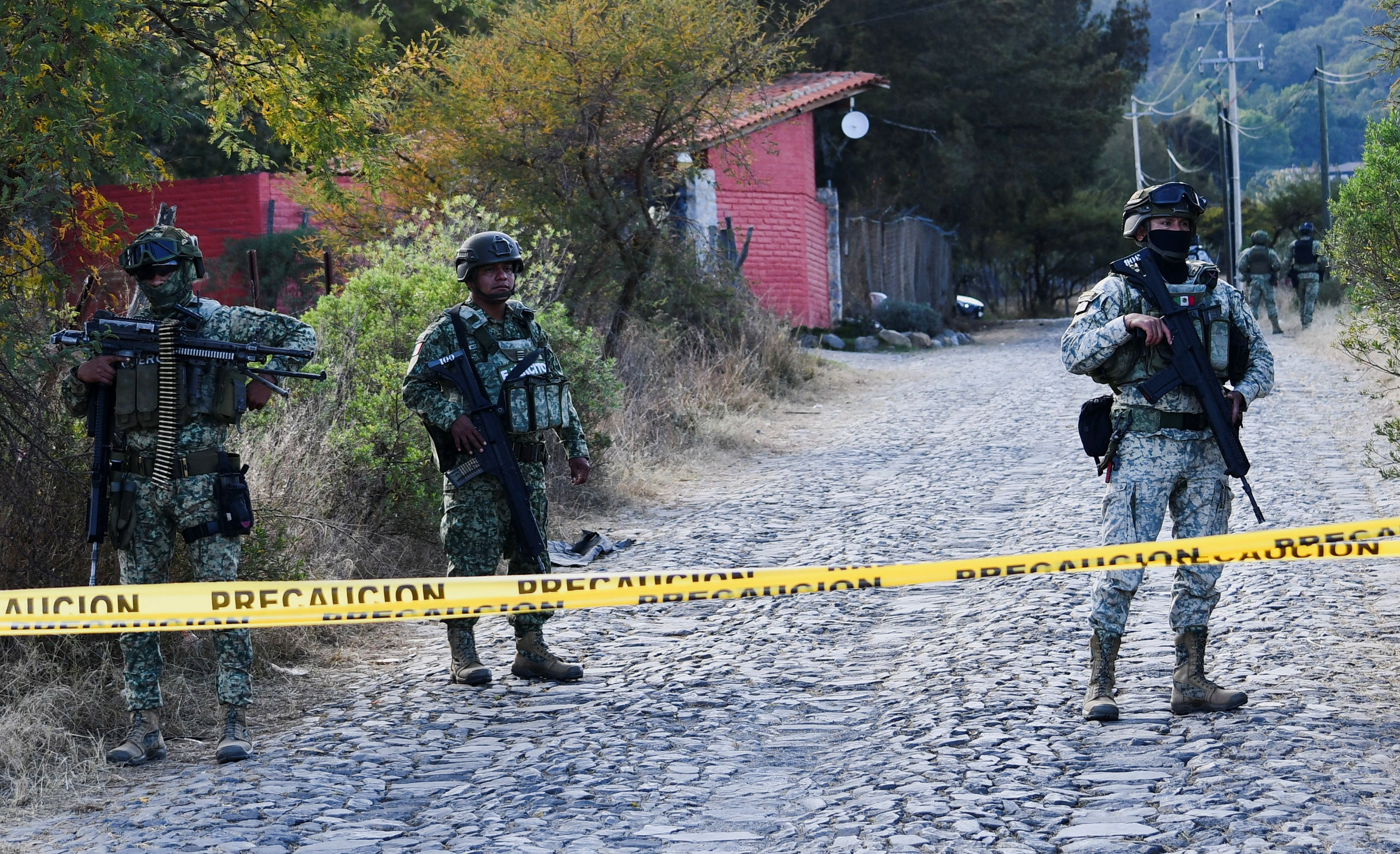
The violence erupted after the reported death of Nemesio Oseguera, known as “El Mencho,” leader of the Jalisco New Generation Cartel (CJNG). In response, cartel members launched coordinated attacks across at least 20 states, blocking roads, setting vehicles on fire, and targeting gas stations, businesses, and banks, while clashing with security forces.
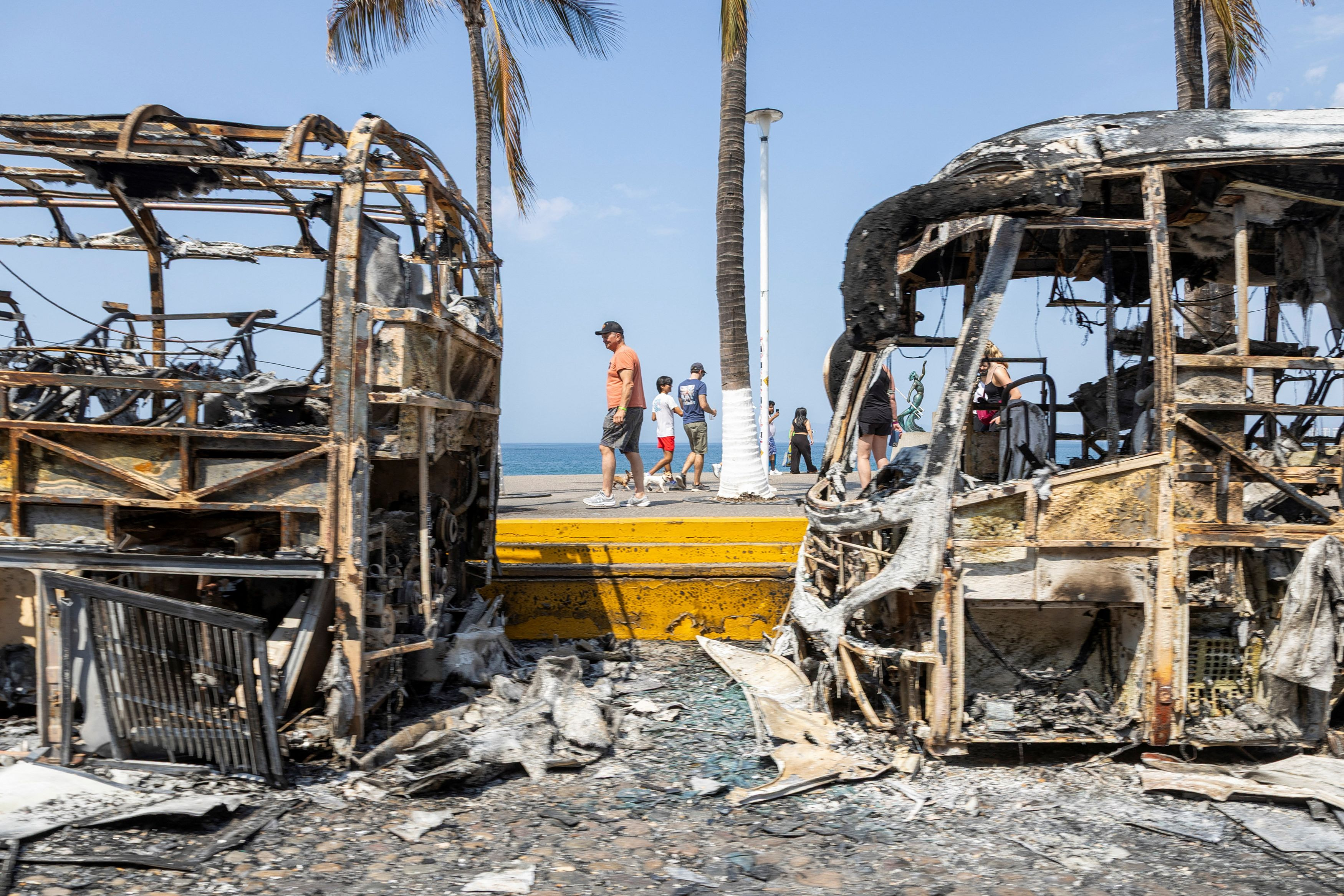
Tourists walk past the burnt wreckage of buses after a series of blockades and attacks by organized crime following a military operation in which cartel boss Nemesio Oseguera, ‘El Mencho,’ was killed in the state of Jalisco, in Puerto Vallarta, Mexico, February 23, 2026. REUTERS/Alfonso Lepe
Mexican authorities have significantly increased their response, deploying an additional 2,500 troops to the state of Jalisco, bringing the total number of soldiers in the region to 10,000 since Sunday.
NEWSLETTER TABLE TALK
Never miss a story.
Subscribe now.
The most important news & topics every week in your inbox.
The escalation has intensified concerns about security ahead of the World Cup, which Mexico will co-host with the United States and Canada. Analysts warn that unless the government quickly stabilizes the situation, international visitors may hesitate to travel to the country.
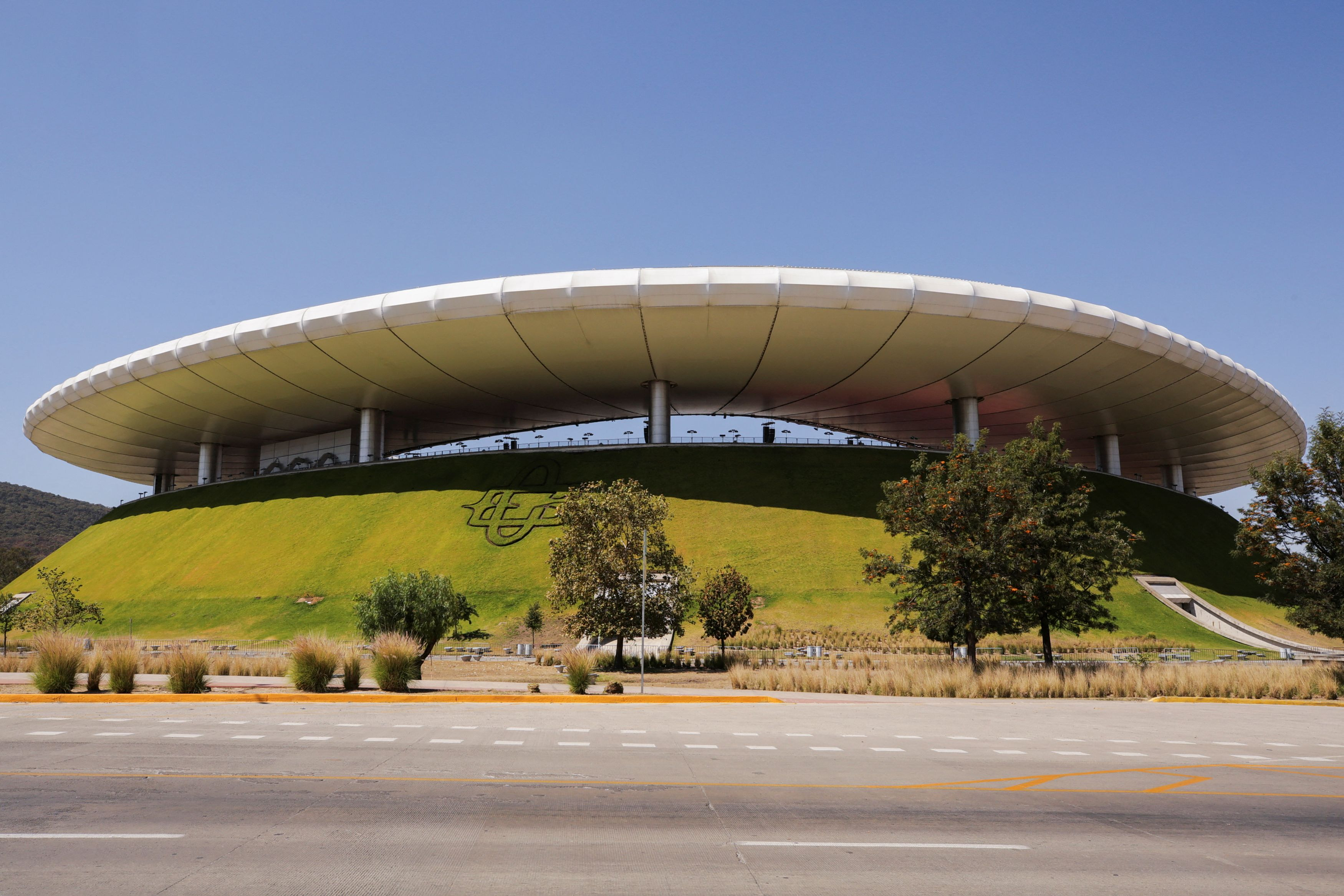
The Akron Stadium, one of the venues for the 2026 FIFA World Cup and scheduled to host four matches at this summer’s tournament, after a military operation in Jalisco state in which Mexican drug lord Nemesio Oseguera, known as “El Mencho,” was killed, in Guadalajara, Mexico, February 23, 2026. REUTERS/Gabriel Trujillo
Experts note that cartel reactions to such high-profile events typically follow three patterns. The first is a show of force, aimed at deterring further government operations—already evident in the widespread attacks. The second involves internal power struggles or territorial conflicts with rival groups seeking to exploit instability. The third, and most severe, is an outright escalation into sustained conflict with state authorities.
The CJNG, widely regarded as one of the most violent and unpredictable criminal organizations in Mexico, remains a dominant force despite the reported loss of its leader. Alongside the Sinaloa cartel, it plays a major role in the production and trafficking of illegal drugs, including fentanyl, much of which is exported to the United States.
Officials face mounting pressure to demonstrate progress in tackling organized crime, particularly amid broader international scrutiny. The United States has intensified its focus on drug trafficking networks in the region, increasing expectations for decisive action from Mexican authorities.
While the death of a cartel leader may offer a short-term strategic gain, analysts caution that it does not signal the dismantling of the organization. Instead, it risks triggering further instability—at a critical moment as Mexico prepares to welcome the world for one of the biggest sporting events.