Before there was a park, there was a horse track. Before the horse track, there was a burial ground.
Today, there is the Stavros Niarchos Foundation Cultural Center (SNFCC), one of the most admired additions to modern Athens. Designed by Renzo Piano and completed during Greece’s financial crisis, it gave a tired city and its people a modern public library, a beautiful park and a home for the Greek National Opera.
But beneath this modern landmark, archaeologists discovered a very different Athens.
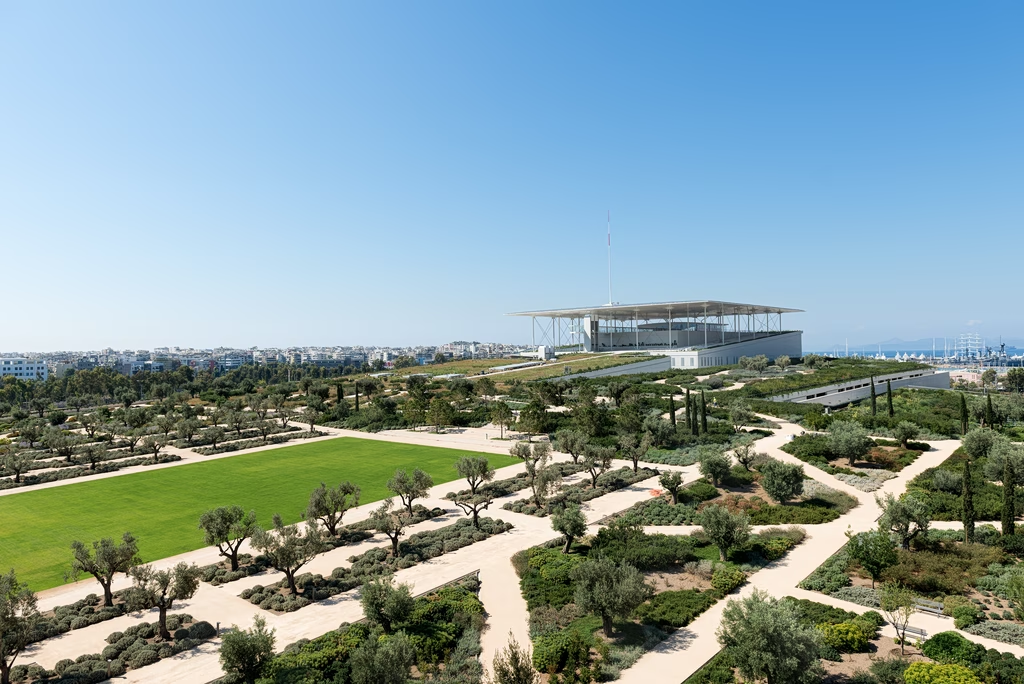
An image of the artificial hill at the Stavros Niarchos Foundation Cultural Center, which lies in the center of the Phaleron excavations. ©SNFCC Yiorgis Yerolymbos
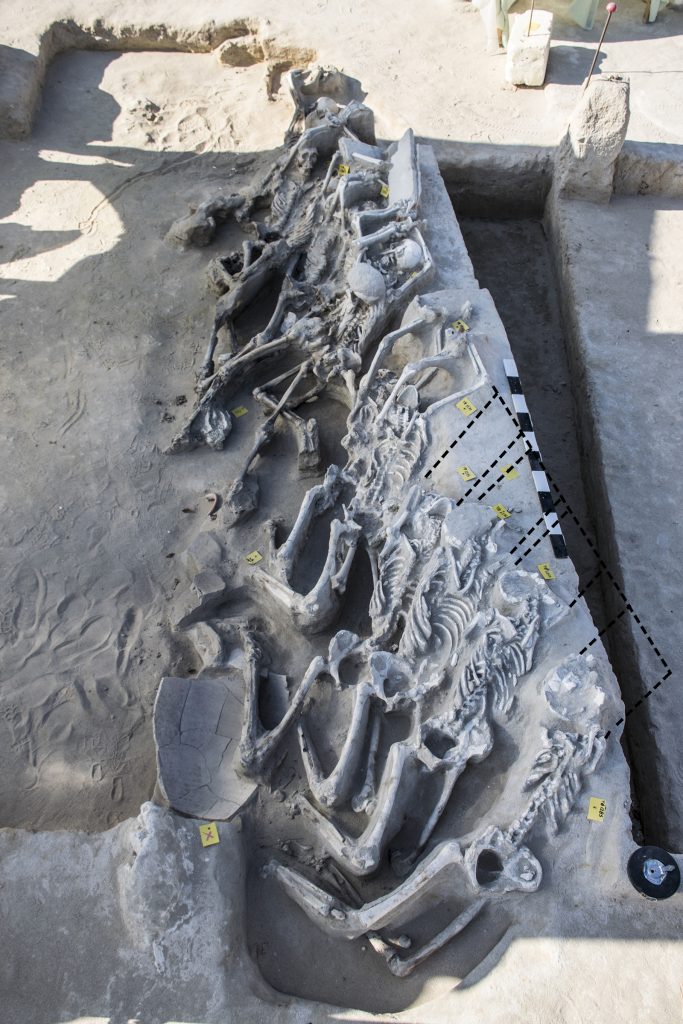
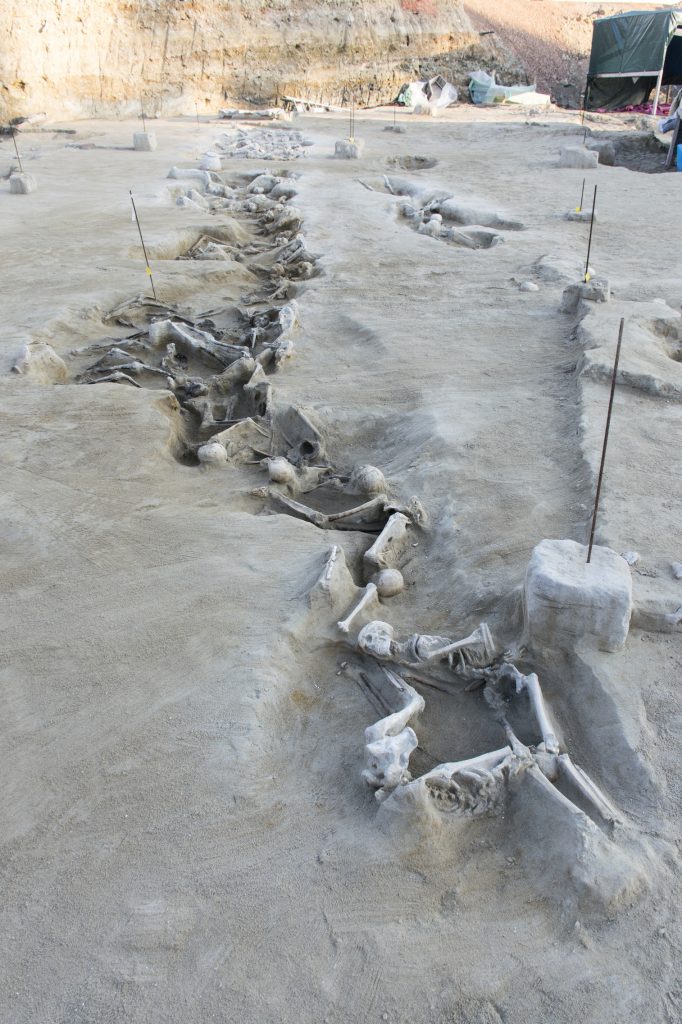
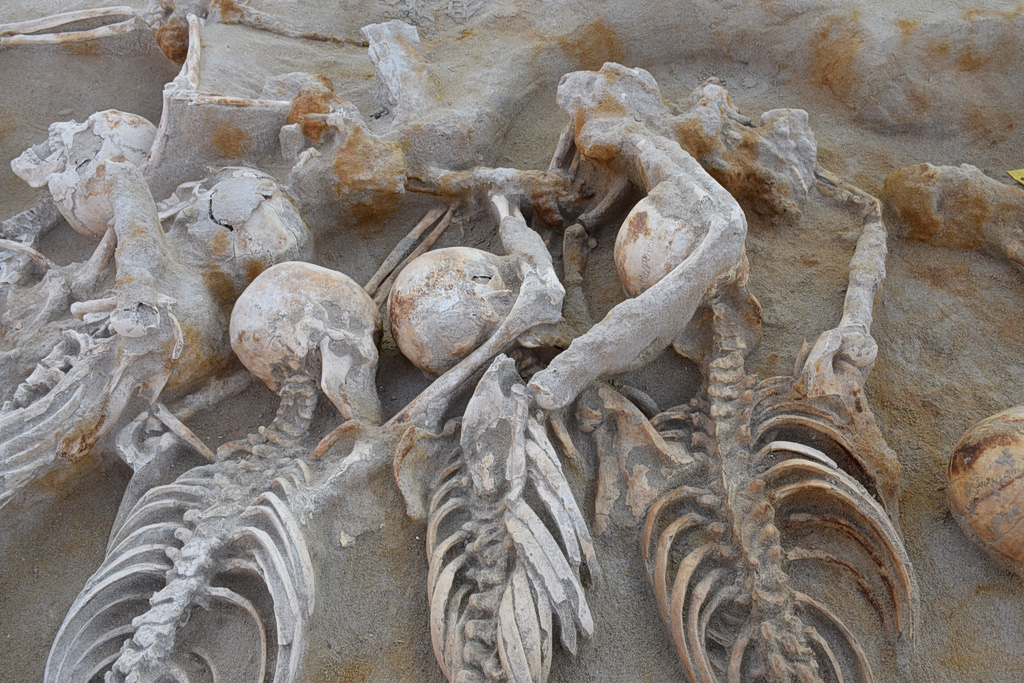
More than 2,000 burials have been recorded at Phaleron over successive excavations. The discovery that made the site famous came in the spring of 2016, when archaeologists working in the Esplanada sector uncovered 79 adult men laid out in several groups. Many still wore iron restraints around their wrists. The positions of others suggested they had been bound with materials that later decayed.
Photographs of the skeletons traveled around the world, and almost immediately, the men acquired possible identities.
©MINISTRY OF CULTURE—PHALERON EXCAVATION ARCHIVE
Could they have been supporters of Cylon, the aristocrat whose seventh-century BCE attempt to seize power ended with the killing of his followers, despite their having sought sanctuary? Or were they foreign invaders, mercenaries or prisoners captured in some other conflict?
Images from the excavation and theories from the time can be seen at the SNFCC in a small onsite exhibit. A decade later, research results from archaeologists are coming in and providing some answers.
When Ancient Teeth Speak
A recent study led by Julianne Stamer, a doctoral researcher at Arizona State University, tested tooth enamel from 66 of the Esplanada men and 97 adults buried elsewhere at Phaleron.
“Strontium isotopes enter tooth enamel during childhood and reflect the geology of the area in which a person grew up,” Stamer explained to TO VIMA International Edition.
Of the 66 Esplanada men, 64 had signatures consistent with the local Attica range. Across the full sample, 156 of 163 individuals, or 95.7 percent, produced apparently local signatures.
©MINISTRY OF CULTURE—PHALERON EXCAVATION ARCHIVE
That does not identify their political allegiance or explain why they were killed. It does, however, make one theory much less likely: that the group consisted primarily of outsiders brought to Attica and executed.
Jane Buikstra, Stamer’s supervisor and one of the scholars who helped establish American bioarchaeology, is careful about going further.
“Our osteobiographical approach focuses on individual life histories that, in the absence of written records, are written in bone and other human tissues,” she told TO VIMA International Edition.
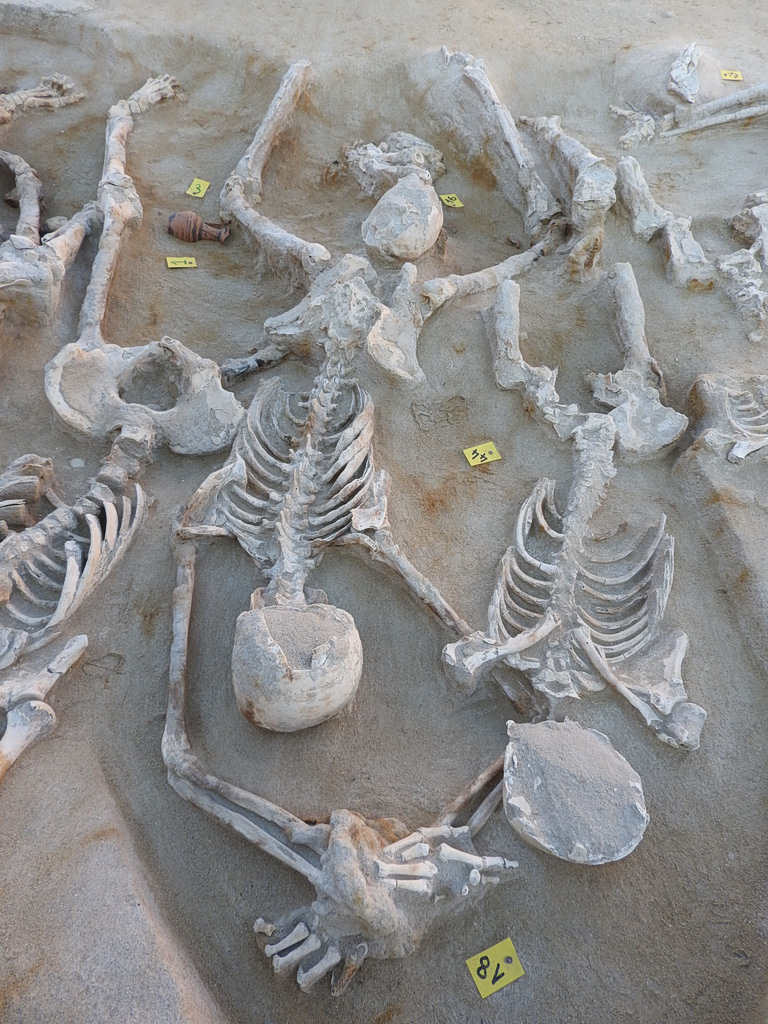
An image of the excavation of the Skeletons of Phaleron, where 79 adult men were found, many bound with iron restraints. ©MINISTRY OF CULTURE—PHALERON EXCAVATION ARCHIVE
Buikstra highlights that the date of the burials has yet to be settled. Radiocarbon dating would normally help, but the men fall within the Hallstatt plateau, a section of the calibration curve that produces frustratingly broad date ranges. Interpretations based on the archaeological evidence extend from the late seventh to the fifth century BCE.
A late seventh-century death places them in an era of competing aristocratic factions, before Athens developed a broadly accepted legal order. In contrast, a fifth-century execution would situate them in a very different political world.
Moreover, Buikstra highlights uncertainty over how the men were killed. The restraints and burial positions indicate captivity, but forensic work is calling into question whether or not they actually received blunt blows to the head, or if this occured after burial.
The association of the shackled men with Cylon remains a possibility, but for Buikstra, it’s far from a certainty.
©MINISTRY OF CULTURE—PHALERON EXCAVATION ARCHIVE
A Cross-Section of Ancient Greek Society
For Stella Chryssoulaki, the head archaeologist who led the rescue excavation at Phaleron, the attention paid to the shackled men has obscured the scale of the wider discovery.
“There is so much more to the Esplanada than the shackled men,” she told TO VIMA International Edition. “Phaleron is a large cemetery including people buried over several centuries and using a range of very different practices.”
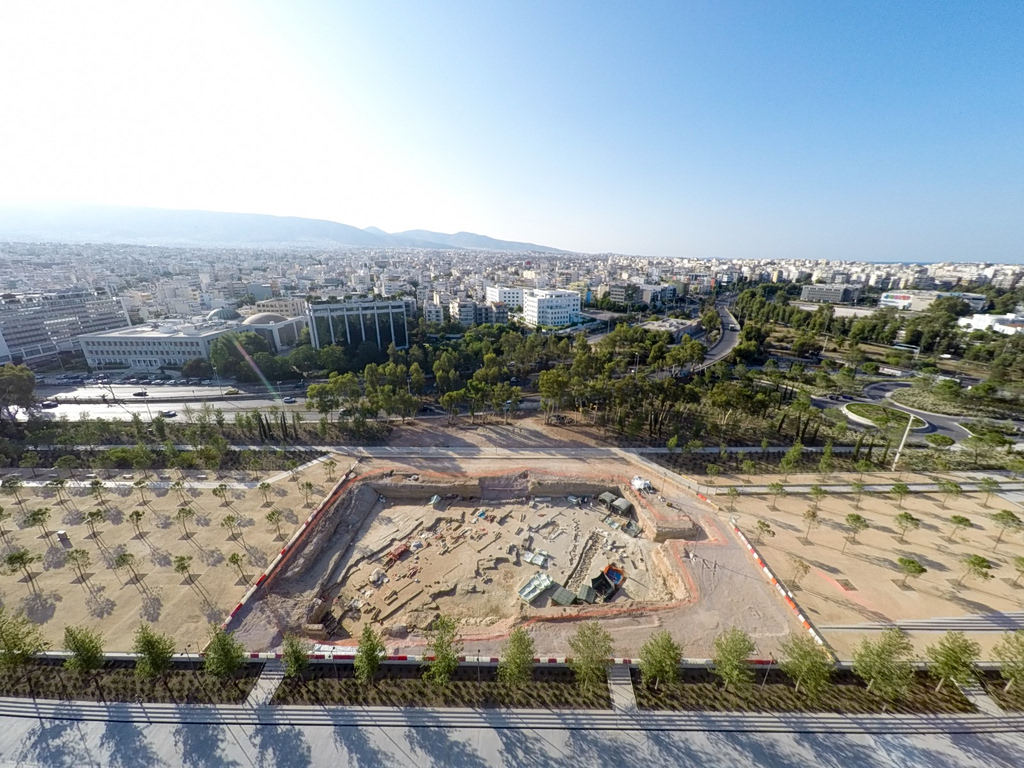
Aerial photograph of the Esplanada excavation site at SNFCC, where the Phaleron Skeletons were found. ©MINISTRY OF CULTURE—PHALERON EXCAVATION ARCHIVE
The latest comprehensive review of the evidence identifies more than 230 possible or confirmed ‘biaiothanatoi’, a term used for people who died violently or received markedly unusual treatment in death. A total of 171 skeletons appear in individual and paired burials and in at least 17 collective burials extending across roughly three centuries.
Even where violence is clear, bones cannot reliably distinguish political victims from prisoners, captives, enslaved people or ordinary offenders. Yet the pattern suggests that organized violence, captivity and coercive punishment recurred in the society that eventually produced Athenian democracy.
The cemetery also contains many newborns, infants and young children. Some were placed inside amphorae, cooking pots or hydriae. Some vessels had been reused or assembled from fragments. Other children were buried with cups, feeding vessels or figurines, including a small horse and rider.
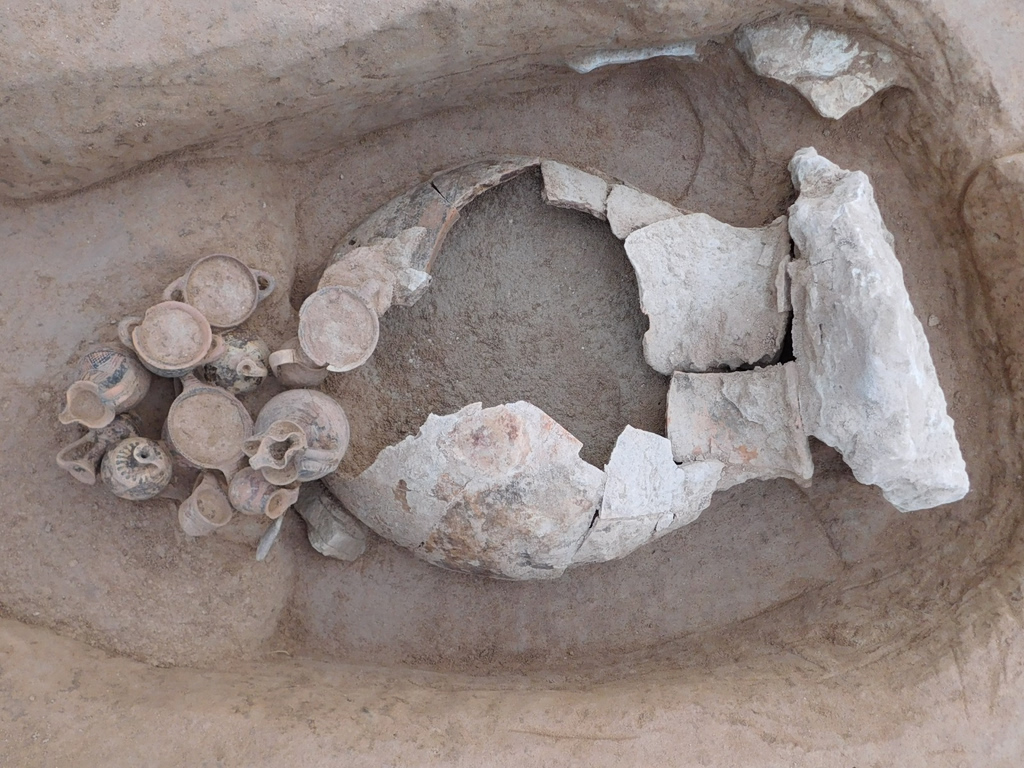
An infant’s grave, surrounded by burial offerings. The discovery changed archaeologist’s understanding of infant burial practices in ancient Greece. ©MINISTRY OF CULTURE—PHALERON EXCAVATION ARCHIVE
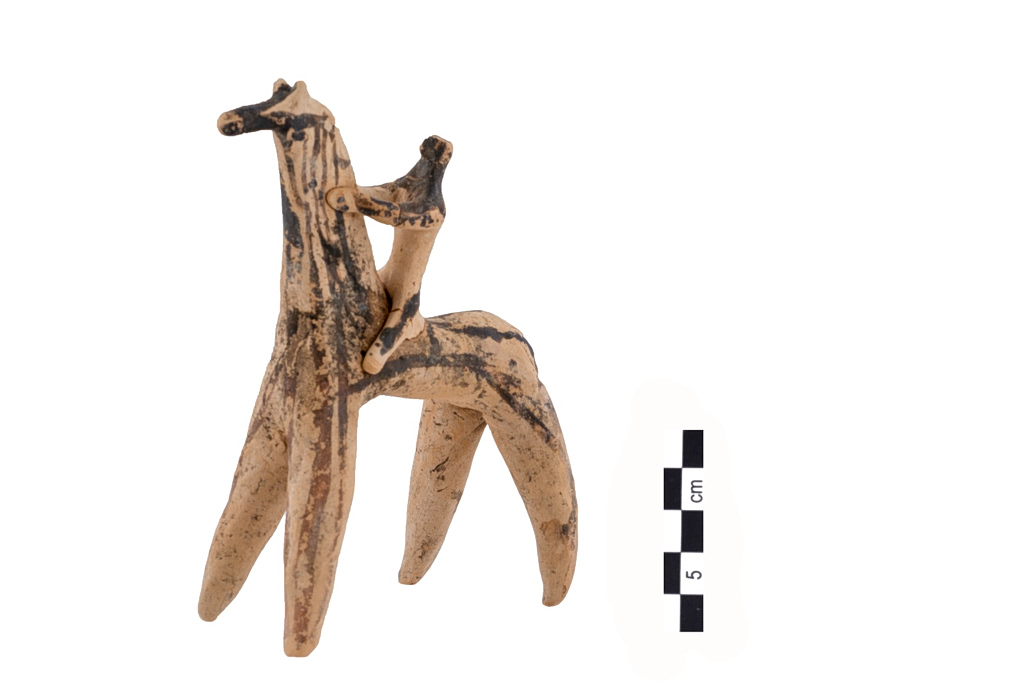
©MINISTRY OF CULTURE—PHALERON EXCAVATION ARCHIVE
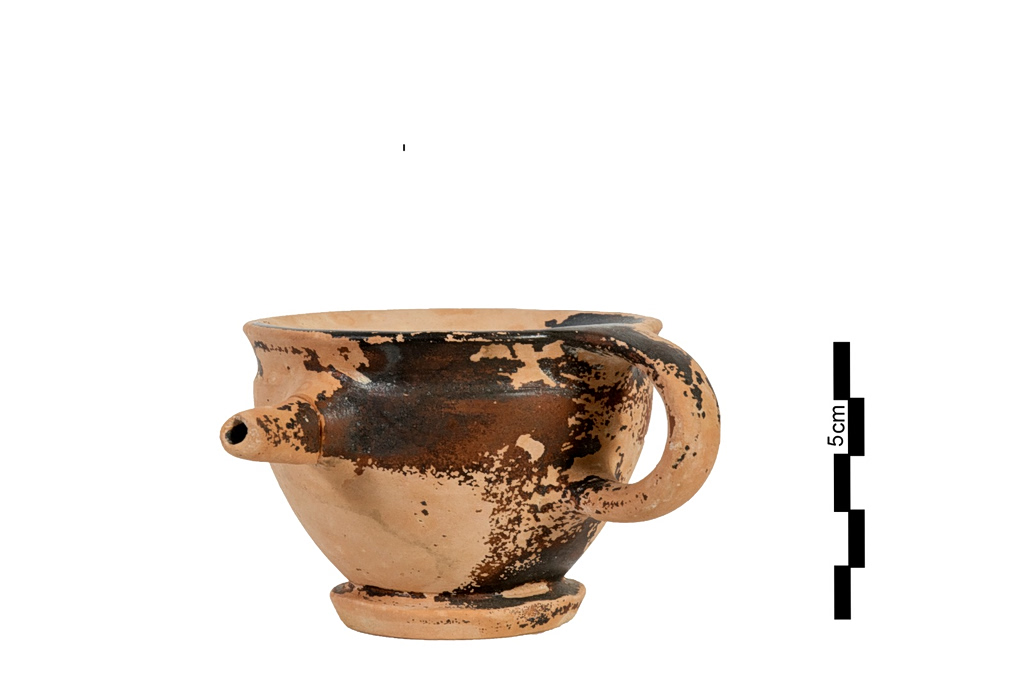
Among the excavation’s findings were different ceramics including pitchers and figures. ©MINISTRY OF CULTURE—PHALERON EXCAVATION ARCHIVE
Buikstra is struck by the unusual frequency of child remains, but cautions against reading it simply as evidence of exceptionally high infant mortality. Burial customs, preservation and the extent of the excavated area may all have shaped the sample.
Meanwhile, Buikstra hopes further work will reveal more about maternal health as well as infant feeding, nutrition and disease.
The graves also challenge the older description of Phaleron as a cemetery reserved for the poor and marginalized. The people buried there did not share a single diet, state of health or form of burial. Preliminary comparisons even suggest that some adults in the collective burials had marginally better dental health than others found in individual graves at the site.
Increasingly, Phaleron is looking less like a cemetery for one excluded group than a final resting place for a cross-section of a complicated society.
The ‘Hill of Secrets’
Then there is the part archaeologists did not excavate.
The recent excavations examined approximately 11,000 square meters in separate areas of the former Phaleron horse track. The 2022 exhibition catalogue Phalērόthen: Between Two Worlds identifies a 57.480 square-meter unexplored gap between the Central and Northwestern excavation sectors. Archaeologists also traced the continuation of the cemetery beneath parts of the SNFCC’s artificial hill and park without investigating it. Its full extent in this section remains unknown.
Chryssoulaki said the graves appeared to be growing denser at the point where excavations stopped. She believes the cemetery’s central and possibly best-preserved zone may lie beneath the hill.
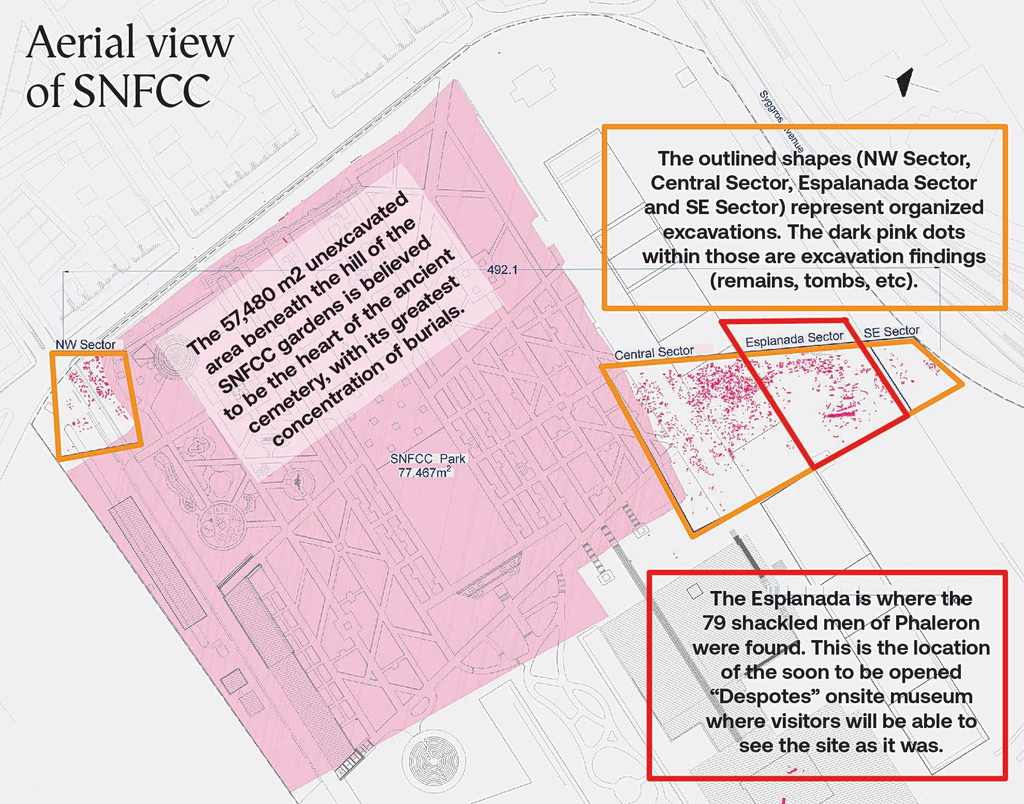
©MINISTRY OF CULTURE—PHALERON EXCAVATION ARCHIVE
“We weren’t allowed to dig exploratory trenches beneath it, which was disappointing because we were curious about what we would find,” she added.
Smiling, Chryssoulaki revealed, “that is why amongst ourselves we would call it ‘the hill of secrets.’ Now, I can only hope that the compacted soil deposits, including layers associated with the old horse track that occupied the site before the SNFCC, created a protective barrier over the graves before the new layers of soil were added.”
She stressed that the SNFCC complied with Greek law and financed rescue excavations wherever construction required earth to be removed. Where the project added soil, excavation was not required. As a result, the park and artificial hill could therefore be built without investigating the ancient layers below.
The old horse track may itself have offered some protection. Chryssoulaki details that it was laid over more than a meter of fill and did not require foundations that cut into the archaeological layer.
Leaving remains in place is not necessarily archaeological neglect, clarifies Chryssoulaki. Excavation is destructive, and future researchers may possess methods for extracting information that are unavailable today. But because exploratory trenches were not dug beneath the hill, neither the number and significance of the burials nor their present condition is known.
As for the shackled men of Phaleron, the remains are slated to be housed at a purpose-built protective exhibition called “Desmotes” on the other side of the SNFCC canal. In January, the Ministry of Culture announced the €7.5 million museum shell would be completed during the first half of 2026. That deadline has passed, and a public opening date has yet to be announced, although the structure appears to be in the final phases of preparation. The SNFCC clarified to To Vima Internation Edition that the land around Desmotes and structure itself are under the auspices of the Ministry of Culture.
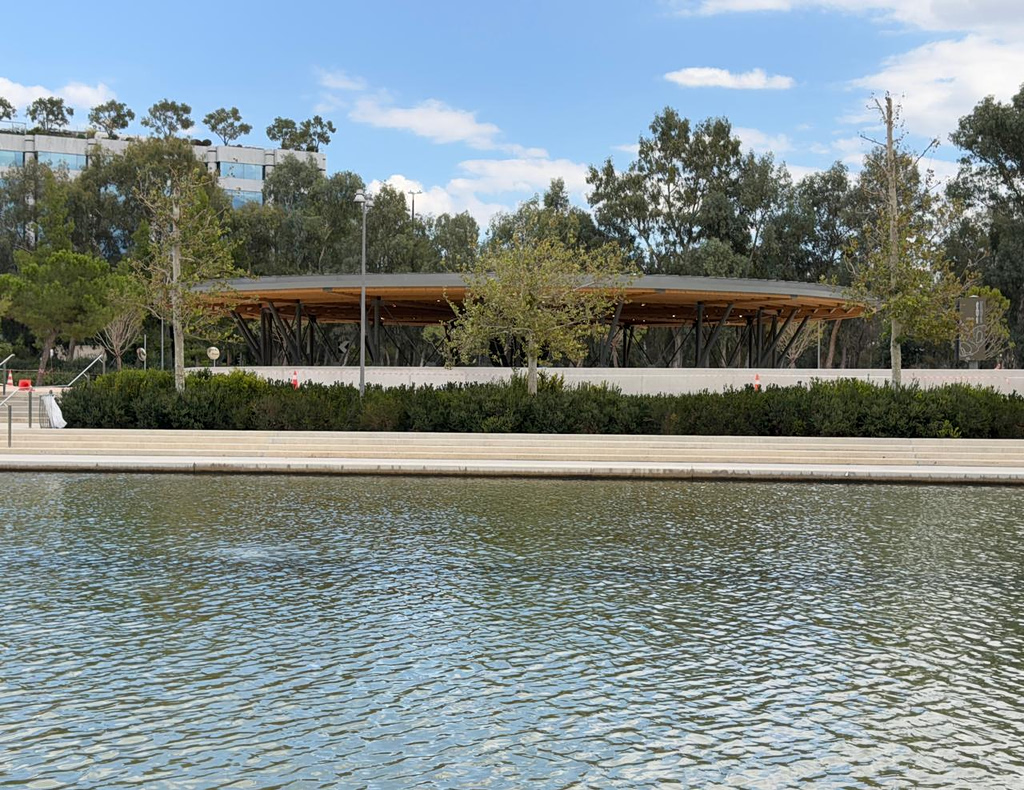
The Desmotes museum, which is adjacent to the SNFCC, and was scheduled to open in the first half of 2026. ©MINISTRY OF CULTURE—PHALERON EXCAVATION ARCHIVE
Phaleron’s Unfinished Archive
At Athens’ most famous ancient cemetery, Kerameikos, the celebrated tombs show how prominent families of the time chose to commemorate their dead. Phaleron preserves a less “curated” record of the city’s dead: infants, people buried without lasting memorials, and victims of violence.
Learning about Phaleron’s version of history matters just as much as researching Kerameikos, particularly for a society that produced democracy. Ultimately, the site’s greatest contribution may not lie in identifying one famous historical event, but in revealing more about the people the written sources left out.
Some of their stories have now been unearthed from the ground and continue to be pieced together by archaeologists around the world. How much more of that history remains beneath the SNFCC park is unknown, at least for now.
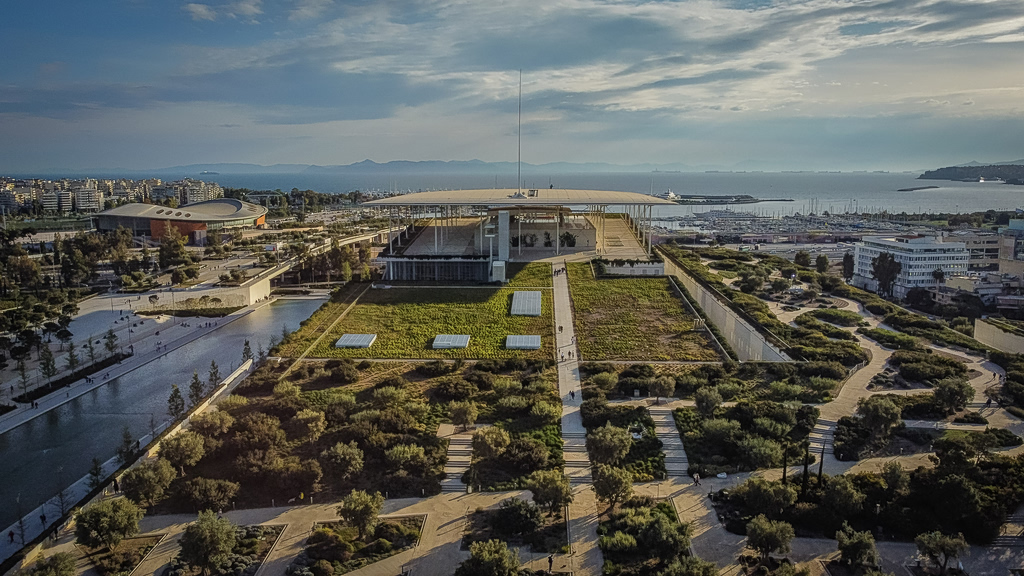
SNFCC aerial view ©SNFCC Nikos Karanikolas