 Μake us preferred on Google
The 2026 APEC Economic Leaders’ Meeting in Shenzhen, held on 18–19 November, highlighted the changing international order and the growing importance of the Asia-Pacific. One of the city’s welcoming slogans, “Once you arrive, you’re one of Shenzhen’s people”, captures an important feature of its development: attracting talent, welcoming ideas and turning knowledge into innovation. Shenzhen’s transformation into a major technology and industrial centre shows how openness, entrepreneurship and human capital can drive economic competitiveness.
This competition now extends beyond trade and technology to research, innovation and higher education. China, traditionally a major source of international students for Western universities, is emerging as a destination in its own right. Meanwhile, established destinations such as the United States and Australia face policy uncertainty, financial pressures and growing competition. For Greece, these shifts offer an opportunity that remains largely untapped.
China: from student supplier to education destination
China’s Study in China initiative links higher education with research, technological development, industrial policy and international engagement.
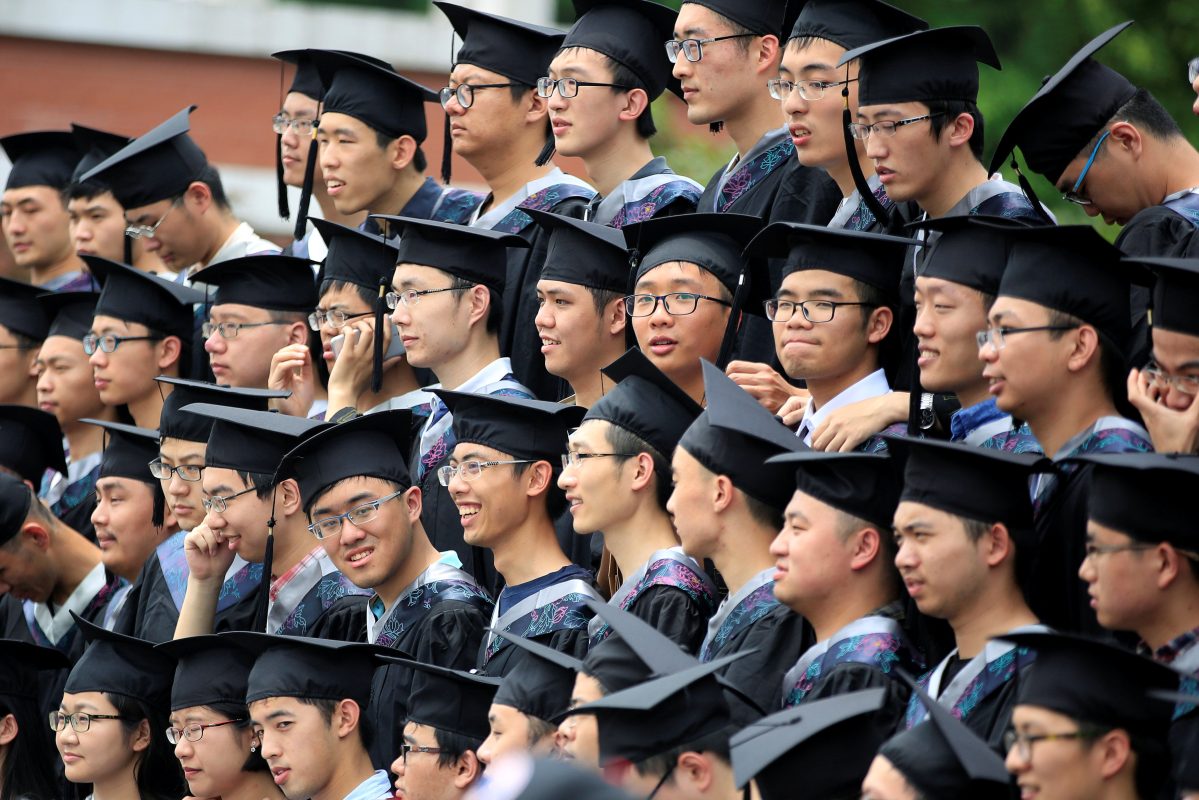
According to figures reported at the 2026 China Study Abroad Forum, China received approximately 380,000 international students from 191 countries and regions in 2024–25, including participants in exchange programmes. Of these, around 205,000 were enrolled in degree programmes, with postgraduate students accounting for 35 per cent.
China’s ambitions are also reflected in the growing international standing of its universities. In the 2027 Times Higher Education World University Rankings, Tsinghua University rose to 11th globally, while China’s representation in the top 200 increased from 13 to 17 universities. Asia also placed three institutions in the global top 15 for the first time.
Yet student numbers and rankings alone do not establish academic leadership. Research quality, institutional credibility, academic autonomy and intellectual openness remain essential to attracting and retaining global talent.
The United States: uncertainty in a leading system
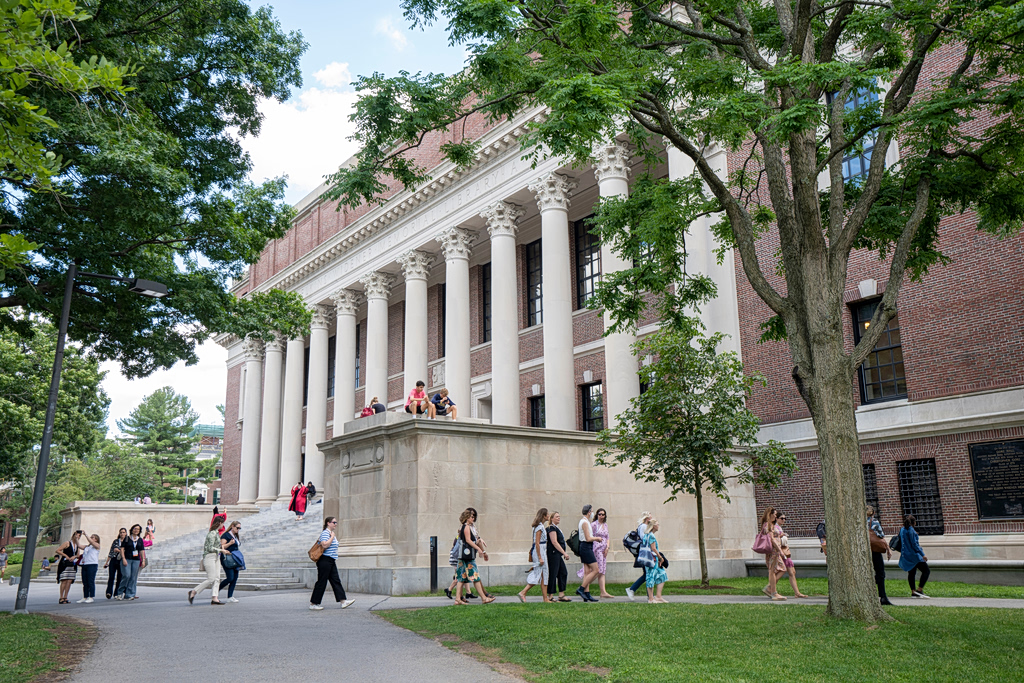
A group of visitors walk past the Harry Elkins Widener Memorial Library, Harvard University’s flagship library, in Harvard Yard, Cambridge, Massachusetts. Tada Images / Shutterstock.com
The United States remains a leading destination for international students, but its universities face growing uncertainty. An Institute of International Education survey of 809 institutions found that international student numbers fell by 9 per cent in autumn 2026, while new enrolments declined by 15 per cent. The overall figure includes international graduates participating in Optional Practical Training (OPT).
Visa restrictions, rising costs and uncertainty over post-study employment have contributed to the decline, particularly affecting institutions dependent on international tuition revenue.
The implications extend beyond university finances. International students contribute to research, innovation and the global networks that underpin American academic leadership. A sustained decline could therefore weaken the country’s longer-term research capacity and international influence.
Australia: the risks of financial dependence
International education has become one of Australia’s major export industries, generating A$53.6 billion in export income in 2024–25. It was the country’s fourth-largest individual export category, behind iron ore, coal and natural gas but ahead of gold. The figure includes tuition fees and students’ expenditure on accommodation, food, transport and other services.
However, following its post-pandemic recovery, the international student market has begun to weaken. Tighter visa settings, rising costs and competition from other destinations have added to the pressure. Government data for August 2026 show that student numbers fell by 8 per cent compared with August 2025, enrolments by 9 per cent and commencements by 12 per cent across all education sectors. The decline in higher education enrolments was considerably smaller.
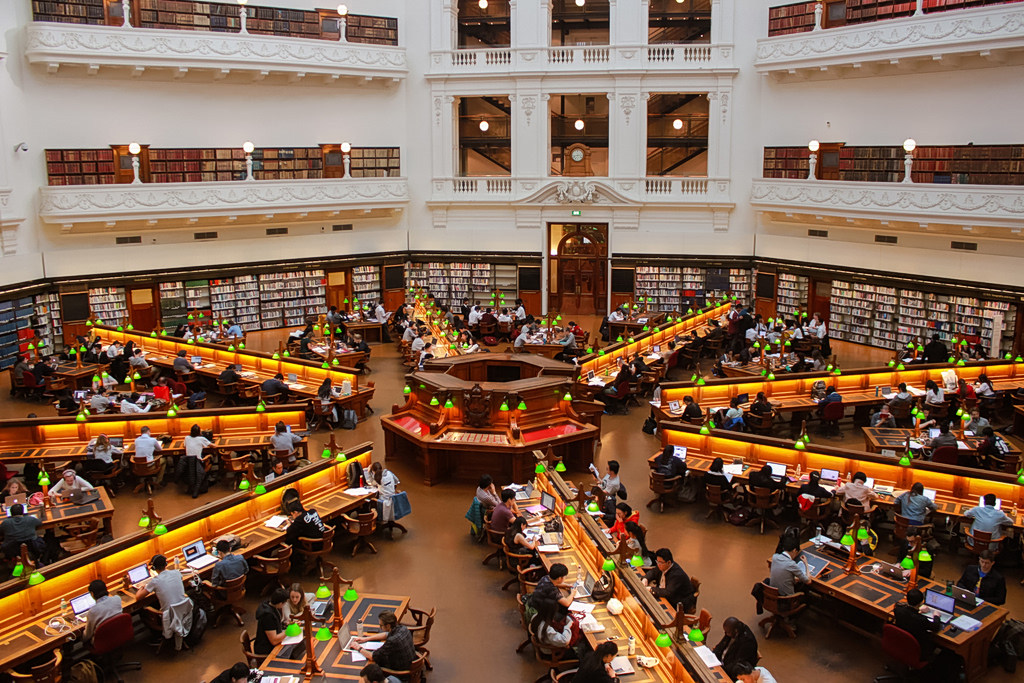
State Library of Victoria in Melbourne, Australia. Gregorio Koji / Shutterstock.com
The financial pressures are increasingly visible. As the Australian Financial Review reported in October 2026, falling international student numbers have brought university mergers and sector consolidation onto the policy agenda. The University of Melbourne recorded an operating deficit of $124 million in 2025, compared with $99 million in 2024. Its expenditure grew faster than operating income, while international student numbers declined.
These developments expose the vulnerability of a funding model heavily reliant on international tuition revenue and changes in domestic funding arrangements. Australia’s challenge is to remain attractive to overseas students while strengthening public investment, research capacity and alternative university revenue sources.
Greece: an opportunity within the European Higher Education Area
Greece remains on the margins of European higher education. Eurostat data for 2024 show that students from abroad accounted for just 2.6 per cent of its tertiary student population, the lowest proportion in the EU, compared with an EU average of 8.7 per cent, 21.6 per cent in Cyprus and 20.8 per cent in Austria.
Greece needs to integrate its universities more fully into the European and international academic community. This means making better use of the European Higher Education Area through English-language degrees, joint postgraduate programmes, research partnerships and stronger support for international students. Its geographical position and Mediterranean connections also offer opportunities to expand academic cooperation beyond Europe.
International alumni and diaspora networks could further extend these partnerships, particularly into the Asia-Pacific, linking universities with business communities and turning educational mobility into lasting academic and economic cooperation. Such networks can also prepare future leaders to engage confidently across cultures and economies.

The Academy and the University of Athens, in Panepistimiou Street. Apostolis Giontzis / Shutterstock.com
Rethinking the purpose of higher education
China, the United States, Australia and Greece face different challenges, but the lesson is common: higher education must be more than an export industry or a source of university revenue. Its value lies in creating knowledge, developing talent and fostering the intellectual openness needed for innovation.
Shenzhen demonstrates how openness and human capital can drive competitiveness. Yet meaningful international engagement also depends on the relationships universities build through alumni, diaspora and business networks. Ultimately, success will depend not simply on attracting international students, but on building institutions and lasting partnerships that generate knowledge, strengthen mutual understanding and prepare future generations to engage confidently with the world.
Steve Bakalis is an economist and Visiting Scholar at the Central University of Finance and Economics, Beijing, China. His professional experience spans higher education and international engagement across Australia and Asia.