
 Μake us preferred on Google
It is a sequence of events that has played out across China, with reverberations around the world: a crane arrives at a BMW dealership, rips out the German carmaker’s sign and replaces it with the logo of a Chinese vehicle brand.
In five years, BMW’s sales in China have plunged by 42 per cent — this year it is set to deliver fewer than half a million cars into the world’s biggest auto market.
But its travails do not only show how foreign carmakers have largely been routed from the country; they also reveal how China is winning the global battle for the future of the car.
The entire western automotive industry has been caught off guard by the dramatic pace of the transition to electric vehicles in China, which has crushed the sales of brands ranging from Volkswagen to Toyota and Mercedes-Benz, whose line-ups are still dominated by petrol cars.
As western carmakers dithered and delayed, their Chinese rivals figured out how to produce more affordable EVs on a scale that is accelerating the demise of the combustion engine globally — and put them on course not only to win the technology battle in EVs but to win the broader automotive war.
Francesca Gamboni, chief supply chain officer at Volvo Cars, owned by China’s Geely, describes the China-led shift to EVs as “irreversible”.
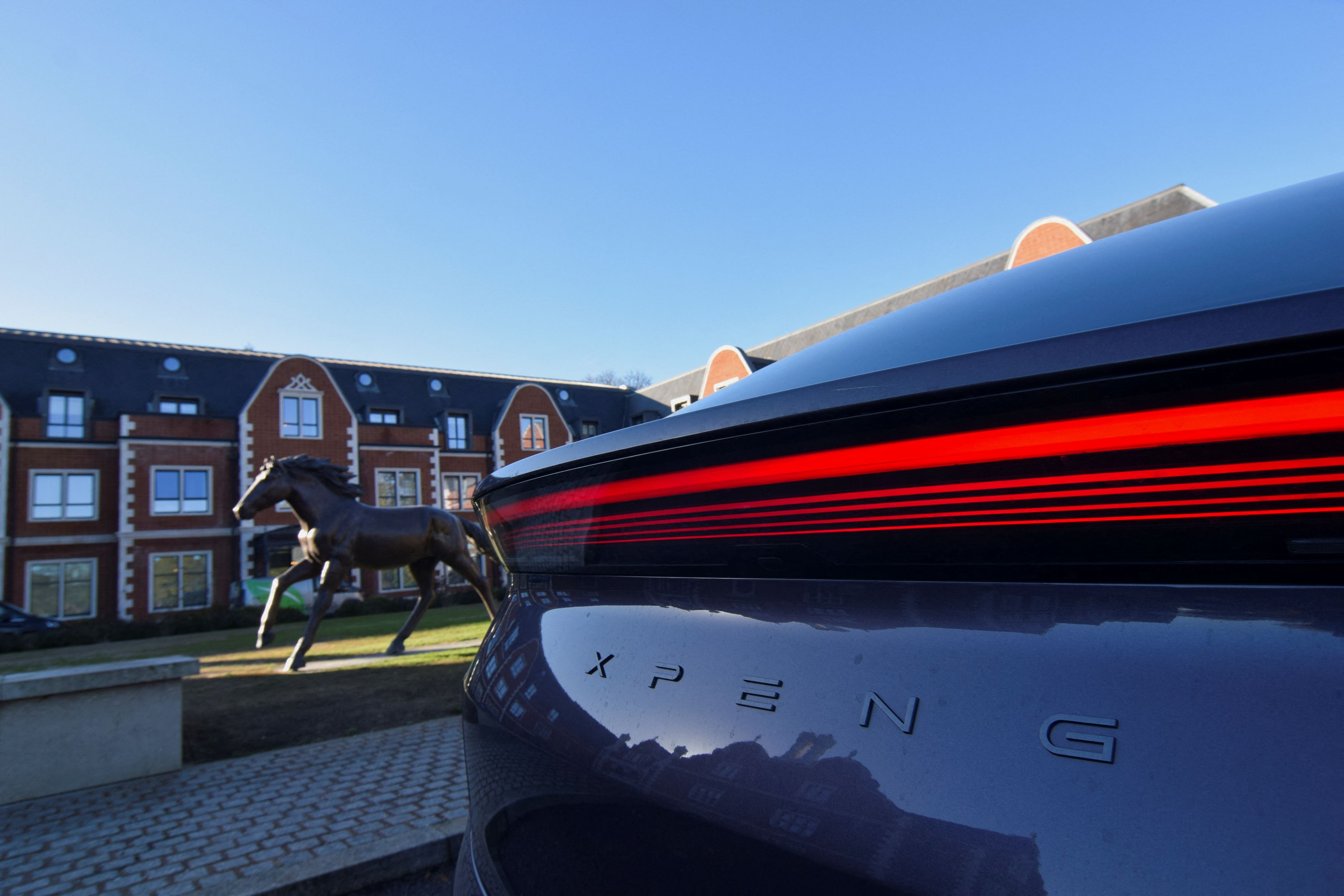
Details of an XPENG L03 fully electric SUV at a test-drive event organised by the Chinese EV maker in Windsor, Britain, November 13, 2026. REUTERS/Nick Carey
“You have the followers who . . . are not ready or trying to maybe slow down the process in order to get ready,” she says. “Unfortunately for them, [the EV transition] is going very fast. It is exponential.”
In China, cars powered by internal combustion engines and the legacy companies that make them are being left for dead. And now the shift is beginning to play out on a global scale as China’s carmakers make advances across the west, with profound economic consequences.
Germany’s largest carmaker, Volkswagen, plans to cut more than 100,000 jobs — roughly one in six of its employees — while up to 350,000 jobs in the auto industry’s European supplier base could disappear by the end of the decade, according to estimates by the European Association of Automotive Suppliers.
EU industry commissioner Stéphane Séjourné has warned that Europe’s automotive industry is in “mortal danger”.
Cut-throat competition at home is fuelling Chinese carmakers’ aggressive expansion overseas. US and European regulators have moved to protect local carmakers by watering down plans to expedite the shift to EVs and raising tariffs on Chinese imports.
But analysts say those measures ultimately risk strengthening the technological advantage built by Chinese carmakers — and leave the west even further behind in the EV race.
A price war decades in the making
China’s ascendancy in the car industry is partly the result of decisions taken in the mid-1980s by then leader Deng Xiaoping, who ordered a dramatic increase in the mining of rare earths that produce the magnets used in EV motors. Beijing moved to position itself at the forefront of the EV revolution in the early 2000s, after failing to gain a foothold in the petrol car market.
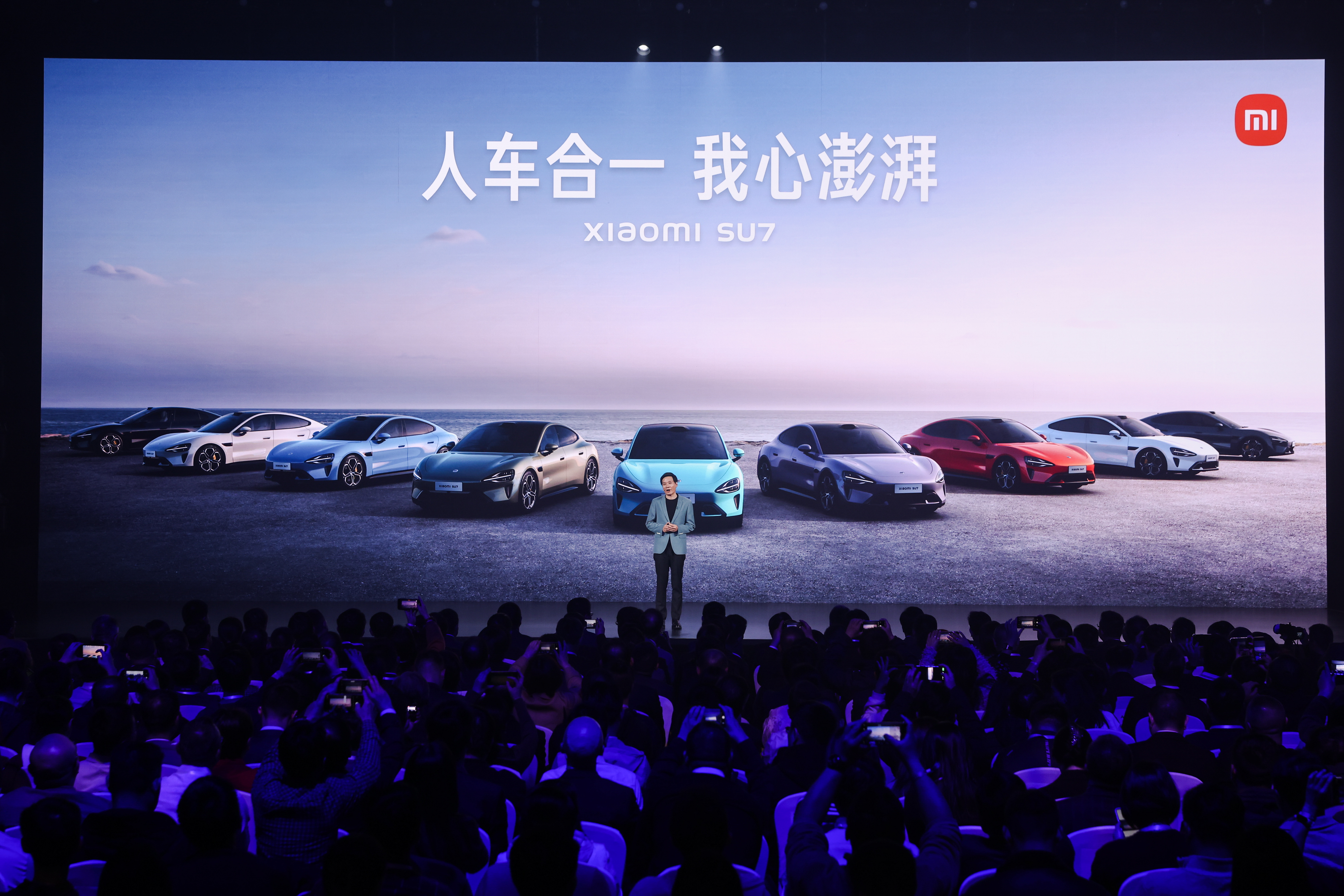
epa11248076 Lei Jun, Founder and CEO of Chinese mobile internet company Xiaomi Technology Co. Ltd., speaks during the Xiaomi SU7 electric car launch ceremony at Beijing Etrong International Exhibition and Convention Center in Beijing, China, 28 March 2024. Xiaomi released its new electric car product ‘SU7’ on 28 March 2024. EPA/WU HAO
One in four new cars sold globally is now an EV or a plug-in hybrid, according to green think-tank Ember. These “new energy vehicles” now account for almost 70 per cent of new cars sold in China.
“The Chinese automotive industry was ambitious in terms of electrification, and this helped, I think, the overall industry to speed up electrification,” says Renault chief executive François Provost.
The surge in fuel prices caused by the Iran war combined with an expansion of government subsidies in several European markets has helped EV sales in the EU to increase by half for the first nine months of 2026 compared with the same period a year ago, according to European car industry body Acea. In Germany, France and the UK, roughly three in every 10 new cars sold are now EVs.
In the US, however, sales have collapsed in the wake of President Donald Trump’s cancellation of tax credits on EV purchases and reversal of climate policies. EVs accounted for just 6 per cent of its new vehicle market in the third quarter, down from a peak of 10.6 per cent a year earlier, according to Cox Automotive.
Punitive tariffs and technology restrictions have in effect shut Chinese EVs out of the American market. But Paul Jacobson, chief financial officer at General Motors, says the US carmaker believes “there’s a likelihood that the regulatory environment will pivot in the future again . . . we want to be ready for that”.
Ultimately, the most important consequence of China’s progress has been to drive down the cost of EVs.
In the west, the first generation of EV buyers bought their cars primarily out of a desire to minimise their carbon footprint. But the decline in prices and rise in petrol costs mean that buying an EV today often makes good economic sense. A product that was just years ago perceived as the preserve of wealthy Californians is now accessible to vast swaths of the Chinese population.
Of the 10 bestselling EVs in China so far this year, five have starting prices below Rmb100,000 ($14,990), according to data from Automobility, a Shanghai-based consultancy.
An EV typically costs a Chinese manufacturer about $20,000 to produce domestically, but it would cost about $31,000 to make the equivalent car in Europe, where wages, energy bills and battery prices are higher, according to consultants from AlixPartners. Western car executives also complain that their Chinese rivals benefit from substantial state subsidies.
Despite such advantages, Chinese EVs are generally sold in Europe at comparable prices to European equivalents — although the brands offer special discounts and generous financing terms.
Auto industry analyst Matthias Schmidt says this makes them appear “competitive without being seen as dumping or as cheap Chinese products”.
European players are trying to fight back with more affordable EVs that draw on their decades of heritage. Renault has just launched a new Twingo EV in the UK, which will start below £15,000 including government subsidies — cheaper than BYD’s Dolphin Surf compact, priced at £18,675.
Some western carmakers are even partnering with Chinese rivals: Ford is collaborating with Geely in Spain and Stellantis is planning a manufacturing joint venture with Dongfeng in France.
The EV price wars in China drove industry profitability “down to the bottom”, says Thomas Meininger, executive director at research firm Mobility Global. “Now the question is: will we see the price war spreading to other regions as well? Is it a race to the bottom?”
Death of the internal combustion engine
In China — where sales of petrol-powered cars have tumbled by two-thirds since 2017 — dealers say that customers perceive legacy car brands in the same way iPhone buyers view Nokia handsets.
Nissan chief executive Ivan Espinosa acknowledges that “one of the weaknesses that we have is that our brand is perceived as an internal combustion engine company”. But he contends that “all the Chinese cars look alike. They don’t have this legacy and identity. So I think that the fight is far from being over.”
BMW’s new chief executive Milan Nedeljković is hoping the launch of its all-electric iX3 SUV, built in Shenyang, will kick-start an improvement in the carmaker’s performance in China, where dealers say it was slow to recognise the speed of the EV shift and the quality of homegrown manufacturers.
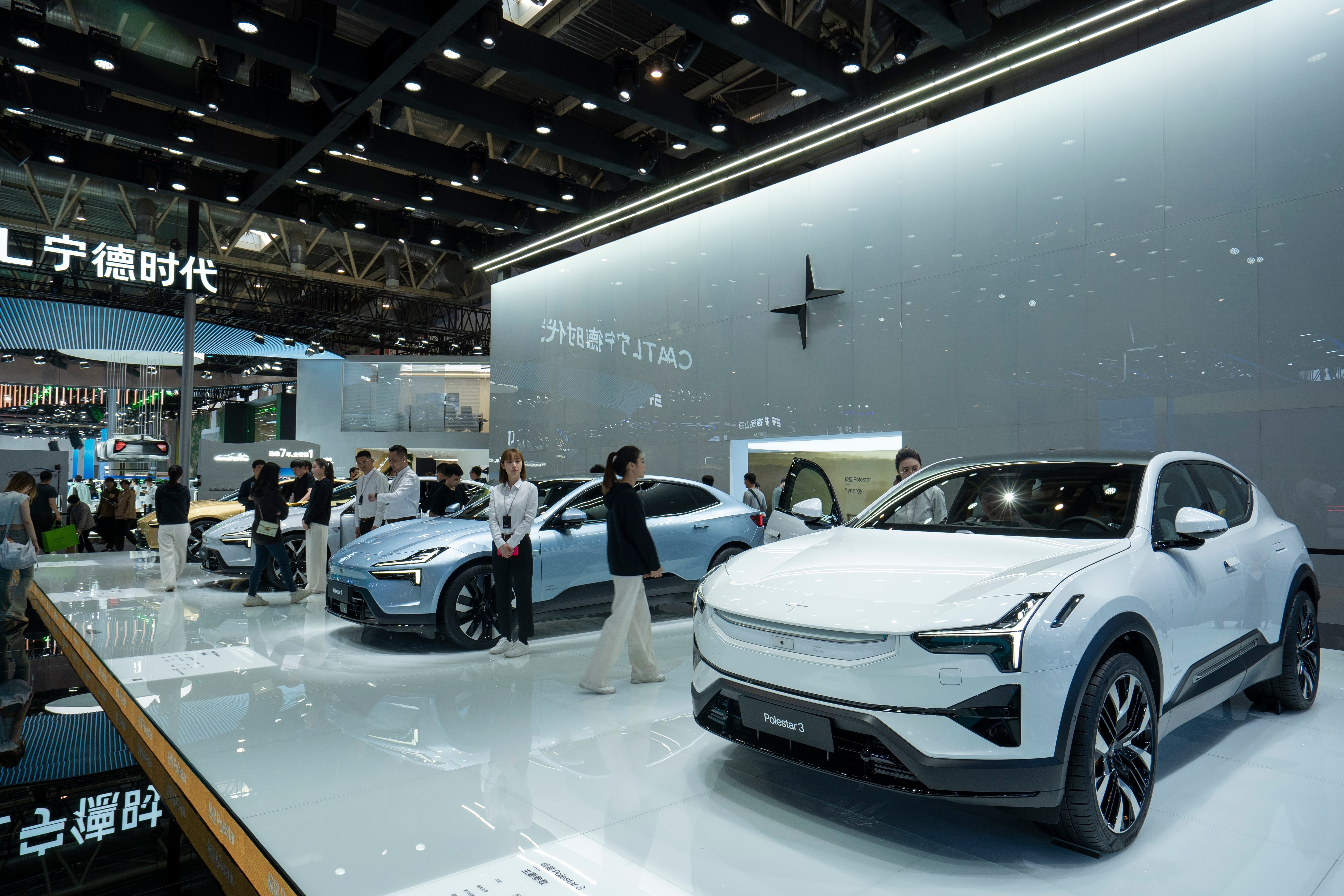
The iX3 is the first model based on BMW’s “Neue Klasse” technology platform, developed at a cost of more than €10bn.
While expressing confidence about the iX3’s prospects on a recent earnings call, BMW’s chief financial officer Walter Mertl shared the company’s conviction that the market for petrol cars “will be alive in specific price segments. It will continue to do so up to the next decade.”
That view is contested. Chris Liu, a Shanghai-based analyst at Omdia, argues that the internal combustion engine market is in terminal decline. “The decline creates a vicious cycle: lower volumes push up per-vehicle production costs, making it even harder for manufacturers to compete on price,” he says.
In 2020, when China’s auto market was still mostly comprised of petrol cars, German, American, Japanese and Korean brands controlled 64 per cent of it. Today, the combined share of international brands has fallen to about 25 per cent, according to consultancy Automobility.
Over that time, China’s annual car sales have contracted from 25mn to 20mn, a slowdown driven by a prolonged property market slump and the phased withdrawal of government subsidies.
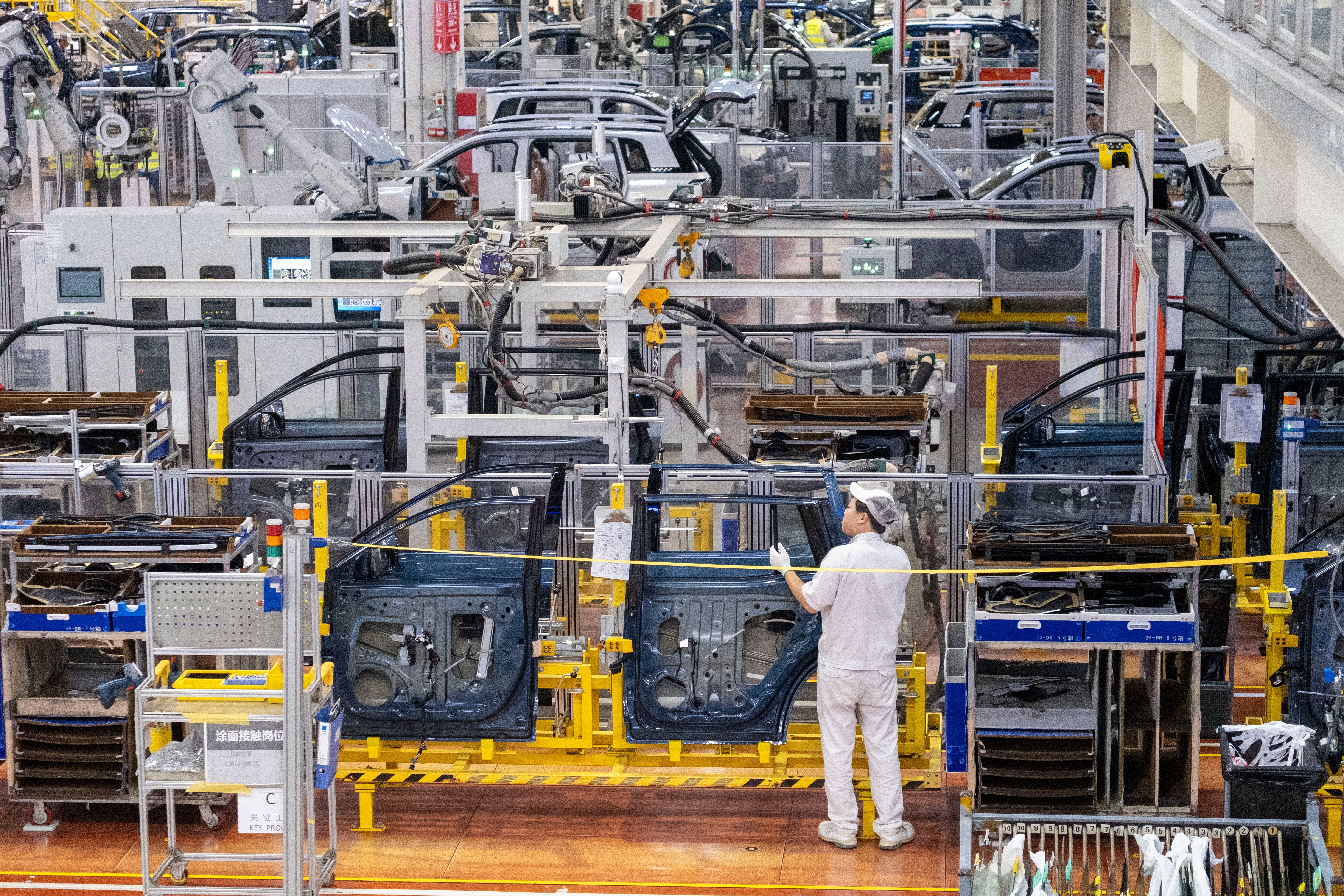
As a result, the country’s car plants — which can produce 48mn vehicles a year at full capacity — are underutilised.
That is true even for China’s biggest auto exporter, Chery, which produces the UK’s most popular car, the Jaecoo 7. At one of its factories in Wuhu, on the Yangtze River delta, the company can produce a new car every minute. But when the FT visited in October, it was only running at half its capacity.
Chery’s international chief Zhang Guibing warned that industry forecasts of vehicle demand held “no meaning”.
The limits of protectionism
The cut-throat domestic market has prompted China’s carmakers to accelerate their push into western rivals’ strongholds.
Analysts estimate they will export around 12mn cars this year, up from 7.1mn last year and fewer than 1mn in 2020. AlixPartners forecasts that Chinese manufacturers will almost triple overseas production to 3.4mn cars by 2030.
Assailed by new competition, western carmakers are pushing to ease UK and EU regulations that were designed to make them shift to EVs faster.
Carmakers argue that the rules — which impose heavy penalties if they do not hit EV production targets or sufficiently reduce emissions from polluting vehicles — are rigid and do not reflect the uneven pace of the shift to EVs.
France and Germany recently agreed to keep new combustion engine cars on European roads well after 2035, while the UK is preparing to ease its target that 80 per cent of new cars emit zero emissions by 2030.
While carmakers welcome such steps, betting on the continued survival of the internal combustion engine could backfire. Volvo Cars’ Gamboni says cutting EV investment is risky, arguing that “Europeans like European cars” only if they are competitive with Chinese equivalents on price and technological prowess.
The willingness of governments to slap tariffs on Chinese EVs has varied depending on the importance of their domestic car industries. At one end are the US and the EU, which levy tariffs of 100 per cent and a maximum 45 per cent respectively, while the UK has a standard 10 per cent.
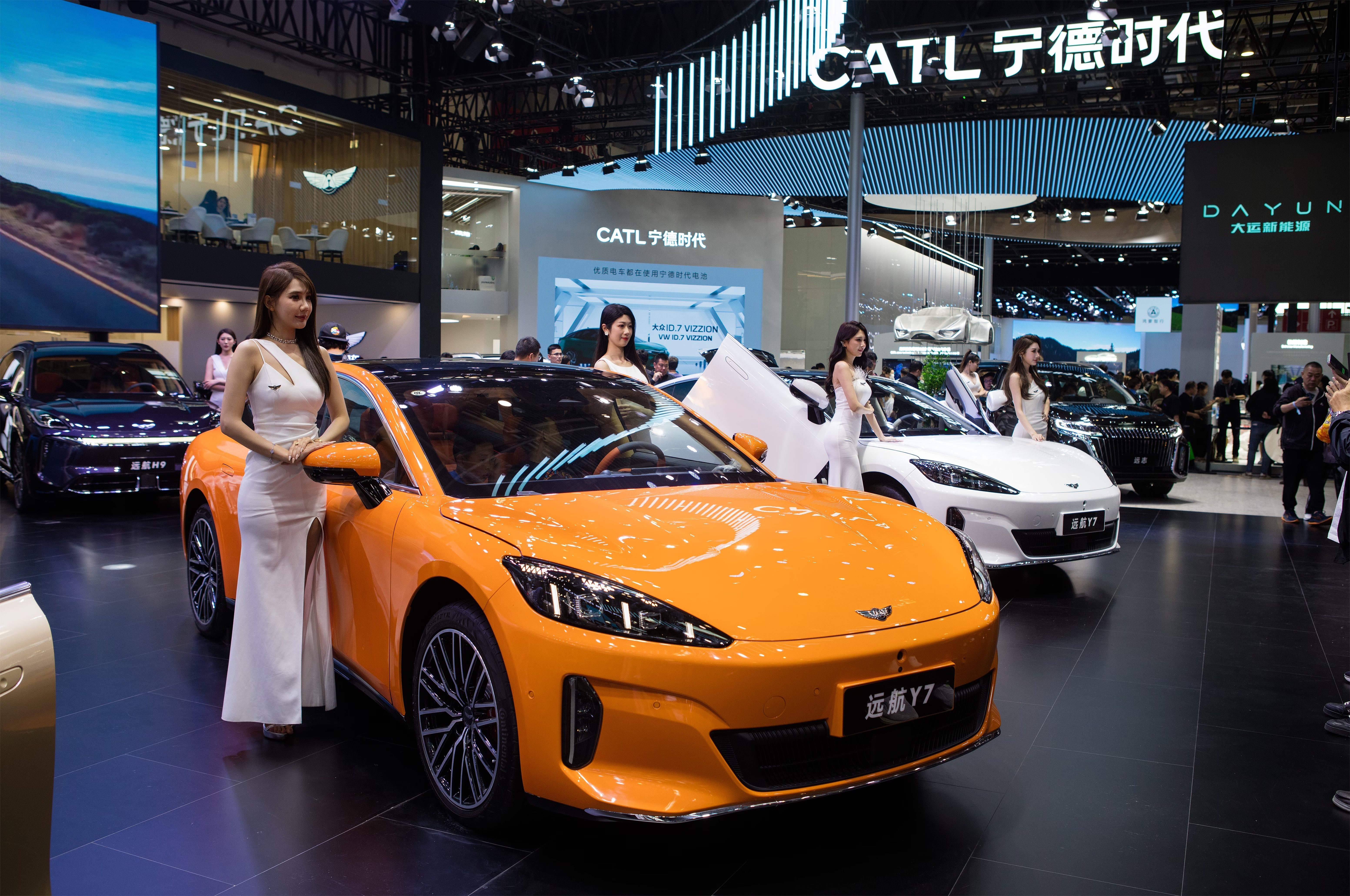
Australia, by contrast, does not levy any tariffs on Chinese cars. EVs are growing rapidly in the country, making up 23 per cent of car sales in October, compared with just 7 per cent a year earlier, according to industry data. The Australian Automotive Dealer Association (AADA) estimates that Chinese brands will account for 58 per cent of the market by 2035, up from 34 per cent this year.
In the UK, where Prime Minister Andy Burnham is under pressure from Brussels to align Britain’s trade policy with that of the EU, Chinese brands have taken a 22 per cent share of the car market, according to the Society of Motor Manufacturers and Traders.
Researchers at Rhodium Group estimate that markets accounting for 44 per cent of China’s car exports, including Thailand and South Africa, are considering or planning to erect trade barriers.
The US consultancy warned that if Brussels succeeded in co-ordinating restrictions, Beijing’s “willingness to take retaliatory measures” would increase.
Caught in the crossfire
Traditional carmakers are caught in the geopolitical crossfire. With tariffs having only limited impact, Brussels has proposed a “Made in EU” scheme with stringent rules that require the use of Europe-made car parts and labour.
Under current proposals, Ford’s electric Transit, Europe’s best-selling van brand, would be unlikely to qualify for EU subsidies even though it was designed and engineered in the UK and Germany and half its components are sourced from within the EU, because the final assembly takes place in Turkey.
BYD, China’s biggest carmaker, is building a new plant in Hungary to ensure it is not affected by the rules. It is also delaying plans for a factory in Turkey and looking instead for a second facility in Spain or France.
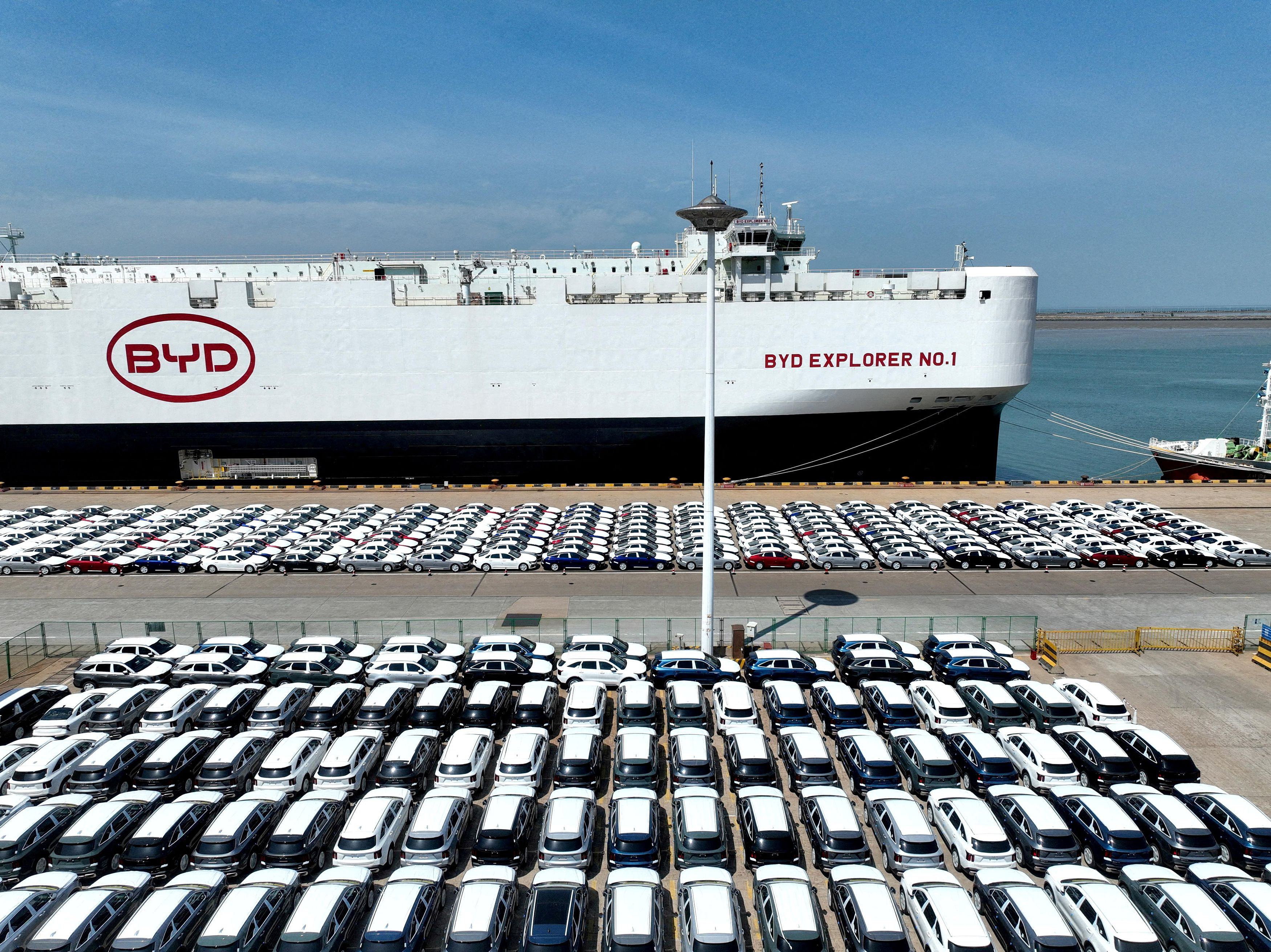
FILE PHOTO: A drone view shows BYD electric vehicles (EV) before being loaded onto the “BYD Explorer No.1” roll-on, roll-off vehicle carrier for export to Brazil, at the port of Lianyungang in Jiangsu province, China April 25, 2024. China Daily via REUTERS ATTENTION EDITORS – THIS IMAGE WAS PROVIDED BY A THIRD PARTY. CHINA OUT./File Photo
“It doesn’t matter what will happen. BYD is on our own path to invest heavily in Europe,” says Stella Li, the group’s top international executive.
BYD already replaced Tesla as the world’s largest EV maker last year. But it faced a setback recently after a Dutch court barred it from selling its Ti7 SUV in Europe on the grounds that it copied the design of Jaguar Land Rover’s Defender. BYD said it strongly disagreed with Friday’s preliminary judgment and will appeal against the decision.
Car executives around the world agree on one thing: that the next frontier of the automotive battle will be fought over the deployment of AI and assisted driving software. That shift could create new industry leaders and drive consolidation around the world.
Tesla, which lost its position as the world’s largest EV manufacturer to BYD, is pivoting to self-driving robotaxis, while Chinese rival Xpeng is preparing to bring its semi-autonomous driving technology to European cities next year.
As electrification transforms the industry almost beyond recognition, Gamboni argues that Europe, like the rest of the western world, can still prevail — but there is no longer any time to spare. “This exactly depends on how we behave and how we move now.”
Copyright The Financial Times Limited 2026
© 2026 The Financial Times Ltd. All rights reserved. Please do not copy and paste FT articles and redistribute by email or post to the web.