 Μake us preferred on Google
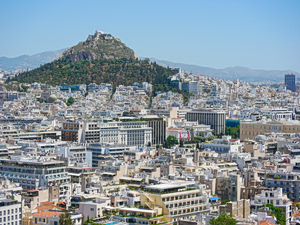
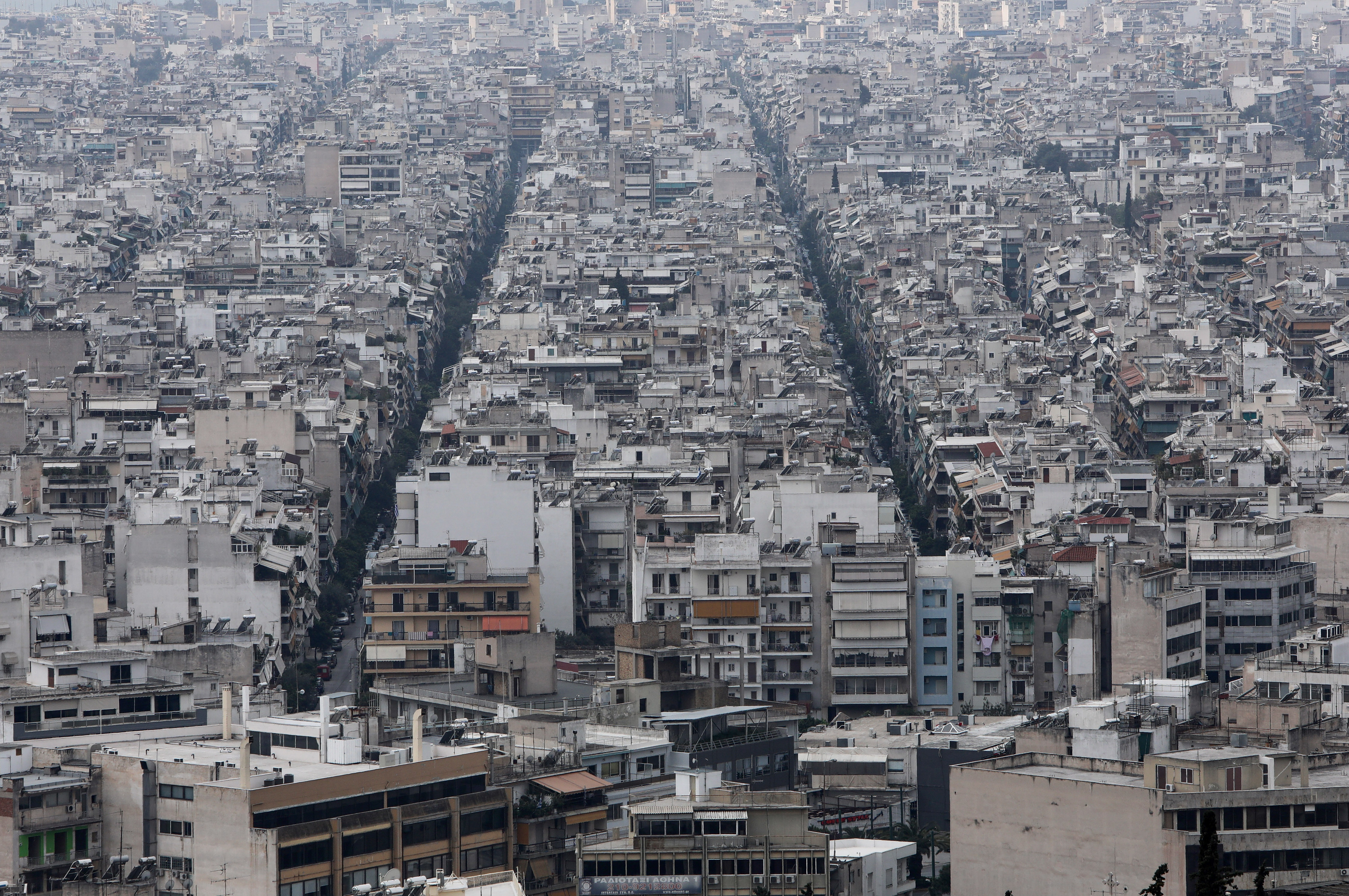
Athens is changing. Its population is shrinking, rents are rising and a growing number of the available housing stock is being converted into short-term rentals, raising questions about the future of residential neighborhoods in the capital. A proposed overhaul of the city’s urban planning rules seeks to address these changes, with new restrictions on tourist accommodations, incentives for long-term housing and tighter controls on construction.
The proposals are part of a new Local Urban Plan for the Municipality of Athens, which would also reshape some of the capital’s largest redevelopment projects, expand green spaces and change how residents move around the city.
But the plan remains on hold. The study has been with the Environment and Energy Ministry for months and according to officials familiar with the process has passed the evaluation stage . However, it has not yet been put up for public consultation, raising questions about its eventual adoption.
The proposals come as Athens struggles with a growing imbalance between housing and tourism. The city lost approximately 20,600 residents over a decade, while an estimated 1,800 buildings stand vacant in its historic center. At the same time, more than 13,000 properties have been listed for short-term rental in the city’s First Municipal District alone, an area encompassing neighborhoods from Kolonaki and Exarchia to Koukaki, Plaka, Monastiraki and Syntagma. Traditional neighborhood businesses, including bakeries and workshops, are increasingly giving way to cafes and restaurants catering to tourists, eroding the character of the
The planning team has identified two main problems: Buildings remain unused because of renovation costs, uncertainty over taxes and complications arising from shared ownership, while the expansion of short-term rentals has intensified competition for available housing. The result is a shrinking pool of homes for young households, students and vulnerable residents.
Three Zones for Airbnb Rentals
One of the plan’s most significant proposals would divide Athens into three zones, with restrictions on short-term rentals determined by the level of tourism activity in each neighborhood.
In the red zone, which includes Plaka, Koukaki and the Commercial Triangle, no new short-term rental permits would be issued. These areas are considered saturated because of the concentration of tourist accommodations.
The orange zone, covering neighborhoods such as Pangrati and Exarchia, would introduce a limit of 90 days per year for short-term rentals.
The rest of Athens would fall within a green zone, where authorities would monitor the market for signs of increasing tourism pressure rather than impose additional restrictions.
The plan also proposes a 20-bed threshold for short-term rental properties. Accommodations offering more than 20 beds would have to be classified as hotels, making them subject to corporate taxation and hotel safety requirements. The planners cite a ruling by Greece’s highest administrative court, the Council of State, which recognized that large-scale short-term rental activity can constitute a change in a property’s designated use.
Incentives to Bring Empty Homes Back Into Use
The proposed changes go beyond restrictions on Airbnb-style rentals.
Property owners could receive reductions in ENFIA, Greece’s annual property tax, along with renovation subsidies, provided they commit to renting their properties on long-term leases of at least five years. Short-term rentals would also be prohibited in areas designated exclusively for residential use.
To expand affordable housing, the plan recommends using underutilized public land for social housing developments through public-private partnerships. Major redevelopment projects would also be required to allocate a proportion of their housing to social use. The aim is to bring vacant properties back into the housing market while protecting existing residential neighborhoods from further conversion to tourist accommodations.
The proposals were developed under the Konstantinos Doxiadis Urban Planning Reform Program, an initiative of the Environment and Energy Ministry implemented through the Technical Chamber of Greece.
What Would Change for Building Heights?
With approximately 95% of Athens already built up, the planners are recommending reductions in permissible building density across the city’s planning districts. The proposed floor area ratios, which determine how much can be built on a given plot, would range from 0.8 to 4.8, depending on the area.
Building height limits would also vary considerably, from 7.5 meters (about 25 feet) in particularly sensitive areas to more than 24 meters (79 feet) in the commercial core. In central Athens and Plaka, the proposed limits would generally range from 11 to 15 meters (36 to 49 feet). Any increase would have to be justified by a study covering the entire city block. The plan also proposes raising the minimum plot size required for construction to prevent the subdivision of land into smaller lots
Another significant change concerns the transfer of development rights, a mechanism that allows unused building rights to be transferred to designated areas. The planners propose establishing six Development Rights Reception Zones, exclusively in districts where permissible building density has already been reduced.
In historic and archaeological areas, additional height and floor space allowances granted under the country’s New Building Regulation would be prohibited entirely. In other areas, developers could still benefit from these allowances and transferred development rights, but the total amount of construction permitted could not exceed the limits in place before the proposed reductions.
A Different Future for Government Buildings
The plan also considers the future of government buildings in central Athens that would be left vacant under a separate project to relocate nine ministries and four public agencies to the proposed Andreas Lentakis Government Park. The relocation would affect approximately 14,000 employees, including staff from the ministries of Finance, Development, Environment and Energy, Labor, Agricultural Development, Health, Tourism, Culture and Interior.
The urban planners are concerned that the vacated buildings could be converted into hotels, eroding even further the character of central Athens. They propose restrictions to prevent widespread hotel conversions and recommend finding alternative uses for the properties to maintain a mix of activities in the city center. They also argue that decisions about how these buildings will be used should be made before the relocation takes place, rather than afterward.
Redeveloping Elaionas and Protecting Plato’s Academy
Another priority is Elaionas, a sprawling former industrial district about 2.9 kilometers (1.8 miles) from central Athens. Covering approximately 870 to 950 hectares across five municipalities, Elaionas has long been constrained by fragmented administration and outdated development plans that were never implemented. The study proposes a joint urban plan for all five municipalities to overcome longstanding administrative obstacles. It also calls for a hub for green technology and research-based businesses, as well as a new park stretching along a local stream.
A separate architectural competition is already underway for a redevelopment strategy covering roughly 500 hectares of Elaionas, including urban design, architecture and transportation planning.
At Plato’s Academy, the planners question the proposed location of a new museum within the archaeological park. The park covers approximately 13 hectares and is an important green space for surrounding neighborhoods. According to the study, building the museum inside it would eliminate about three hectares of open and green space.
The planners support the creation of the museum but recommend examining alternative locations, including land owned by REDS that was designated for expropriation for archaeological purposes in 2011, neighboring Culture Ministry properties currently used to store archaeological finds and disused industrial buildings that could be restored.
The Long-Delayed Goudi Metropolitan Park
The proposed Goudi Metropolitan Park is another major focus. Plans to create a large public green space on the approximately 96.5-hectare site date back to 1977. A presidential decree setting out the park’s boundaries and permitted uses was issued in 2011, but the Council of State struck it down in 2017 because a strategic environmental assessment had not been carried out beforehand. The project has remained unresolved ever since.
About 55 hectares still belong to the Ministry of National Defense, and the transfer of land needed to create the park has never been completed.
In September 2025, the mayors of Athens, Zografou and Papagou-Holargos called for changes to the proposed regulations, including the establishment of a management authority and restrictions on uncontrolled vehicle access and parking. The new urban plan incorporates those proposals and calls for a single management body, the removal of incompatible land uses and better connections between Goudi Park, Ilisia Park and Mount Hymettus.
More Green Space and a 15-Minute City
Athens currently has just 5.36 square meters (about 58 square feet) of green space per resident, compared with a target of 10.44 square meters established under previous urban plans.
The proposed framework includes tailored land-use regulations for 38 planning districts, protection for exclusively residential neighborhoods and the establishment of environmental corridors connecting green spaces. The planners also recommend adopting the concept of a “sponge city,” using green spaces and water management infrastructure to absorb rainfall and reduce flooding. That would include uncovering sections of certain streams, which currently run underground for much of their length. Cooling measures would be prioritized in neighborhoods most vulnerable to high temperatures as part of the city’s climate adaptation strategy.
The transportation proposals draw on the concept of the 15-minute city, in which residents can reach essential services, including workplaces, schools, health care, shops and recreational facilities, within a 15-minute walk or bicycle ride from home. Suggested measures include lower-traffic areas in Kypseli and Pangrati, feeder bus routes connecting neighborhoods to the new Metro Line 4, a bicycle corridor between Kifissia and Faliro, and a coordinated parking policy developed with neighboring municipalities.
Why the Plan Has Yet to Move Forward
Despite the range of proposals, there is still no timetable for public consultation. The delay comes as the Environment and Energy Ministry faces mounting disputes over urban planning policy.
The government recently retreated from proposed locations for Development Rights Reception Zones in Athens’ northern suburbs following opposition from local authorities. Meanwhile, new legal challenges have been filed with the Council of State over national spatial planning frameworks for tourism and renewable energy. According to sources familiar with the planning process, the ministry appears reluctant to introduce another potentially contentious set of urban planning proposals ahead of the elections.