 Μake us preferred on Google
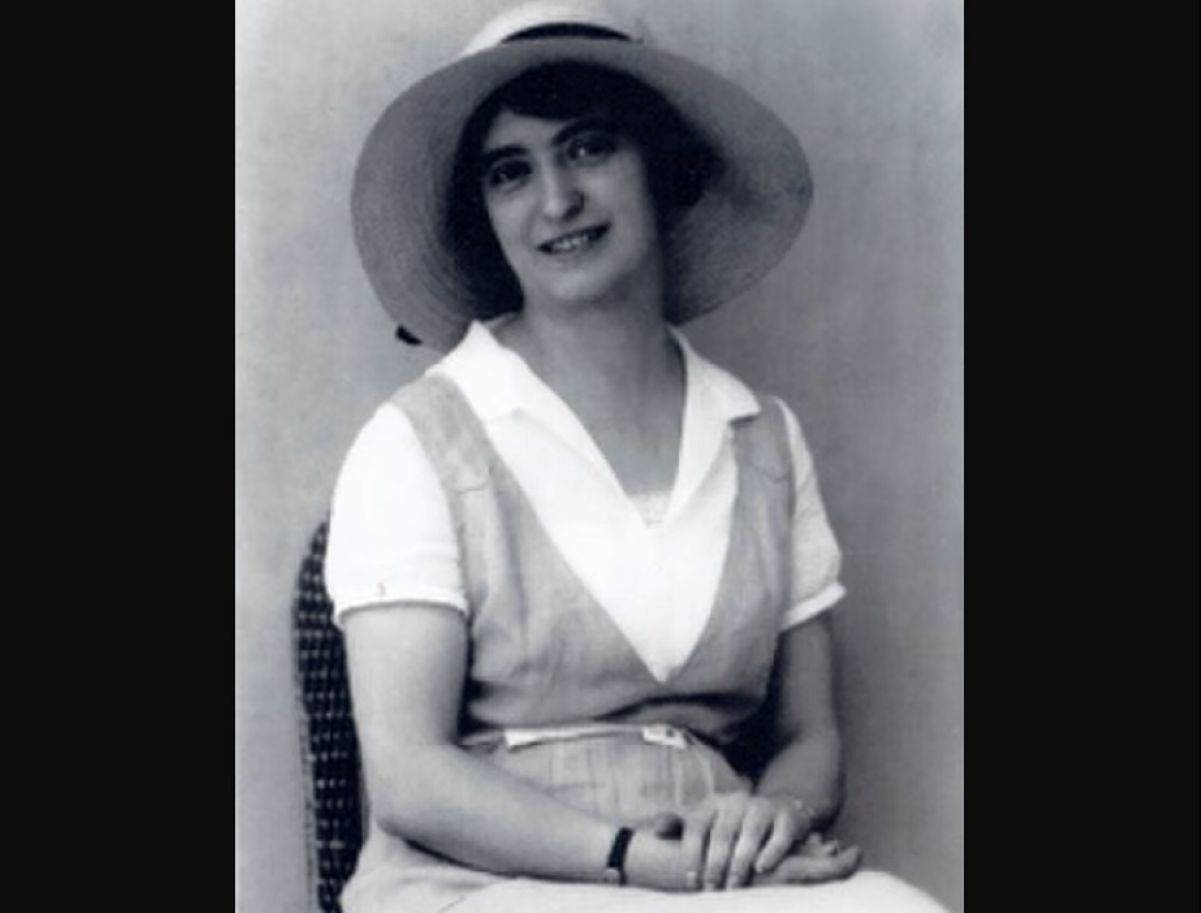
 On the morning of September 8, 1944, just weeks before the liberation of Athens, Lela Karagianni was led to her execution along with dozens of other prisoners by German occupation forces, in the woods of Dafni near the Haidari concentration camp.
Known as the “Mother of the Resistance” or the “Bouboulina of the Occupation,” Karagianni remains one of the most emblematic figures of the Greek National Resistance. Before the war, she had been an ordinary middle-class housewife and mother of seven. The German invasion of 1941 changed everything.
She began smuggling British soldiers to safety, tending to the wounded, running intelligence networks linked to the Middle East, and supplying arms to resistance fighters — activities that led to repeated arrests and imprisonment.
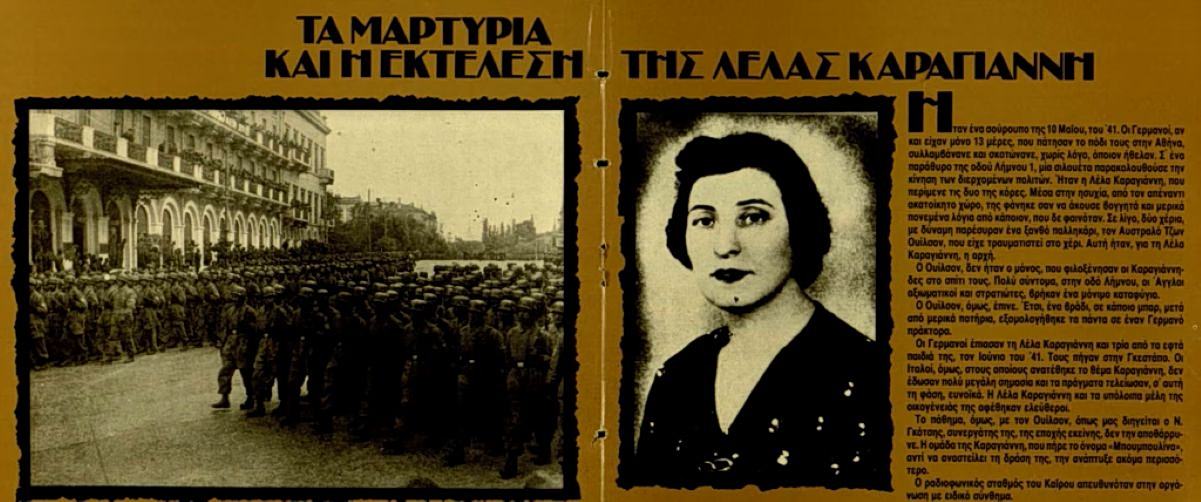
“TACHYDROMOS,” 5.3.1984, Historical Archive of “TO VIMA” | “TA NEA”
When the German authorities finally uncovered the extent of her resistance work, she was subjected to brutal torture in the Gestapo’s holding cells in Kolonaki, where she was held for several weeks before her execution.
On May 16, 1946, the newspaper Ta Nea published an excerpt from Greek Trilogy: Resistance – Liberation – Revolution, written by British Lieutenant Colonel Wilfred Byford-Jones, who chronicled the period from the earliest acts of resistance through the Varkiza Agreement. Byford-Jones described Karagianni’s case as “truly unique,” noting that this mother of seven had managed to place agents inside the Gestapo and the SS itself, agents who fed her invaluable intelligence.
According to his account, after German troops entered Athens, Karagianni — without telling her husband — sold her jewelry and bought two houses, one on Fylis Street and another on Limnou Street, which she turned into hideouts and way stations for smuggling British soldiers and Greek patriots out of the country. Byford-Jones wrote that a statue should stand for her in Athens, describing her at 46 as tall and striking, with large dark eyes and black hair. The British simply called her “Mother.”
A family affair
Her resistance work never remained a solitary undertaking. As her family learned of her double life, they joined her secret network one by one. Working alongside a police officer named Georgios Mitsos, who forged identity papers, and a baker at the Kokkinia prisoner camp, they freed captives under her direction and smuggled them to Egypt. Her husband and children — her daughters Ioanna, Electra and Nefeli, her sons Georgios, Vyron and Nelson, and her son-in-law Spyros Kratsas — became her closest collaborators, forming what Byford-Jones called an unprecedented case of an entire family turned spy ring.
The organization she built took the name “Bouboulina,” a nod to her maternal lineage, which traced back to the family of the naval heroine Laskarina Bouboulina — the origin of the nickname by which she became known.
A web of informants
The group’s work extended well beyond smuggling operations. The 1946 account describes an extensive intelligence network that had infiltrated German services at every level, tracking the movements of ships and submarines, the location of minefields and fortifications, air activity, and munitions depots.
Karagianni reportedly obtained the names of German agents departing for the Middle East from within the German secret service itself, and even managed to relay photographs of German spies to Allied headquarters in Cairo. Her network reached as far as the Greek laborers conscripted to build the occupiers’ fortifications, while she simultaneously supplied resistance fighters in the mountains with weapons, food and money.
Such activity inevitably drew the attention of the occupying authorities. Her 21-year-old son Georgios was arrested alongside a wounded British soldier, John Wilsky, in 1941, though he later escaped from an Italian camp and joined the guerrillas in the mountains. On June 24, two of her daughters, 24-year-old Ioanna and 22-year-old Electra, were arrested on charges of sheltering and smuggling British soldiers; they were later released, only to be placed under house arrest. Though German intelligence eventually freed them, the arrest of Karagianni and her husband followed that autumn — she spent seven months in prison, he two and a half.
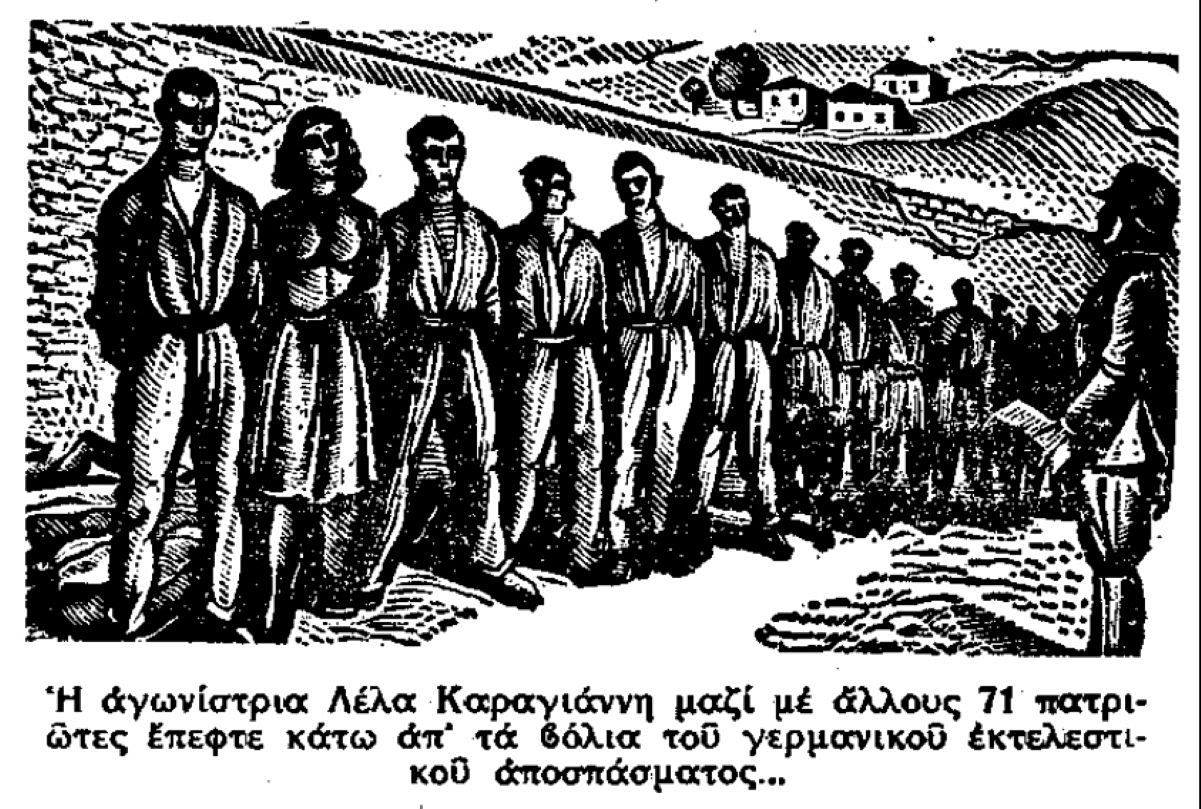
“TA NEA,” 9.8.1976, Historical Archive of “TO VIMA” | “TA NEA”
More arrests followed, culminating in the final, fatal one in the summer of 1944. On the night of July 12, two German cars pulled up outside her home just before midnight. She was seized once again, this time along with five of her children — Ioanna, Vyron, Nelson, Nefeli and Electra Krasa — bundled into a car and driven through the darkness to Haidari as terrified neighbors watched from behind their shutters.
At Haidari, she was tortured in an attempt to force her to name the people behind her network. She told her interrogator, with pride, that she was happy — because as a woman, she had planned and carried out acts of sabotage, gathered and transmitted intelligence to the Middle East, and aided the resistance fighters in the mountains.
On the evening of September 7, 1944, Lela Karagianni was transferred with other prisoners to the holding cells on Merlin Street. It would be her last night. The following morning, in near-darkness, the prisoners were ordered to leave all their belongings behind in cell number 15, then loaded onto a bus.
Historical research places the number executed on September 8, 1944, at 59 — nine of them women.