 Μake us preferred on Google
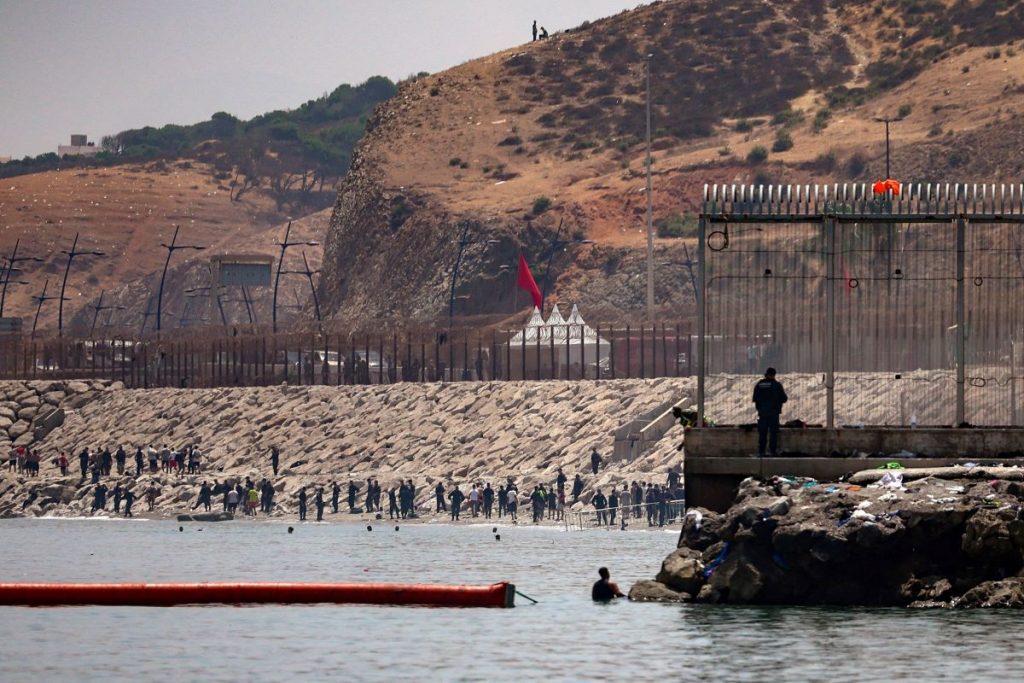
 The Greek government has called for the creation of a European emergency mechanism allowing the temporary suspension of asylum procedures and the immediate return of third country nationals entering the bloc illegally during episodes of what it describes as the “weaponization” of migration, arguing that the European Union lacks an adequate legal framework to respond to mass border crises such as last week’s events in the Spanish enclave of Ceuta.
Speaking during an extraordinary meeting of EU interior and migration ministers, Migration and Asylum Minister Thanos Plevris said Athens supports Spain in managing the crisis but argued that recent events demonstrate the need for a common European response to exceptional circumstances. He pointed to the attempted mass crossings at the Greek-Turkish land border in the northeast border prefecture of Evros in 2020 as a precedent, saying Athens’ experience should inform future EU policy.
Plevris argued that the EU Migration and Asylum Pact is designed to manage normal or elevated migratory pressure but is insufficient when migration is deliberately used as a geopolitical “tool”. Echoing a proposal recently advanced by Greek Prime Minister Kyriakos Mitsotakis, he called for a legal mechanism that would allow member states, under international law, to temporarily suspend asylum applications and immediately return irregular arrivals during orchestrated mass influxes.
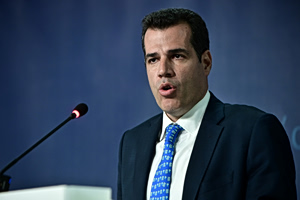
Migration and Asylum Minister Thanos Plevris.
The minister also criticized national immigration policies that, in Greece’s view, could encourage irregular migration, an apparent reference to Spain’s large-scale regularization programs under Prime Minister Pedro Sánchez’s government.
Plevris said such measures risk acting as a “pull factor” for smuggling networks and irregular migrants and argued that EU financial assistance to third countries should be more closely linked to their cooperation in preventing departures and accepting returns.
He reiterated Greece’s longstanding position that protecting the bloc’s external borders requires both search-and-rescue operations and effective deterrence consistent with international law. Plevris called for a stronger Frontex presence, deeper cooperation with neighboring non-EU countries and broader consideration of return hubs in safe third countries. He said cooperation with Turkey has contributed to a sharp decline in arrivals on the eastern Aegean islands during the first half of 2026 and pointed to growing cooperation with Libya as another positive development.
Spanish response
The proposals came as Spain sought to reassure European partners that the unprecedented migrant surge into Ceuta had been brought under control.
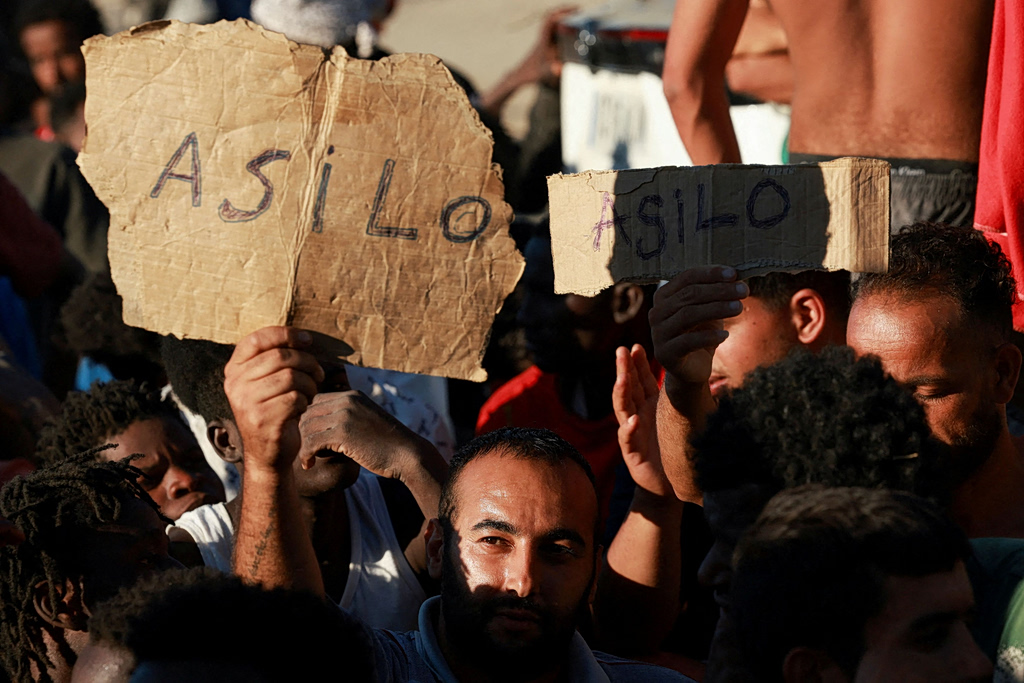
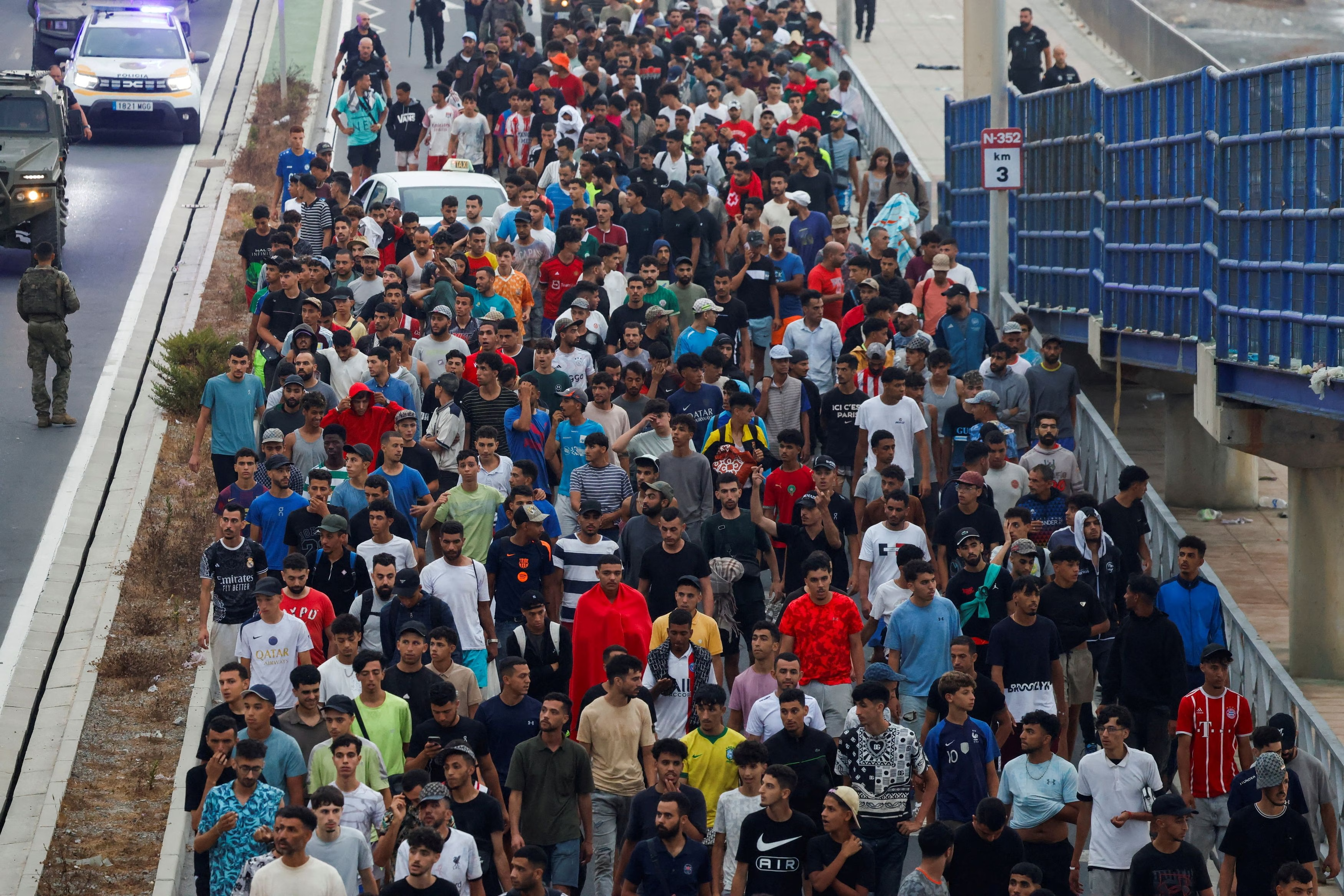
Interior Minister Fernando Grande-Marlaska told fellow ministers that approximately 72,000 third country nationals entered the North African enclave during last week’s crisis, with about 70,000 already returned to Morocco under expedited procedures. French Interior Minister Laurent Nuñez said the provisional death toll had risen to 75.
Grande-Marlaska rejected suggestions that Europe’s passport-free Schengen area had been endangered, insisting the crisis never posed a systemic threat to border-free travel. According to Reuters, Nuñez said EU ministers broadly praised Madrid’s handling of the emergency, while France announced reinforced controls along its frontier with Italy as a precautionary measure.
The crisis has intensified scrutiny of Sánchez’s migration policy, which has long drawn criticism from Spain’s opposition parties and several European governments over successive regularization initiatives and what critics describe as an inconsistent balance between humanitarian commitments and border enforcement. While Madrid maintains that its approach complies with European law and reflects labor market realities, opponents argue repeated legalization programs risk encouraging further irregular migration.
For Greece, the debate revives memories of the March 2020 Evros crisis, when thousands of migrants gathered at the Greek-Turkish land border after Ankara announced it would no longer prevent departures toward Europe. Athens temporarily suspended the registration of asylum claims, deployed additional security forces and received strong political backing from EU leaders, who described Greece as Europe’s “shield.” According to reporting by To Vima, the episode has since become a cornerstone of the Greek government’s argument that migration can be exploited as an instrument of hybrid pressure by neighboring states.
Greek officials contend that the Ceuta crisis demonstrates similar vulnerabilities along the EU’s external borders and have urged member states to adopt permanent legal tools allowing emergency action before national asylum systems become overwhelmed. Athens argues such measures would protect, rather than undermine, the integrity of Europe’s asylum framework by preserving its capacity to function during exceptional crises.

Greek PM Kyriakos Mitsotakis
Mitsotakis
In an article published by Politico a day earlier, Greek Prime Minister Kyriakos Mitsotakis argued that the European Union must adapt its migration policy to a rapidly evolving security environment in which migration can be deliberately exploited as a form of hybrid pressure by state and nonstate actors. While acknowledging the progress achieved through the EU Migration and Asylum Pact, he contended that the existing framework is designed to manage ordinary or elevated migratory flows rather than sudden, coordinated mass arrivals intended to overwhelm border states and destabilize the bloc.
Mitsotakis cited the 2020 Evros border crisis, when Greece accused Turkey of encouraging thousands of migrants to cross into the EU, alongside the Belarus border crises affecting Poland, Lithuania and Latvia in 2021, as examples of migration being used as a geopolitical instrument. He said the recent developments in the Spanish enclave of Ceuta highlighted similar vulnerabilities and underscored the need for a dedicated European emergency mechanism.
Under the proposal, the EU would establish clear criteria for identifying cases of “instrumentalized” migration based on both the scale and speed of arrivals and evidence of coordination by third countries or criminal networks. Once activated, the mechanism would permit temporary, proportionate and tightly regulated emergency measures, including accelerated asylum procedures and, in exceptional circumstances, the temporary suspension of asylum applications for newly arrived third country nationals while facilitating their swift return in accordance with international and European law.
Mitsotakis argued that such measures would not undermine Europe’s humanitarian obligations but instead preserve the integrity of the asylum system by ensuring it remains operational during extreme crises. He stressed that any emergency powers should be strictly time-limited, subject to judicial safeguards and fully compliant with the EU Charter of Fundamental Rights and the principle of non-refoulement.