
 Μake us preferred on Google
Russia has indicated it is willing to return to trilateral peace negotiations with Ukraine and the United States, potentially as early as November 10, following talks between President Vladimir Putin and U.S. envoy Steve Witkoff in St. Petersburg on Wednesday.
The proposed discussions would focus on security arrangements for both Russia and Ukraine after the war and could be held in Abu Dhabi, Kremlin aide Yuri Ushakov said. He described the planned negotiations as technical-level talks, without providing a confirmed date.
The meeting comes as President Donald Trump seeks progress toward ending the war, despite fundamental disagreements between Moscow and Kyiv over the terms of a settlement. According to Reuters, the Kremlin also used the discussions to raise several issues beyond Ukraine, including Iran, agricultural supplies to the United States and a possible meeting between Putin, Trump and Chinese President Xi Jinping.
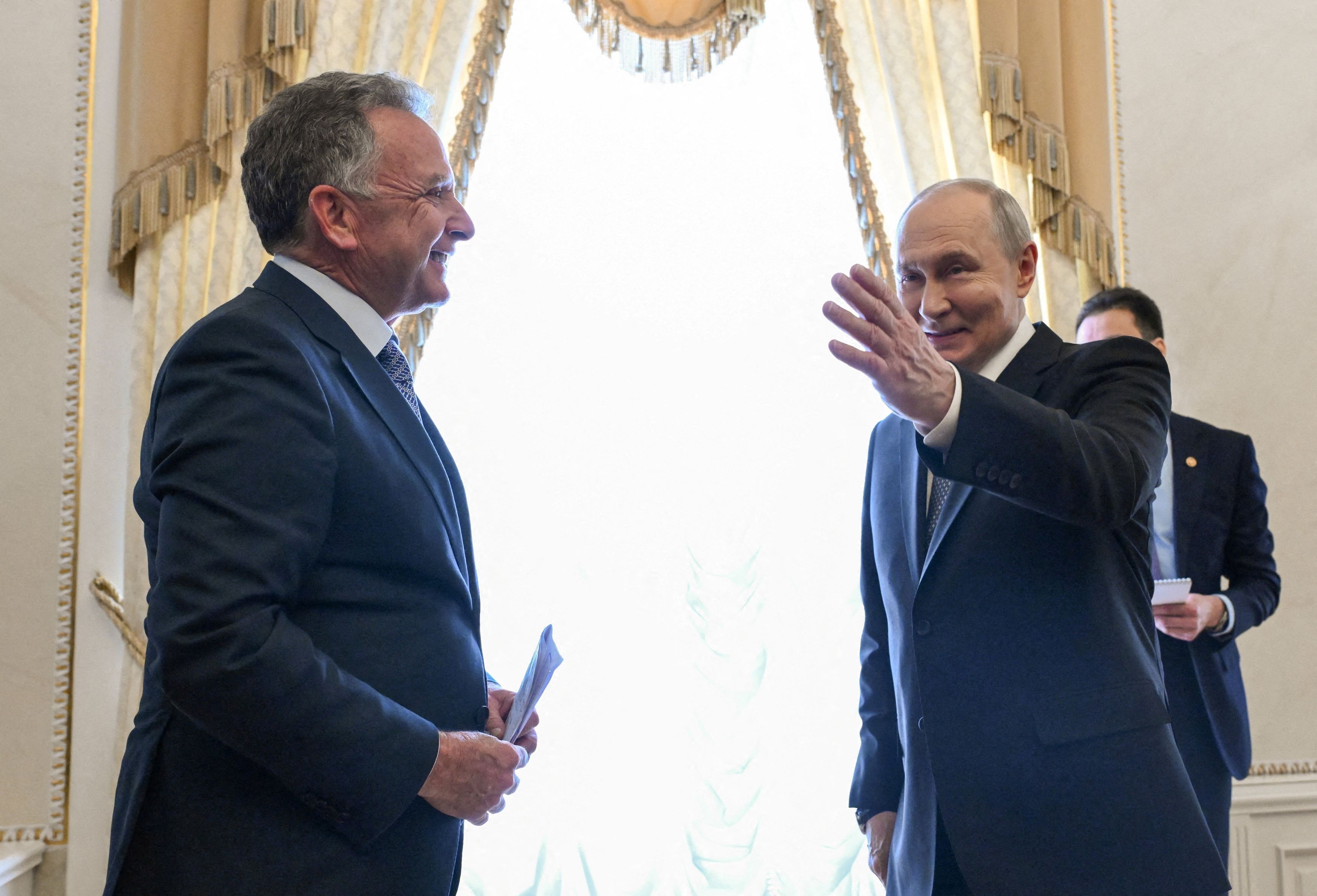
The talks lasted nearly three hours at the Constantine Palace in St. Petersburg. They began with the release of Stephen Hubbard, a retired American teacher who had been detained in Russia. The Kremlin described the move as a goodwill gesture following a request from Trump.
It was the ninth in-person meeting between Putin and Witkoff, according to Reuters.
Moscow remains dissatisfied with progress toward peace
The prospect of renewed negotiations does not necessarily signal that the two sides are closer to an agreement. Russia continues to demand full control of Ukraine’s Donetsk region and oppose Kyiv’s membership in NATO. Moscow has also insisted on a comprehensive settlement rather than a temporary ceasefire.
The latest meeting followed Witkoff’s discussions in Oslo with Ukrainian President Volodymyr Zelenskyy, the leaders of Finland and Norway, and European and NATO representatives. Witkoff told Putin that those talks had generated “some degree of momentum,” while a U.S. official said Ukraine had put forward new ideas and proposals.
Ushakov nevertheless indicated that Moscow remained dissatisfied with aspects of the Oslo discussions, Reuters reported.
Trump has increased pressure on Kyiv to reach an agreement. On Tuesday, he warned that Ukraine needed to end the war or face “a very bad thing.”
Zelenskyy, meanwhile, has expressed support for a trilateral meeting with Trump and Putin to discuss the key questions surrounding a possible end to the conflict. The Kremlin has previously said that a direct meeting between the Russian and Ukrainian presidents would require careful preparation by their aides.
During Wednesday’s talks, Witkoff presented Putin with documents containing ideas for a potential peace deal. Jared Kushner, Trump’s son-in-law, also wanted to share proposals with the Russian president and subsequently joined the meeting by phone.
Kirill Dmitriev, Putin’s special investment envoy, participated in the discussions as well. The Kremlin said the sides considered major joint economic projects, some of which it described as nearing realization.
Putin raises cooperation on Iran and fertilizer
Ukraine was not the only issue on the agenda. Putin offered to help the United States address its concerns about Iran, pointing to Russia’s longstanding relationship with Tehran.
Moscow has repeatedly offered to use its ties with Iran to help resolve U.S. concerns over the country’s nuclear program. Putin told Witkoff that reaching an agreement with Tehran was both possible and necessary, according to the Kremlin.
The Russian president also proposed supplying substantial quantities of fertilizer to American farmers.
The discussions included the possibility of a meeting in China next month involving Putin, Trump and Xi. The Kremlin said preparations were already underway in Beijing for what it described as an unprecedented three-way meeting.
Questions over US support for Ukraine
The diplomatic effort is unfolding amid growing unease in Kyiv and among its allies about Washington’s continued military and intelligence support.
Relations between the United States and Ukraine have deteriorated following Trump’s announcement of a diesel export deal with Russia earlier this month. The agreement was intended to help lower U.S. fuel prices, which have risen following the American strikes on Iran.
Ukraine has also reported interruptions to some intelligence-sharing arrangements and problems involving its use of the Starshield military satellite system. Zelenskyy said the Oslo discussions had resulted in an agreement to address those issues.
Separately, The Wall Street Journal reported Wednesday, citing U.S. officials and people familiar with the matter, that Elon Musk had ordered a slowdown the previous week of a military-grade version of SpaceX’s Starlink service used by Ukraine to track Russian ballistic missile strikes. Reuters said it could not independently verify the report.
Musk has maintained that decisions of this kind are made by the U.S. military or the president. Trump denied responsibility, and Secretary of State Marco Rubio said Wednesday that Washington had not withdrawn Ukraine’s access to Starlink.