 Μake us preferred on Google
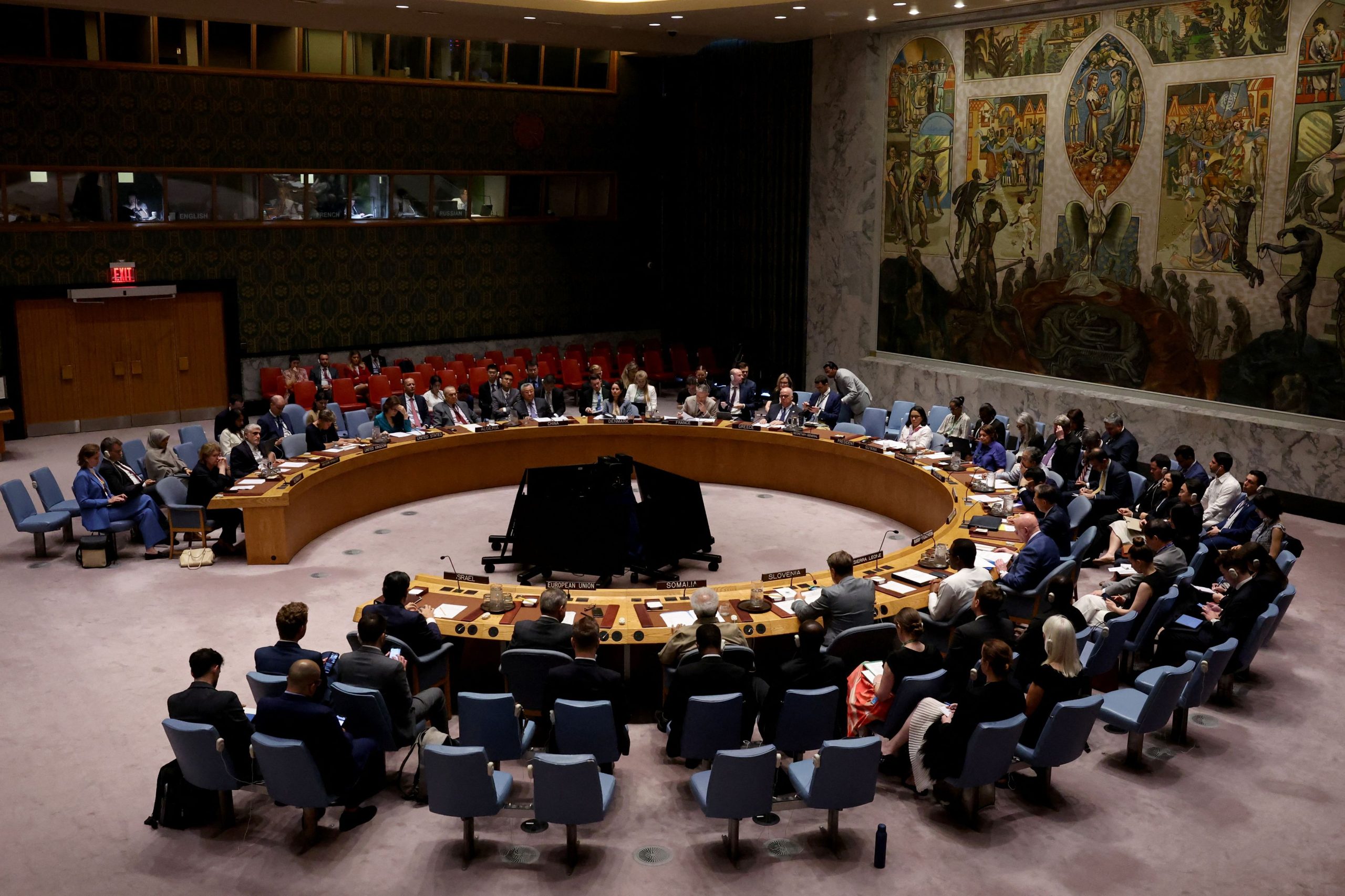
 The U.N. Security Council is expected to vote this month on whether to renew the mandate of a panel overseeing sanctions on Iran, according to France, which holds the council presidency in September.
The panel supports the U.N. sanctions committee on Iran, and its mandate is due to expire on September 26, during the annual U.N. General Assembly meeting. The war between the United States, Israel and Iran is expected to be a major issue at the gathering.
French U.N. Ambassador Jerome Bonnafont said Tuesday that Iran’s nuclear program and its compliance with U.N. obligations would be central to discussions during France’s presidency.
He said the council would have to decide whether to extend the panel’s mandate, which was reintroduced in September 2025 after sanctions on Iran were restored over concerns about Tehran’s compliance with its nuclear obligations. U.N. diplomats said the vote is expected on September 17.
Russia and China oppose oversight mechanism
The vote could lead to a confrontation with Russia and China, which oppose both the sanctions regime and the mechanisms used to monitor it.
The two countries have argued that the Security Council no longer has authority to address the Iranian nuclear issue. In a joint statement issued in March, Moscow and Beijing said the council could not move forward with restoring the sanctions committee or its panel of experts.
The sanctions committee itself has no fixed expiration date. Created in 2006 under U.N. Security Council Resolution 1737, it was established to oversee sanctions imposed on Iran over its nuclear program.
Neither Russia’s nor China’s U.N. mission immediately responded to requests for comment about the planned vote.
The dispute carries the possibility of vetoes by both countries. Russia used its veto in 2024 to block the annual renewal of a separate panel responsible for monitoring enforcement of U.N. sanctions against North Korea over its nuclear and ballistic missile programs.
Sanctions restored over nuclear concerns
The latest dispute traces back to a decision by Britain, France and Germany last year to activate a U.N. “snapback” mechanism. The move restored sanctions that had been lifted under the U.N.-backed 2015 Iran nuclear agreement after the three European countries concluded that Tehran was not meeting its commitments under the deal.
Iran has consistently denied seeking nuclear weapons.
However, its uranium-enrichment program has remained a major concern for the United States and its allies. Enriched uranium can be used for civilian nuclear power but can also provide the material needed for a nuclear weapon, leaving Western governments concerned that Tehran could preserve the option of developing one in the future.