
 Μake us preferred on Google
 A U.S. citizen infected with Ebola in the Democratic Republic of Congo (DRC) is being transferred to Germany for specialist treatment as international health authorities intensify efforts to contain a deadly outbreak that has already claimed more than 130 lives.
The patient, identified by the Serge Christian mission organization as medical missionary Peter Stafford, is being transported to Berlin’s Charité University Hospital, where he will be treated in a dedicated high-security isolation unit.

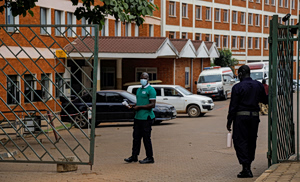
Signage outside the Charite University Hospital, where a U.S. citizen who contracted Ebola in the Democratic Republic of Congo would be admitted to a special isolation ward, according to Germany’s health ministry, in Berlin, Germany, May 20, 2026. REUTERS/Axel Schmidt REFILE – FIXING TYPO “HOSPITAL” IN HEADLINE
German health authorities confirmed they agreed to receive the patient following a request from U.S. officials and said preparations had been made to ensure safe treatment at the country’s largest university hospital.
High-Risk Contacts Moved to Europe
The U.S. Centers for Disease Control and Prevention (CDC) said six individuals considered high-risk contacts are also making arrangements to travel to Europe during their monitoring period.
According to CDC Ebola response manager Dr. Satish Pillai, one person will be quarantined in the Czech Republic, while the remaining individuals will be monitored in Germany.
The transfers come as health officials work to prevent further spread of the outbreak, which has been declared a public health emergency by the World Health Organization (WHO).
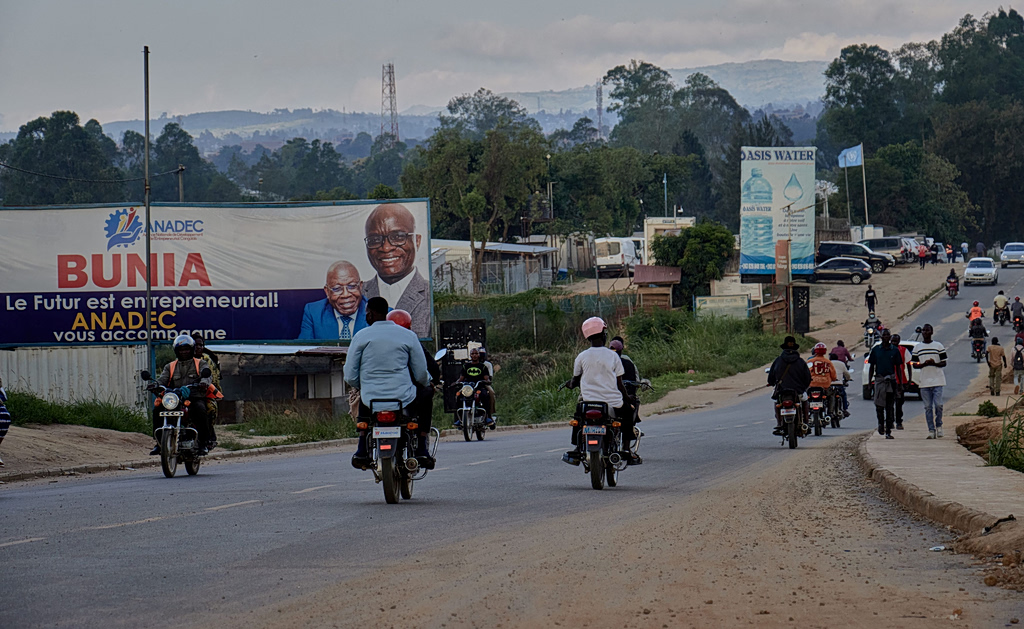
Motorcycles taxi along a road as aid agencies intensify efforts to contain a new Ebola outbreak involving the Bundibugyo strain, near the Bunia National Airport in Bunia, Ituri province, Democratic Republic of Congo, May 19, 2026. REUTERS/Gradel Muyisa Mumbere
The outbreak is linked to the rare Bundibugyo strain of the Ebola virus, which has caused widespread concern among health authorities in eastern Congo.
US Expands Support for Outbreak Response
The U.S. State Department announced plans to fund up to 50 Ebola treatment clinics and related operations in affected regions of the DRC, Uganda and Congo.
The initiative will be financed primarily through the United Nations’ Central Emergency Response Fund and aims to strengthen screening, triage and isolation capabilities while supporting containment measures around affected communities.
Washington said it would continue working closely with the CDC and international partners to mobilize resources needed to combat the outbreak.
The World Bank also confirmed it is focused on providing financial and technical assistance to countries responding to the health emergency.
CDC Says Risk to US Remains Low
Despite the international response effort, U.S. health officials stressed that the risk to the American public remains low.
Pillai said existing Ebola diagnostic tests are capable of detecting the Bundibugyo strain and that the CDC is coordinating with state, local, tribal and territorial health authorities on isolation procedures, testing and specimen collection for suspected cases.
The agency has also activated additional response measures, including travel restrictions announced on Monday for individuals who have recently been in the DRC, Uganda or South Sudan.
CDC teams are continuing disease surveillance, contact tracing, laboratory testing and viral sequencing efforts in the region. The agency currently maintains offices in both the DRC and Uganda and plans to deploy an additional expert to support response operations on the ground.
Africa CDC Criticizes Travel Restrictions
The travel measures drew criticism from the Africa Centers for Disease Control and Prevention, which argued that border restrictions are not an effective solution to controlling outbreaks.
In a statement, Africa CDC Director General Dr. Jean Kaseya said the priority should be stopping transmission where the outbreak originates rather than limiting international travel.
“The fastest path to protecting all countries in the world is to aggressively support outbreak control at the source,” Kaseya said, adding that global health security “cannot be achieved through borders alone.”