
 Μake us preferred on Google
 The spread of mosquitoes capable of transmitting infectious diseases has become a growing challenge for European health authorities, as climate change, global travel and international trade create conditions that allow new species to establish themselves in areas where they were previously absent.
Recent maps from the European Centre for Disease Prevention and Control (ECDC) show a clear trend: invasive mosquito species are expanding across Europe, with Greece now among the countries at the center of this development.
Tiger mosquito established across Greece
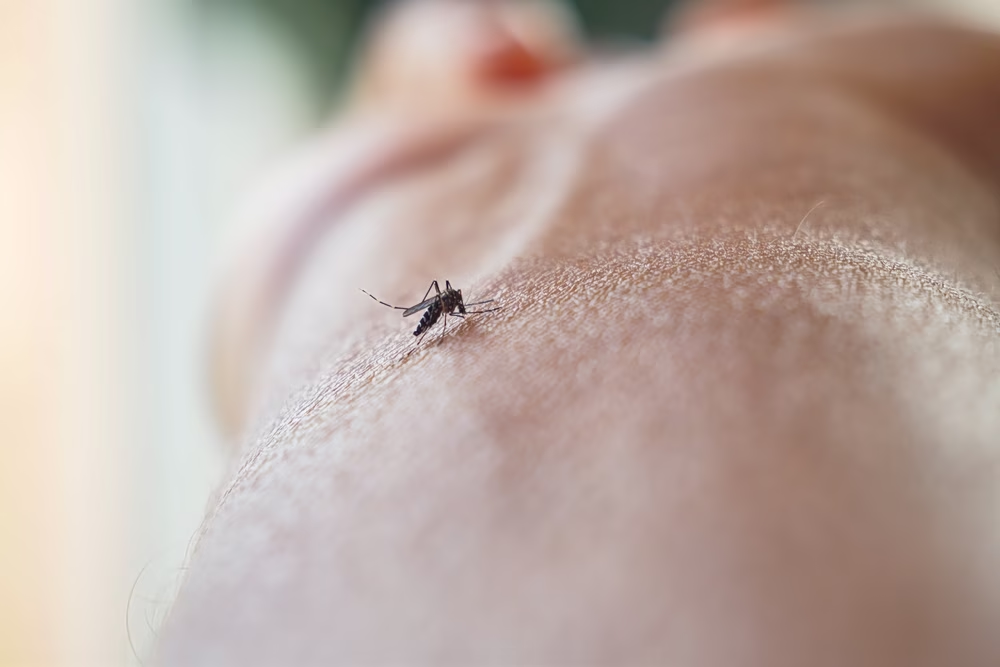
One of the species attracting particular attention is Aedes albopictus, commonly known as the tiger mosquito.
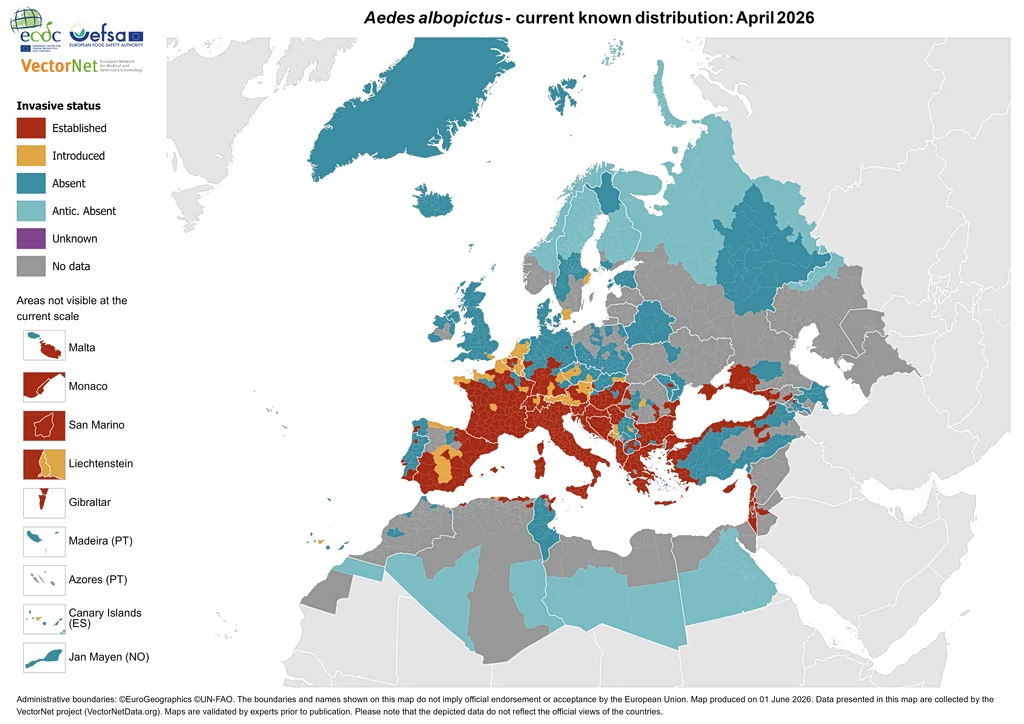
According to ECDC data, the species has become established across large parts of Greece, with its geographical range continuing to expand in recent years. Greece is among the European countries where further spread of the mosquito has been recorded, reinforcing its presence across southern Europe.
The concern is not only linked to the discomfort caused by mosquito bites. The tiger mosquito is a known carrier of viruses including dengue fever, Chikungunya and Zika.
Although these diseases are not currently endemic in Greece, the presence of the mosquito increases the need for surveillance. Authorities warn that imported cases from other countries could, under certain conditions, lead to local transmission.
Longer mosquito activity period linked to climate conditions
ECDC maps also highlight a wider shift in Europe, showing that environmental conditions in some regions now allow mosquitoes to survive and reproduce for longer periods of the year.
In Greece, the tiger mosquito remains active for more than eight months annually, indicating how favorable conditions have become for its continued presence.
Despite the attention given to diseases associated with invasive mosquito species, the main mosquito-related public health concern in Greece remains the West Nile virus, which is recorded almost every year in the country and is mainly transmitted by mosquitoes of the Culex genus.
Other mosquito species under monitoring
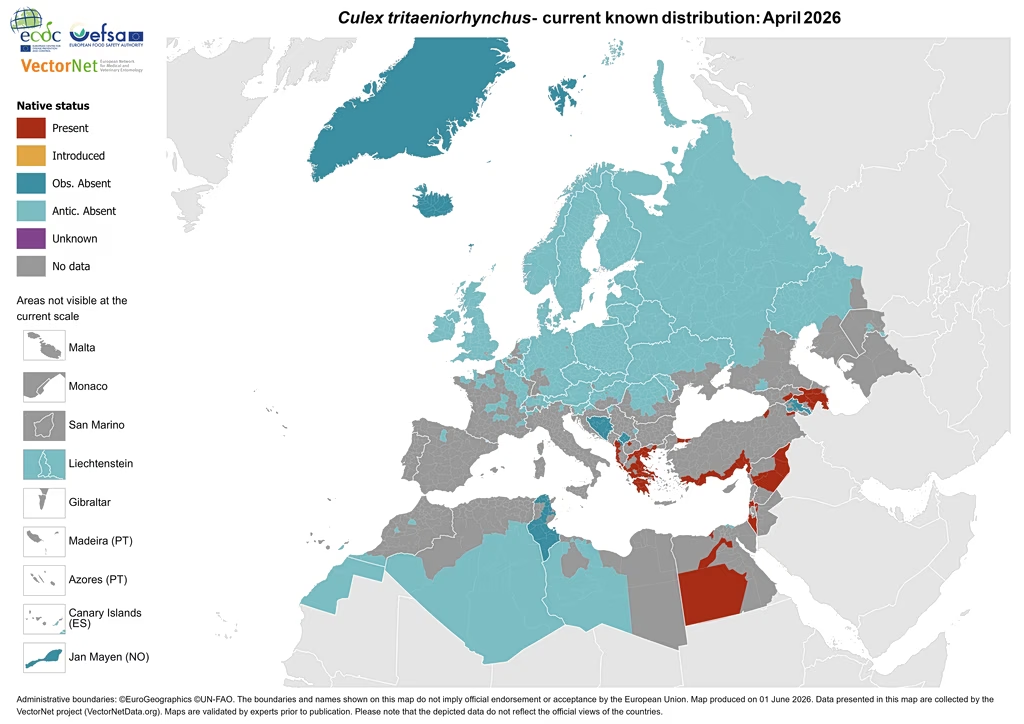
Scientists are also monitoring other mosquito species that are appearing or expanding in Europe.
Among them is Culex tritaeniorhynchus, considered an important carrier of Japanese encephalitis in Asia. While the disease is not circulating in Europe, the presence and spread of this species in Greece is being tracked as part of wider efforts to identify emerging public health risks.
At the same time, recent data have drawn attention to the appearance of Aedes aegypti in Luxembourg. The species is considered one of the most effective transmitters of dengue fever and, until recently, was not established in European countries.
Experts stress that the expansion of mosquito species does not automatically mean that the diseases they can transmit will also spread.