
 Μake us preferred on Google
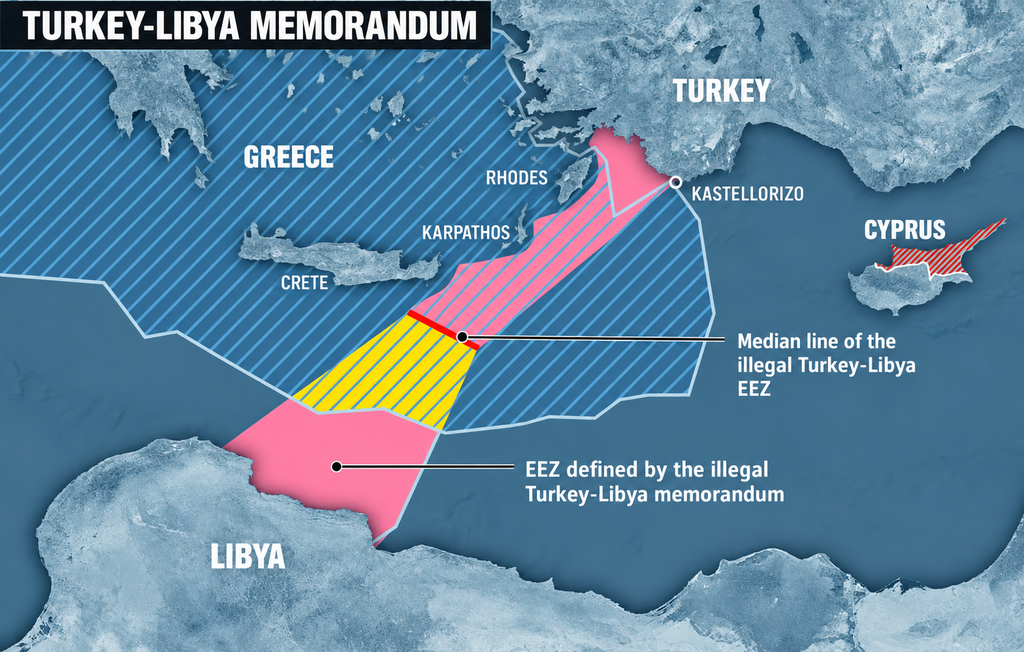
The European Parliament has reaffirmed its rejection of the Turkey-Libya maritime agreement, declaring it invalid under international law and calling on Ankara and Tripoli to refrain from actions that infringe on the sovereign rights of other countries.
In a resolution adopted Thursday, lawmakers reiterated their longstanding position that the agreement violates the rights of third states and produces no legal effects. The vote comes after the recent ratification of the controversial memorandum by Libya.
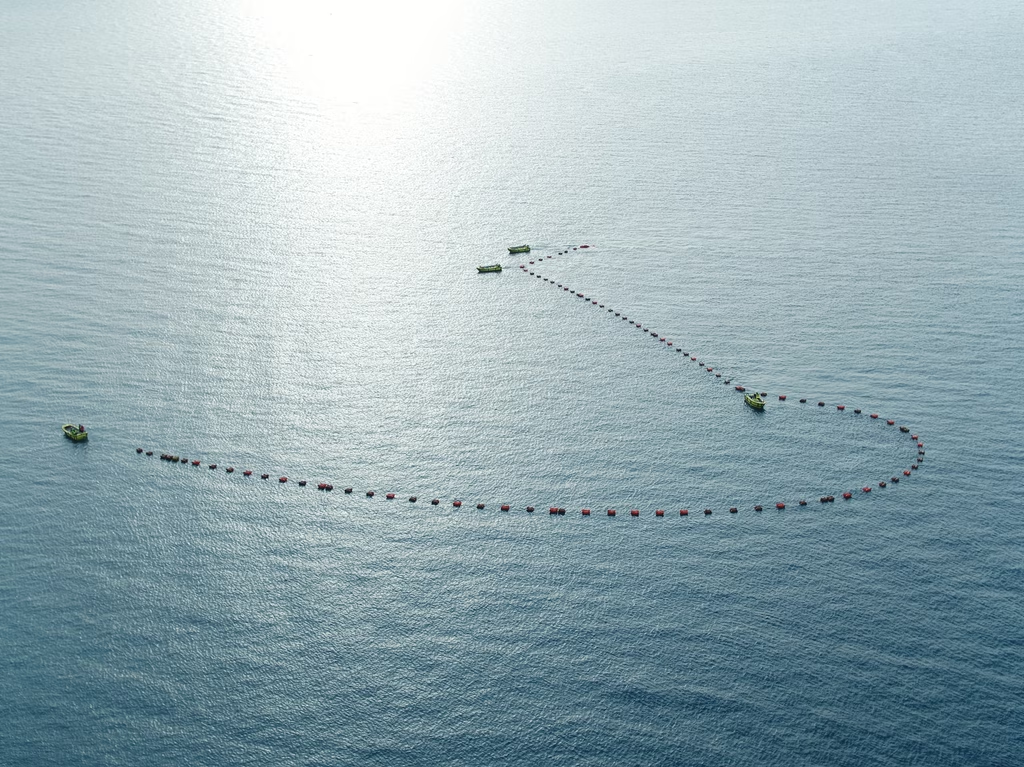
The resolution also criticized Turkey’s plans to establish marine parks beyond its territorial waters, its use of navigational warnings, known as NAVTEX, for political purposes, alleged violations of territorial waters and illegal fishing.
The European Parliament called on Turkey to refrain from unilateral actions that violate international law and to avoid interfering with the laying of submarine cables or the implementation of the Great Sea Interconnector (GSI), as well as other projects of common interest between Greece and Cyprus.
Lawmakers expressed full solidarity with Athens and Nicosia, reaffirming the rights of Greek islands, including Crete and the Dodecanese, to maritime zones. They also urged Turkey and Libya to fully adhere to the United Nations Convention on the Law of the Sea (UNCLOS).
The resolution further condemned Turkey’s casus belli — its declared threat of war over Greece’s potential extension of its territorial waters — and stressed that Turkey and Libya cannot impose maritime boundaries on Greece without its consent.
MEPs called for the cancellation of the Turkey-Libya memorandum and related agreements on hydrocarbons. They also urged the two countries not to issue or implement permits for activities in maritime zones where other states hold rights.
Calls for coordinated EU action and possible sanctions
The resolution welcomed the unity shown by the 27 EU member states, which jointly opposed the ratification of the Turkey-Libya agreement by western Libya in October. It also praised a joint declaration condemning the memorandum at the United Nations by Greece, Cyprus, Egypt, Bahrain and the United Arab Emirates.
MEPs backed relevant European Council conclusions from 2019 and 2025, as well as recent statements by EU leaders.
The Parliament also called for coordinated diplomatic action to protect the interests of the European Union and its member states, as well as regional stability. It urged a stronger European maritime security presence, modeled on the EU’s ASPIDES operation, with a focus on protecting underwater infrastructure, energy corridors and freedom of navigation.
The resolution calls on the European Council to consider targeted sanctions if the Turkey-Libya agreement leads to violations of the sovereign rights of EU member states.
It also urges a review of the EU’s financial cooperation with Turkey and Libya to ensure that European funding does not support activities aimed at implementing the memorandum.
MEPs asked EU foreign policy chief Kaja Kallas and the European Commission to submit a report within three months. The report should detail diplomatic representations made over the agreement, safeguards ensuring that EU funding is not used to support its implementation, and any additional measures needed to protect the sovereign rights of Greece, Cyprus and other member states.
Ankara rejects the resolution
Turkey’s Foreign Ministry strongly criticized the European Parliament’s decision, rejecting the resolution as containing “biased and unfounded claims.”
Ankara described the move as politically motivated and a “futile attempt,” arguing that the European Union has no authority over the delimitation of maritime zones.