 Μake us preferred on Google
KYIV—Ukrainian special forces stationed in Libya had been studying the movement of Russian warships and commercial vessels for months, gathering intelligence for one of the most audacious military operations Kyiv has carried out far beyond Russian and Ukrainian borders, said people familiar with the operation.
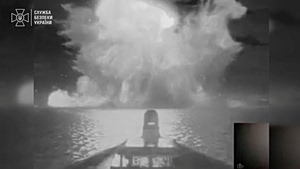
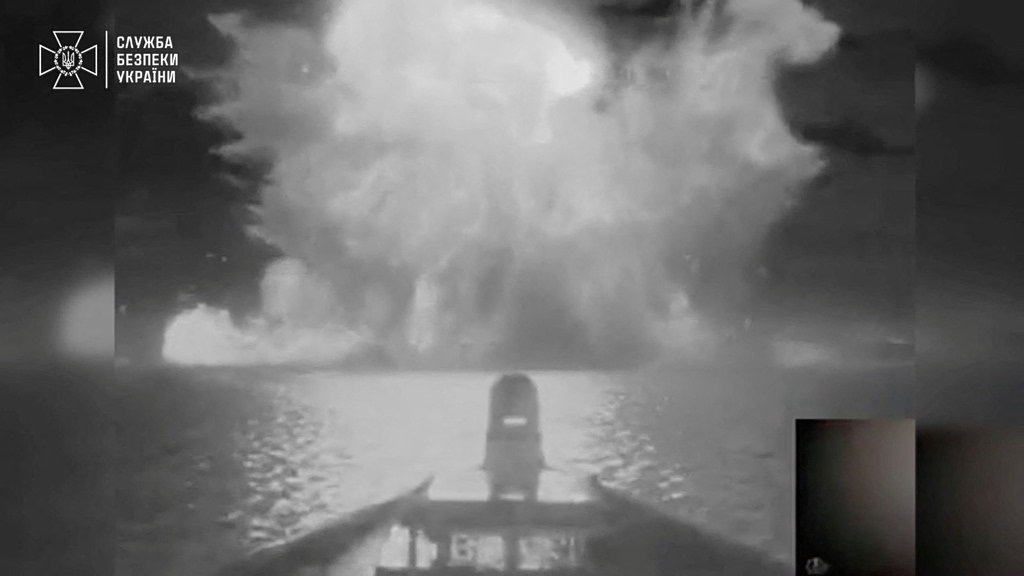
Before dawn broke Sunday, a Ukrainian team launched seven explosive-laden sea drones from a mother ship in the Mediterranean Sea off the coast of North Africa, said a Ukrainian military official.
A short time later, after taking fire from helicopters and automatic weapons mounted on motorboats, the drones slammed into a Russian navy corvette and a nearby Russian cargo ship.
Most targeted the corvette, the Ukrainian military official said, with at least one drone boat striking the dry-cargo ship. The resulting explosions sank the warship, known as the Merkury, and set the Angara, a freighter, ablaze.
The attack demonstrated Ukraine’s ability to strike the Russian navy and a shipping network that ferries weapons to hot spots where the Kremlin’s forces and their allies operate. It also showed an increasing willingness by Kyiv to strike far away from the war zone.
“The Ukrainians have always been known to push the envelope,” said Jalel Harchaoui, a Libya-focused security analyst with the Royal United Services Institute, a defense think tank based in London.
The operation also destroyed a Ka-27 combat helicopter, according to Ukrainian President Volodymyr Zelensky , who said the Angara was used by Russia to transport weapons.
“We hit back when Russia attacks us,” Zelensky said in his address Monday to the North Atlantic Treaty Organization’s parliamentary assembly. “And today, Russia can feel our response all the way from Western Siberia, where its oil refineries are burning, to the coast of Libya, where its warships are sinking.”
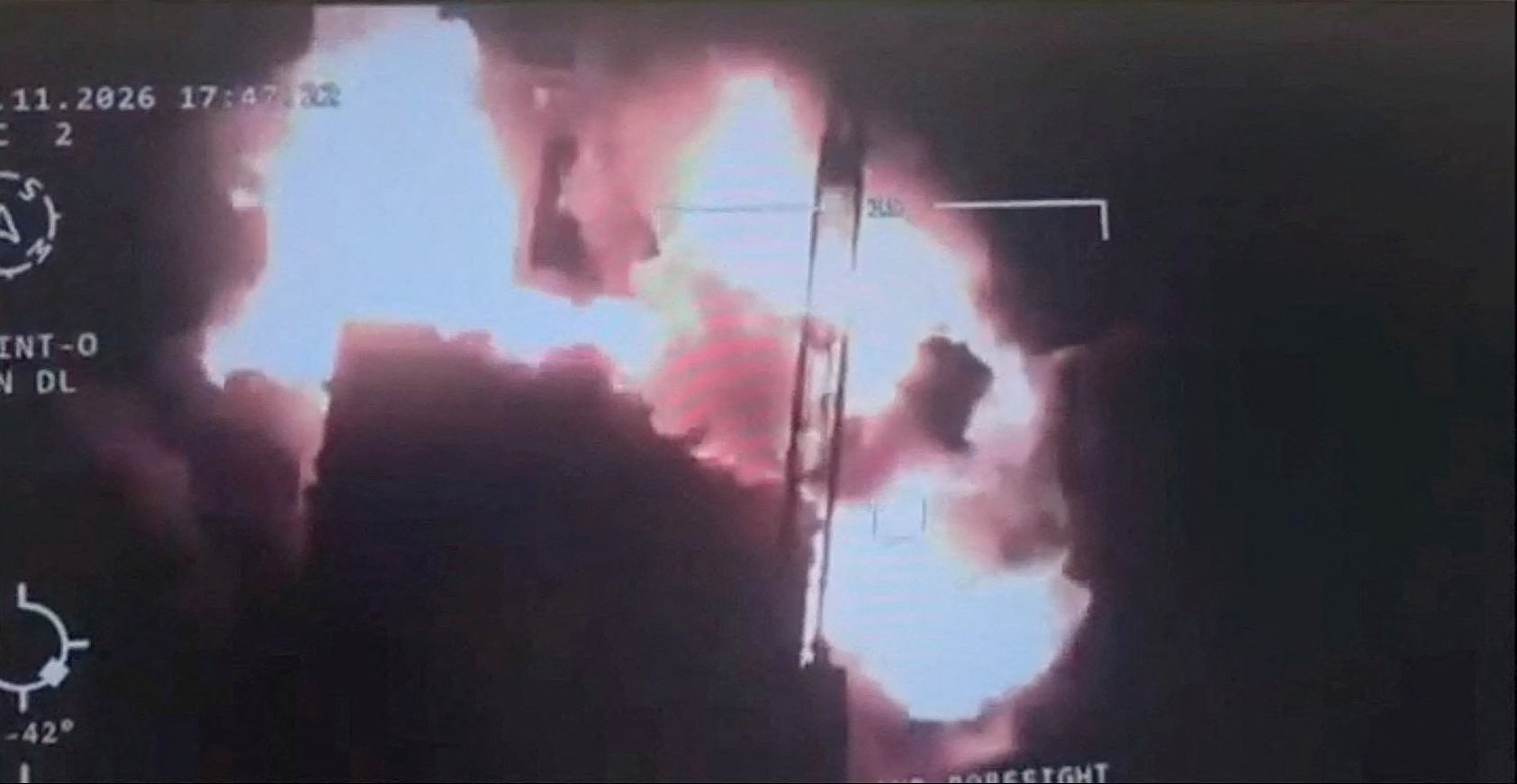
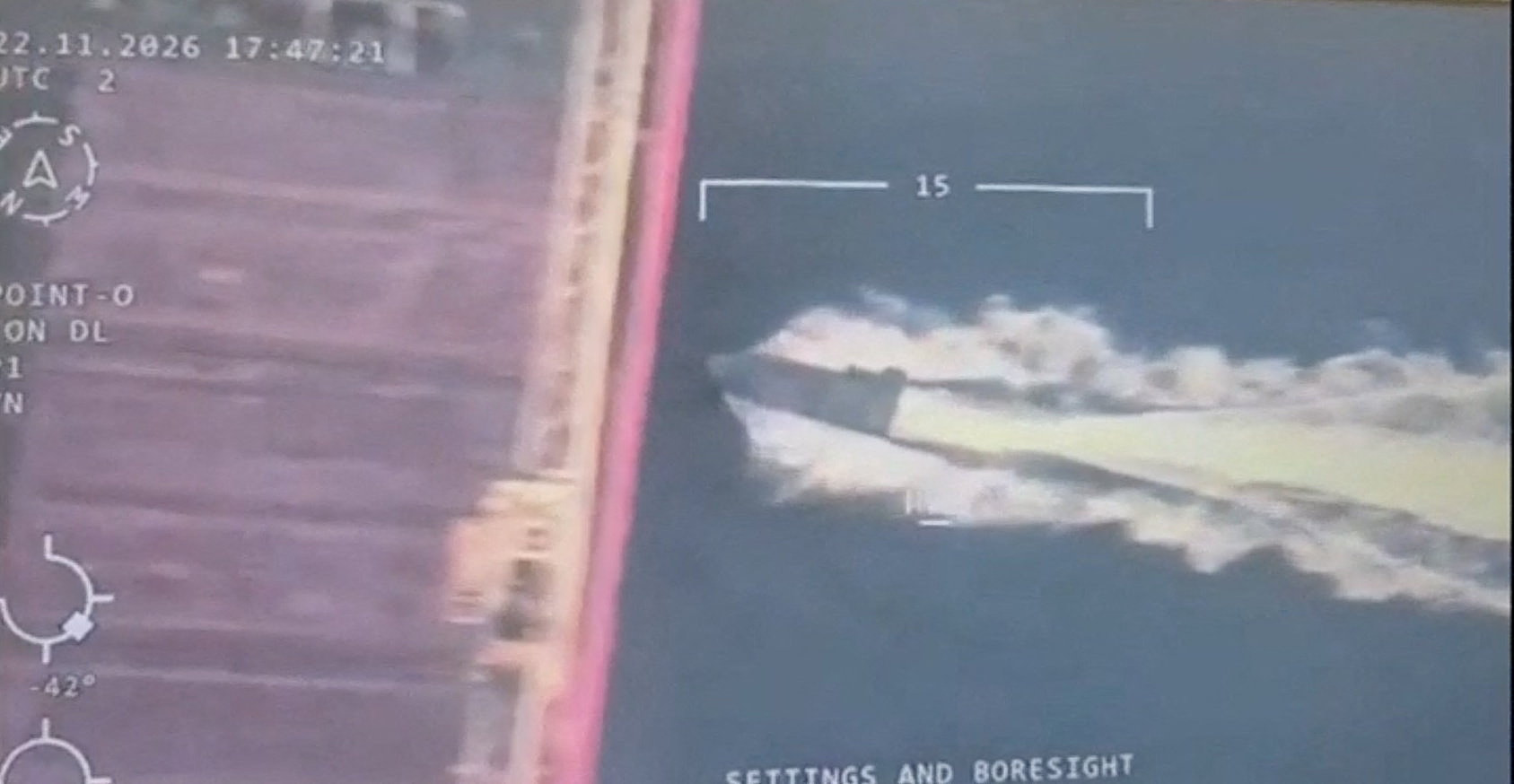
A screen recording shows the moment of the attack on a Russian cargo ship, off the coast of Benghazi, Libya November 22, 2026, in this screengrab taken from a video. MEDIA OFFICE OF THE EASTERN LIBYAN FORCES [LIBYAN NATIONAL ARMY]/Handout via REUTERS
Libya, which is split between the internationally recognized government in the west and Gen. Khalifa Haftar , a Moscow-backed warlord in the east—where the sunken warship was berthed—condemned the attack Monday.
The Tripoli-based government expressed “deep concern” over Zelensky’s remarks and said Libya hadn’t authorized any foreign military activity within its borders or territorial waters and wasn’t a party to the conflict between Ukraine and Russia.
The Ministry of Foreign Affairs demanded that Ukrainian authorities provide immediate, official clarifications regarding the nature and scope of the strike. Specifically, it sought verification on whether any Libyan territory, ports or facilities were used to plan, execute or provide logistical support for the operation.
Ukrainian operatives based in Western Libya carried out sabotage attacks on at least three vessels linked to Russia sailing in the Mediterranean last year, the people familiar said.
Ukraine hasn’t publicly acknowledged those attacks.
The Ukrainian intelligence-gathering work for Sunday’s strike on the warship also informed those attacks, the people said.
Since the fall of Bashar al-Assad in Syria, where Russia once operated a naval base but now has only negotiated access, the Kremlin has been looking elsewhere to establish a presence at warm-water ports that can serve as bridgeheads to funnel troops, mercenaries and arms to Africa.
Libya, where Russia has had a military footprint in the east for years, has been part of Moscow’s plans for alternate venues. Most recently, the Kremlin has supported and supplied Haftar, who waged war against the government in Tripoli between 2019 and 2020.
Russia poured weapons into Libya and sent Wagner paramilitary units to help Haftar during his militia’s failed attempt to conquer the whole country. Haftar maintains control and influence in a swath of Libya where Russia recently increased its military deliveries, doubling down on its presence there, according to satellite images reviewed by The Wall Street Journal and security analysts.
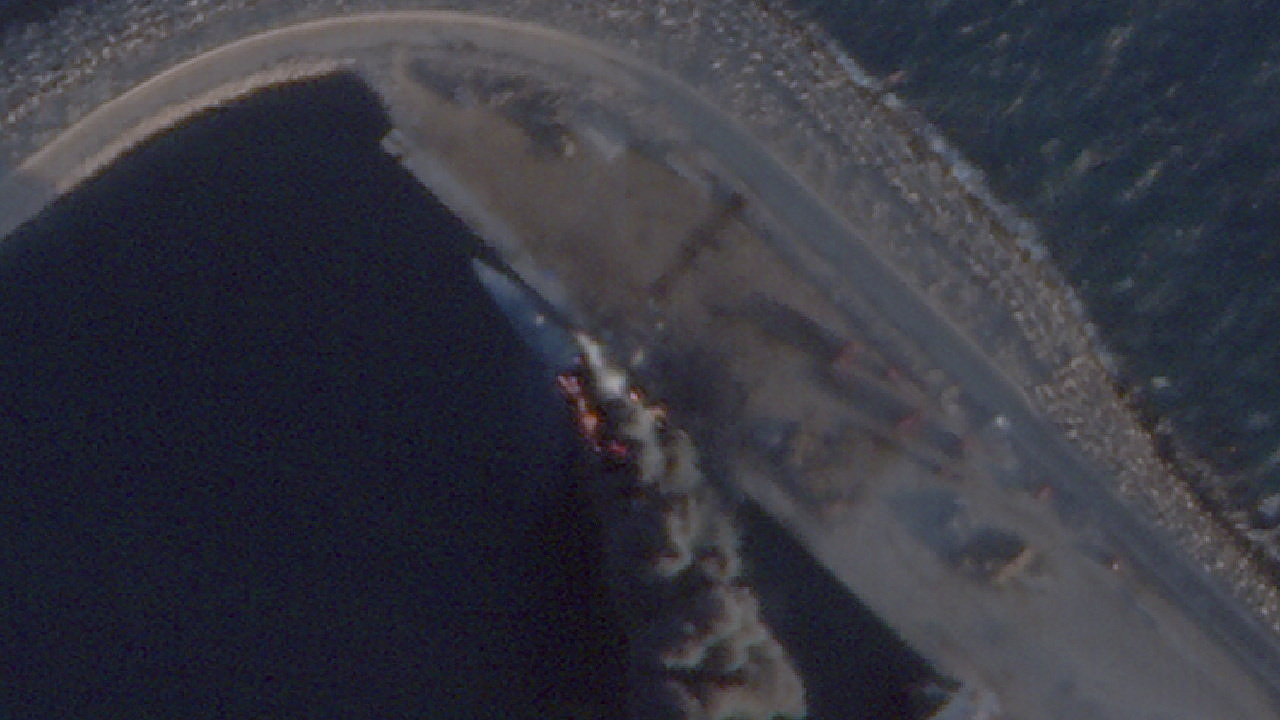
A satellite image of smoke rising from a fire after an explosion aboard a Russian ship docked at Benghazi port, Libya, November 22, 2026. 2026 Planet Labs PBC/Handout via REUTERS
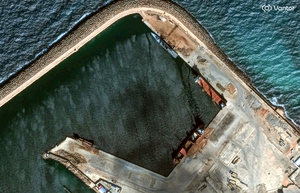
Satellite images from commercial satellite firm Vantor showed a pair of cargo ships called the Anastassia and the Yuriy Arshenevskiy arriving in September at a port in Tobruk, in eastern Libya.
Military vehicles appear to have been loaded off the vessels, the images show. Russian cargo ships delivering military hardware often are escorted by Russian naval vessels, as they were in this case.
“They were scaling up the volume of their military assets’ deliveries,” said Harchaoui of the Royal United Services Institute. “They were not getting scared of pouring thousands of tons of equipment with Russian navy escorts.”
“What attracted the Ukrainians was not the delivery,” Harchaoui said. “It was the presence, the symbolic presence of the Russian navy itself.”
Write to Benoit Faucon at benoit.faucon@wsj.com and Jared Malsin at jared.malsin@wsj.com