 Μake us preferred on Google
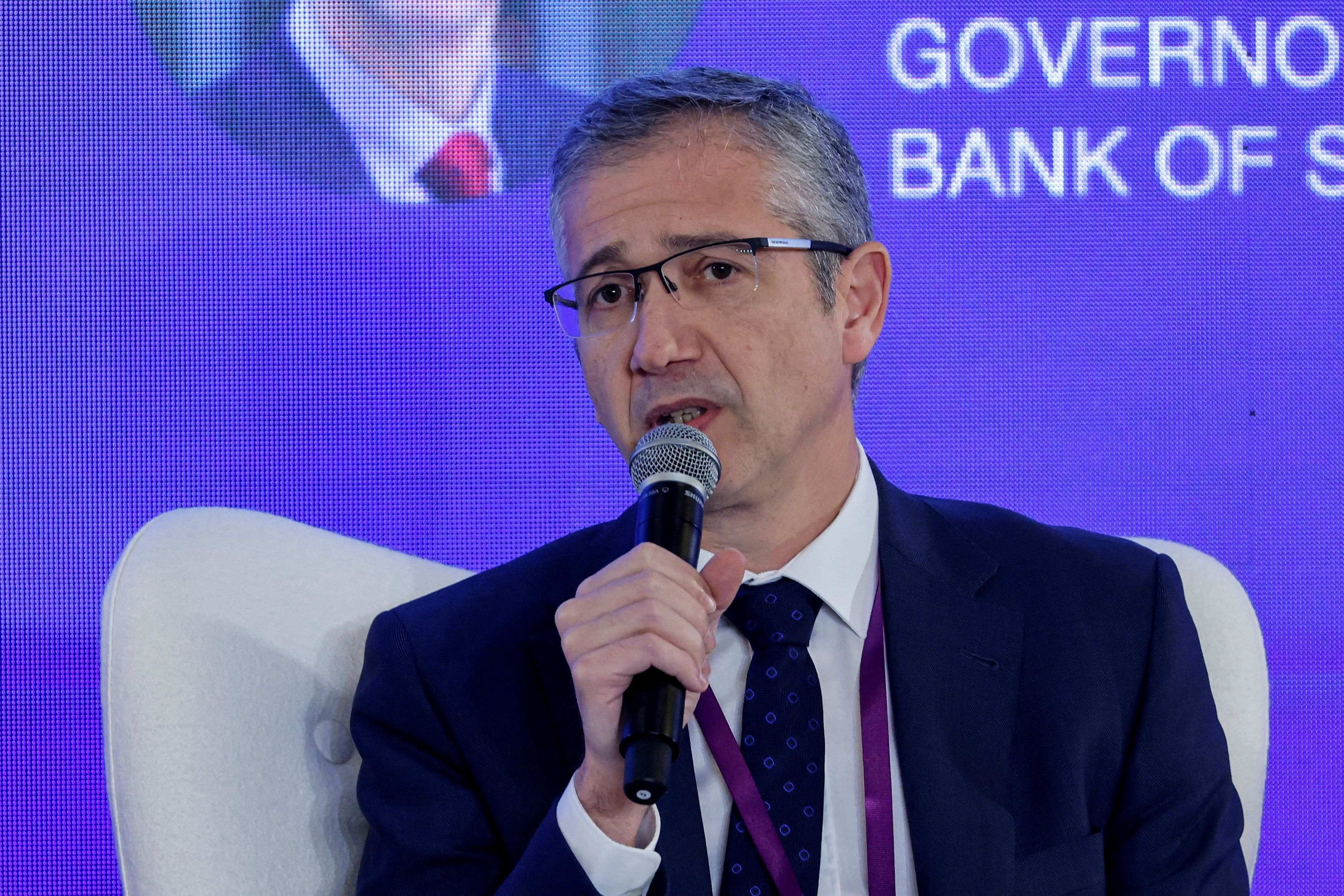
BRUSSELS—European leaders have chosen Spain’s Pablo Hernández de Cos to be the next president of the European Central Bank, betting a technocrat can navigate the continent through debt problems in France, flagging growth and stock-market jitters.
Hernández de Cos will succeed departing President Christine Lagarde, who is stepping down in February. The European Parliament and the ECB’s governing council must endorse his candidacy, with a final seal of approval by EU leaders expected in December.
Who is Hernández de Cos?
Hernández de Cos, 55 years old, is a career central banker who got his start as an economist at Spain’s central bank and eventually rose to become its governor. He is currently head of the Bank for International Settlements, a consortium of global central banks.
Former colleagues describe him as soft-spoken with a technical acumen that spans a vast body of economic topics such as privatization in Spain, stablecoins and fiscal policy.
Spanish economist José Manuel González-Páramo was a professor when he met Hernández de Cos, then a young graduate student in Madrid. González-Páramo served as his Ph.D. thesis adviser and later brought him along to Frankfurt as an adviser when he joined the ECB’s executive board in 2004. Hernández de Cos was a master of networking and a formidable sparring partner on topics of monetary policy, González-Páramo said.
“It was just obvious that he would be something,” said González-Páramo.
He will be the ECB’s first Spanish chief.
What do investors think?
Investors believe Hernández de Cos will face an immediate challenge from France, whose bond market has grown volatile as markets fret over mounting debt problems and political gridlock .
Hernández de Cos will step into the role two months before France begins voting to choose a successor to departing President Emmanuel Macron . The two front-runners—far-right leader Marine Le Pen and far-left leader Jean-Luc Mélenchon —have been critical of the ECB and called on policymakers to help bring down France’s borrowing costs.
The ECB has tools it can use to calm markets, but its leaders will be wary of intervening to help a country whose financial problems are viewed as largely self-inflicted.
Hernández de Cos supported the ECB’s quantitative-easing policies that helped indebted countries. But he has also stressed the need for fiscal discipline.
“Ultimately with him at the helm it will increase the market’s expectation that if things get really bad he’ll step in,” said Mike Bell, head of market strategy at RBC BlueBay Asset Management. “But I wouldn’t take him being appointed as a chance to max out French risk.”
How did he win the role?
Hernández de Cos beat out Dutch rival Klaas Knot , who was the only other contender for the job. Knot was viewed as the more conservative candidate, an image he had sought to distance himself from in recent months.
The process of choosing an ECB president is inherently political. Eurozone leaders jockey for open slots while also attempting to balance the interests of the eurozone’s 21 economies.
As the bloc’s largest economies, Germany and France play an outsize role in the decisions, but unspoken rules around representation meant it was unlikely either would secure the ECB presidency. A German— Ursula von der Leyen —heads the European Commission, while Paris faced long odds to clinch the ECB presidency again following Lagarde’s term .
Instead, France and Germany settled for roles on the ECB’s six-person executive board. German economist Markus Brunnermeier, currently a professor at Princeton, is expected to become the ECB’s next chief economist. French economist Laurence Boone , meanwhile, is set to take over the ECB’s markets operation role.