
 Μake us preferred on Google
 As a ferocious roar grew louder, people at the imposing customs checkpoint that sits at 6,000 feet on the border between China and Nepal started running. In seconds, video shows, a monstrous wave surged over and around the Gyirong Port building, burying everything in mud.
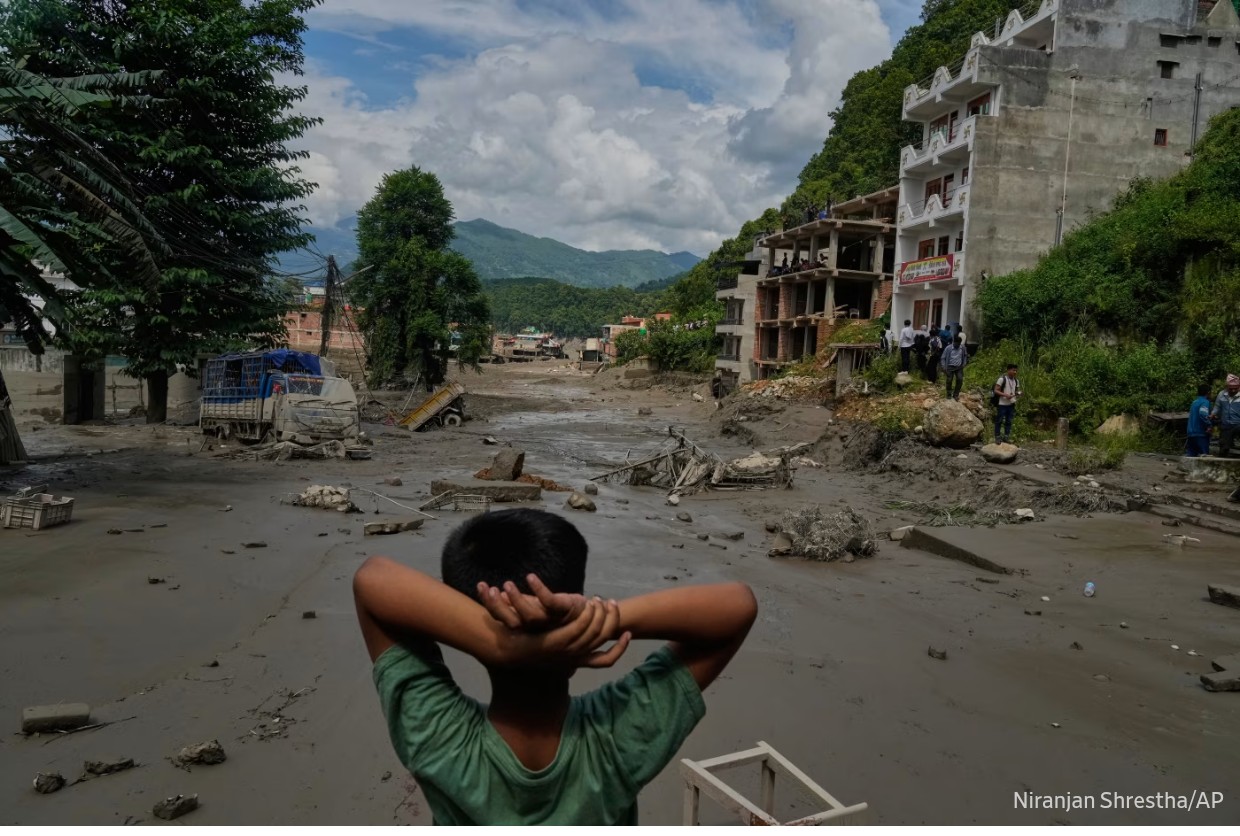
Hundreds of people are missing in Nepal and China, after devastating floods likely triggered by an avalanche high in the Himalayas washed through towns and villages popular with Hindu and Buddhist pilgrims.
At least 157 people are dead in Nepal, according to officials there, a figure that will certainly rise as more bodies are recovered. Dozens of foreign tourists, including nearly 50 Americans and more than 130 travelers from India, Nepal’s other giant neighbor, are unaccounted for.
Scientists around the world who research mountains, ice and the river systems downstream are trying to solve the mystery of what caused such a destructive flood.
Following a meeting with Chinese weather officials, Nepal’s weather forecasting department wrote in a social-media post that, according to China’s preliminary assessment, “there has been no significant rainfall in the Chinese territory and no flooding has occurred due to the rains.”
For now, scientists say the leading hypothesis they are examining based on initial satellite data comparisons is that a large piece of a glacier broke off and tumbled hundreds of feet into the valley below, where the ice was pulverized into water by the sheer velocity of the fall and met up with downstream rivers.
“In order for this magnitude of floodwater and debris to come downstream there has to be a gigantic landmass or ice break,” said Umesh Haritashya , a professor of geosciences and sustainability at the University of Dayton, Ohio, who is part of a group of scientists trying to explain what happened. With more satellite readings being gathered and processed, they should have a clearer picture by Thursday.
Early in the day, possible causes of the flood being considered included a glacial lake outburst as well as an avalanche triggered by an earthquake. But the 4.4 magnitude earthquake that the U.S. Geological Survey initially recorded in the area turned out to be the seismic signal generated by the avalanche itself. The agency has since corrected its record to show the reading as generated by a landslide.
Floods generated due to the destabilization of ice or debris—or a mix of the two—in the mountains tend to be highly destructive because the solids they carry add to their power.
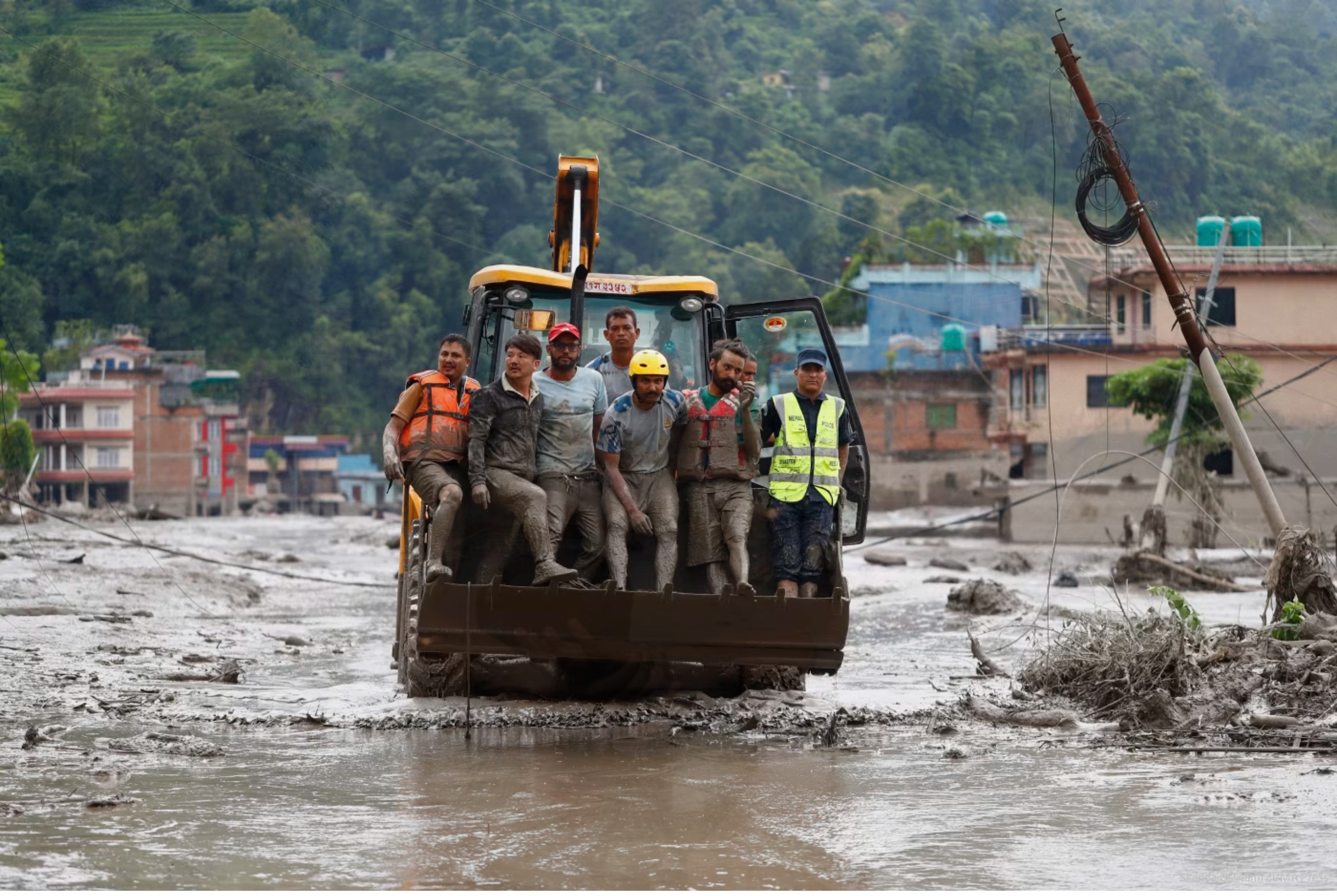
China has dispatched hundreds of people to the affected areas in Tibet, as well as heavy machinery to areas where many buildings are now buried in silt left by the floods.
In Nepal, Prime Minister Balendra Shah , who came to power this year on a wave of Gen Z discontent over corruption and unemployment, deployed the army, police and paramilitary forces. It’s the first major crisis the young leader has had to confront since taking office in March.
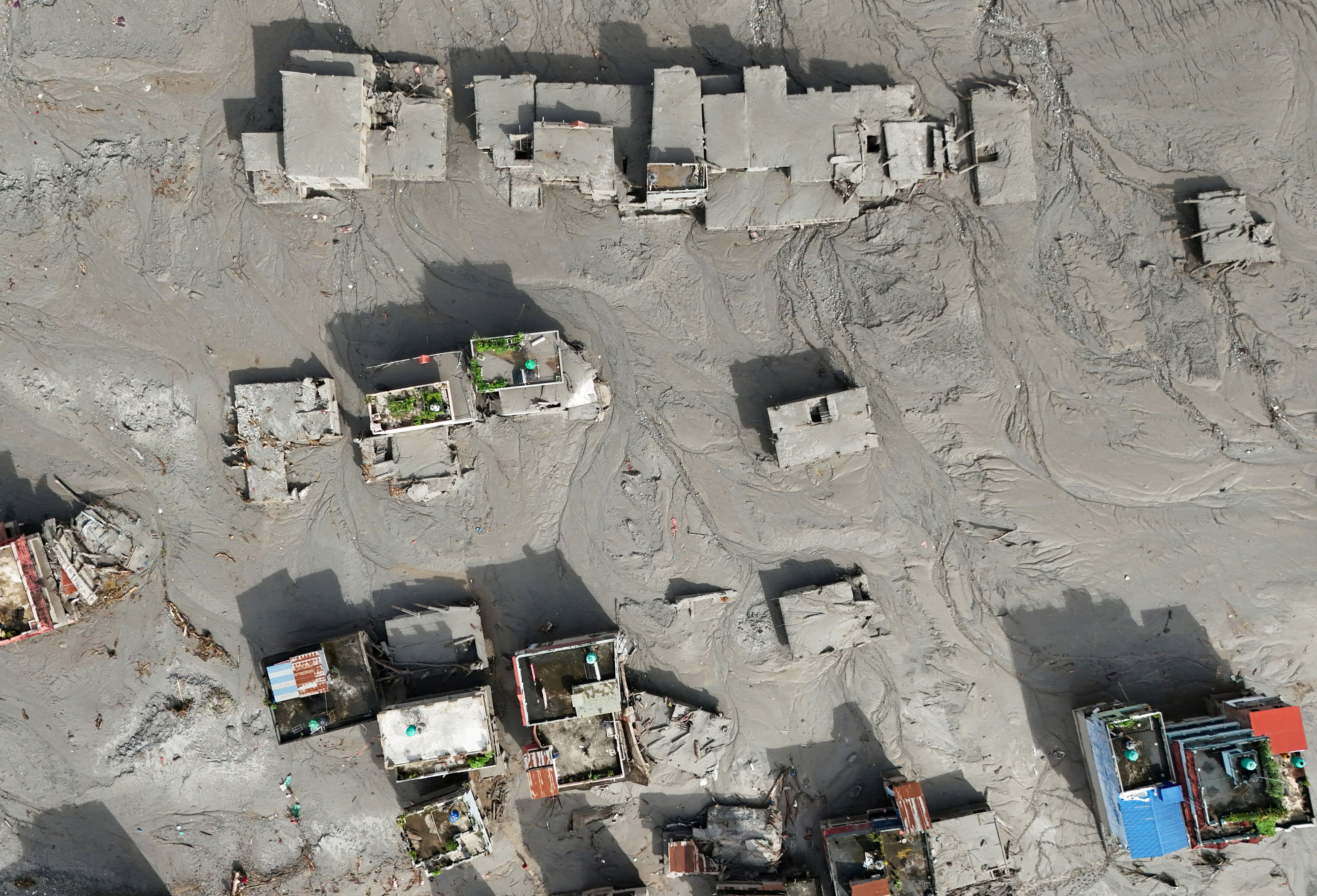
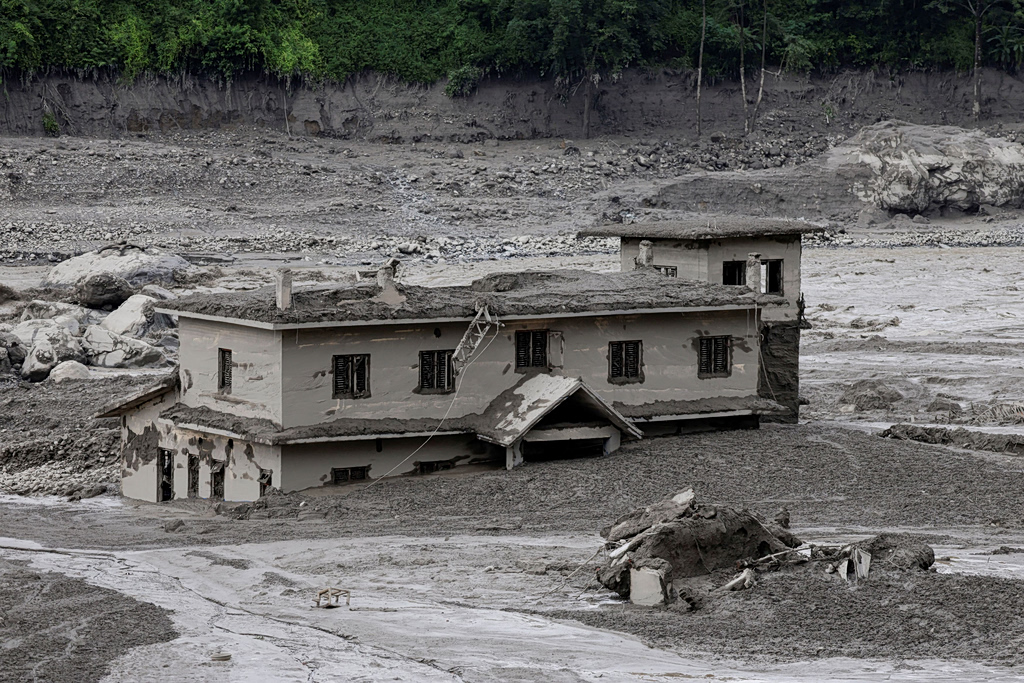
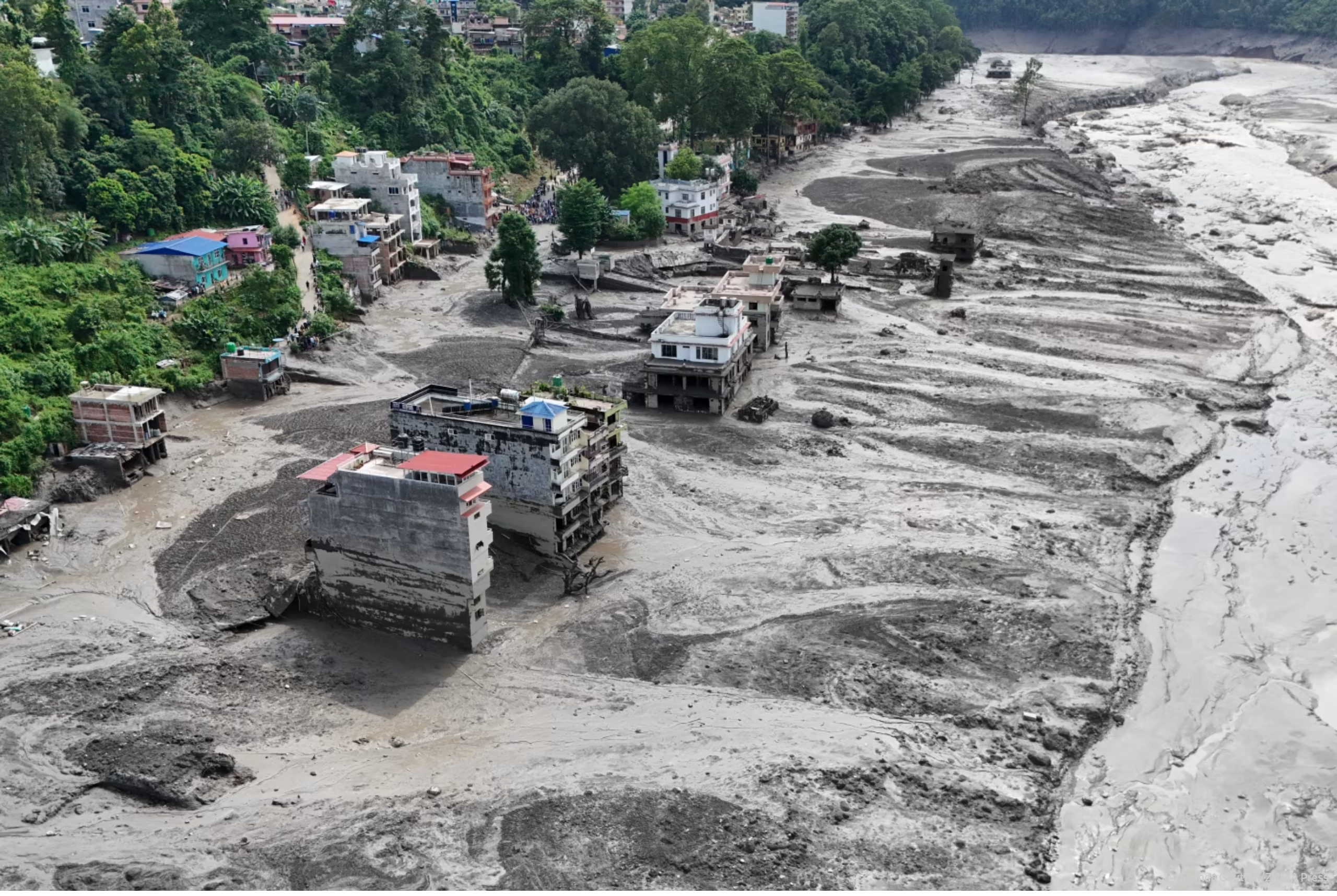
A drone view shows mud covering buildings following devastating floods at Trishuli in Nuwakot district, Nepal, August 27, 2026. REUTERS/Navesh Chitrakar
In a post on Facebook, Shah expressed sorrow for the pain caused to so many Nepalese from “unexpected thunder of natural disaster” and told them the government was with them for every need.
The area is popular with trekkers and with Hindu and Buddhist pilgrims who flock to small villages and towns like Syapru Besi and Timure, near the confluence of the Trishuli and Lhende rivers, which faced some of the worst damage on Wednesday.
These villages are vital gateways to Nepal’s world-famous Langtang Valley and Tamang Heritage trails, and also serve as transit hubs for many Hindu and Buddhist travelers visiting sacred mountain lakes in the region, such as Gosaikunda in Nepal and Kailash Mansarovar in Tibet.
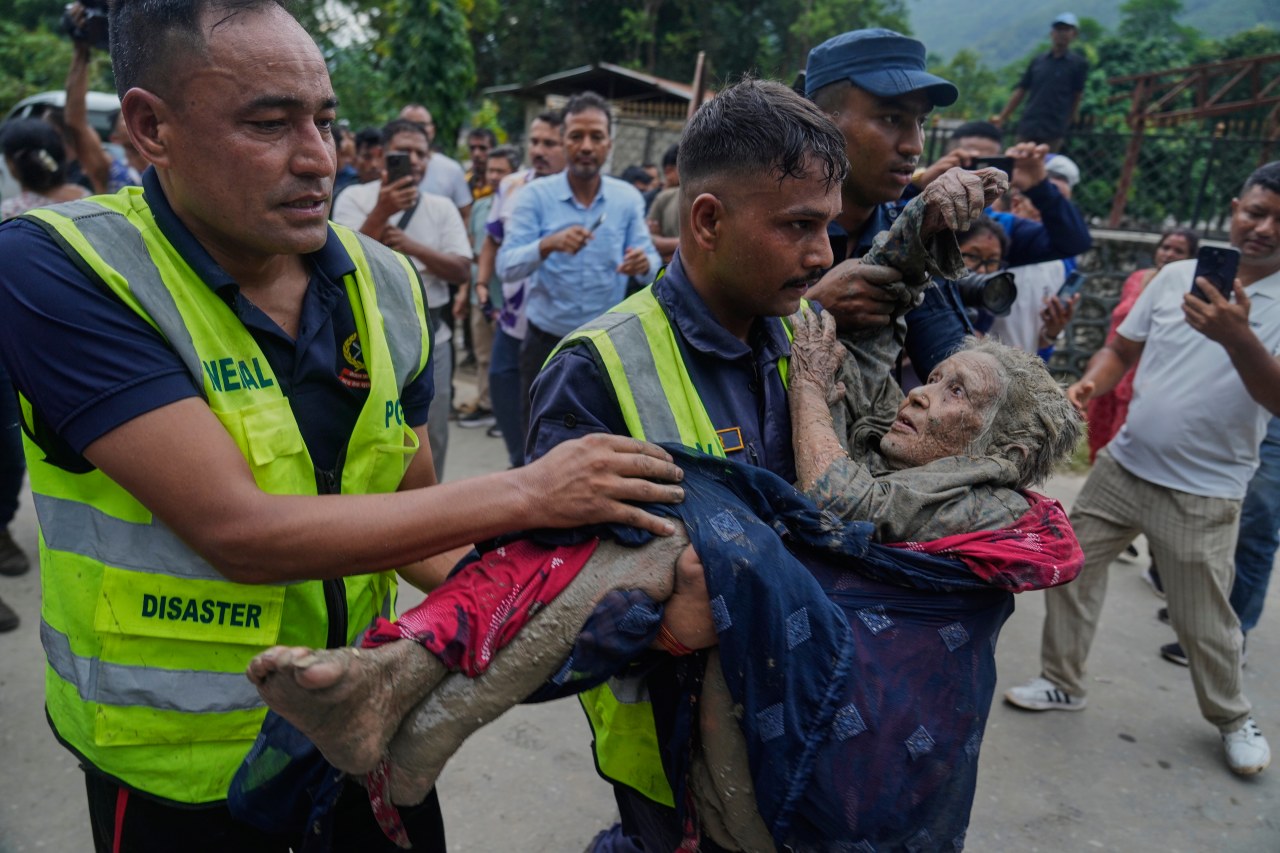
Nurbu Tamang, 67, who runs a homestay for pilgrims and tourists on the hiking route to the Gosaikunda lake in Rasuwa district, said he was in Kathmandu when the flood hit the area on Wednesday. One of his houses in Syapru Besi was swept away by Wednesday’s flood. “My house was about 500 meters (1,640 feet) higher than the river gorge, but there was so much water that it swept away everything in its course,” he said.
On Wednesday night at his Kathmandu house, he sheltered three of about 130 people from the Syapru Besi and Timure area whom Nepal’s security forces rescued by helicopter earlier in the day. About 20 of those rescued are undergoing treatment at Kathmandu hospitals while others are taking shelter at the homes of relatives and acquaintances, he said.
“They are so traumatized,” he said. “They say what they witnessed was unlike any flood—something beyond imagination.”
Across the Himalayas and other mountainous regions of Asia, human settlements are facing the increasing risk of floods unconnected to rainfall, as warmer temperatures destabilize glaciers.
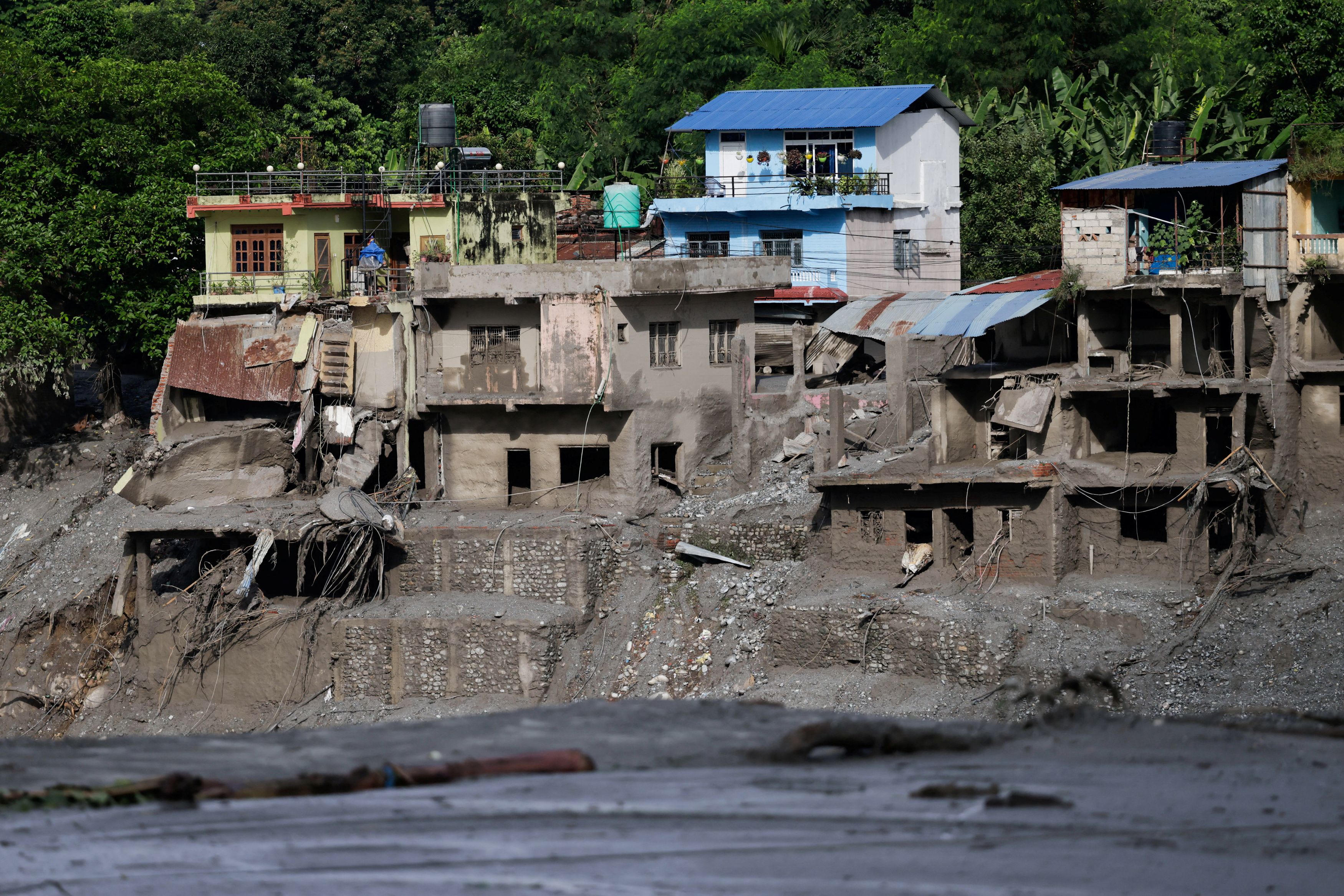
Damaged houses following devastating floods, in Trishuli in Nuwakot district, Nepal, August 27, 2026. REUTERS/Navesh Chitrakar
This is the second time in a year that flash floods have torn through the Nepal-China border area, after the region saw flooding from a glacial lake in Tibet that overflowed in July 2025.
In 2023, a glacial lake burst in the northeastern India state of Sikkim, destroying a hydropower dam and leaving scores of people dead. Many survivors are still rebuilding their homes.
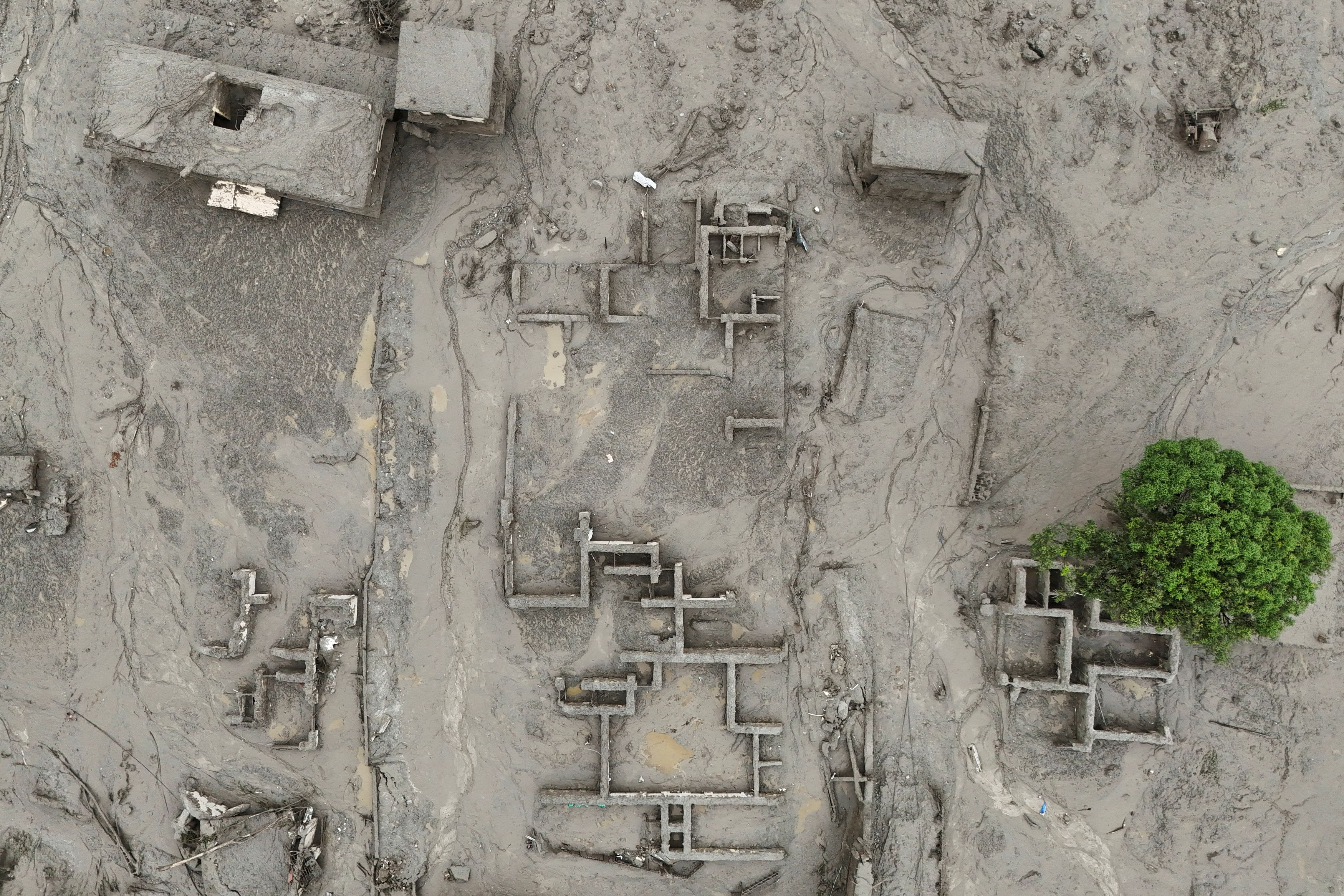
A drone view shows mud covering buildings following a flash flood in Trishuli, Nuwakot district, Nepal, August 27, 2026. REUTERS/Navesh Chitrakar TPX IMAGES OF THE DAY
Simon Cook , a geoscientist at the University of Dundee in Scotland, who is working with Haritashya as well as Dan Shugar , a geomorphologist at the University of Calgary in Canada, said that satellite data indicates that it is likely that a part of a glacier at around 16,000 feet, close to the border with China, broke off.
“It sat over what looks like a quite steep bedrock step,” he said. “And it was sort of dangling…the tongue was kind of just on the edge of that step.”
But even if the glacier hypothesis turns out to be correct, scientists would still need to piece together how that managed to generate the amount of water that it did. Was there water hidden in the glacier that broke, or ice in the valley below that also was crushed into water, for example.
“There’s a relatively small bit of glacier that broke off…And yet the scale of the flood seems to have been absolutely cataclysmic,” Cook said. “Is it physically feasible that this piece of glacier could have been pulverized into water to create a flood of that size?”
Write to Tripti Lahiri at tripti.lahiri@wsj.com and Krishna Pokharel at krishna.pokharel@wsj.com