
 Μake us preferred on Google
 Thirty-five years ago, the oil fields of this desert sheikhdom the size of New Jersey went up in flames when Iraq’s Saddam Hussein invaded and drew the U.S. into the first Gulf War.
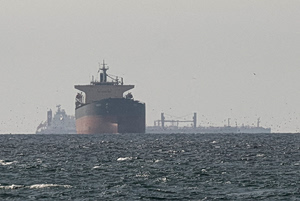
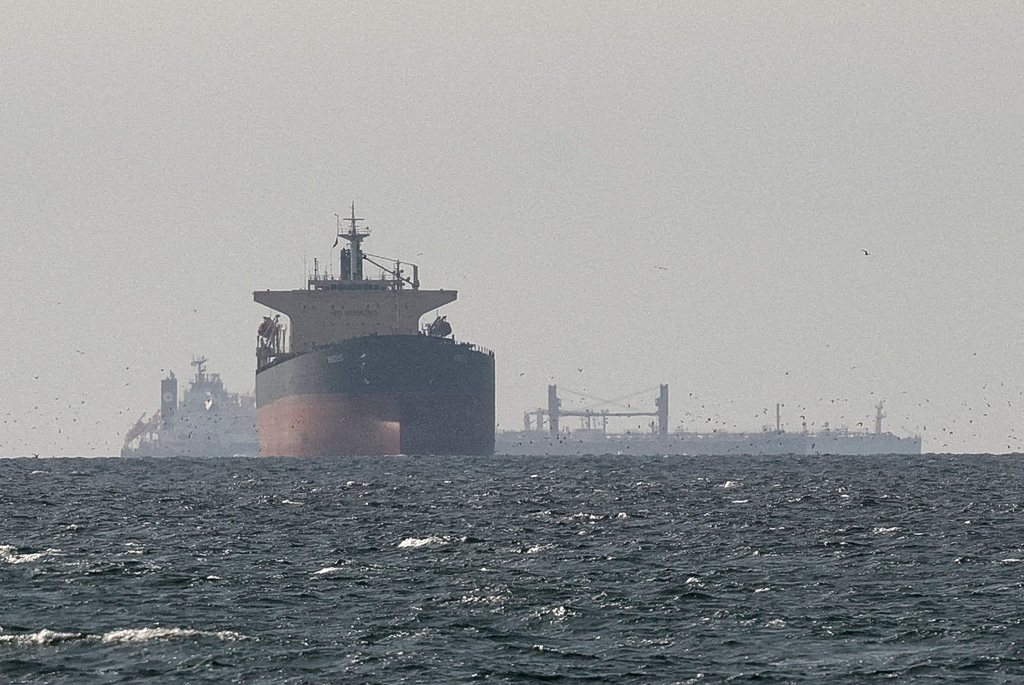
Today, Kuwait’s crude has stopped flowing again. Rigs are standing still, while oil-loading berths along the Persian Gulf are empty. With the Strait of Hormuz closed, Kuwait has stopped exporting nearly 2 million barrels a day, depriving the world of around 2% of its daily needs, and shutting off the country’s main income source.
The Iran conflict has hurt countries up and down the Gulf—but few as much as Kuwait. Practically everything its 5 million residents eat and drink must be trucked in from neighboring Saudi Arabia .
Meanwhile, hundreds of Iranian drones and missiles have badly damaged Kuwait’s oil infrastructure, hurt U.S. military bases and sent American diplomats and thousands of troops stationed in the country packing.
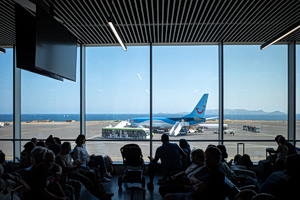
The airport only recently reopened, long after others, and remote learning remains in place, even as neighboring states returned to in-person schooling.
Workplace attendance for the public sector, which employs most of the workforce, remains capped at 50%. Public gatherings have been slow to return.
Although only a few people were killed, Kuwait City’s seaside skyline is pockmarked with war wounds. That includes the top floors at the state oil company’s headquarters, which was struck by cruise missiles on April 5, sparking a fire that sent smoke billowing into the night sky.
Last month’s S&P Global’s purchasing managers index indicated confidence in Kuwait is at its lowest level since the Covid-19 pandemic began six years ago.
“I don’t think anybody envisioned that transit passage safe and free through the Strait of Hormuz would be curtailed for anywhere close to this amount of time,” said Sheikh Nawaf S. Al-Sabah, deputy chairman and chief executive of state-owned Kuwait Petroleum Co.
With a sovereign-wealth fund valued at well over $1 trillion, Kuwait can theoretically go more than a decade without making money and still pay for cradle-to-grave welfare benefits for about 1.5 million citizens, in a population that also includes more than 3 million foreign residents.
But the situation risks entrenching trends that had already turned Kuwait—which flourished in the 1960s and 1970s—into something of an also-ran in the region after it struggled to rebound from the 1990 Iraq invasion. It offers a cautionary tale for the rest of the Gulf of what can happen when uncertainty and instability become ingrained in countries whose selling points are wealth and peace.
“We cannot continue to stay as we are for a very long time,” said Faisal Al-Mutawa , a top businessman whose family has imported consumer goods for generations and wants less government control of the economy.
He noted that Kuwait long talked about building a rail line to bypass the Gulf, but never did. Now, he is having to bring goods in by truck, which costs six times as much than by ship. Government-imposed price freezes are squeezing margins.
“We need somebody to change the economy here in Kuwait,” much as Saudi Arabia and others did with visionary projects, Al-Mutawa said.
Current and former officials hail the government’s steady approach, saying Kuwait isn’t trying to emulate others and learned from the 1990 war that caution is a virtue.
State minister for economic affairs and investment Abdulaziz AlMarzooq said Kuwait’s reserves can sustain it for a prolonged period. The suspension of oil exports “could be an insurance premium that we pay, but historically, it is still a moment in time,” he said.
“We’re now trying to assess and focus on just [being] resilient, not necessarily always efficient.”
Vulnerable location
Shaped roughly like a triangle, Kuwait is hemmed in by Iraq, Saudi Arabia and the Gulf. That puts it on the wrong side of the Strait of Hormuz, whose closure essentially made Kuwait landlocked.
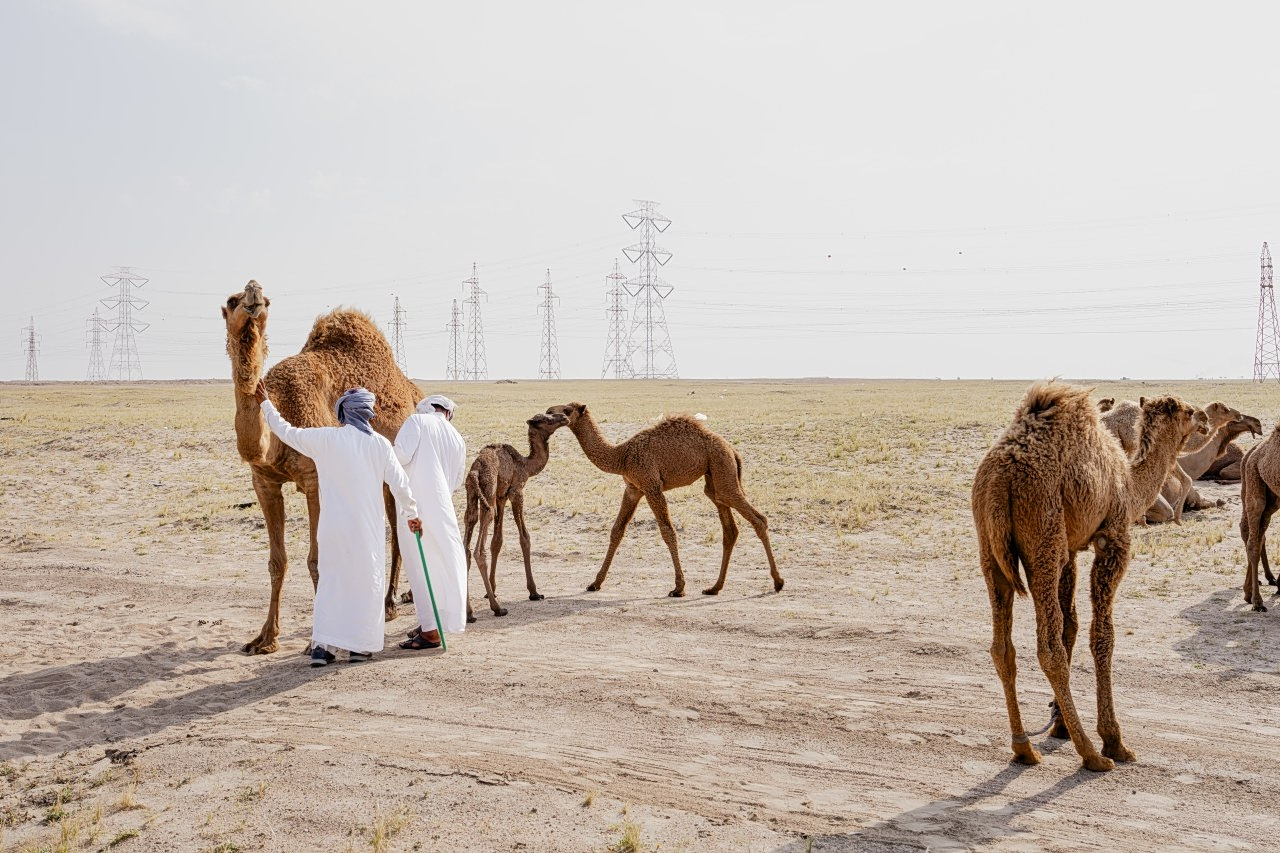
Before the airport reopened, there was only one way to enter: overland from Saudi Arabia. A recent visit involved a multi-hour drive on a dark desert highway where grazing camels far outnumbered people. A few gas flares could be seen flickering from the road, but the country’s energy facilities had essentially been mothballed.
Officials are worried about further instability. Kuwait recently summoned the Iranian ambassador to protest what it described as an infiltration by Iranian paramilitary forces who clashed with Kuwait’s military, injuring one. Iran denied the accusations.
Kuwait is also concerned about Iraq, from which small-scale attacks against oil operations were launched even before the Iran war began. Officials estimate at least half the drone attacks in the current conflict originated from Shia militias there which receive support from Tehran. Kuwait’s military said on May 10 it intercepted several more drones.
In Abdali, an agricultural region abutting Iraq, a lone herder tended to dozens of camels on a recent afternoon. His father used to graze the animals across the border but hasn’t returned in 35 years. Now they only stray south into Saudi Arabia, he said.
Left behind
Kuwait City was once seen as the Gulf’s economic center, much like Dubai or Doha today. A fishing and pearling village before the discovery of oil, it opened the region’s first stock market and modern university, and gained a reputation as a vibrant cultural hub, with a more-visible role for women in society.
The country created a welfare state that provided nationals with universal healthcare and education. It built infrastructure at home and invested abroad in real estate and financial markets through the world’s first modern sovereign-wealth fund.
Saddam Hussein’s invasion interrupted all that. After a U.S.-led coalition liberated the country, retreating Iraqi troops torched oil wells, igniting fires that took nearly a year to extinguish.
Vestiges of that era are still present: Charred remnants of Iraqi tanks and antiaircraft guns litter Failaka Island off the coast of Kuwait City. Inhabited since the time of Alexander the Great, it now has little civilian presence left.
Elsewhere, Kuwait took years and spent billions to rebuild, and invited American troops to stay. But it struggled to shake off a sense of fragility. Investors became more cautious. Although run by hereditary royals, the country’s raucous parliament blocked new policies. The prevalence of oil dulled any urgency to diversify the economy.
“The country seems to have become somewhat frozen in time after the liberation,” said Edward “Skip” Gnehm Jr., who was U.S. ambassador when the invasion was repelled and continued to visit. “Nothing happened.”
Today, Kuwait boasts the world’s second-largest shopping mall and plenty of luxury outlets, but it lacks Dubai’s futuristic feel. Motorists complain that potholes and loose gravel from old roadtops cause crashes or flat tires. Some areas haven’t been fully repaved in decades.
While Dubai attracted more than $14 billion in foreign direct investment in 2024, Kuwait brought in only about $725 million in a similar period, according to official data. Dubai’s airport handled more than 95 million passengers last year, while Kuwait’s saw under 15 million, authorities said.
Playing it safe
Kuwaiti officials are confident the country will bounce back.
“This is not our first crisis, and from each one, we’ve learned a lot more, and have adapted well to suit us for the next one,” said Sheikh Nawaf, the Kuwait Petroleum Co. boss.
The oil company’s headquarters “suffered extensive damage, but remains standing,” he added in an interview at temporary offices in a nondescript corporate park. “We’re using it as a symbol of the oil sector and of Kuwait,” he said. “We are both defiant and resilient.”
Kuwaiti officials say the closure of oil infrastructure allows for overdue maintenance. Otherwise, they prefer to wait and see how the war plays out before launching new initiatives. Meanwhile, the United Arab Emirates—where Dubai is located—is accelerating construction of a second pipeline to double export capacity by next year.
Many regard Kuwait as too cautious to ever match up again with the likes of Dubai.
They point to the airport, which faced near-daily drone attacks that destroyed several fuel tanks and a radar system. While other countries reopened after the cease-fire, Kuwait stayed closed for two more weeks and still operates a fraction of normal flights.
The extended closure was widely seen as a reflection of the authorities’ extreme aversion to risk, with no one willing to take responsibility in case something bad happens.
Write to Stephen Kalin at stephen.kalin@wsj.com