

 Μake us preferred on Google
 TOKYO—War in Iran is draining the color from Japanese supermarket shelves.
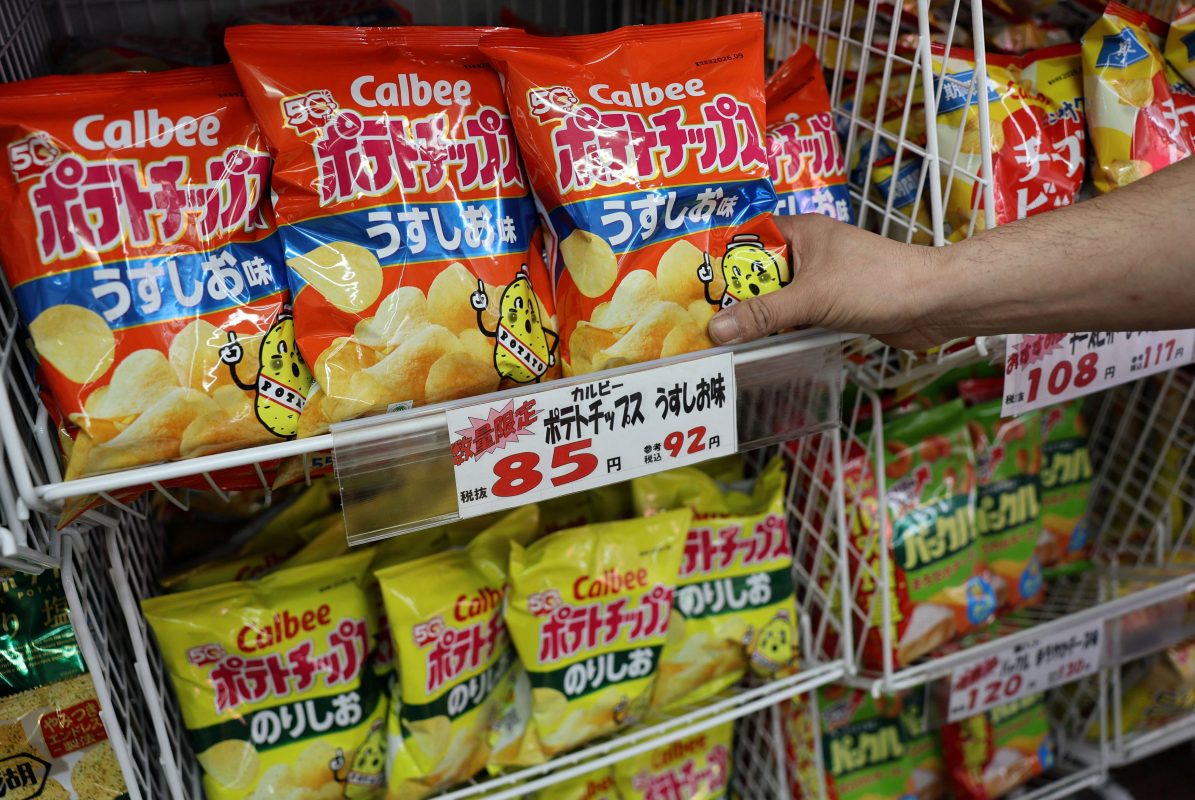
Snack maker Calbee plans to switch to black-and-white packaging for some of its most popular potato chips because of chemical shortages, the company said Tuesday.
The new monochrome packages will go on sale in Japan May 25, Calbee said, blaming difficulties procuring raw materials such as naphtha, a petrochemical used in paints and inks.
Fans of lightly salted Calbee chips will no longer see the familiar orange and blue design, while seaweed-flavor enthusiasts will miss out on yellow and green. Consommé flavor is also affected, Calbee said.
The Japanese government expressed puzzlement. Prime Minister Sanae Takaichi has said Japan has secured enough naphtha and similar oil-derived products to last into next year.
“As of now, the government has not received any reports indicating that immediate supply issues are expected for printing ink or naphtha,” Deputy Chief Cabinet Secretary Kei Sato said Tuesday at a news conference.
Calbee signage at the company headquarters in Tokyo, Japan May 12, 2026. REUTERS/Issei Kato
Worries about naphtha and other crude-oil products have been building since Iran closed the Strait of Hormuz in late February in response to U.S. and Israeli strikes. The volatile liquid is used in the production of plastics, drugs and other goods.
Artience , a Japan-based printing ink manufacturer, said in April it planned to raise prices for its printing ink for plastic and paper products by 20%, citing the naphtha shortage.
Typically, Japan gets about 40% of the naphtha it consumes from the Middle East, according to Japan’s Cabinet Office. Another 40% is domestically produced and the remainder comes from other regions.
The government said it has increased imports from countries including the U.S., Peru and Algeria and boosted domestic output.
Even so, companies are anxious. An April survey by Seidanren, which represents consumer-goods companies and consumer organizations in Japan, found that 44% of more than 100 companies polled have already felt some effects from the naphtha shortage. Three-quarters said they would expect to see an effect on production within three months if supply issues persist.